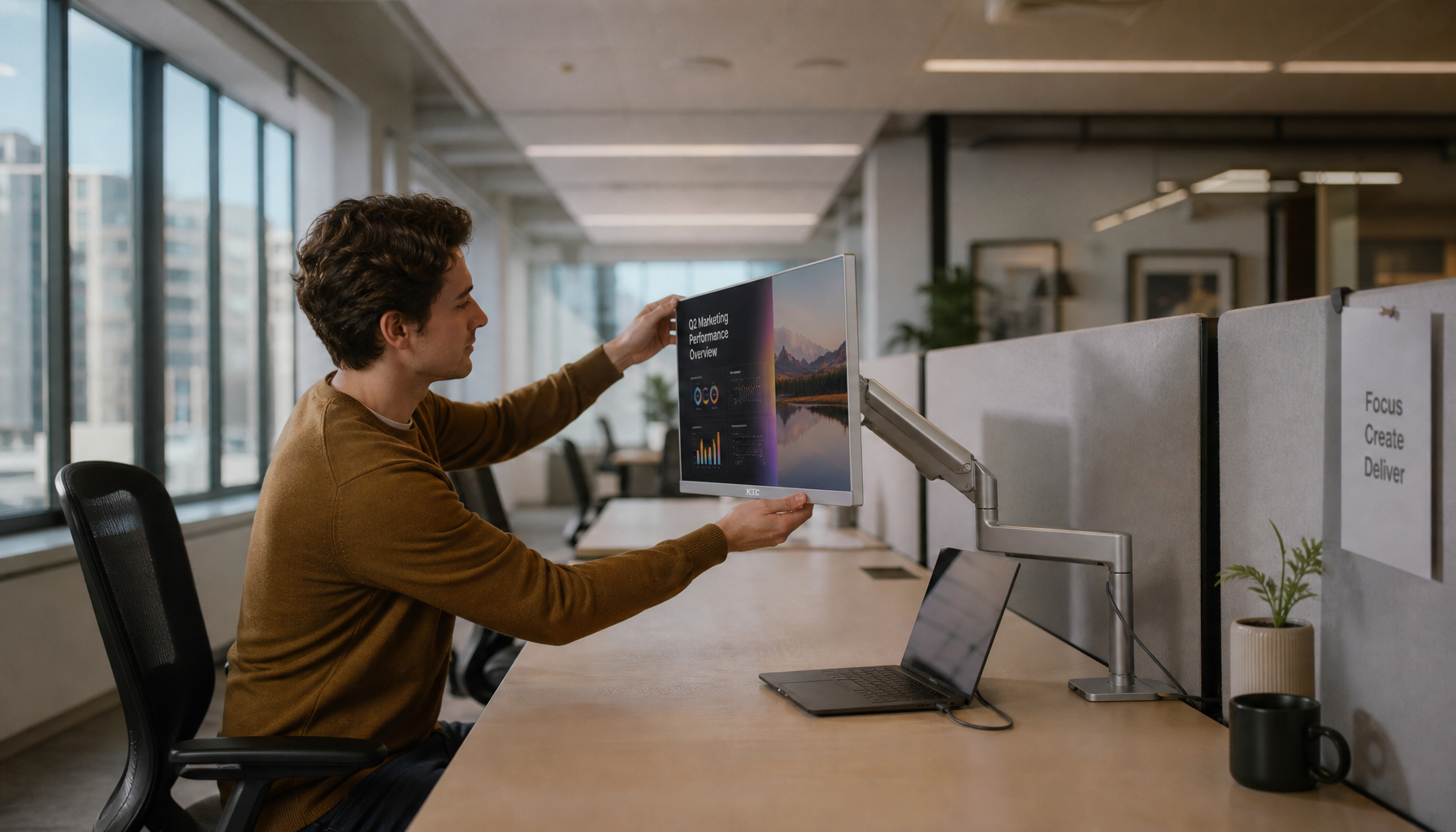
Screen breaks work best when they are treated as planned handoffs, not interruptions. A brief pause note, a physical reset, and a visible restart cue can protect focus while giving your eyes and brain time to recover.
Ever stand up from a dense spreadsheet, code review, design spec, or ranked-match analytics dashboard and come back feeling like the whole mental map vanished? A simple pause note plus a short, timed break can reduce the costly 15- to 20-minute re-entry spiral many focused workers experience after a disruption. Here is a practical system for resting your eyes and brain without dropping the thread.
Why Screen Breaks Feel Risky When You Are Deep in Work
Screen breaks often fail because they are treated as blank space. You stop mid-thought, check your cell phone, skim messages, and return to a task that now looks unfamiliar. The issue is not the break itself; it is the lack of a bridge between focus mode and recovery mode.
For display-heavy work, breaks are not optional maintenance. The display screen equipment work recommendation is to take short, frequent breaks or changes of activity, with 5 to 10 minutes every hour generally preferred over a longer break every few hours. That guidance matches real workstation experience: a sharp monitor can make work feel frictionless, but your eyes, posture, and executive attention still need resets.
The trick is to break without context collapse. Your screen break should preserve three things: what you were doing, why it mattered, and the first action you will take when you return.
Define the Break Before You Take It
A productive screen break is an intentional period away from the screen that restores attention without pulling you into a second digital task. Checking email, scrolling social feeds, or opening a news tab is not a real break for your brain or your eyes. It is another screen task wearing a softer jacket.
The UNC Learning Center notes that intentional breaks can restore attention, reduce stress, and improve motivation when they create distance from work-related thoughts. For monitor-heavy users, that distance matters because the same close-range visual system is being asked to keep performing even during a “break” if you move from a 32-inch display to a cell phone.
Before leaving your desk, write one sentence that answers: “What was I solving?” Then write the next physical action: “Compare column C against the Q4 target,” “resume paragraph under the desk-setup section,” or “test HDMI input lag with game mode on.” This creates a restart handle. When you return, you do not need to reconstruct the whole project; you only need to follow the next cue.
Use the Pause Note Method
The pause note is the most reliable way to take breaks without losing your train of thought. Keep it short enough that you will actually do it. A good pause note has a status line, a friction point, and a restart command.

For example, if you are choosing between two productivity monitors, your note might read: “Comparing 27-inch 1440p vs 32-inch 4K for office use. Stuck on text clarity versus desk depth. Return by checking viewing distance and scaling comfort.” That note turns a vague mental cloud into a clean re-entry point.
This works especially well for writers, analysts, gamers reviewing footage, and anyone switching between tabs, dashboards, and specs. It also lowers the temptation to “just keep going” while your accuracy drops. Time management is a learned set of planning, evaluation, self-control, and prioritization skills; the pause note is a micro-version of that skill set.
Choose the Right Break Length for the Task
There is no universal perfect break interval. A competitive gamer reviewing match footage, a designer color-checking a portable display, and an accountant working across two monitors have different strain patterns. Still, the best starting point is short and frequent.

Work Pattern |
Best Break Style |
Why It Works |
Deep writing, coding, analysis |
25 minutes focused, 5 minutes away |
Protects mental momentum while preventing fatigue buildup |
Normal office display work |
5 to 10 minutes every hour |
Matches ergonomic guidance for frequent recovery |
Eye-heavy review or dense spreadsheets |
20-second visual reset every 20 minutes |
Reduces close-focus strain without stopping the workflow |
Long meeting blocks |
5-minute buffer between calls |
Prevents video fatigue and gives notes time to settle |
The 20-20-20 rule is especially useful for screen immersion because it is small enough not to break flow: every 20 minutes, look at something about 20 ft away for 20 seconds. It is not a full mental reset. It is eye maintenance, and it works best alongside longer movement breaks.
Protect the Break From Digital Drift
The biggest threat to your train of thought is not standing up. It is replacing one screen loop with another. Social apps, short videos, and inbox checks introduce new decisions, emotions, and unresolved threads. You return with more mental tabs open than when you left.

NAMI highlights that screen multitasking can increase distraction, reduce productivity, and create more errors, especially when the phone stays visible or reachable. For a performance-driven setup, treat your cell phone like a competing input source. If your main display is for work, your phone should not become a second command center during recovery.
A better break is physical and boring in the best way. Stand up, refill water, look out a window, stretch your hands, walk to another room, or step outside for a few minutes. If an idea arrives, write it on paper instead of unlocking the phone. The goal is not entertainment; the goal is returning with a cleaner signal.
Build Breaks Into Your Display Setup
A strong screen-break habit starts with workstation design. If your monitor is too close, too high, too dim, too bright, or surrounded by glare, every minute demands more from your eyes. You will need more breaks, and you will resist them because you are already irritated.

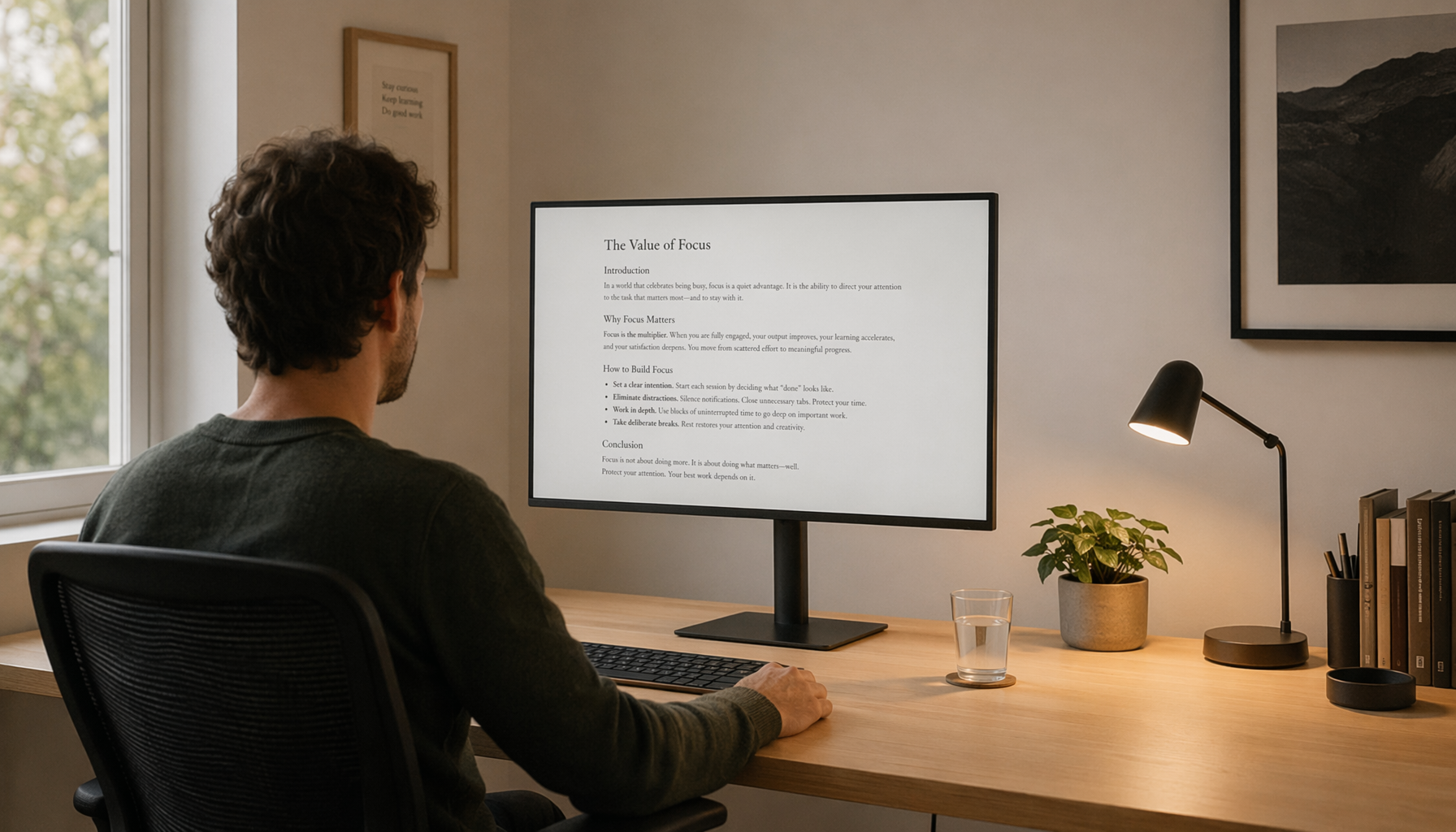
Eye-strain reporting notes that a better desk setup can include a larger monitor, larger font size, sitting about an arm’s length from the screen, and positioning the display so the eyes look slightly downward. From hands-on display testing, this matters most with high-resolution office monitors: 4K sharpness is only an advantage if scaling, distance, brightness, and contrast make text effortless.
For portable smart screens, the break challenge is different. Because they are often used in cramped spaces, on couches, in hotel rooms, or beside laptops, posture can degrade quickly. Set the portable display on a stand whenever possible, raise the laptop camera or screen, and keep the screen path straight rather than twisting your neck between panels.
Use Tools, But Do Not Outsource Judgment
Timers, app blockers, and screen-time reports can help, but they work best when they support a clear rule. A reminder that says “take a break” is easy to dismiss. A reminder tied to a specific routine is harder to ignore: pause note, stand, look far, move, return.
Screen-time management tools can balance productivity and well-being by using trackers, timers, blockers, and reports without eliminating necessary digital work. That distinction matters for professionals. The goal is not less screen time at any cost; it is less low-value screen time and better recovery between high-value sessions.
On desktop systems, phone operating systems, and many browsers, you can schedule downtime, app limits, focus modes, or blocked sites. For gaming and productivity displays, use a layered approach: the monitor stays optimized for performance, while the operating system handles interruption control. Keep refresh rate, brightness, and input settings stable; let software manage access to distracting apps.
Make Breaks Easy to Resume From
A break system only works if returning feels frictionless. Before stepping away, leave the right window visible, highlight the current paragraph, park the cursor where you will resume, or write the next calculation directly in the document. If you are comparing monitor specs, leave the decisive comparison visible, not a homepage or search results page.
The same planning principle applies at the micro level: choose one system and use it consistently. Do not scatter restart cues across sticky notes, browser tabs, chat messages, and memory. Pick one capture place: a notebook, a task app, or the top line of the working document.
A simple restart ritual also helps. Sit down, read the pause note, take one breath, perform the restart command, and ignore everything else for three minutes. Momentum usually returns after the first concrete action.
Pros and Cons of Structured Screen Breaks
Structured breaks improve visual comfort, reduce fatigue, and protect decision quality. They also make work more measurable because you can see when your focus actually peaks. For monitor users who spend all day in spreadsheets, editing timelines, dashboards, game analysis, or communication tools, that is a real performance advantage.
The downside is that breaks can feel artificial at first. Timers may interrupt a genuine flow state, and overly rigid schedules can annoy people who do creative or investigative work. That is why break timing should flex around task demand. Use visual microbreaks during strong flow, then take a longer movement break at a natural stopping point.
When Breaks Are Not Enough
If you consistently cannot return to work after a short break, the problem may be bigger than screen discipline. Sleep debt, burnout, poor ergonomics, unmanaged notifications, eye focusing issues, or attention disorders can all make re-entry unusually hard. Breaks help, but they are not a substitute for medical, vision, or mental-health support when symptoms are persistent.
Workplace screen time is also an organizational issue, not only a personal habit. Workplace learning research describes screen-heavy work as a productivity and well-being challenge, with screen-based tasks affecting focus, sleep, physical comfort, and work quality. If every break is swallowed by back-to-back video meetings, constant pings, and no recovery windows, the calendar needs redesign, not more willpower.
A Practical Training Plan for This Week
Start with one rule for five workdays: never take a screen break without a pause note. Keep breaks short, physical, and away from the cell phone. Use 20-20-20 eye resets during active screen sessions, then take 5 to 10 minutes away from the workstation about once an hour when the task allows.
At the end of each day, check one thing: how long did it take to regain focus after breaks? If re-entry still takes more than a few minutes, make the pause note more specific. If breaks keep turning into scrolling, move the phone out of reach before starting deep work.
Your display should help you perform, not quietly drain the attention you bought it to enhance. Train the handoff, protect the reset, and return to the screen with the next move already waiting.