USB-C docking monitors simplify hybrid work by turning the monitor into the desk hub: one cable can carry display output, laptop charging, keyboard and mouse access, and sometimes Ethernet. The result is a faster, cleaner laptop-to-desktop transition with fewer loose adapters and less daily setup friction.
Ever sit down at your home desk, open your laptop, and spend the first five minutes hunting for the charger, display cable, mouse receiver, and network adapter? A well-chosen USB-C docking monitor can reduce that routine to one plug-in step while keeping your full-size screen, keyboard, mouse, and wired accessories ready. This guide explains what these monitors actually simplify, where the tradeoffs appear, and what to check before buying one for hybrid work.
What a USB-C Docking Monitor Actually Does
A USB-C docking monitor combines a desktop display with a built-in connection hub. Instead of connecting a laptop to a separate monitor, charger, USB hub, Ethernet adapter, and docking station, the monitor becomes the central device on the desk. In a typical setup, the power cable stays connected to the monitor, the keyboard and mouse stay plugged into the monitor’s USB ports, and one USB-C cable connects the laptop when you sit down.

That is different from using a standard monitor with a separate docking station. A traditional dock sits between the laptop and the display, while the monitor is mostly just a screen. A docking monitor folds much of that dock behavior into the display itself, which matters for hybrid workers because the monitor is already the largest fixed object on the desk. Fewer boxes on the desk usually means fewer cables running across it.
The practical setup can be very direct. A home setup example from a university’s docking monitor instructions shows the monitor receiving power, the laptop connecting through USB-C, a keyboard and mouse connecting through USB ports, and optional Ethernet connecting at the monitor, so a single USB-C connection links the laptop to charging, input devices, and network access.
The Daily Difference
With a regular monitor, the desk often depends on several repeated connections: HDMI or DisplayPort for video, a charger for power, USB for keyboard and mouse, and possibly Ethernet for stable calls. With a USB-C docking monitor, those connections stay parked at the desk. The laptop becomes the only device that moves.
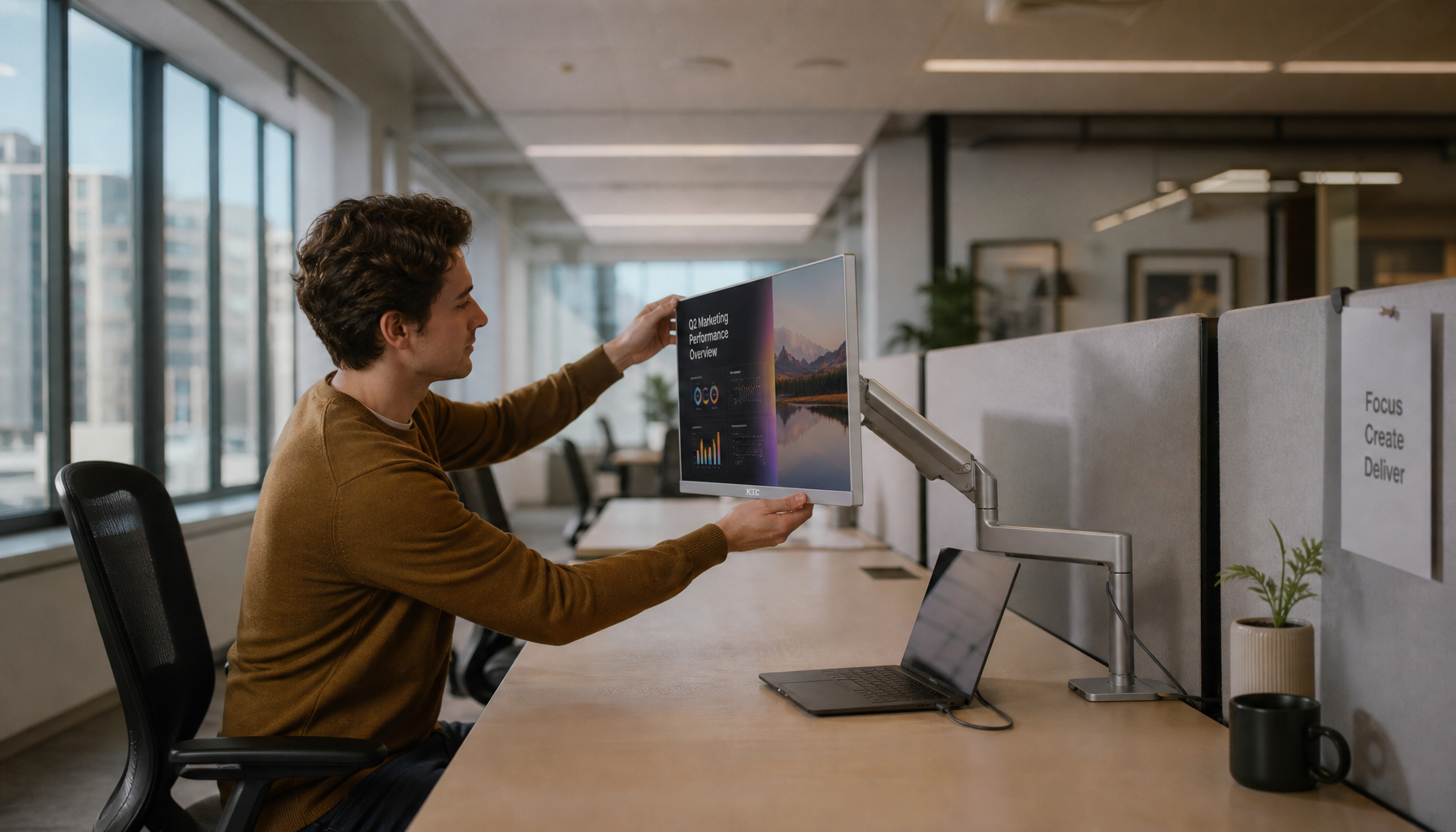
For hybrid work, that changes the behavior of the workspace. You can bring a laptop home, connect one cable, and immediately use a larger display for spreadsheets, design reviews, dashboards, code editors, video calls, or document editing. When you leave, you unplug one cable rather than dismantling the whole workstation.

Why One Cable Matters for Hybrid Work
The main benefit is not just fewer cables; it is repeatability. A hybrid desk needs to work the same way every morning, whether the laptop came from the office, a meeting room, or a kitchen table. When the monitor acts as the docking point, the keyboard, mouse, webcam, storage device, and wired network can remain attached to the monitor instead of being reconnected one by one.
A docking station is commonly used to connect a laptop to monitors, keyboard, mouse, and other equipment, and it may include USB-C, USB, audio, DisplayPort, HDMI, Ethernet, and power-in ports for laptop workstations. A USB-C docking monitor brings that same idea closer to the display buying decision: you are not just buying screen size and resolution; you are buying the connection pattern for your desk.
This is especially useful in shared or flexible workspaces. If two people use the same desk at different times, one labeled USB-C cable is easier to manage than a loose bundle of power, video, and USB cables. If you move between a work laptop and personal laptop, the experience is also cleaner, provided both laptops support the monitor’s USB-C display and charging features.
A Practical Setup Example
A simple home-office arrangement can look like this:
- Power cable stays connected to the monitor and wall outlet.
- USB-C cable runs from the monitor to the laptop.
- Keyboard and mouse stay connected to the monitor’s USB ports.
- Ethernet, if used, stays connected to the monitor.
- DisplayPort is used only if you are chaining a second monitor.
That arrangement mirrors real docking monitor instructions where power, USB-C, USB peripherals, and optional Ethernet are assigned to specific monitor ports. The key point is that the laptop connection becomes temporary, while the desktop equipment remains permanent.
What to Check Before Buying
The most important buying decision is whether the monitor can replace the mess of equipment you actually use, not whether it merely has a USB-C port. USB-C can carry different combinations of video, data, and power depending on the laptop and monitor. Before buying, check the monitor’s USB-C power delivery, display support, USB hub behavior, Ethernet availability, and multi-monitor options.

Power delivery is the first filter. If your laptop normally uses a 65W charger, a docking monitor should provide at least that much USB-C charging if you expect it to replace the laptop charger at your desk. If the monitor provides less power than the laptop needs, it may still work for light office tasks but drain slowly under load, or you may need to keep the original charger connected. A university’s equipment setup guidance notes that some dock setups may still require a separate laptop power adapter, which is exactly the kind of detail buyers should verify before assuming one cable does everything.
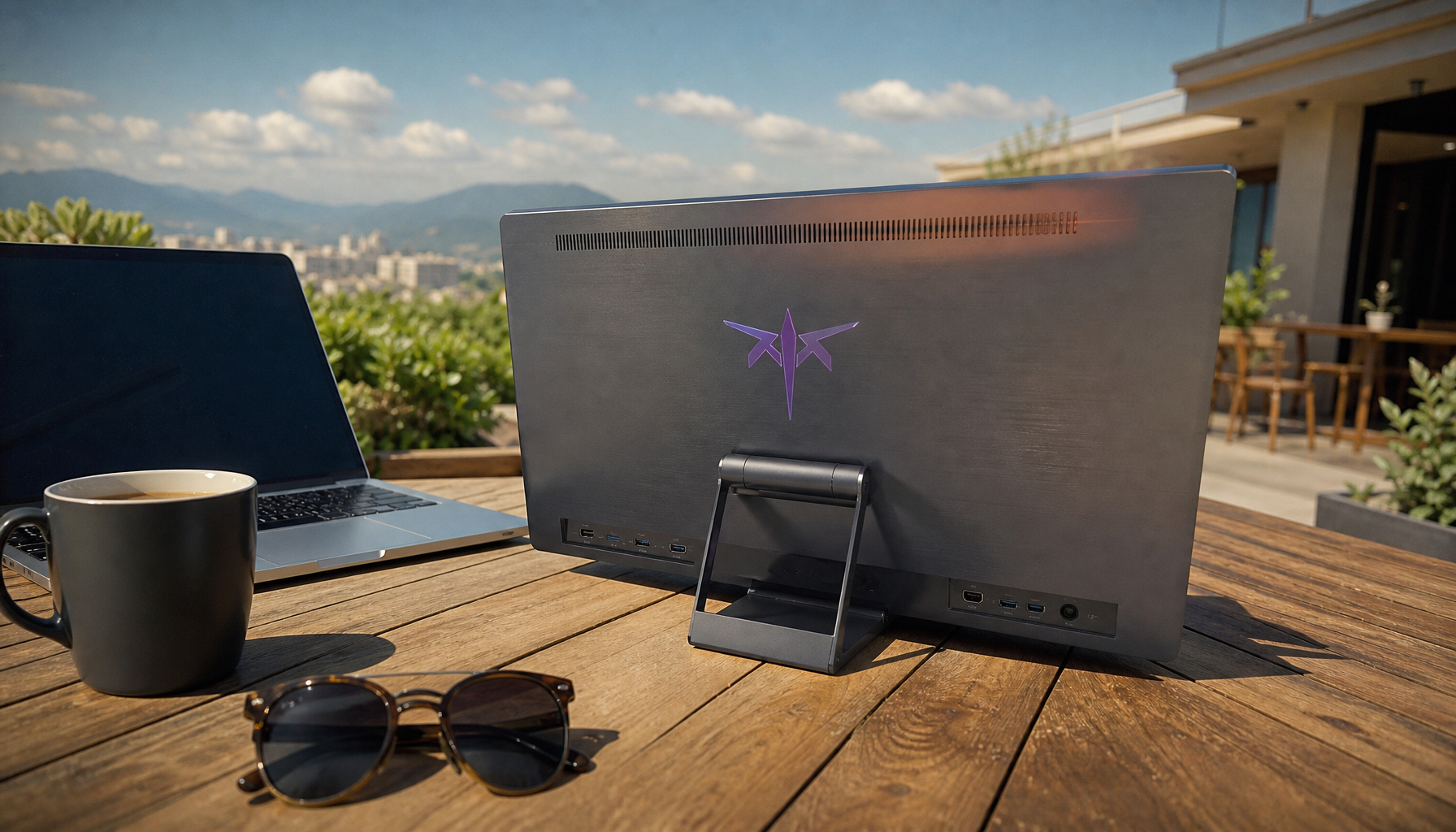
Port selection is the second filter. A strong hybrid-work docking monitor should have enough USB ports for a keyboard, mouse, webcam, headset adapter, or external storage device. Ethernet is valuable if your video calls suffer on Wi-Fi, and audio ports can matter if your headset is wired. For monitor-focused buyers, this is where a USB-C docking display can outperform a basic office monitor, because the connectivity is part of the daily workflow rather than an accessory.
Key Buying Parameters
Buying factor |
What to check |
Why it matters for hybrid work |
Practical recommendation |
USB-C power delivery |
Wattage supported by the monitor |
Determines whether the monitor can charge the laptop through one cable |
Match or exceed the laptop charger rating when possible |
Display support |
Resolution and refresh rate over USB-C |
Affects sharpness, motion smoothness, and usable workspace |
Prioritize resolution for productivity; prioritize refresh rate for gaming or motion-heavy work |
Number and type of USB ports |
Keeps keyboard, mouse, webcam, and accessories connected at the desk |
Count your current devices before buying |
|
Ethernet |
Built-in RJ45 port |
Helps stabilize video calls and large file access |
Choose it if Wi-Fi is inconsistent at your desk |
Multi-monitor support |
DisplayPort out or daisy-chain support |
Enables a second monitor without adding a full separate dock |
Confirm laptop and monitor compatibility before purchase |
Ergonomic adjustability |
Height, tilt, swivel, and stand stability |
Supports healthier viewing angles and consistent posture |
Choose height adjustment over a fixed stand |
Laptop compatibility |
USB-C video and charging support |
Not every USB-C port behaves the same way |
Verify the laptop supports display output over USB-C |
Display Quality Still Matters
A USB-C docking monitor is still a monitor first. If the panel is uncomfortable, too small, too dim, or mismatched to your work, the docking convenience will not make the desk feel productive. For hybrid workers, the sweet spot is usually a display that gives enough screen space for side-by-side windows without making text too small or forcing constant scaling adjustments.
For document editing, spreadsheets, research, and browser-heavy work, resolution and screen size are often more important than extreme refresh rate. For creative work, color accuracy and panel quality matter more. For users who split time between work and gaming, the decision becomes more nuanced: a high-refresh-rate USB-C monitor may be attractive, but buyers should confirm what refresh rate is supported over USB-C at the desired resolution. A monitor can have a fast panel and still be limited by the laptop’s USB-C display mode or the way bandwidth is shared with USB data.
Ultrawide monitors can also simplify hybrid desks by replacing two separate screens with one broad desktop. That can reduce cable count even further, but it creates its own ergonomic and compatibility questions. The screen should be large enough to hold multiple windows comfortably, yet positioned so the center of the display remains directly in front of the user. For portable monitor users, a USB-C docking monitor at the main desk can serve as the stable home base, while the portable display remains the travel companion.
Productivity vs. Gaming Priorities
A productivity-first buyer should usually prioritize USB-C charging power, port selection, resolution, text clarity, and stand adjustment. A gaming-first buyer should add refresh rate, response time, adaptive sync support, and input flexibility to that list. A hybrid buyer who does both should look carefully at whether the monitor offers both USB-C docking for work and separate HDMI or DisplayPort inputs for a gaming desktop or console.
The most common mistake is choosing the monitor only by panel specs or only by dock specs. A great USB hub attached to a mediocre display is frustrating. A beautiful high-refresh panel with weak USB-C charging may still leave you plugging in a charger every day. The best choice balances both sides.
Multi-Monitor Setups: Cleaner, but Not Automatic
USB-C docking monitors can support dual-monitor setups, but buyers should not assume every model handles this the same way. Some setups use USB-C from the laptop to the first monitor, then DisplayPort from the first monitor to the second monitor. In the university example, the first monitor connects to the laptop through USB-C, while the first and second monitors connect to each other using DisplayPort between monitors.

That can make a dual-monitor desk much cleaner because the laptop still connects to the first monitor with one cable. However, the first monitor becomes the hub. USB devices should typically connect to that first monitor unless the second monitor has a separate USB connection that enables its USB ports. This matters when you are deciding where to plug in a webcam, keyboard, mouse, or headset receiver.
Dual monitors also add display bandwidth questions. Resolution, refresh rate, and laptop USB-C capabilities all influence what combinations are possible. If you want two high-resolution displays, or one productivity monitor plus one high-refresh gaming monitor, check the laptop’s supported external display output before buying the monitors.
Cable Labeling Still Helps
Even with a docking monitor, labeling cables is worth doing. A university recommends wrapping tape around each cable end and writing the cable type and destination on it so equipment can be reconnected correctly when moved back to an office. That small habit is useful for hybrid workers who occasionally reconfigure a desk, swap laptops, or pack equipment for relocation.
A practical label might read “USB-C to laptop,” “DisplayPort to second monitor,” “Ethernet to router,” or “Keyboard USB.” You may only need to troubleshoot the desk once or twice a year, but when you do, labels save time.
Ergonomics: The Setup Is Easier, but Placement Still Matters
A docking monitor reduces cable friction, but it does not automatically create a comfortable workstation. Monitor position still affects posture, eye comfort, and long work sessions. Poor placement can lead to tilted chin posture, forward bending, sideways bending, eyestrain, blurred vision, dry eyes, headaches, and neck or shoulder discomfort, especially when a laptop screen is used as the main display for hours.

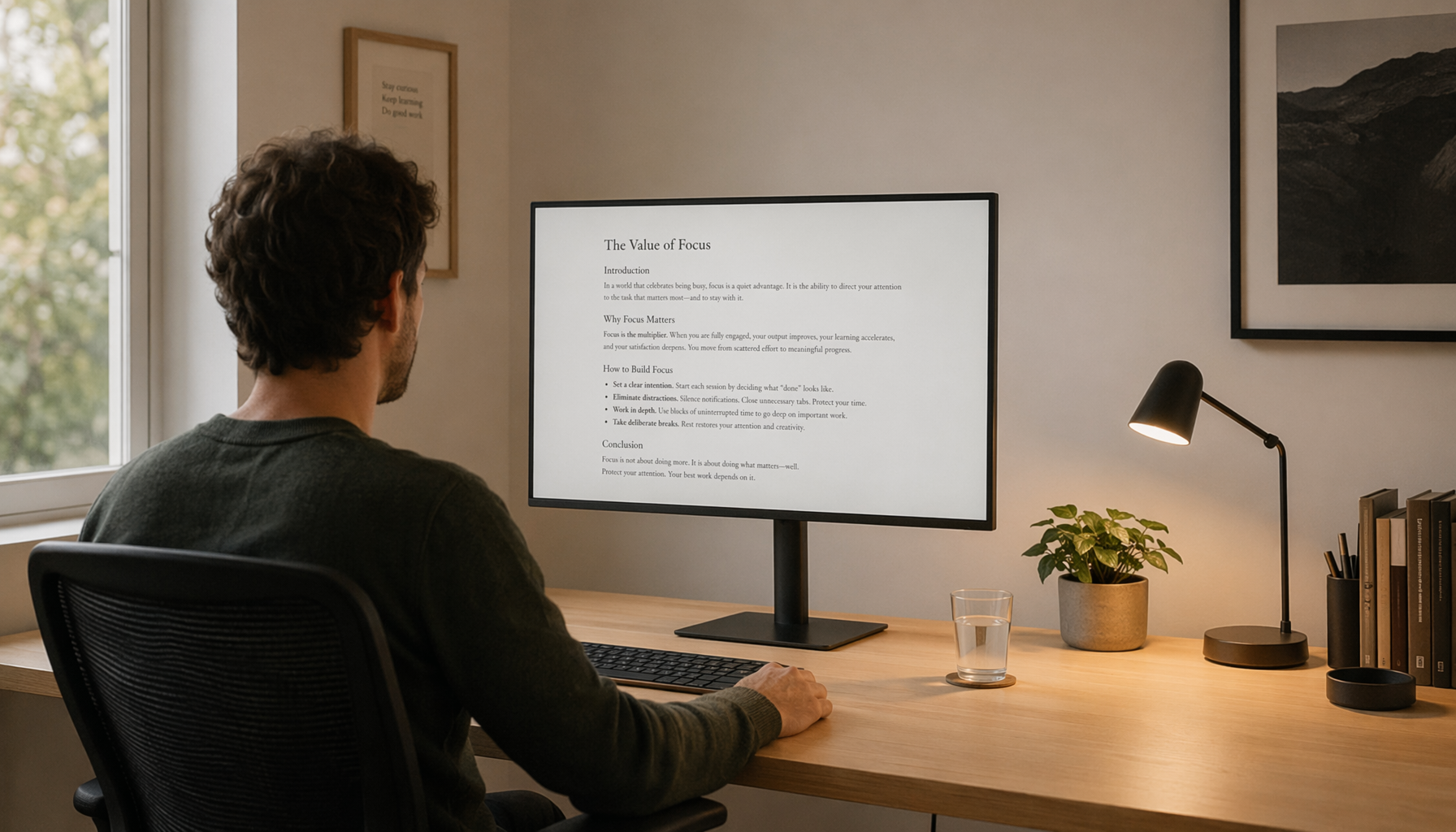
For a desktop monitor, the screen should sit at a comfortable viewing distance and angle. An occupational health and safety organization notes that a comfortable screen position is roughly 15 degrees below the horizontal eye-level line, with the preferred visual zone extending about 15 degrees above and below normal line of sight for monitor positioning. In everyday terms, your eyes should not be forced sharply upward, downward, or sideways just to read the center of the screen.
Viewing distance also matters. The same ergonomic guidance references visual comfort distances around 31 inches to 44 inches, depending on viewing conditions and downward angle. For most home desks, that means the monitor should usually sit about an arm’s length away, with text scaled so you are not leaning forward to read it.
Dual-Monitor Ergonomics
For two monitors used equally, place them at the same height and angle them in a shallow semicircle around you. If one screen is primary, put it directly in front and place the secondary screen to the side. This is especially important for hybrid workers who use one monitor for writing or spreadsheets and another for email, chat, dashboards, or reference material.
A height-adjustable stand is not a luxury in this context. It lets you place the panel correctly without stacking books, bending your neck, or lowering your chair to compensate for the screen. When comparing docking monitors, give stand adjustability real weight alongside USB-C wattage and port count.
Action Checklist for a Cleaner Laptop-to-Desktop Setup
- Choose a USB-C docking monitor with enough power delivery to match your laptop’s normal charger.
- Count every desk accessory before buying: keyboard, mouse, webcam, headset, external drive, Ethernet, and second monitor.
- Confirm the laptop supports video output and charging over USB-C, not just basic USB data.
- If using two monitors, verify the monitor’s DisplayPort daisy-chain or second-display support before purchase.
- Plug keyboard, mouse, and Ethernet into the primary docking monitor so they stay fixed at the desk.
- Label the USB-C, power, Ethernet, and DisplayPort cables before moving or reconfiguring the setup.
- Adjust the monitor to about an arm’s length away, with the screen center slightly below eye level.
FAQ
Q: Can one USB-C cable really handle video, charging, keyboard, mouse, and Ethernet?
A: Yes, if both the laptop and monitor support those functions over USB-C. A docking monitor setup can use one USB-C cable to connect the laptop while the monitor provides charging, display output, USB accessory access, and optional wired networking. The important caveat is compatibility: the laptop’s USB-C port and the monitor’s USB-C input must support the required display and power features.
Q: Is a USB-C docking monitor better than a separate docking station?
A: It is better when you want a cleaner desk, fewer devices, and a simpler daily plug-in routine. A separate docking station can still be better if you need more specialized ports, higher power delivery, multiple high-resolution displays, or more flexible placement. For many hybrid workers, the docking monitor is the simpler choice because the display, hub, and laptop cable all live in one predictable place.
Q: Should hybrid workers choose a high-refresh-rate USB-C monitor?
A: Choose high refresh rate if you game, edit motion-heavy content, or value smoother pointer and window movement. For office-heavy hybrid work, prioritize resolution, text clarity, USB-C charging, port selection, and ergonomic adjustment first. If you want one monitor for both work and gaming, confirm that the desired refresh rate works over the input you plan to use, especially if USB-C bandwidth is also handling USB accessories.
Final Takeaway
USB-C docking monitors simplify hybrid work because they turn the monitor into the fixed center of the desk. The laptop comes and goes, while the display, charger, keyboard, mouse, Ethernet, and second-monitor connection can stay in place. That one-cable routine saves time, reduces clutter, and makes a home or office workstation feel more consistent.
The best choice is not simply the largest screen or the monitor with the most ports. Buy for the full workflow: enough USB-C power for your laptop, the right display quality for your work, ports for the accessories you actually use, support for any second monitor, and a stand that lets you position the screen comfortably for long sessions.