An integrated monitor USB hub can dramatically reduce desk clutter by letting you connect your keyboard, mouse, webcam, and other peripherals directly to the display instead of your computer. For many hybrid workers and minimalist setup enthusiasts, this creates a practical one-cable workflow that eliminates separate hubs and extra wires, though success depends on your specific peripherals, laptop compatibility, and the monitor's USB bandwidth limits.
The Cable Clutter Problem: Why Your Desk Feels Messy
A messy desk isn't just an eyesore. The tangle of power bricks, HDMI cables, USB hubs, and peripheral wires often slows you down when you need to switch devices or find the right cable. For remote workers, gamers, and freelancers in small apartments, this clutter competes for limited surface space and can even contribute to a scattered mindset during focused tasks.
The core issue usually comes from treating every device as a direct connection to your laptop or PC. A laptop charger, separate monitor cable, external hub for your keyboard and mouse, and webcam quickly multiply into a cable nest. An integrated monitor USB hub addresses this by turning the display itself into the central connectivity point. Instead of routing everything to your host device, you route most peripherals to the monitor, often reducing visible cables to just one upstream connection.
This approach works especially well in hybrid work setups where you frequently switch between a laptop and desktop, or in gaming battlestations where peripherals need quick access without reaching behind a tower. The key is understanding that not every monitor port behaves the same way, and setup order matters for reliable performance.
What is a Monitor USB Hub? Understanding Upstream vs. Downstream
A monitor USB hub is an internal set of ports built into the display that lets it act as a pass-through for data and sometimes power. The distinction between upstream and downstream ports is essential to avoid common connection errors.
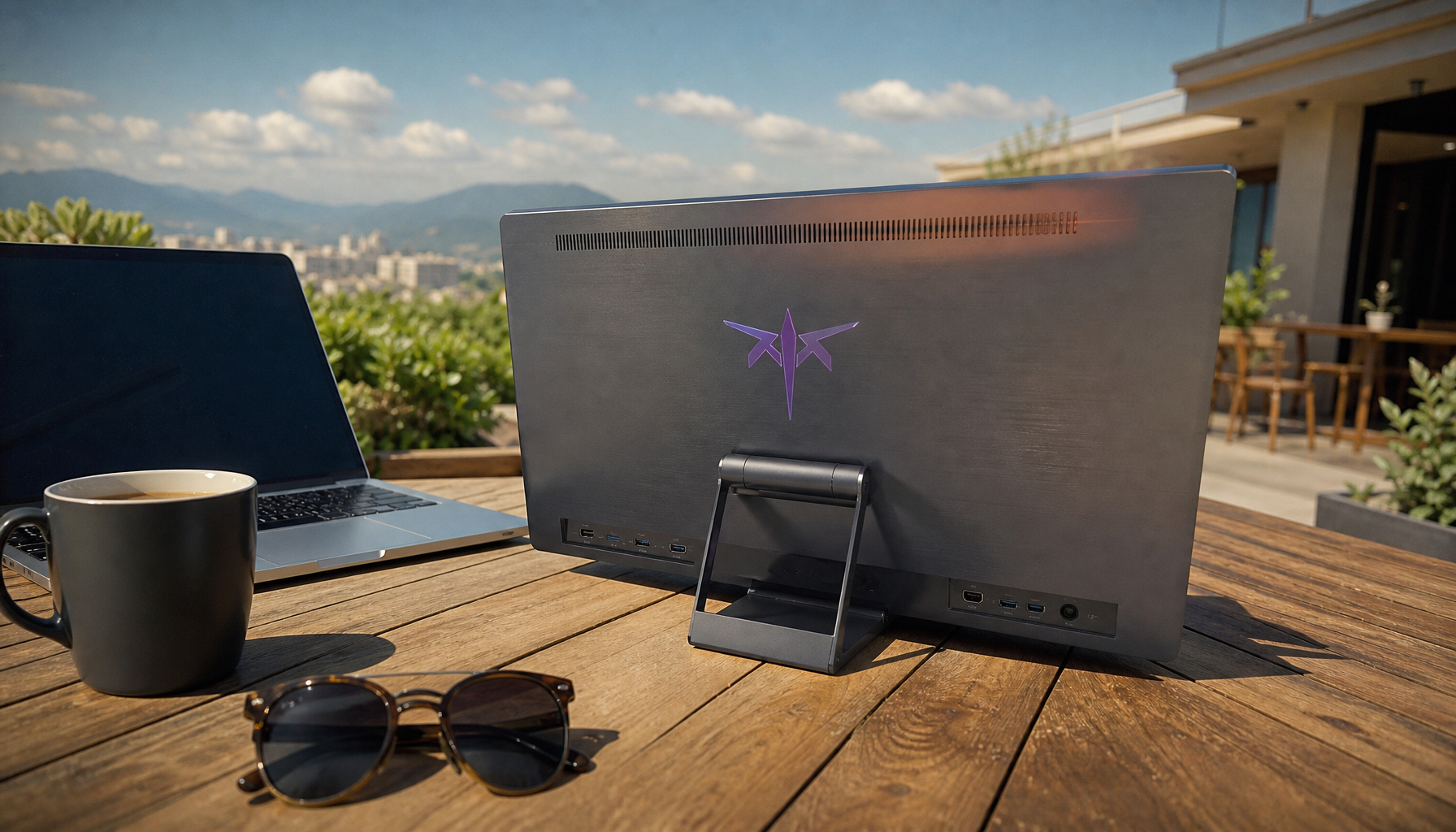
An upstream port serves as the input that bridges the monitor's hub to your computer, typically via a USB-B or USB-C cable. This single connection carries both the display signal and data for any peripherals plugged into the monitor. Downstream ports, usually the more numerous USB-A or USB-C sockets on the monitor's side or base, are the outputs where you connect your keyboard, mouse, webcam, or storage devices.
Not all ports on a monitor are equal. Some are power-only charging ports that provide electricity but no data connection, while true data ports support both charging and communication with your computer. Checking your monitor's manual or port labels helps you identify which downstream ports belong to the active hub. For most users, this means you can plug low-bandwidth devices like a mouse and keyboard into the monitor and enjoy instant access without additional desk hardware.
The "One-Cable" Setup: Power Delivery and DP Alt Mode
The appeal of a monitor USB hub peaks with a true one-cable setup, where a single USB-C connection handles video, data, and laptop charging. As the official DisplayPort over USB-C specification explains, this relies on your laptop and monitor both supporting DisplayPort Alternate Mode (DP Alt Mode). DP Alt Mode allows the USB-C cable to carry video signals alongside data and power, removing the need for a separate HDMI or DisplayPort cable.
Your laptop must also support USB Power Delivery (USB-PD) for the monitor to charge it. Many KTC models, including the H49S66 ultrawide and H27P6 4K gaming monitor, offer 65W to 90W PD, which can replace a laptop charger in lighter workloads. Keep in mind that actual delivered power often varies with monitor brightness and features like local dimming. A 90W rating may effectively drop to 45-65W under high-HDR loads, so verify your laptop's typical draw before relying on it fully.
This setup shines for minimalist desks but requires compatible hardware on both ends. Older laptops without DP Alt Mode or sufficient PD support will still need separate cables, limiting the clutter reduction.
Setup Guide: Connecting Your Workspace Correctly
Getting reliable performance from a monitor USB hub follows a logical sequence that prevents many common headaches.
Start by connecting the upstream cable. Use the included USB-C or USB-B to USB-C cable to link the monitor's upstream port to your laptop or PC. This establishes the data bridge. Next, power on the monitor and your host device so the hub can enumerate properly.
Once the upstream link is active, connect low-bandwidth peripherals like keyboards, mice, and basic webcams to the monitor's downstream ports. These human interface devices (HID) typically use very little bandwidth and perform well through the hub. For cable management, route wires through the monitor stand's built-in channels or along an arm to keep everything hidden behind the screen.
If your monitor includes KVM functionality, as many KTC gaming and office models do, you can switch between multiple computers with one set of peripherals. Test connections one device at a time to isolate any issues before adding more. For the cleanest look, use short, matching cables for peripherals so excess length doesn't create loops visible from the front.

Common Mistakes and Compatibility Limits
Even with the right hardware, several friction points can undermine the convenience of a monitor USB hub. One frequent issue is the OSD (on-screen display) toggle between High Resolution Video and High Speed Data modes. High Resolution Video dedicates more lanes to the display signal, supporting 4K at 144Hz or 160Hz on models like the H27P6 but often limiting USB to 2.0 speeds (480 Mbps). High Speed Data mode splits lanes to enable USB 3.x (5 Gbps or higher) but may cap refresh rates at 60Hz without Display Stream Compression (DSC).
USB-C Monitor OSD Trade-off: Video First vs Data First
Choose the mode that matches your primary use: High Resolution Video favors smoother gaming and higher refresh, while High Speed Data preserves more USB bandwidth for peripherals and storage.
View chart data
| Scenario | Refresh rate | USB data speed | One-cable convenience |
|---|---|---|---|
| High Resolution Video | 3.0 | 1.0 | 2.0 |
| High Speed Data | 1.0 | 3.0 | 3.0 |
This bandwidth trade-off forces a practical choice. Gamers prioritizing 144Hz+ refresh rates often accept slower USB speeds for storage or high-resolution webcams. Productivity users transferring large files may prefer the data-first mode and accept a lower refresh rate or enable DSC if their system supports it.
Mac users frequently encounter wake-from-sleep issues over USB-C, where the monitor fails to wake reliably with the laptop. This handshake friction often requires manually unplugging and replugging the cable, reducing the seamless feel of a one-cable setup. Wireless peripherals can also experience lag or jitter when their dongles are plugged into USB 3.0 ports near high-speed data cables due to radio frequency interference. Placing wireless dongles on the PC side or using a short extension often resolves this.
Power sag represents another real limit. The monitor's total power budget is shared between its backlight (especially in Mini-LED or HDR modes) and the USB-C PD port. A monitor rated for 90W charging may deliver noticeably less when running at maximum brightness, which can slow laptop charging during intensive tasks.
Best Peripherals for Hub Use: A Tiering Strategy
Not every device performs equally well through a monitor hub. A tiered approach helps prevent data bottlenecks, lag, or unexpected disconnects.
Tier 1 devices that demand high bandwidth or low latency, such as external NVMe SSDs, 4K webcams, or professional audio interfaces, usually work best connected directly to your PC. These benefit from the full bandwidth and more stable connection of the host's native ports.
Tier 2 peripherals like keyboards, mice, printers, USB headsets, and basic webcams are ideal for the monitor hub. They use minimal data and benefit from the convenience of being permanently attached to the display. Avoid overloading the hub with multiple high-power devices simultaneously, such as charging two phones while running a large external drive, as this can strain the shared power budget.
Daisy-chaining additional hubs into the monitor's downstream ports often leads to instability or reduced speeds. For the most reliable one-cable experience, keep the monitor hub for input devices and direct-connect your most demanding storage or capture devices. This tiering strategy matches real-world bandwidth realities and helps maintain smooth performance across gaming and productivity workflows.
For more on building an efficient workspace, see our guide on How a USB-C Monitor Can Streamline Your Workspace. Users focused on ergonomics may also want to explore the Home Office Setup Guide: How to Choose the Right Ergonomic Monitor.
Desk Layout & Routing Strategy: Hiding the Evidence
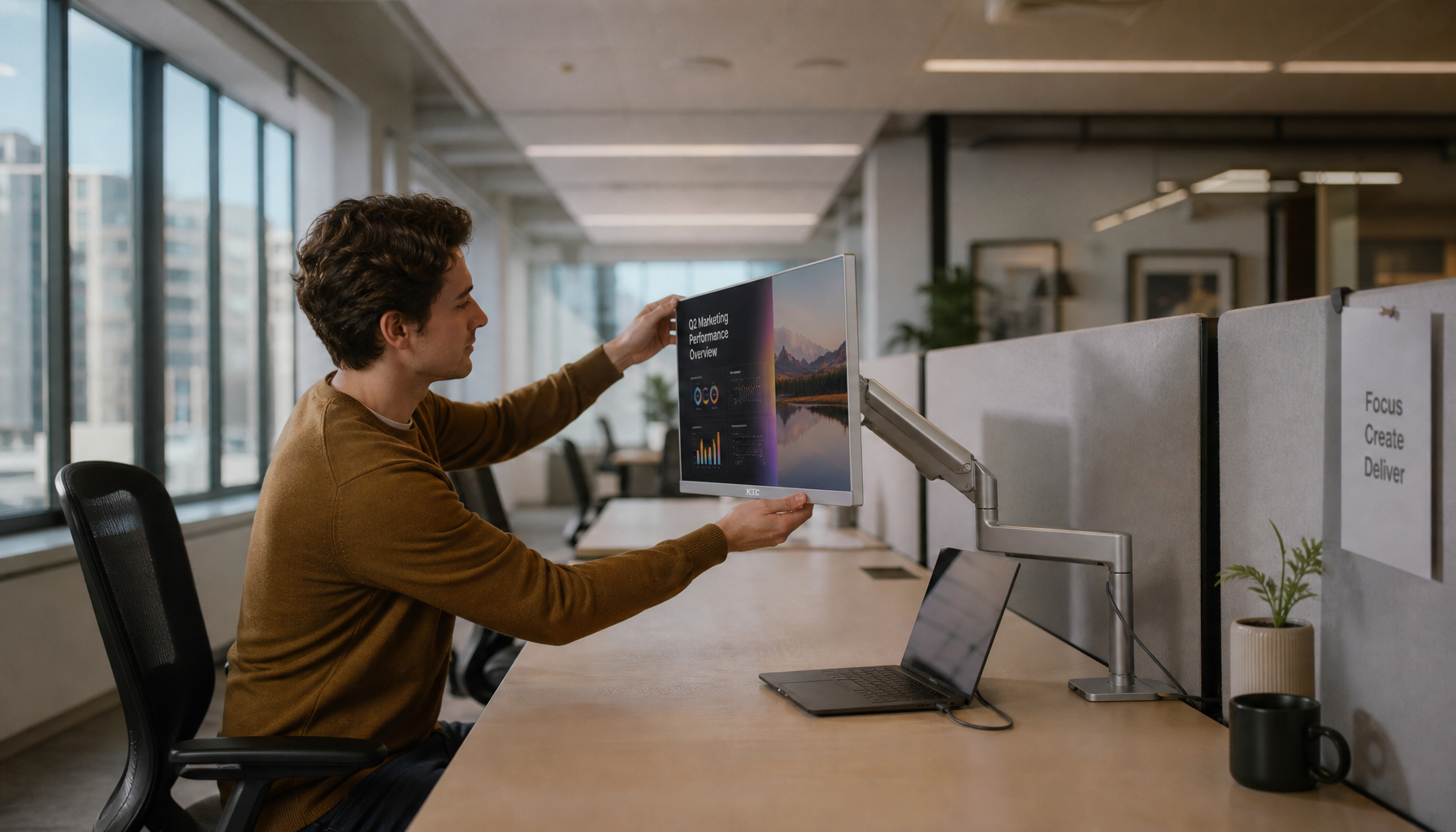
The final step in a clean monitor hub setup is strategic cable routing that makes the remaining wires disappear. Many KTC monitors include built-in cable management channels in the stand or arm, allowing you to thread the upstream cable and downstream wires neatly behind the panel.
Use short, purpose-length cables for peripherals so there's minimal slack. A wireless mouse and keyboard reduce visible wires even further, provided you manage any dongle placement to avoid interference. The goal is a monitor-first workspace where the display becomes the hub, and your laptop or PC sits more cleanly to the side or underneath.
This layout works particularly well with ultrawide models like the 49" DQHD 180Hz Curved Gaming Monitor, which offers generous 90W USB-C and integrated KVM for multi-device switching. For more compact desks, the 27" 4K 160Hz Gaming Monitor provides similar hub functionality with strong ergonomics to help position everything comfortably.
If you're considering a broader upgrade, check the Office Monitor collection for models optimized for clean, productive workspaces or the full All Monitors lineup to compare hub features across sizes.
Monitor Hub vs. Docking Station: Making the Final Call
A monitor USB hub often delivers enough connectivity for most users at essentially no extra cost, making it a strong alternative to a dedicated $150–$300 docking station. As this XDA Developers analysis notes, the integrated approach can replace more desk clutter than many expect by leveraging the monitor's existing circuitry.
Choose the monitor hub route when your needs center on a single laptop, moderate peripheral load, and one or two displays. It excels for minimalist setups, hybrid work, and gaming desks where the cost savings and simpler cable runs outweigh advanced features.
A dedicated docking station or Thunderbolt dock becomes the better choice for dual 4K displays, multiple high-bandwidth storage devices, mission-critical reliability, or enterprise-level port expansion. These provide more consistent bandwidth allocation and often better Mac compatibility for wake and charging stability.
KTC models balance this decision well by including high-wattage PD, KVM switching, and robust USB hubs as standard, giving strong spec-per-dollar value for users whose workflow fits the integrated approach. Test your specific peripheral mix and laptop before committing fully, as real-world results depend on exact compatibility.
Does a Monitor USB Hub Support Fast Charging and High-Speed Data Transfer?
Most integrated monitor hubs support USB Power Delivery ranging from 15W to 90W depending on the model, but actual charging speed can decrease when the display uses significant power for high brightness or HDR. High-speed data transfer (USB 3.x) is usually available but may require switching the monitor's OSD to High Speed Data mode, which can limit maximum refresh rate on 4K or high-refresh panels.
Why Does My Wireless Mouse Lag When Connected to the Monitor Hub?
Wireless dongles can pick up interference from high-speed USB 3.0 data lines or nearby hard drives. Moving the dongle to a port farther from other cables, using a short USB extension, or connecting it directly to the PC often resolves jitter or lag for gaming and precise work.
Can I Use a Monitor USB Hub to Replace a Full Docking Station?
For many single-laptop users with standard peripherals, yes. A monitor hub handles keyboard, mouse, webcam, and moderate storage needs effectively and at lower cost. However, it typically cannot match a dedicated dock for multiple high-resolution displays, extensive Thunderbolt expansion, or the most demanding professional workflows.
Will My MacBook Fully Charge and Wake Reliably Through a Monitor USB Hub?
Charging is usually reliable within the monitor's PD limits, but wake-from-sleep behavior remains a known friction point in the Mac ecosystem. Some users need to unplug and replug the cable occasionally. Check your specific monitor model and macOS version for the latest community-reported workarounds.
Which Devices Should I Avoid Plugging Into the Monitor's USB Hub?
Avoid connecting high-bandwidth devices like external NVMe SSDs, 4K webcams, or professional audio interfaces if you need maximum speed and stability. These perform better when plugged directly into your computer. Overloading the hub with multiple charging devices at once can also strain the shared power budget.