Yes, many USB-C monitors can work as practical docking stations for laptops, letting one cable carry video, power, keyboard, mouse, storage, audio, and sometimes Ethernet. The key is choosing a monitor with a built-in USB hub, enough power delivery for your laptop, and an RJ45 Ethernet port if wired networking matters.
Is your desk turning into a cable fight every time you connect your laptop, charger, keyboard, mouse, headset, and network adapter? A well-equipped USB-C monitor can turn that daily setup into a single-cable routine while keeping a full-size display and peripherals ready at your workstation. Here is how to tell whether a monitor can truly replace a dock, where it falls short, and what to check before buying.
What a USB-C Monitor Dock Actually Does
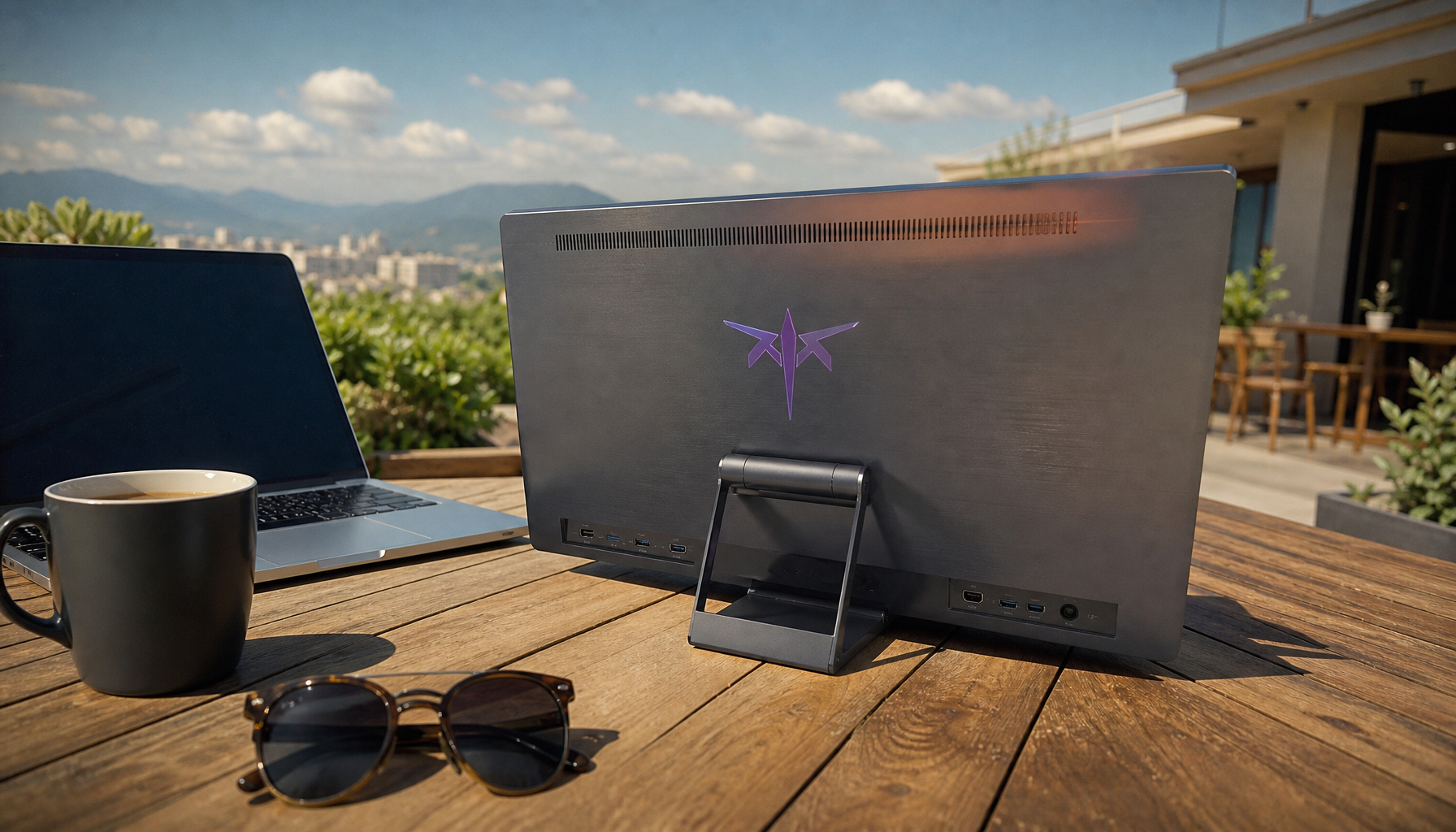
A USB-C monitor with docking features is more than a display with a convenient connector. It combines a screen, USB-C video input, power delivery, and a USB hub inside the monitor chassis. When you connect your laptop with one USB-C cable, the monitor receives the video signal while also sending power back to the laptop and exposing connected peripherals such as a keyboard, mouse, webcam, external drive, or headset.
That one-cable workflow is the main advantage. A 34-inch USB-C hub monitor setup, for example, can treat the display as a central hub for power, video, and accessories, which mirrors how these monitors are used in real office environments: plug the laptop into the monitor, rather than into five separate devices.

The catch is that “USB-C monitor” does not automatically mean “docking monitor.” Some USB-C ports only accept video. Others support video and charging but have no downstream USB ports. A true dock-like monitor should advertise USB-C power delivery, a USB hub, and, if needed, Ethernet.
Can It Handle Peripherals Like a Real Dock?
For everyday peripherals, yes. A USB-C hub monitor can usually support low-bandwidth devices such as a keyboard, mouse, USB headset, webcam, card reader, or conference speaker. This is the sweet spot for office productivity displays and portable workstation setups because the monitor becomes the permanent anchor while the laptop stays mobile.

The practical test is simple: look at the downstream ports. If the monitor has USB-A or USB-C ports labeled for accessories, those ports generally route back to the laptop through the main USB-C connection. An overview of USB-C monitors describes this all-in-one role as one of the major reasons people choose USB-C displays for cleaner workstations.
Performance-driven users should watch bandwidth. A 4K display signal, USB data, charging, and Ethernet all share the capabilities of the USB-C link. For normal office gear, that is fine. For high-speed external SSDs, capture cards, or multiple 4K displays, a dedicated Thunderbolt or USB-C docking station may still be the stronger choice. A review of a triple 4K display docking station shows why specialized docks exist: they are built for heavier multi-display and high-bandwidth expansion than most monitor hubs.
What About Ethernet?
Yes, but only if the monitor includes an RJ45 Ethernet port. USB-C itself can carry network data through the monitor’s internal hub, but the physical Ethernet jack must be built into the display. If your monitor has no RJ45 port, it cannot provide wired networking unless you plug a separate USB Ethernet adapter into one of its downstream USB ports.
This matters for hybrid offices, gaming desks, and video-call-heavy setups. Wired Ethernet gives more stable latency than Wi-Fi, which is useful for competitive gaming, large cloud file transfers, remote desktop sessions, and long video meetings. A university knowledge base for a USB-C hub monitor specifically includes network connection behavior, which reinforces the point that Ethernet is a monitor feature, not a universal USB-C guarantee.
A real-world example: if your laptop has only two USB-C ports and no Ethernet jack, a USB-C monitor with RJ45 lets you leave the Ethernet cable permanently connected to the display. When you sit down, one cable connects your laptop to the screen, charger, keyboard, mouse, webcam, and wired network. When you leave, one cable releases everything.

The Specs That Decide Whether It Replaces a Dock
The most important spec is USB-C power delivery. If the monitor provides 65W and your laptop normally uses a 45W or 65W charger, you are in good shape. If you use a performance laptop that expects 100W, 140W, or more, the monitor may slow-charge it or fail to maintain battery under load. For a gaming laptop, this is especially important because many gaming systems still need their original power brick for full GPU performance.

The second spec is display mode support. An explanation of whether a USB-C port can be used for display highlights the core requirement: the port must support video output, commonly through DisplayPort Alt Mode. If your laptop’s USB-C port is charge-only or data-only, the monitor dock workflow will not work even if the monitor is fully capable.
The third spec is hub layout. A value-oriented office monitor might include two USB-A ports and Ethernet, which is enough for a keyboard, mouse, and network cable. A more complete productivity display may add USB-C downstream, audio out, KVM switching, and daisy-chain support. A roundup of USB-C monitors makes clear that feature sets vary widely, so the phrase “USB-C monitor” should be treated as a category, not a promise.
Feature to Check |
Why It Matters |
Practical Target |
USB-C Power Delivery |
Charges your laptop through the display cable |
65W for many office laptops, higher for performance laptops |
DisplayPort Alt Mode |
Allows video over USB-C |
Required on the laptop and monitor |
Connects peripherals through the monitor |
At least two downstream USB ports |
|
RJ45 Ethernet |
Enables wired networking |
Required if you want one-cable Ethernet |
KVM Support |
Shares keyboard and mouse across computers |
Useful for laptop plus desktop setups |
Refresh Rate |
Affects motion clarity and gaming feel |
Match your gaming or productivity needs |
Pros and Cons of Using a Monitor as a Dock
The strongest benefit is desk simplicity. A USB-C docking monitor reduces cable clutter, frees laptop ports, and makes switching between desk and travel mode fast. For office productivity displays, that is a serious quality-of-life upgrade because it turns the monitor into a reliable base station.
Another benefit is value. Instead of buying a monitor and a separate dock, one well-specified display may cover both roles. A broad selection of USB-C monitor models also shows how common this feature has become across mainstream price points, not just premium enterprise displays.
The tradeoff is specialization. A monitor dock is usually less flexible than a standalone docking station. If you need three external displays, ultra-fast storage, many USB ports, or advanced Thunderbolt features, a separate dock is more likely to deliver. Support discussions around multi-monitor setup reflect a common reality: once the setup becomes complex, the dock choice matters as much as the monitor choice.
There is also an upgrade-cycle issue. If your docking features live inside the monitor, replacing the dock means replacing the display. That is fine when you plan to keep the monitor for years, but less ideal if your laptop workflow changes often.
Gaming, Creative Work, and Office Use: Where It Fits Best
For office productivity, a USB-C monitor with Ethernet is often the cleanest solution. A 27-inch or 34-inch display with 65W to 90W charging, a few USB ports, and RJ45 can handle spreadsheets, browser work, meetings, and document review with very little friction.

For creative work, it depends on the files and peripherals. A designer using a keyboard, mouse, calibration device, webcam, and occasional card reader will benefit. A video editor moving large files from fast external drives may prefer a dedicated high-bandwidth dock or direct laptop connection for storage.
For gaming, treat the USB-C dock function as convenience, not the performance core. A gaming monitor’s refresh rate, adaptive sync support, response behavior, and input choice still matter most. If the laptop only outputs its highest refresh rate through HDMI or DisplayPort, the USB-C dock path may not deliver the full gaming experience. An overview of connecting one, two, or more monitors underscores that laptop output capabilities vary, so the best connection depends on the machine as much as the display.
How to Buy the Right USB-C Docking Monitor
Start with your laptop’s requirements. Confirm that its USB-C port supports display output and check the wattage of its charger. Then match the monitor’s power delivery to that number as closely as possible. If the laptop uses a 65W charger, a 65W monitor is practical. If it uses a high-wattage gaming charger, expect the monitor to power the office side of your setup but not replace the main charger under heavy load.
Next, map your desk. If you need Ethernet, do not settle for a monitor that only says “USB hub.” Look for RJ45 in the specs. If you use a webcam, keyboard, mouse, and USB headset, count the downstream ports before buying. If you switch between a work laptop and personal desktop, prioritize KVM support.
Finally, decide whether the monitor is the center of your system or just one part of it. Monitor buying advice consistently emphasizes that the best display choice depends heavily on use case, so a beautiful panel without the right ports may be a poor docking station, while a practical hub display with the right connections can be a daily productivity win.
FAQ
Do all USB-C monitors charge laptops?
No. Some USB-C monitors support video only, while others support video plus power delivery. Check the listed wattage before assuming it can replace your laptop charger.
Can I plug a keyboard and mouse into the monitor?
Yes, if the monitor has downstream USB ports and is connected to the laptop through the proper upstream USB-C connection. This is one of the most common uses for a USB-C hub monitor.
Can a USB-C monitor provide Ethernet?
Yes, but only when it has a built-in RJ45 Ethernet port or when you connect a USB Ethernet adapter to the monitor’s hub. Without one of those, the monitor cannot provide wired networking.
Is a USB-C monitor better than a separate dock?
For a clean office desk, often yes. For advanced multi-monitor setups, high-speed storage, or heavy gaming laptop power needs, a dedicated dock may still be better.
A USB-C monitor can act as a docking station when the right hardware is built in. Choose for power delivery, downstream USB ports, Ethernet, and laptop compatibility first; the result is a cleaner, faster, more reliable desk where the screen becomes the hub instead of just another cable endpoint.