Your USB-C monitor may show video but fail to charge your laptop because power delivery is blocked, reduced, or never negotiated through the dock. The usual causes are dock wattage limits, a USB-C port that supports video but not charging, a cable without the right capabilities, or a laptop, dock, and monitor combination that is not fully compatible.
Is your desk supposed to run from one clean USB-C cable, but your laptop battery still drops while the monitor, keyboard, and mouse all work? A quick wattage and cable check can often separate a bad setup from a bad device in minutes, especially when the monitor works for video but not charging. This article gives you a practical path to diagnose the dock, cable, port, and power budget before buying random adapters.
The Core Problem: USB-C Is a Shape, Not a Promise

USB-C looks universal, but the connector alone does not guarantee laptop charging, video output, high-speed data, or Thunderbolt support. A USB-C port may support only data, only charging, DisplayPort Alt Mode for video, USB Power Delivery for charging, Thunderbolt, USB4, or some mix of those features.
That is why a monitor can light up perfectly while your laptop says “not charging.” The video path and the charging path are negotiated separately. One community discussion captures this exact pattern: USB-C monitors displayed video correctly, yet the laptop did not charge, with users discussing Power Delivery, Thunderbolt 3, USB4, cable quality, and port behavior as separate variables in the same physical connection through USB-C monitor connections.
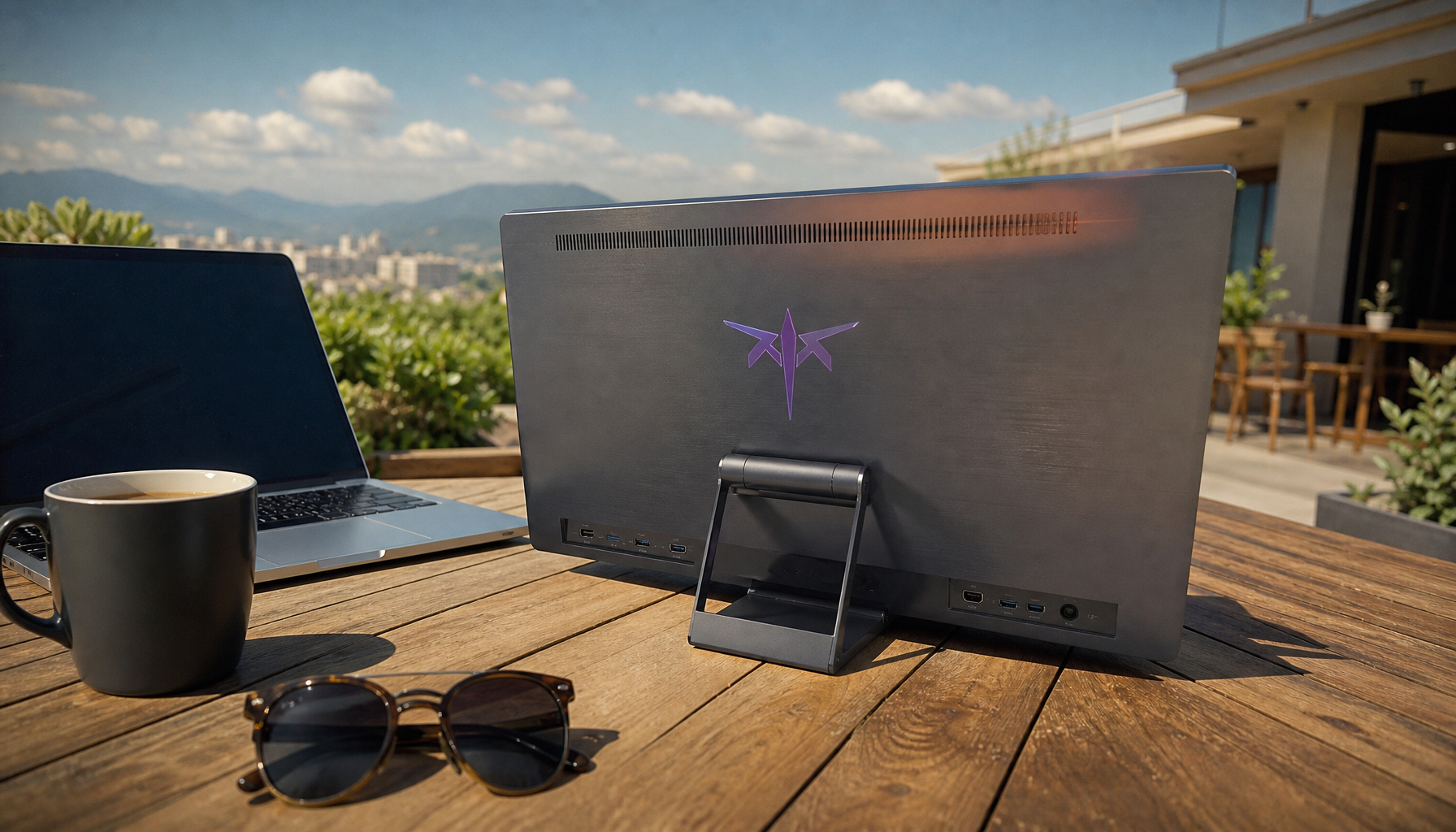
For a real-world example, imagine a 27-inch USB-C productivity monitor with 45W Power Delivery connected to a dock, and then the dock connected to a performance laptop that expects 65W, 90W, or more. The monitor may be doing exactly what its spec sheet says, but the laptop may still drain during gaming, compiling, video calls, or driving multiple displays.
Power Delivery Has to Survive the Whole Chain

USB-C Power Delivery, often shortened to USB-C PD, is the charging negotiation between the power provider and the laptop. When a monitor is plugged directly into a laptop, the monitor can act as the power provider. When a dock sits in the middle, the dock must either pass that power through properly or provide its own power to the laptop.
This is where many setups fail. A monitor rated for 65W charging does not automatically deliver 65W to the laptop after passing through a hub or dock. Some docks require their own wall adapter. Some use part of the incoming power for USB ports, Ethernet, card readers, or display conversion. Some do not pass upstream charging from a monitor at all.
Troubleshooting advice for USB-C charging follows the same principle: use a USB-C Power Delivery charger with at least the same wattage as the laptop’s included power supply, and bypass hubs when testing charging through USB-C Power Delivery. That guidance reflects how strict USB-C power negotiation can be when a dock complicates the path.
Setup Component |
What to Check |
Why It Matters |
45W, 65W, 80W, 90W, or 100W |
Must meet or exceed the laptop’s practical charging need |
|
Dock power input |
Own AC adapter or pass-through only |
A passive or underpowered dock may not feed the laptop |
Host USB-C port |
Charging input support |
Some ports handle display or data but not laptop charging |
Cable |
PD rating plus video support |
A charging cable may not support video, and a video cable may not carry enough power |
The Dock May Be the Bottleneck

A dock is not just an extension cord. It is an active device that negotiates with the laptop, monitor, charger, and peripherals. If the dock is designed to take power from its own AC adapter, it may ignore or limit power coming from the monitor. If it is a smaller USB-C hub, it may support pass-through charging only when a charger is connected to a specific input port.
Full desktop docks are usually better for stable charging because they are built around predictable power budgets. For example, multi-monitor dock selection should account for operating system, monitor count, resolution, port needs, and whether the laptop can natively support the target display setup; some Thunderbolt 4 docks also support up to 100W power delivery, certified at 98W, for demanding workflows through a multi-monitor docking setup. That matters because a triple-display office or creator desk is already pushing video bandwidth before you add laptop charging.
A simple calculation helps. If your laptop shipped with a 96W charger and your monitor provides 65W, the laptop may charge slowly while idle but lose battery under load. If a dock consumes part of that power budget, the laptop may see even less. For gaming laptops, workstations, and high-refresh external display setups, “not charging” can really mean “not enough negotiated wattage.”
The Cable Can Carry Video But Still Fail the Power Setup
Cables are the most underestimated part of USB-C monitor troubleshooting. A cable can fit, pass keyboard and mouse data, and still fail to carry the correct video mode or charging profile. The reverse is also true: a cable may charge a cell phone but not support DisplayPort Alt Mode for a monitor.
The monitor cable that came in the box is often more reliable than a longer, cheaper replacement. Cable quality and signal integrity can affect whether all USB-C monitor functions work correctly, especially when DisplayPort over USB-C, charging, and hub data share one connection.
For docked setups, look for a cable that explicitly supports the functions you need, not just the connector shape. If your desk runs a 4K monitor, USB hub, Ethernet, and charging from one cable, you want a full-featured USB-C, USB4, or Thunderbolt cable with a known power rating. A cable advertised only as a “USB-C charging cable” is not enough evidence.
Monitor Wattage: Productivity Displays Often Beat Gaming Displays
USB-C charging strength varies heavily by monitor category. Office and creator monitors often prioritize one-cable laptop docking, while gaming monitors may prioritize refresh rate, adaptive sync, response time, and panel performance over high-wattage charging.
One USB-C monitor lineup shows that spread clearly: some productivity and creator models list USB-C Power Delivery from 65W to 90W, while gaming USB-C models in the notes are commonly around 15W to 18W through USB-C Power Delivery. That difference can decide whether a laptop charges, holds steady, or drains during a long session.
This is where display buying becomes workflow buying. A 27-inch 1440p office monitor with 65W PD may be excellent for a thin laptop, spreadsheets, research, and video calls. A 240Hz gaming monitor with low USB-C wattage may deliver immersive motion but still require the laptop’s own charger. Neither is bad; they are optimized for different jobs.
Direct Connection Is the Fastest Diagnostic

Before blaming the monitor, remove the dock from the chain. Connect the monitor’s included USB-C cable directly to the laptop. If the laptop charges directly, the dock is the limiting device or is connected incorrectly. If it still does not charge, the monitor’s PD rating, the laptop port, the cable, or the laptop’s charging policy is the better suspect.
Bypassing hubs and connecting USB-C devices directly is a useful first test for recognition and charging behavior. That single check separates a monitor-to-laptop problem from a dock-in-the-middle problem.
If direct USB-C video works but charging does not, check the monitor’s on-screen menu as well. Some monitors have USB-C priority modes, high-resolution modes, or hub settings that shift bandwidth between USB speed and display capability. Others may have a dedicated USB-C input for display and power, while another USB-C port is only downstream data.
Compatibility Can Break an Otherwise Sensible Setup
Thunderbolt, USB4, DisplayPort Alt Mode, driver-based display docks, and regular USB-C docks are not interchangeable. Thunderbolt 3 devices can work on Thunderbolt 4 ports at Thunderbolt 3 specifications, but actual behavior still depends on the host, dock firmware, operating system, and display outputs.
Commercial dock documentation shows a useful pattern: the same dock can behave differently across laptop hosts, including different power delivery limits and feature support. The practical advice is to verify the live dock model, laptop model, firmware, and supported host list before buying or troubleshooting.
This also matters for multi-monitor setups. A dock may support multiple monitors on paper, but actual support can differ depending on whether the dock uses a driver-based display chipset, Thunderbolt, or MST-style display routing. Charging may still work in more than one arrangement, but the same dock choice affects video behavior, driver needs, and desk reliability.
A Practical Troubleshooting Flow
Start with the power math. Find the laptop’s included charger wattage, then compare it with the monitor’s USB-C Power Delivery rating and the dock’s laptop charging output. If the laptop came with a 90W or 100W charger and the monitor offers 45W, expect weak or no charging under load.
Next, test direct monitor-to-laptop charging with the included monitor cable. If charging works, reconnect the dock and confirm whether the dock has a specific upstream host port, a dedicated power input, or a pass-through charging port. A common mistake is plugging the monitor into a downstream USB-C data port on the dock and expecting that path to power the laptop.
Then swap only one variable at a time. Use a known full-featured USB-C or Thunderbolt cable. Try another USB-C port on the laptop if it has multiple ports, because one may support charging while another may be data or video only. Restart the laptop and update firmware or drivers, especially when the dock relies on host software for display or power behavior.
Software state can still matter. External USB-C monitor troubleshooting may use Safe Mode to isolate settings, extensions, and software behavior; Safe Mode can reset display settings and reveal whether the normal startup environment is involved through Safe Mode. If charging fails in every mode and every direct test, the issue is more likely hardware capability than software.
When You Should Replace the Dock, Not the Monitor
Replace or upgrade the dock when direct monitor charging works but docked charging does not, when the dock’s rated laptop output is below your laptop’s charger wattage, or when the dock’s manual does not state USB-C PD pass-through to the host. A powered Thunderbolt or USB-C dock with a clear 85W, 96W, 98W, or 100W laptop charging rating is usually a better match for a permanent desk than a travel hub.
USB-C dock choice should be tied to the actual host connection, display needs, and charging behavior rather than the promise of one-cable simplicity through USB-C docking stations. A dock that is excellent for a keyboard, mouse, and one HDMI screen may be the wrong tool for a 4K dual-monitor workstation with laptop charging.
FAQ
Can a USB-C monitor charge through any dock?
No. The dock must support upstream charging to the laptop, and it must provide enough wattage. Many docks use their own power adapter, while some smaller hubs only pass power from a charger connected to a specific USB-C PD input.
Why does my laptop charge directly from the monitor but not through the dock?
That usually points to the dock. It may not pass monitor power upstream, it may reserve power for its own ports, or it may have a lower host charging limit than the monitor’s direct PD output.
Is Thunderbolt required for USB-C monitor charging?
No, Thunderbolt is not required for charging. USB-C Power Delivery handles charging. Thunderbolt helps with bandwidth and advanced display setups, but the laptop, dock, monitor, and cable still need compatible power behavior.
Can a low-wattage monitor damage my laptop?
A low-wattage USB-C monitor should not damage a properly designed laptop. The more likely result is slow charging, no charging, or battery drain during heavy workloads.
The Clean Desk Rule
A one-cable display setup works only when the whole chain agrees: laptop port, cable, dock, monitor, and wattage. Test direct first, match the dock’s charging output to the laptop’s real power need, and treat USB-C specs as performance requirements rather than marketing shorthand.