Use a powered portable monitor, dock, or USB-C Power Delivery setup so the screen pulls energy from wall power or a power bank instead of the console. The key is to separate video output from power demand and keep the console charging while you play.
Is your console dropping battery fast the moment you connect it to a bigger screen at a hotel desk, dorm room, or coffee table? A properly powered portable monitor setup can give you 1080p tabletop-style play without making the console act like the monitor’s battery pack. Here’s how to connect it cleanly, choose the right screen, and tune the setup for longer sessions.
Why Portable Monitors Drain a Console Battery
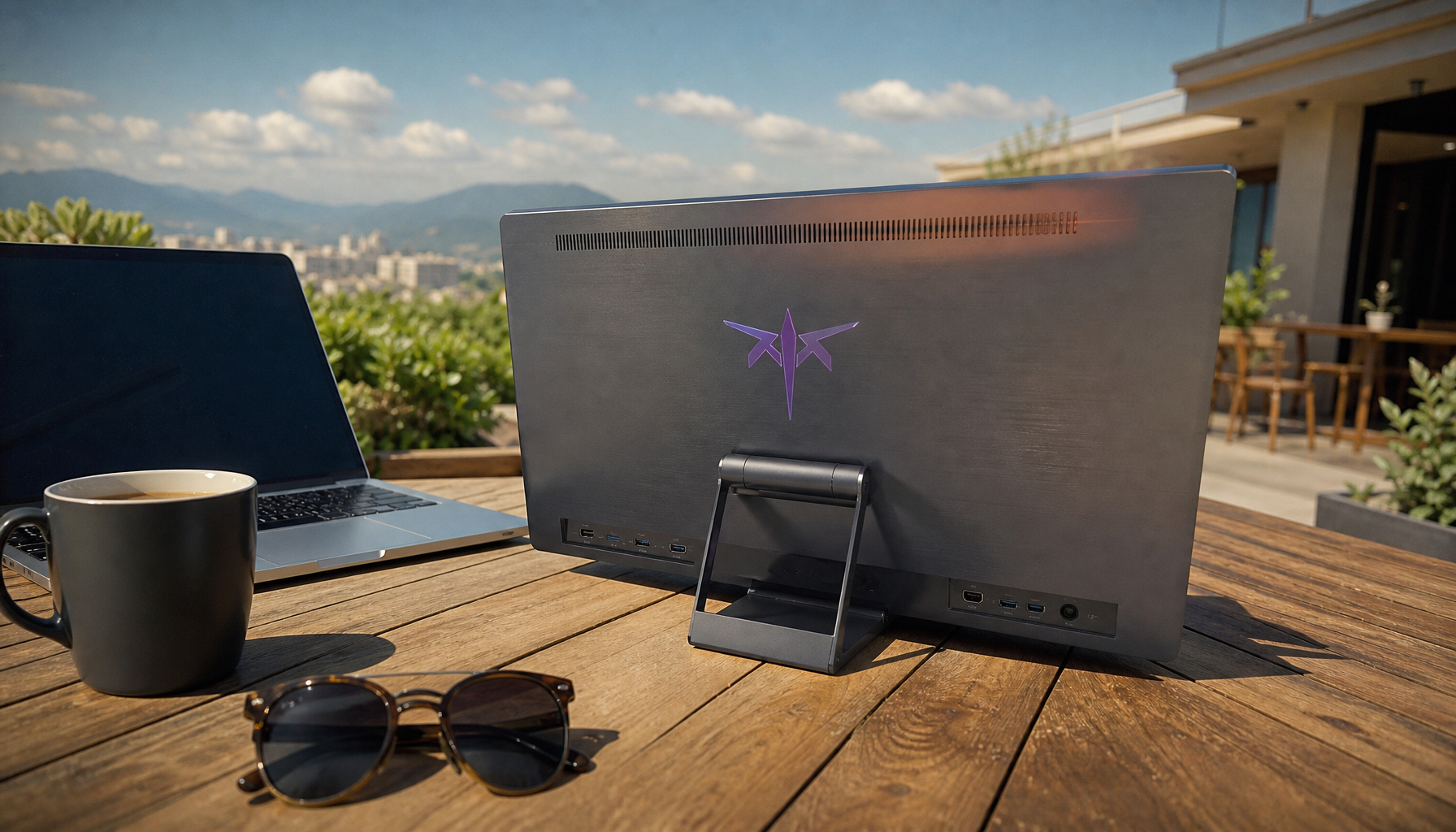
A portable monitor is a slim external display that usually connects through HDMI, USB-C, or both. The problem is that many portable monitors do not have their own battery, so they need power from somewhere. If that source is the console, your system is suddenly feeding both the game hardware and the display.

The console is not just sending a picture when it runs in external display mode. It also needs enough power to maintain docked-display behavior, controller communication, audio, and system performance. Portable monitor guides consistently flag power requirements as a decisive compatibility issue because not every USB-C port can carry video, charging, and power output in the direction you need.
For console-only use, the display target is simple. The console outputs up to 1080p in docked mode, so a sharp 15.6-inch 1080p portable monitor is usually a better battery-smart buy than a 4K screen. A 4K model can make sense if it also serves a laptop, streaming device, or future console, but it will not make these games render in 4K.
The Best Setup: Give the Monitor Its Own Power
The most reliable way to avoid draining the console is to power the portable monitor separately. In practice, that means the console sends video through the dock or a compatible adapter, while the monitor gets electricity from a wall charger, USB-C charger, or capable power bank.

A simple travel setup works like this: the console sits in its dock or a dock-style adapter, HDMI runs from the dock to the portable monitor, and USB-C power runs into the monitor from a charger or power bank. The dock also needs power, so the console can stay charged instead of slowly falling toward shutdown. This setup uses more cables than a single-cable configuration, but it is dependable and easier to troubleshoot.
Some monitors support USB-C Power Delivery, often shortened to PD. USB Power Delivery lets compatible USB-C devices negotiate voltage and current automatically, which matters because this console has specific charging behavior. External-monitor compatibility notes state that a monitor intended for docked play over USB-C should support both video transmission and USB Power Delivery output, with roughly 7.5W to 39W available for the console. That is the difference between displaying for a while and displaying while staying charged.
USB-C vs HDMI: Which Connection Should You Use?
USB-C is elegant when it works because one cable can sometimes carry video and power. The catch is that a USB-C-shaped port does not guarantee video output, video input, charging input, or charging output. Some portable monitor USB-C ports are power-only. Others accept video but cannot send enough power back to the console. That is why spec sheets matter more than connector labels.
HDMI is usually the safer gaming connection. Wired connections are recommended for gaming because they avoid the lag and instability that can show up with wireless casting. With this console, HDMI through the dock also avoids many USB-C compatibility surprises. The tradeoff is that HDMI carries video and audio, not power, so you must power the monitor separately.
Setup |
Battery Impact |
Best Use |
Main Tradeoff |
Console directly powering monitor |
High drain |
Emergency short sessions |
Shorter play time |
Dock plus HDMI plus powered monitor |
Low drain |
Travel, desk, multiplayer |
More cables |
USB-C monitor with PD output |
Low if compatible |
Clean tabletop setup |
Must verify specs |
Monitor with built-in battery |
Low to moderate |
Outlet-free sessions |
Higher cost and weight |
Pick the Right Portable Monitor
For most players, the value sweet spot is a 14-inch to 15.6-inch 1080p IPS portable monitor. IPS panels are common because they balance color, viewing angles, and price, which matters when two people are leaning over the same screen for split-screen racing or fighting games. OLED looks better in dark scenes and HDR content, but it costs more and is not necessary for console-only play.
Portable gaming monitors commonly support HDMI, USB-C, and gaming-focused specs, but this console does not need every premium feature. A 144Hz refresh rate is excellent for a gaming laptop, yet these games will not take full advantage of it in the same way. Spend first on the features that change the real experience: stable power, a usable stand, matte coating, decent speakers, full-size HDMI or reliable mini-HDMI, and a panel size that fits your bag.
Portable monitor testing points to the same practical conclusion: for console-only gaming, cheaper 1080p models often make more sense than expensive 4K or touch-enabled models. A 17.3-inch portable monitor can feel great at a vacation rental table, but it is less appealing when you are packing light. A 14-inch screen is easier to carry, while 15.6 inches feels closer to a compact laptop display.
Use a Power Bank the Right Way
A power bank can keep the setup mobile, but it needs enough output for the job. The cleanest arrangement is to power the monitor from the power bank and power the dock from a charger or another capable output. If you use one battery pack for everything, make sure it can provide enough wattage across multiple ports at the same time, not just a high headline number on one port.

This is where many setups fail in real use. A power bank may advertise strong output, but once two devices are plugged in, each port may drop to a lower wattage. The result can be a monitor that flickers, a console that stops charging, or a session that slowly drains even though the battery icon says charging. For performance-driven play, test the full chain before a trip: launch a demanding game, run the monitor at normal brightness, and check whether the console battery percentage rises, holds steady, or falls after 20 minutes.
Battery research tools such as real power measurement hardware exist because real power behavior changes under load, and the same principle applies here even if you are not using lab gear. A setup that looks fine on the home screen can behave differently during a bright, fast-moving game with wireless controllers connected.
Settings That Reduce Battery Waste
Even with a powered monitor, console settings still matter. If the console is away from the dock or you are using a hybrid travel setup, lower the built-in screen brightness when that screen remains active. If you are playing offline, Airplane Mode can reduce background wireless activity, though you should leave wireless controller support available if your setup needs it.

Controller vibration is another small but real drain. Turning off vibration can help during long sessions, especially if you are using detachable controllers. Sleep Mode settings also matter because a paused console left awake can quietly waste power between matches or during travel delays. Battery-life advice for handheld console users consistently emphasizes brightness control, wireless settings, vibration, and sleep behavior as practical levers.
Monitor brightness is just as important. A portable monitor running near maximum brightness can pull noticeably more power from its charger or power bank. Indoors, start around a comfortable mid-level brightness and raise it only as needed. A matte screen helps because you can often use lower brightness without fighting reflections.
Pros and Cons of Portable Monitor Play
The upside is obvious: a portable monitor turns the console into a stronger shared-screen system without needing a hotel TV, living room display, or full desk setup. You get a bigger view for split-screen games, better posture than hunching over the built-in display, and a screen that can also serve a laptop or office setup.
The downside is power complexity. A portable monitor adds another device to charge, another cable to pack, and another spec sheet to understand. Some models have weak speakers, flimsy stands, or USB-C ports that do less than the connector suggests. For reliable travel play, a slightly thicker monitor with a stable kickstand and clear power behavior is often better than the thinnest model on the shelf.
Quick FAQ
Can a Handheld-Only Model Use a Portable Monitor?
No. A handheld-only model does not output video to an external display, so it cannot use a portable monitor as a gameplay screen. You need a model with external display support.
Do I Need a 4K Portable Monitor?
No. A 1080p portable monitor is the sensible match for this console. A 4K monitor is only worth considering if you also plan to use it with a laptop, media device, or another console.
Can One USB-C Cable Run Everything?
Sometimes, but only if the monitor supports the right USB-C video input and enough USB Power Delivery output for the console. If you are unsure, use the dock with HDMI and give the monitor separate power.
Closing Thought
The battery-smart portable setup is not about buying the most expensive screen. It is about routing power intelligently: keep the console charging, let the monitor draw from its own source, and choose a 1080p display with the ports, stand, and brightness control that match how you actually play.