




You can catch most obvious color problems on a monitor without buying a colorimeter, but you cannot fully prove absolute accuracy from the screen alone.
Does your gaming monitor look punchy in one game, washed out on the desktop, and slightly green when you open photos? That is a common problem on high-refresh-rate, ultrawide, and portable displays, especially when factory presets prioritize impact over accuracy. A practical software-only process can expose bad gamma, uneven brightness, clipping, oversaturation, and weak sRGB modes before you spend money on calibration gear, and that is exactly what you will build here.
What Software-Only Validation Can Actually Tell You
Software-only checks can reveal major monitor issues like broken gradients, poor gamma, dead pixels, uneven brightness, and obvious color separation problems, which makes them useful for evaluating gaming monitors, ultrawide panels, and portable displays right out of the box. They are especially helpful when you are deciding whether a panel is healthy enough to keep or whether a factory-calibrated claim holds up in normal use.
True validation still needs a real-world reference, such as a known-good print, a calibrated color target, or a verified external display. That matters because test images alone can show that a monitor is behaving badly, but they cannot confirm that the red, green, and blue primaries are landing exactly where they should.
Full calibration is unique to each individual unit, even among two monitors with the same model number. For buyers, that means a software-only workflow is best used as a screening tool: it helps you decide whether your monitor is acceptable for gaming, content creation, or mixed use, and whether it is worth keeping before you step up to hardware calibration.
Set Up the Room Before You Judge the Panel
Ambient light and reflections materially change perceived color accuracy, so start with a consistent room setup. Avoid direct sunlight, turn off harsh glare, and let the monitor warm up before testing. On a bright 34-inch ultrawide or a glossy portable monitor, room reflections can make blacks look lifted and whites look cooler than they really are.
Test images are easiest to judge in a dim room and full-screen mode, which is why quick office checks often miss problems that show up at night. If you cannot darken the room, even a simple shade around the screen helps reduce stray light. This step matters more than many buyers expect because brightness is not color accuracy; it is just backlight intensity.

A practical baseline for many desks is 120 cd/m2 brightness and a 6500K color temperature target. If your monitor has an sRGB, Custom, or User picture mode, test those first. Highly saturated Vivid or gaming presets can look exciting, but they often exaggerate colors and make web content or skin tones look wrong.
Use the Right Test Patterns for the Problems You Can See
Gamma, grayscale, gradients, and pixel defects are all visible with browser-based test patterns, and these are the fastest checks to run on any monitor. On a good panel, gradients should look smooth, grayscale steps should stay distinct, circles should appear round, and solid fields should not show bright or dark patches that pull your eye immediately to one side.

Black level, contrast, and gamma should be adjusted with test patterns rather than guesswork. Near-black bars should be barely visible, white bars should remain distinct near the top end, and gamma should stay close to the common 2.2 target. If dark grays look washed out, the monitor may be tracking below 2.2; if shadows plug up too quickly, gamma may be too high or black level may be crushed.
The built-in display calibration tool can guide gamma, brightness, contrast, and color balance if you are on a desktop computer driving a gaming or creator monitor. It is not a substitute for a meter, but it is useful for cleaning up obvious errors after you choose the best picture preset. For HDR-capable displays, keep SDR and HDR judgments separate because one mode can look correct while the other remains off.
What Numbers Matter When You Read Monitor Specs
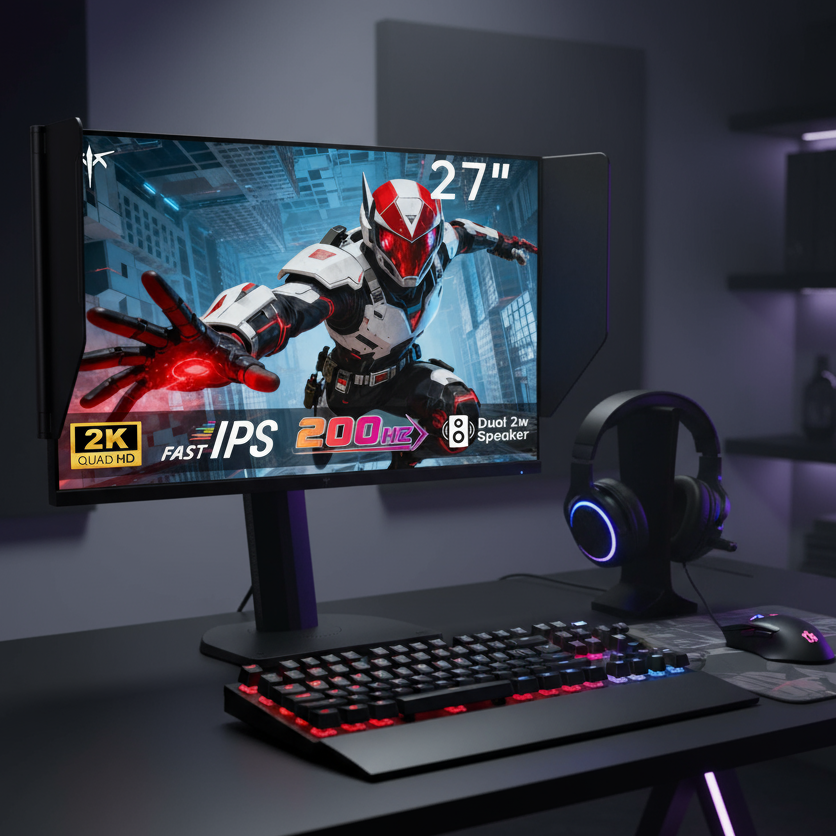
Delta E below 2 is generally considered excellent, while values above 3 are usually noticeable. For buyers comparing gaming monitors, ultrawide displays, or portable monitors, that means a published Delta E < 2 claim is a positive sign, but it should not be treated as a guarantee for your exact unit, room, and settings. A listing such as a gaming monitor listing, which includes detachable side shields and a published Delta E < 2 claim, is best treated as a comparison point: software checks can screen whether those claims look plausible in use, but they cannot fully verify them.

sRGB remains the key reference for most web content and games, so coverage close to 100% sRGB is still the most practical target for general desktop use. If you also edit photos or video, other wide-gamut color spaces become more relevant, but oversaturation is a common problem when wide-gamut monitors are used outside a proper sRGB clamp.
Portable monitors marketed for color work often advertise 100% sRGB, 95% DCI-P3, or even Delta E below 1, and those specs can be meaningful if the panel also has good uniformity. The catch is that portable panels are used in changing light, odd viewing angles, and improvised setups, so their real-world reliability often depends more on setup discipline than on the spec sheet alone.
Parameter |
Good target for buyers |
What it tells you |
What it does not prove |
Near 100% |
Good fit for web, games, and general desktop use |
Per-unit accuracy |
|
Delta E |
Below 2 |
Low average color error |
|
Gamma |
Around 2.2 |
Correct shadow and midtone brightness |
Correct gamut mapping |
Color temperature |
Around 6500K |
Neutral white balance |
Accurate colors in all presets |
Uniformity |
Even center-to-edge brightness and tint |
Reliable full-screen editing and browsing |
Correct calibration of primaries |
Where Gaming, Ultrawide, and Portable Monitors Usually Fail
Non-uniform panels are a common issue on 100+ Hz IPS gaming monitors, and calibration cannot fix severe edge tinting or brightness falloff. If the center looks acceptable but one side is warmer, cooler, or dimmer, that is a panel limitation, not a settings problem. This is one of the biggest reasons a fast gaming monitor can look great in motion yet disappointing for color-critical work.
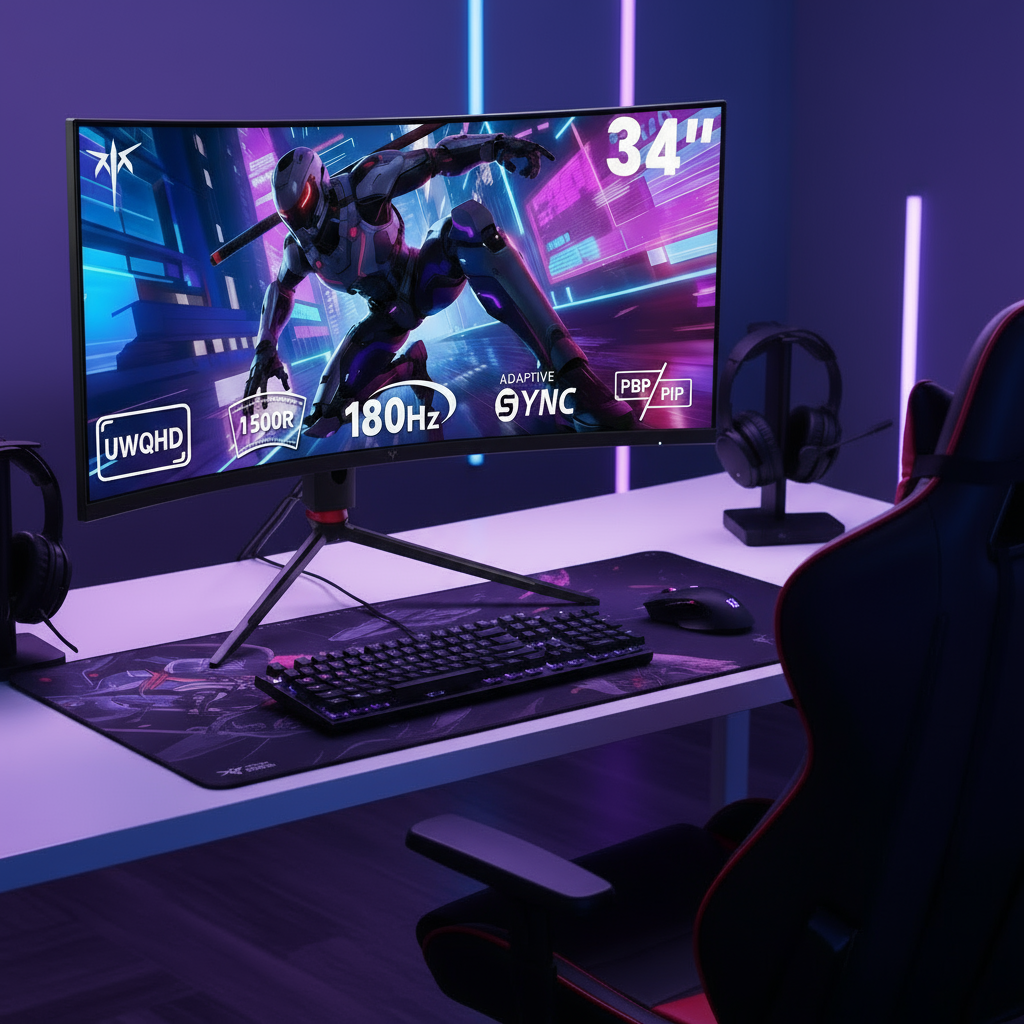
Uniformity is one of the most important visual checks on larger screens, especially on 34-inch or 49-inch ultrawides where your eyes cover more area at once. Use 25%, 50%, and 75% gray screens and look for side-to-side shifts. If neutral gray turns pink on one edge and green on the other, no amount of software tuning will make that panel truly reliable for editing or consistent desktop work.

Factory calibration is only a starting point, not a permanent guarantee. That is true for portable monitors and premium creator displays alike. Shipping variance, panel aging, firmware differences, and locked picture modes can all change what you actually see on your desk.
When Software Checks Are Enough and When They Are Not
Manual adjustments are often enough for non-creator use, especially if your main goal is balanced color for gaming, streaming, office work, and occasional photo edits. If the monitor passes gradient, grayscale, gamma, and uniformity checks, and the sRGB or Custom mode looks natural, most buyers can stop there with reasonable confidence.
A print comparison or calibrated color target is the low-cost way to go further without immediately buying a hardware calibrator. Sending a known image to a reputable print lab that supports ICC profiles is a practical validation step because it tests both your screen judgment and whether your files will translate outside the monitor.

Recalibrating every 4 to 6 weeks is a reasonable maintenance interval once you move into paid creative work, multi-monitor matching, or print delivery. That is the point where a hardware colorimeter becomes worth the cost, because software checks can show drift but cannot measure it precisely.
FAQ
Q: Can I check monitor color accuracy without a colorimeter?
A: Yes, you can reliably spot major problems with test patterns, an sRGB mode check, grayscale screens, and a controlled room setup. You cannot fully confirm absolute color accuracy without a trusted external reference or measurement device.
Q: Is a factory-calibrated gaming or portable monitor good enough?
A: Often, it is good enough for gaming, media, and mixed desktop use, especially if published specs show near-100% sRGB and Delta E < 2. It is not a guarantee that your individual unit has perfect white balance, gamma, or uniformity.
Q: What is the single best software-only check before I return a monitor?
A: Run full-screen grayscale and gradient tests after switching to the most neutral preset. If you see obvious banding, color tinting, crushed blacks, clipped whites, or strong side-to-side uniformity shifts, the monitor is unlikely to become truly accurate through settings alone.
Practical Next Steps
Use this checklist before deciding whether your monitor is accurate enough or whether you need better hardware:
- Let the monitor warm up, then test it in stable, low-glare lighting.
- Switch to sRGB, Custom, or User mode before touching advanced settings.
- Use test patterns to adjust black level, contrast, and gamma toward a 2.2 target.
- Check full-screen gray at several shades for uniformity problems, especially on ultrawide and high-refresh-rate IPS panels.
- Compare color on a trusted print, color target, or another known-good display if your work depends on consistency.
- Keep the monitor if it passes visual checks for your use case; replace it if uniformity or tint issues are obvious.
- Buy a hardware calibrator only when you need repeatable, per-unit accuracy for paid creative work or multi-display matching.
References
- A photography forum discussion about validating monitor color calibration
- A monitor test site
- A company guide to evaluating monitor color accuracy
- A company guide to calibrating monitors for accurate colors
- An article about portable monitors for photographers with a color-accuracy focus
- A calibration forum discussion about non-uniform screens
- A monitor test image set
- A monitor review site’s guide to adjusting monitor settings
- A monitor review site’s explanation of color accuracy tests
- An operating system guide to monitor color calibration


