Adaptive Sync usually feels worse only when a game or setup pushes it outside the monitor’s working range. Most of the time, the fix is to keep frame delivery inside that range and clean up the surrounding settings.
Does your crosshair feel sticky for a split second when a fight gets busy, even though the torn lines are gone? Many displays stay fluid only while the game stays within the screen’s supported range, so sudden performance swings can make motion feel uneven instead of clean. This article explains how to tell whether the problem is the monitor, the game, or the settings stack, and what to change first.

What Adaptive Sync Fixes, and What It Does Not
At its core, Adaptive Sync changes the monitor’s refresh rate to match the GPU’s frame output in real time. That reduces tearing and uneven motion without the heavier latency penalty tied to classic V-Sync. If a game is rendering at 58 fps, the display can refresh at 58 Hz instead of waiting on a fixed cycle, so the image tracks the game more naturally.
That benefit is easiest to feel during camera pans, in racing games, and in mouse movement when frame rate floats instead of staying perfectly locked. But the feature only synchronizes the GPU and the panel; it does not create extra performance, fix every late frame, or hide CPU- or engine-side spikes that make delivery uneven.

The same idea helps beyond gaming. Adaptive Sync on a monitor can also reduce judder in mixed-frame-rate playback such as 24 fps and 60 fps video, which is why it matters on work displays, creator setups, and multi-use screens.
Why Smooth Can Turn Into Choppy, Sticky, or Strange
Your frame rate is leaving the monitor’s working range
One of the biggest traps is assuming every Adaptive Sync display behaves the same. The variable-refresh gaming comparison notes that lower-end monitors can have narrow variable-refresh windows such as 48-75 Hz, while stronger implementations span much wider ranges. On a 144 Hz display, that means a fight that drops to 42 fps or a simple menu scene that jumps past the panel ceiling can push the game outside the zone where the monitor can follow it cleanly.
This is when players often say, “The tearing is gone, but it still doesn’t feel right.” Staying inside the monitor’s supported VRR range is not optional fine-tuning; it is the condition that lets variable refresh work as designed. Below the floor, the display may need to repeat frames or use compensation. Above the ceiling, the monitor can no longer track the game one-for-one.
Your average fps looks fine, but frame delivery is uneven
A second problem is confusing average fps with actual smoothness. Adaptive Sync cannot rescue a game that delivers frames in bursts or drops below the monitor’s working floor during heavy scenes. If the hitch appears when effects stack up, scene complexity rises, or the game suddenly gets heavier, the monitor is often exposing a pacing problem that was already there.
This is why gameplay can look cleaner and still feel worse in your hands. In practice, the least convincing setups are usually not the ones with the lowest average fps, but the ones with sudden late frames. The screen stays visually tidy, then one delayed frame lands and your aim or camera movement feels briefly glued in place.
Your settings stack is fighting itself
Classic V-Sync still prevents tearing by forcing frame output to the display cycle, but it can add latency and behave badly when performance moves around refresh boundaries. If you layer in-game V-Sync, driver-level sync, a frame cap, and Adaptive Sync without checking what each one is doing, you can trade obvious tearing for a subtler mix of lag and hitching near the top of the range.
Compatibility matters too. Monitor and GPU support have to line up, and some displays deliver their best VRR behavior only on certain inputs. A monitor can advertise Adaptive Sync on the box yet still feel inconsistent if the wrong port, wrong mode, or wrong control-panel setting is in use.

The monitor itself may be the weak link
Not every certification or badge produces the same result. The variable-refresh gaming comparison describes dedicated hardware implementations as more consistent, with better low-end coverage and tighter control when frame rates fall, while open-standard quality varies more by model. That does not make lower-cost VRR a bad value; it means two monitors with the same advertised refresh rate can feel very different when fps dips hard.
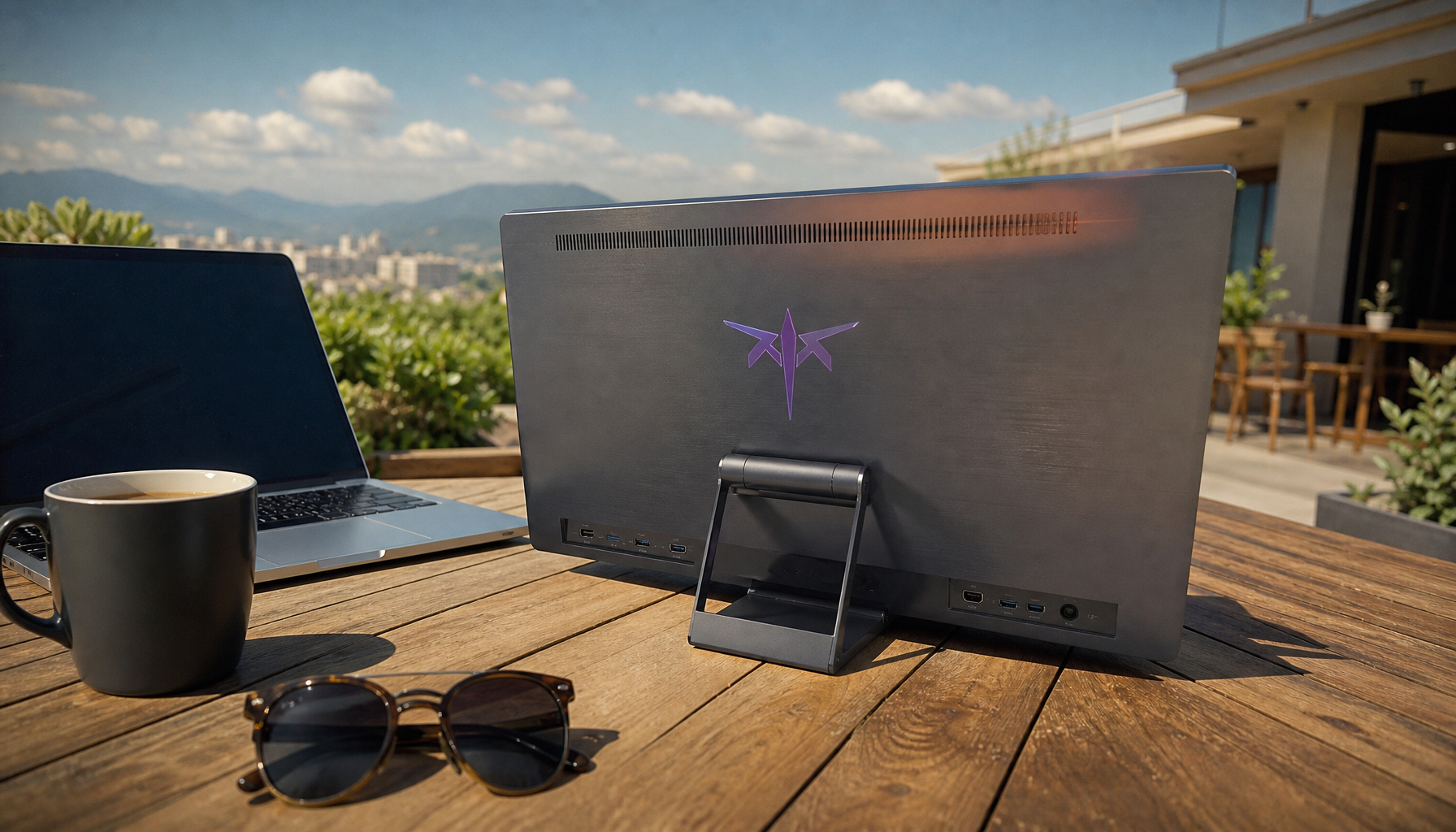
That point matters even more now that the market is full of fast panels. Before moving from settings troubleshooting to hardware assumptions, it helps to confirm the basics on the display itself—for example, whether a model like the KTC 24.5” FHD 180Hz 1ms Wall Mount Gaming Monitor actually lists FreeSync/G-Sync support and the refresh-rate specs you expect to be testing. High-refresh monitors show how much overall feel still depends on panel type, motion handling, input lag, and implementation quality rather than headline refresh numbers alone. A well-tuned 165 Hz display can feel more coherent than a sloppier 240 Hz one if its VRR range, overdrive behavior, and latency control are better sorted.

How To Make Adaptive Sync Feel Smooth Again
When troubleshooting, start by asking whether the game feels worse during low-fps dips, near the fps ceiling, or at all times. That answer usually isolates the problem faster than swapping hardware or turning features off at random.
What you feel |
Most likely cause |
Best first fix |
Motion breaks during heavy scenes |
FPS is dropping below the monitor’s VRR floor |
Lower the settings that cause the deepest dips so the game stays inside the sync range |
Motion feels odd in easy scenes or menus |
FPS is running above the monitor’s ceiling |
Cap FPS slightly below max refresh so VRR keeps control |
The image looks clean but response feels sluggish |
Too many sync modes are stacked together |
Simplify the setup and verify which sync option is actually active |
Flicker or instability appears at low fps |
Weak low-end VRR implementation |
Use a monitor with a wider range or stronger certification if your fps often swings |
That setup guidance is a good model even if you are not using a premium VRR display: enable VRR correctly at the driver level, confirm the target monitor and mode, test that it is really working, and then keep fps inside the display’s supported range with either an fps cap or lower settings. The same logic applies across different GPU vendors and standards-based setups, even if the menu names differ.
It also pays to tune for dips, not just averages. The same guide makes a practical point worth repeating: the feature helps most when frame rates fluctuate, not when they are already perfectly stable. If you have to choose between “Ultra” settings with violent swings and “High” settings that keep the game inside the monitor’s working band, the second setup usually feels better in motion even if the screenshots look slightly less dramatic.

When It Makes Sense To Care Less About It
There are cases where Adaptive Sync simply matters less. The same guidance notes that if your system already holds very high, stable frame rates with no visible tearing, the benefit may be modest. On some retro titles, emulator-heavy setups, or extremely latency-sensitive play styles, a simple fixed high-refresh mode may feel better to you.
That is not a failure of the technology. It means Adaptive Sync is a tool for unstable frame delivery, not a magic upgrade for every game and every rig. The more your fps moves around, the more the feature earns its place.
Adaptive Sync should feel invisible. If you can feel it working, your frame rate is probably escaping the monitor’s comfort zone or the settings stack is misconfigured. Keep the game inside the panel’s real operating range, and the screen stops being the problem and goes back to being what it should be: a clean, immersive window into the match.