Sometimes it does. If your monitor’s HDMI ports are not identical, switching ports can change which audio formats your console detects and whether features like ARC or eARC are available.
Is your console suddenly stuck on stereo, muted through your monitor, or refusing to show the audio format you expected after you moved one cable? In real desk setups, that usually comes down to port capability, the full signal chain, or the monitor advertising different audio support on different inputs. The key is to determine whether the port is the problem, the cable is the limit, or the monitor was never built to pass the audio option you want.
The Short Answer Behind the Port Swap
HDMI’s digital audio and video signal means the console does not treat audio as a separate decision from the display path. When you plug a console into a monitor, the console reads what that connected device says it can handle. If the monitor reports only basic two-channel audio, the console will usually limit its menu choices to match.
That is why changing HDMI ports can matter. Different HDMI port capabilities can vary even on the same display. One port may be the full-bandwidth gaming input, another may be the ARC or eARC path on a TV-style display, and another may support fewer refresh-rate or audio-return features. On a pure PC monitor with two identical HDMI 2.0 inputs, changing ports often changes nothing. On a smart monitor, TV-monitor hybrid, portable smart screen, or soundbar-connected setup, it absolutely can.

Why Consoles Change Audio Options at All
Your Console Reads the Display Chain, Not Just the Cable
The oldest HDMI version in the chain can limit the overall connection, and the same logic applies to feature exposure. The console is not guessing. It reads device capability data and then decides whether to offer PCM, surround, higher refresh modes, or advanced audio paths. If you move from a full-featured HDMI 2.1 input to a lesser port, you may still get a picture, but the audio menu can shrink or behave differently.
A simple example is a 4K 120 Hz console setup. If HDMI port 1 on a display supports the high-bandwidth gaming path and HDMI port 2 is a more basic input, the console may fall back to a lower-performance mode. That shift can affect not just picture settings but also whether the display chain still exposes the same audio behavior, especially when a receiver, soundbar, or adapter sits between the console and screen.
ARC and eARC Change the Situation
eARC’s HDMI audio-return feature is tied to a labeled port that sends audio from the display to a soundbar or receiver with much higher bandwidth than older ARC. If your setup depends on the monitor or TV passing console audio onward, using the wrong port can remove those options. In practice, that means a console plugged into a non-ARC input may still show video just fine, while your external audio system no longer receives the format you expected.
This matters most on display products that blur the line between monitor and TV. A traditional office monitor with a headphone jack may accept only stereo and pass that to 3.5 mm speakers. A smart screen with eARC can sit in a much richer chain and support uncompressed surround or immersive formats when the rest of the gear supports them too.
When Changing Ports Will Not Change Much
Single-monitor HDMI use is often straightforward, and the same practical rule applies to many monitors with duplicate HDMI inputs. If both ports are genuinely the same version, the same bandwidth, and the same internal audio path, your console will usually expose the same output options on either one.
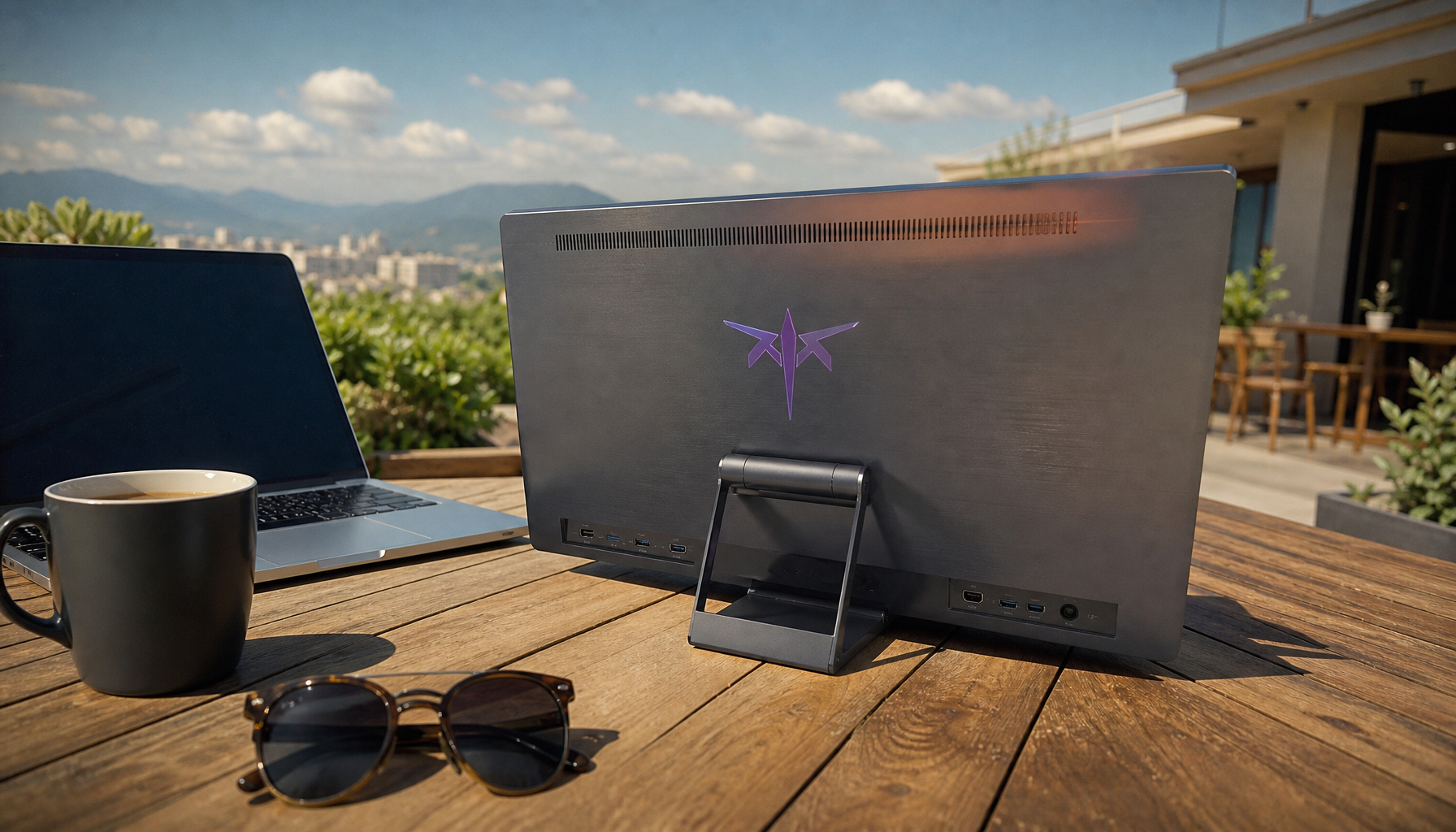
That is common on mainstream 24-inch to 32-inch monitors built mainly for desk use. If the monitor only has basic speakers or only supports stereo over its headphone-out path, switching from HDMI 1 to HDMI 2 usually will not unlock 5.1 or immersive audio. The monitor cannot advertise what it does not support.
When Changing Ports Commonly Does Change Audio Behavior
One Port Is HDMI 2.1 and Another Is Not
HDMI 2.1 gaming features often appear only on the ports manufacturers expect you to use with current consoles. On some displays, only one or two HDMI ports are full-spec. If your console is on the lesser port, you may lose gaming features and, depending on the display’s internal design, see different audio choices or handshake stability.

One Port Is the Audio Return Port
ARC and eARC support live on specific labeled ports. If your soundbar or receiver needs that return path, moving the cable to a standard HDMI input can break the downstream audio chain. The console may then show only what the monitor itself supports, not what your external audio hardware can decode.

Adapters, Switches, and Receivers Can Rewrite the Result
Audio limits from conversion hardware are common when the signal passes through hardware that reports only two-channel sound. That is why one port can seem better even when the monitor is not the real culprit. In many hybrid gaming desk setups, the audio limit comes from the adapter, dock, or receiver path attached to that port, not the panel itself.
Setup path |
Likely console audio result |
Console to identical HDMI monitor ports |
Usually no change |
Console to HDMI 2.1 port vs. older HDMI port |
Possible change in available formats and gaming features |
Console through display’s ARC/eARC path |
Can enable different external audio behavior |
Console through adapter or receiver on one path only |
Audio options may change based on reported capabilities |
How to Tell Whether the Port Is the Real Problem
Direct connection is a core troubleshooting step because it removes soundbars, switches, and capture devices from the chain. Start there. Plug the console straight into the display, test each HDMI port one at a time, and check whether the console’s audio menu changes. If it does, the ports are not functionally identical.

Then check the port labels and manual. If one input is marked eARC, 4K 120, gaming, or service-specific, treat it as a different class of input rather than just another HDMI port. After that, verify the cable. Separate port and cable limits can create symptoms that look like a bad port, especially when you step up to higher-bandwidth modes.
If the monitor has no speakers, remember that audio may still be going to it. HDMI display audio routing can send sound to a display that appears as an audio device. That can make it seem like the console lost sound when it actually sent sound to a display with nowhere useful to play it.
What to Do for the Best Console Audio on a Monitor
Use the port designed for your use case. For a current desk setup, that usually means the highest-spec HDMI input first, especially if you want 4K 120 Hz or VRR. If you also need external speakers, decide whether the audio should come from the monitor’s headphone jack, a USB headset connected to the console, or a soundbar or receiver chain. Each path changes what the console can reasonably offer.
If you want simple reliability, PCM stereo through a monitor is usually the least troublesome route. If you want surround or immersive formats, the monitor must be part of a chain that actually supports them, or the console needs to send audio directly to hardware that does. That is where eARC, receiver input support, and certified cables matter more than swapping between two otherwise identical monitor inputs.
A different HDMI port can change console audio output options, but only when that port changes the capabilities the console sees. Treat the port, the cable, and the attached audio hardware as one system, and your audio menu will stop feeling random.