Dark mode can reduce screen glare, but it does not automatically make a monitor comfortable. Eye strain usually comes from a mismatch between your display brightness, contrast, room lighting, text rendering, refresh behavior, and viewing setup.
Ever switch to dark mode for a late-night gaming session, only to feel burning eyes, blurred text, or a dull headache after an hour? A practical fix often starts with simple monitor changes: lowering a bright factory preset from showroom-level brightness to a dim-room range, adding soft room lighting, and making text easier to focus on. This guide explains why dark mode can still hurt and how to tune or choose a monitor that is easier to use at night.
Dark Mode Is Not Always Easier to Read
High contrast can make text feel sharp and harsh
Dark mode uses light text on a dark background, which is also called negative polarity. That can feel calmer at first because the screen emits less overall light, but dark mode can also make fine details harder to focus on when your pupils dilate in a dim room.
On a monitor, the problem is often not the dark background itself. It is the bright white text, bright UI borders, subtitles, HUD elements, a platform window, browser tabs, or spreadsheet cells sitting against a nearly black field. A 27-inch or 32-inch display makes those contrast edges large enough that your eyes keep refocusing, especially when you are reading chat, code, menus, or game maps for long stretches.
Halation can make white text look blurry
Some people notice that white letters seem to glow, smear, or bleed into the black background. People with myopia or astigmatism may be more likely to experience halation, where light text appears less crisp on a dark background.

That is one reason dark mode can feel worse on a high-contrast OLED monitor, a Mini-LED display with aggressive local dimming, or a gaming monitor set to a vivid preset. The monitor may technically have excellent contrast, but your eyes may read the image as glare, bloom, or fuzzy edges rather than clean text.
The First Settings to Change on Your Monitor
Start with brightness, not blue light
Many monitors ship in bright retail-style presets, and factory brightness can exceed 300 nits with aggressive contrast. For desktop use, ergonomic brightness guidance points to roughly 120-150 nits in office lighting, 100-120 nits in a typical room, and 80-100 nits in a dark room.
For a late-night gaming setup, that means a monitor at 70-100% brightness may be far too intense even in dark mode. A better first test is to open a mostly white browser page, hold a white sheet of paper near the screen, and lower brightness until the display no longer looks like a light panel. If the monitor has a brightness scale from 0 to 100 rather than nits, try 20-35 in a dark room, then adjust by feel.
Reduce contrast if dark scenes glow or crush detail
Higher contrast can improve perceived sharpness, but excessive contrast in a dark room can cause bright UI edges, blooming, halo fatigue, or crushed shadow detail. For OLED and Mini-LED monitors, controlled highlights and lower peak brightness are usually more comfortable for desktop work than HDR-style brightness.
A useful adjustment is to reduce contrast by 5-10% from the monitor’s default, especially if white text looks too hot against black. On monitors with local dimming, try turning local dimming off or setting it to low for browsing, writing, spreadsheets, and coding. Save the high local-dimming or HDR mode for games and movies where highlights matter more than small text comfort.
Room Lighting Matters More Than the Theme
Do not use a bright monitor in a dark room
Eye strain often comes from a large brightness difference between the screen and the surrounding room. A monitor should be set to about the same brightness level as the room around it, because a screen that becomes the only bright object in view can cause eye strain, headaches, or blurred vision.

This is why dark mode can still fail at night. If your 34-inch ultrawide is the only light source in the room, every bright menu, cursor, subtitle, health bar, or browser window becomes a small glare source. Soft bias lighting behind the monitor, a desk lamp pointed away from the screen, or a monitor light bar can reduce the brightness jump your eyes have to handle.

Match the display to the room
For a dim bedroom or gaming corner, aim for a screen brightness that feels similar to the wall or desk around it. In very dark rooms below about 50 lux, 80-100 nits is a reasonable target; in a normal room around 150-300 lux, 100-120 nits is often more comfortable.
The goal is not to make everything dark. The goal is to reduce adaptation stress, where your eyes keep switching between a bright screen and dark surroundings. If dark mode still strains your eyes after brightness adjustment, try a dimmed light mode or gray theme instead of pure black.
Text, Color, and Polarity Can Change Comfort
Positive polarity may be easier for long reading
Positive polarity means dark text on a light background; negative polarity means light text on a dark background. For office-style work, positive polarity is often less affected by glare and resembles printed material, though personal comfort still matters.

For monitors used across gaming, writing, browsing, and work, this suggests a mixed approach. Use dark mode for launchers, dashboards, media apps, and game menus if it feels calmer. Use light mode, sepia mode, or a low-contrast gray theme for long reading, editing, spreadsheets, or documentation if dark mode makes text shimmer.
Avoid harsh color combinations
Bright blue and red can be harder on the eyes because they sit near opposite ends of the visible spectrum. Viewing colors far apart, such as red and blue, can require more focusing effort and lead to more fatigue during long monitor sessions.
On a gaming monitor, that matters for RGB-heavy overlays, crosshairs, chat text, map markers, and productivity apps with custom themes. If your dark theme uses neon blue links, red warnings, and pure white text on black, switch to softer grays and warmer accent colors. For text, off-white on charcoal often feels better than pure white on pure black.
Gaming Monitor Features That Affect Eye Strain
Refresh rate helps motion comfort, but it is not a cure-all
Long sessions can cause computer vision symptoms such as eyestrain, headaches, blurred vision, dry eyes, and neck or shoulder pain. For gaming monitors, refresh rates above 60 Hz may improve comfort, with gains often starting around 75-100 Hz and 144 Hz serving as a practical mixed-use target.

A 144 Hz or 165 Hz monitor can make scrolling, camera pans, and aiming feel smoother than 60 Hz, which may reduce motion-related discomfort. But it will not fix a screen that is too bright, too contrasty, flickering at low brightness, or positioned poorly. Treat refresh rate as one part of comfort, not the entire solution.
Flicker-free dimming and anti-glare coatings are worth checking
If your eyes hurt more after lowering brightness, the monitor’s dimming behavior may be part of the problem. A display marketed with flicker-free backlighting is usually a better bet for long reading and late-night use than one that visibly flickers or feels unstable at low brightness.
Anti-glare treatment also matters. A glossy OLED may look beautiful for HDR games, but reflections from a window, lamp, or white wall can make dark mode harder to read. If you use an ultrawide monitor in a bright apartment or near a window, glare control may improve comfort more than changing the app theme.
Monitor Setup Comparison: What to Adjust First
Situation |
Likely Cause |
First Adjustment |
Better Long-Term Choice |
Dark mode hurts in a dark room |
Screen is still too bright for the room |
Lower brightness toward 80-100 nits and add bias lighting |
Monitor with easy brightness controls and low-brightness comfort |
White text looks fuzzy on black |
Halation, astigmatism, or excessive contrast |
Use charcoal backgrounds and off-white text |
Display with good text rendering and less aggressive contrast presets |
Eyes burn after long gaming sessions |
Low blink rate, glare, harsh settings, long focus time |
Use breaks, reduce brightness, soften lighting |
144 Hz or higher monitor with flicker-free backlighting |
OLED or Mini-LED looks harsh on desktop |
Bright highlights, blooming, or local dimming behavior |
Lower peak brightness and set local dimming to low or off |
Panel with separate SDR, HDR, and desktop profiles |
Dark mode is worse for documents |
Negative polarity is not ideal for long reading |
Try dimmed light mode or sepia mode |
Monitor with accurate sRGB mode and comfortable text clarity |
Laptop or portable monitor feels tiring |
Small text, close viewing, limited brightness control |
Increase scaling and set proper viewing distance |
Portable monitor with matte coating and stable low brightness |
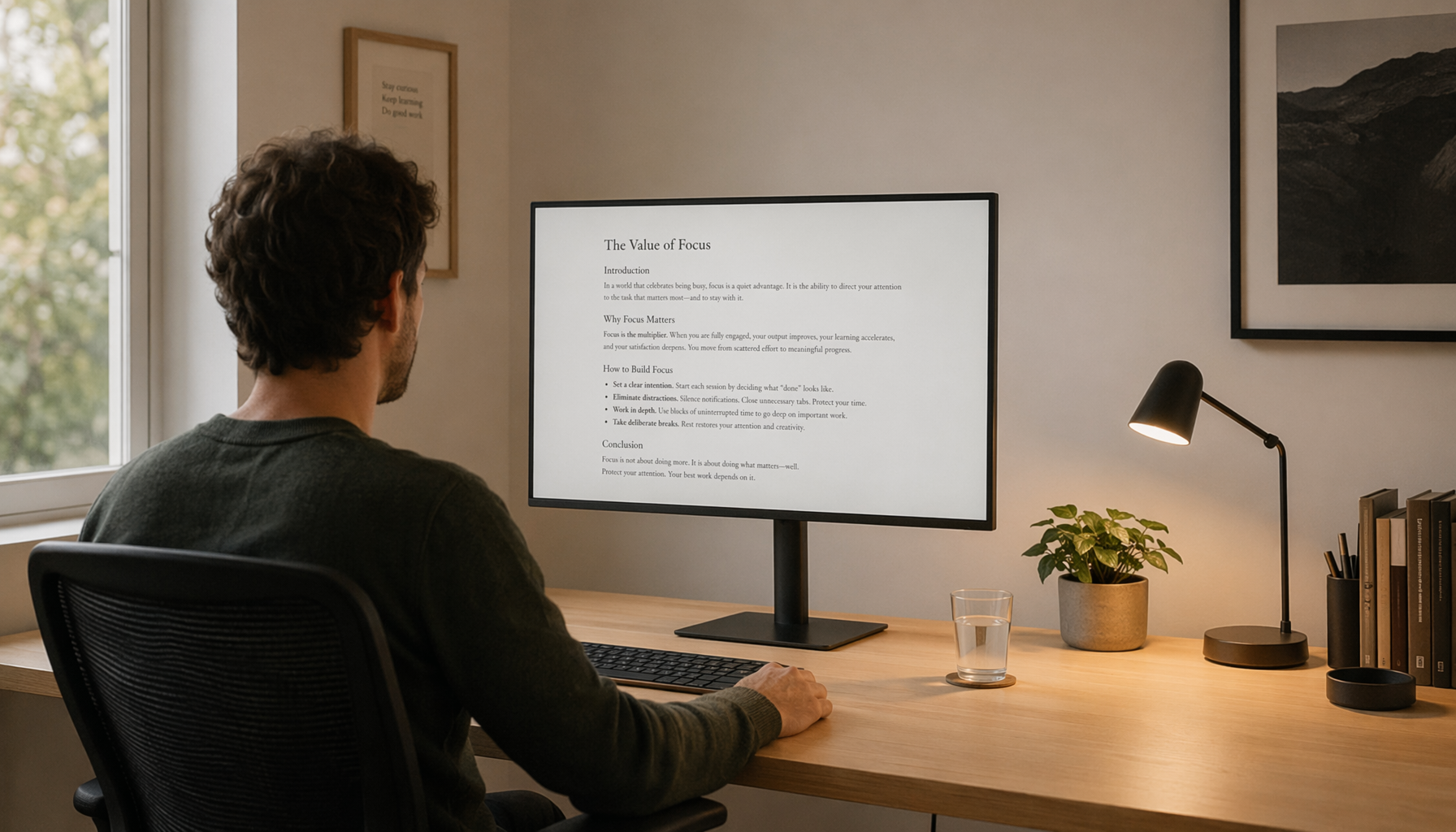
For desk setup, keep the monitor roughly 20-28 inches from your eyes and slightly below eye level. Late-night gaming guidance also points to soft room lighting, flicker-free backlighting, low-blue-light modes, anti-glare treatment, and ergonomic positioning as practical ways to reduce strain during sessions of two or more continuous hours.
FAQ
Q: Why do my eyes hurt in dark mode even when the room is dark?
A: Dark mode lowers the average screen brightness, but it can increase the contrast between bright text and a black background. In a dark room, your pupils dilate, which can make small bright details harder to focus on and can make halos or blur more noticeable.
Q: Should I use blue-light mode instead of dark mode?
A: Blue-light filters and nightlight modes can help reduce bedtime light exposure without forcing every app into dark mode. Blue-turquoise light is more strongly tied to sleep and wake timing than direct eye damage, so use nightlight features in the evening, but still adjust brightness, contrast, glare, and room lighting.
Q: Is an OLED monitor better or worse for eye strain?
A: It depends on the setup. OLED can offer excellent contrast and true blacks, but pure white text on black can feel harsh for some users, and glossy screens can show reflections. For desktop work, lower peak brightness, avoid pure black themes if text blooms, and use separate settings for SDR desktop work and HDR gaming.
Practical Next Steps
Dark mode is a tool, not a guarantee of comfort. If your monitor still causes eye strain, tune the viewing environment first, then the display settings, then the app theme.
Action checklist:
- Set brightness to match the room: try 80-100 nits in a dark room, 100-120 nits in a typical room, or 120-150 nits in a bright office.
- Add soft bias lighting behind or near the monitor so the display is not the only visible light source.
- Lower contrast by 5-10% if white text, HUD elements, or subtitles glow against black.
- Use charcoal gray backgrounds and off-white text instead of pure black and pure white.
- Increase text scaling if you lean forward or squint, especially on 27-inch 1440p, 32-inch 4K, ultrawide, or portable monitors.
- Use 100 Hz, 144 Hz, or higher refresh rates when available, but still fix brightness and glare.
- Check for flicker-free backlighting, matte or anti-glare treatment, and comfortable low-brightness control when buying your next monitor.
For most people, the best dark-mode setup is not the darkest possible screen. It is a balanced monitor profile: modest brightness, controlled contrast, readable text, soft room lighting, and a refresh rate that fits your work or gaming style.