Display uniformity gets worse as heat, backlight wear, pressure, humidity, electrical stress, and component aging slowly change how evenly a screen produces brightness and color. Warning signs include darker corners, cloudy gray patches, edge glow, tint shifts, dimming, flicker, and repeated calibration frustration.
Does your once-clean gaming monitor now make spreadsheets look shadowed at the corners, or does a dark game lobby reveal cloudy patches you cannot unsee? A simple full-screen white, gray, black, red, green, and blue check can quickly separate normal panel variation from problems that affect real work and play. You’ll learn why uniformity drifts, which symptoms matter, and when settings help versus when replacement is the better move.
What Display Uniformity Means
Display uniformity is the screen’s ability to show consistent brightness and color from the center to the edges and corners. A non-uniform display may show the same gray as slightly darker on one side, warmer in one corner, or washed out near the edges.
That matters because modern screens are reference tools, not just output devices. A competitive player relies on stable shadow detail. A designer needs white and gray areas to stay neutral. An office user needs long sessions without visual strain. Screen uniformity becomes easiest to judge when a large flat area lets your eyes compare one zone of the panel against another.
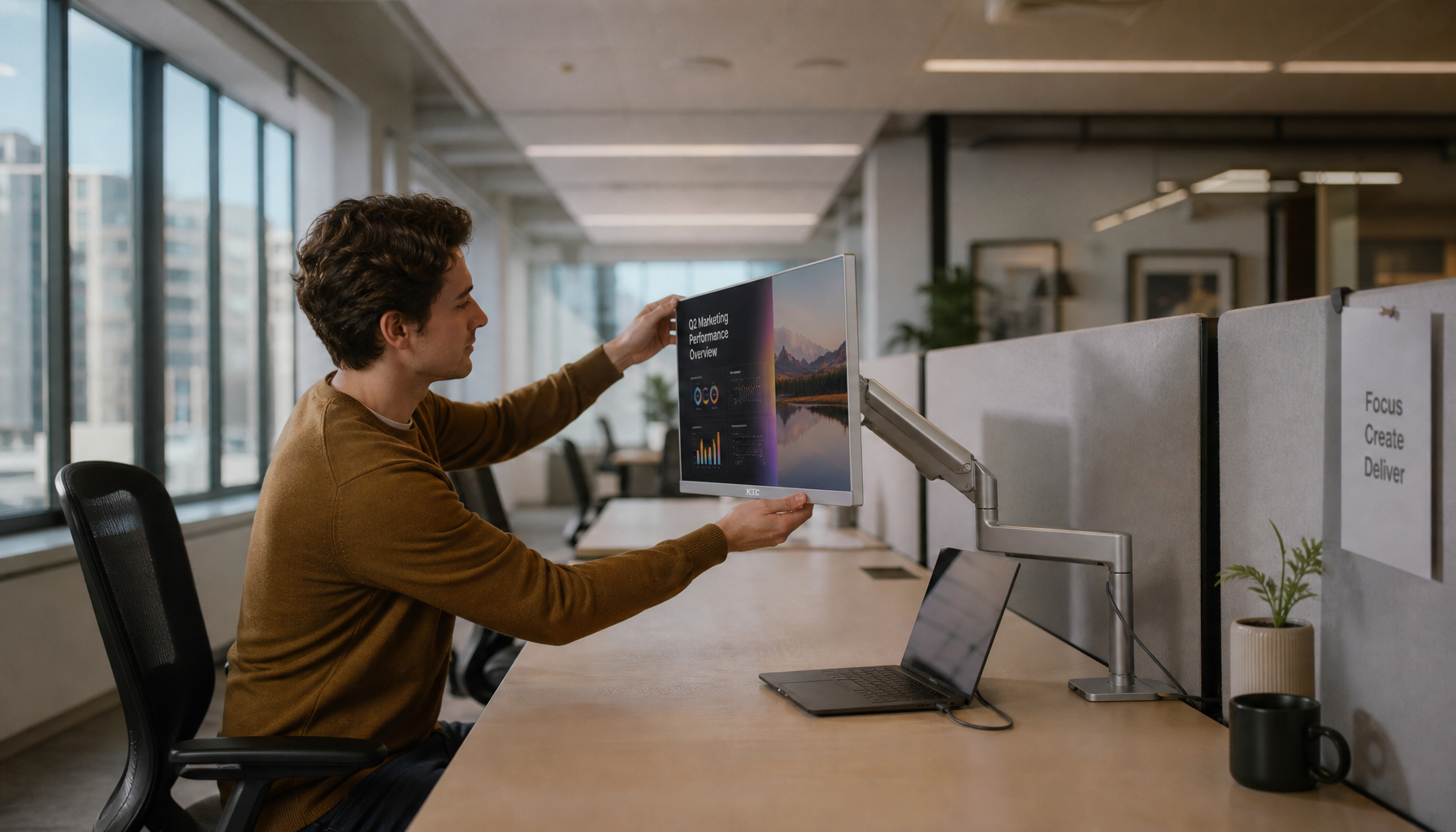
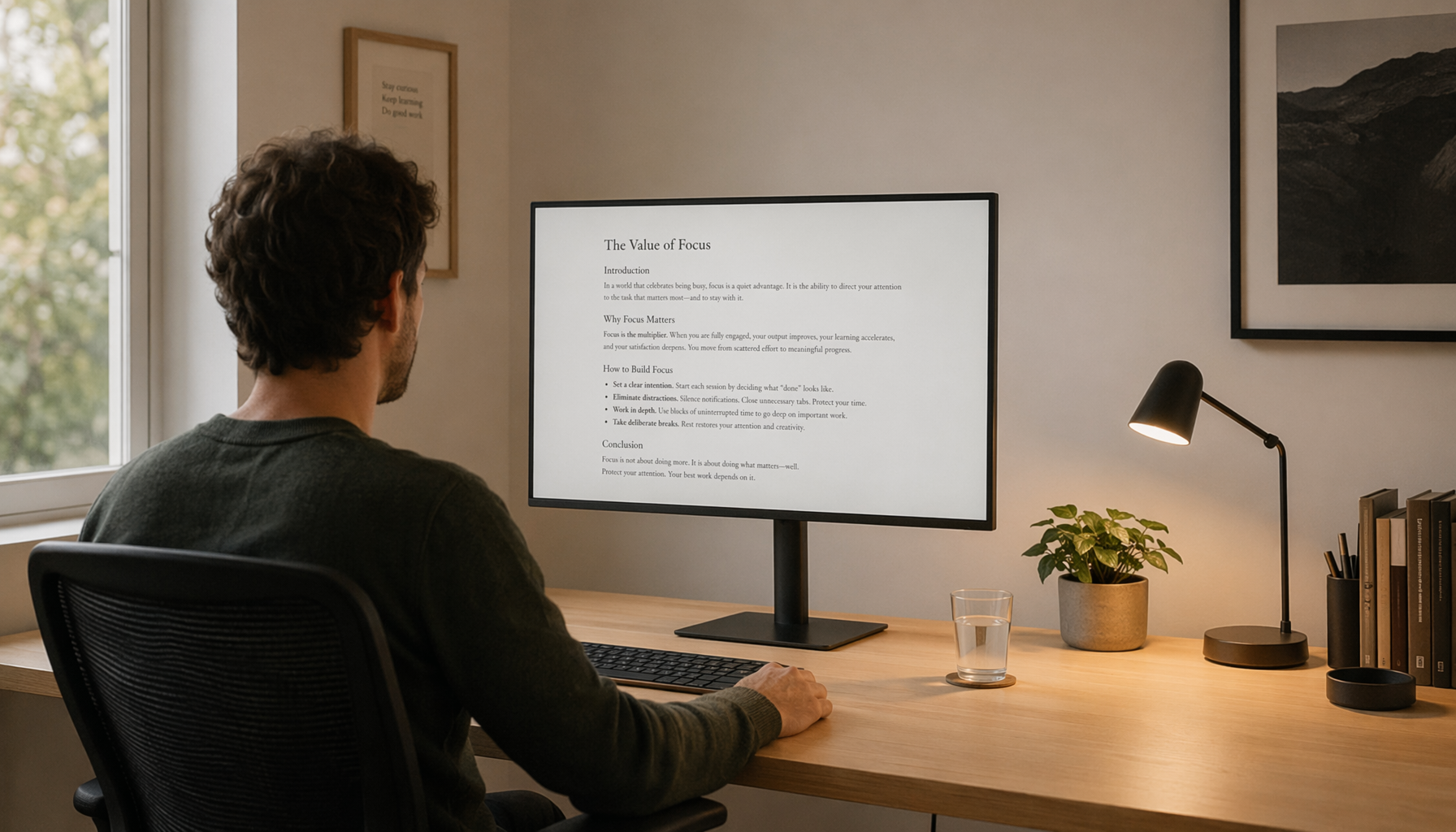
A practical example is a 27-inch office display used for spreadsheets. If the right edge looks slightly gray while the center looks clean white, the defect may seem minor in a test image but become tiring during an eight-hour workday because the same column area always looks different.

Why Uniformity Degrades Over Time
Backlight Wear and Brightness Decay
LCD monitors depend on a backlight, and that light source does not age perfectly evenly. Over years of use, some areas can dim faster than others, especially near edges, heat sources, or zones with mechanical stress. LCD lifecycle guidance identifies long-term wear as a cause of backlight dimming and color shift even in otherwise durable LCD products.
This is why an older monitor may still turn on instantly and look fine at first glance, while a gray uniformity screen reveals a darker band across one side. For productivity users, that can make white documents feel uneven. For gamers, it can make fog, skyboxes, snow, and smoke look dirty or patchy.
Heat, Humidity, and UV Exposure
Heat is one of the most reliable enemies of display consistency. High operating temperatures stress backlights, polarizers, driver electronics, adhesives, and panel layers. Humidity can affect sealing and internal components, while UV exposure can contribute to discoloration or material aging. LCD lifecycle guidance specifically flags high temperatures, humidity, and UV exposure as drivers of dimming, discoloration, degradation, and failure.
For a real-world setup, consider a portable smart screen left near a sunny apartment window or used daily beside a warm laptop exhaust. The panel may not fail suddenly, but the side exposed to more heat can age differently. The result is not always dramatic; it can start as a faint yellow cast or a corner that no longer matches the rest of the screen.

Pressure, Flex, and Shipping Stress
Uniformity can also degrade from physical stress. LCD layers are thin and precisely aligned, so uneven pressure from a tight monitor arm clamp, backpack compression, a warped housing, or repeated transport can create light leakage, dark spots, or cloudy areas. LCD lifecycle guidance treats mechanical durability as critical because physical impact or pressure can crack screens or damage internal components.
Portable monitors deserve extra attention here. A screen carried with a laptop, charger, and notebooks may slowly develop pressure marks even without one obvious accident. If a pale patch appears exactly where pressure is applied during travel, settings are unlikely to solve it.

Electrical Stress and Component Drift
Incorrect voltage, power surges, electrostatic discharge, and unstable power can damage display electronics or cause uneven behavior over time. LCD lifecycle guidance lists incorrect voltage, power surges, and electrostatic discharge as causes of LCD electronic failure.
On LED video walls and large-format installations, the same principle scales up. LED reliability guidance notes that voltage instability can cause flickering or uneven brightness, while poor thermal management can accelerate luminance loss. Its guidance says brightness decay can be a major risk when heat is not controlled well.
For a desktop user, the practical move is simple: use the correct power adapter, avoid questionable docks that underpower portable displays, and take recurring flicker seriously if it appears alongside tint shift or uneven brightness.
Warning Signs You Should Not Ignore
Darker Corners, Hotspots, and Cloudy Gray Areas
Darker corners, bright hotspots, cloudy patches, and edge glow are classic signs that uniformity is slipping. KTC’s support guidance describes weak uniformity as darker corners, bright hotspots, cloudy gray patches, and localized warm or cool tint.
Gray is especially revealing because it sits in the middle of the brightness range. A white screen can hide some defects by overpowering your eyes, while black can exaggerate glow depending on viewing angle. A 50% gray screen often tells the truth: if one side looks smoky, stained, or warmer, the panel is no longer presenting a neutral field.
Color Tint That Moves Across the Screen
A serious warning sign is not just that the monitor looks too warm. It is when the center looks neutral, the left side looks pink, and the right side looks green or blue. That kind of tint variation undermines creative work because moving an image across the screen changes how it appears.
A calibration forum discussion makes the key point: calibration can improve white point, tone response, and overall balance, but it cannot fix the physical reality of a non-uniform panel. In practical terms, if a photo looks correct in the center but too warm in the corner, software profiling may make the center more accurate while leaving the corner visibly wrong. The non-uniform screen problem remains a hardware limitation.
Problems That Appear in Real Apps, Not Just Tests
Every display has some variation, so the decision point is not perfection. The useful question is whether the flaw appears in your actual workflow. KTC’s guidance makes this distinction well: if issues only show up in rare test patterns, the monitor may be usable; if they show up in documents, games, or editing work, a return, exchange, or new role for the display may be justified.
A concrete example is a gaming monitor that shows minor edge glow only on a black test screen in a dark room. That may be acceptable for competitive shooters played in a lit room. The same monitor may be a poor fit for dark cinematic games, color grading, or late-night movie viewing.
How to Test Uniformity Without Lab Gear
Start with controlled lighting. A dim room helps reveal subtle unevenness, while glare can trick you into blaming the panel for reflections. One screen-testing method recommends using full-screen color screens, checking brightness and color consistency, and repeating the test across different colors and brightness levels; testing from different viewing angles also helps separate true panel issues from angle-related shifts.
Use full-screen white and gray to judge brightness uniformity, black to reveal backlight bleed or glow, and red, green, and blue to expose color tint differences. Practical testing advice makes the same point: gray, white, black, and primary-color screens reveal different defects, so one test color is not enough.
A simple uniformity check is especially useful for aging monitors because slow degradation can go unnoticed. Use full-screen plain colors in a dark room and look for areas that are lighter or darker than the rest; the value is early detection, not lab-grade measurement. That matters because a monitor can fade gradually at the edges or develop blotches long before the user realizes editing decisions have been affected. The simple visual test is a good habit before warranty expiration, before buying used, and whenever a trusted display starts to feel off.
Test screen |
What it reveals |
Practical interpretation |
White |
Dim corners, yellowing, dirty patches |
Important for office work, browsing, and document editing |
50% gray |
Brightness drift and dirty screen effect |
Often the best quick check for everyday uniformity |
Black |
Backlight bleed, edge glow, clouding |
Critical for dark games, movies, and night use |
Red, green, blue |
Color tint and channel imbalance |
Useful for creative work and panel aging checks |
Can Settings or Calibration Fix It?
Settings can reduce the impact, but they cannot rebuild the panel. Lowering brightness may make edge glow less distracting in a dark room, but in some cases it can also make uneven zones more obvious. A warmer color temperature may reduce eye strain, while a native or cooler white point may make a weak panel look more even. The calibration discussion highlights this real compromise: technically accurate targets such as 6500K, 120 nits, and gamma 2.2 do not always produce the most comfortable or satisfying result on a poor panel.
Uniformity compensation is the one monitor feature designed for this problem, but it has tradeoffs. It can even out luminance and color across zones, yet it may reduce contrast or lock other settings. KTC notes that uniformity compensation can improve evenness while reducing contrast or limiting controls.
Option |
Upside |
Tradeoff |
Lower brightness |
Reduces visible glow and eye strain in dark rooms |
May not help tint or cloudy patches |
Calibration/profile |
Improves center white point, gamma, and overall color behavior |
Cannot correct physical variation across the whole panel |
Uniformity compensation |
Makes brightness and color more consistent across zones |
May reduce contrast or restrict settings |
Brighter room lighting |
Makes black-uniformity flaws less visible |
Does not actually improve the panel |
Replacement |
Solves severe physical defects when the new unit is better |
Panel lottery and return logistics still apply |
For gaming, keep the monitor at native resolution and the highest stable refresh rate, then tune brightness for the room rather than chasing maximum output. Gaming settings guidance recommends native resolution and high refresh rate for clarity and smoothness, while brightness should be adjusted to balance visibility and strain. Those monitor settings improve the experience, but they do not erase hardware uniformity defects.
When to Keep, Repurpose, Return, or Replace
A monitor with mild uniformity drift can still be valuable. Use it for chat, dashboards, email, reference documents, or non-critical secondary tasks. For color editing, dark gaming, CAD review, or financial spreadsheets with large white and gray fields, the tolerance should be much tighter because the defect becomes part of the work surface.
Return or exchange the display if the flaw is visible in normal use soon after purchase. Replace an aging display when uniformity problems keep returning after brightness, cable, room-lighting, and calibration checks. Walk away from a used monitor if full-screen gray or white reveals obvious blotches, edge dimming, or color stains; dead pixels are not the only risk.
The performance-first standard is straightforward: if the panel distracts you, misleads your edits, hides shadow detail, or makes long sessions harder, it is no longer doing its job. A great display should disappear into the work, the match, or the movie. Uniformity is the quiet spec that keeps immersion trustworthy.