Your calibration is probably not changing; your eyes and workspace are. Daylight, glare, room brightness, automatic display features, and color-management settings can make the same monitor profile look accurate at night but washed out, too blue, too warm, or too contrasty during the day.
Ambient Light Changes Your Perception
A calibrated monitor is measured from the screen, but you judge it through your room. When sunlight hits your desk, wall, screen, or keyboard area, your visual system adapts to that brighter environment, and the display can look dull or color-shifted.

This is why a profile that feels rich at 10:00 PM can look weak at 10:00 AM. Glare from windows and uneven lighting can reduce visual clarity and increase eye fatigue, especially during long work sessions with bright documents or white interface panels.
For accurate work, keep lighting stable. Office setups benefit from soft, indirect light, controlled windows, and monitor brightness that matches the room instead of fighting it; screen reflections are often the hidden reason good calibration feels wrong.
Night Calibration Can Be Too Dark for Day Use
Many people calibrate at night in dim room lighting, then expect that profile to hold up in a bright office. The color values may still be valid, but the luminance target is no longer comfortable or useful.
Display-calibration guidance commonly recommends warming up the display and choosing luminance based on the working environment, with 120 cd/m² as a common starting point for slightly dim rooms. In a bright daytime room, that may feel too low.
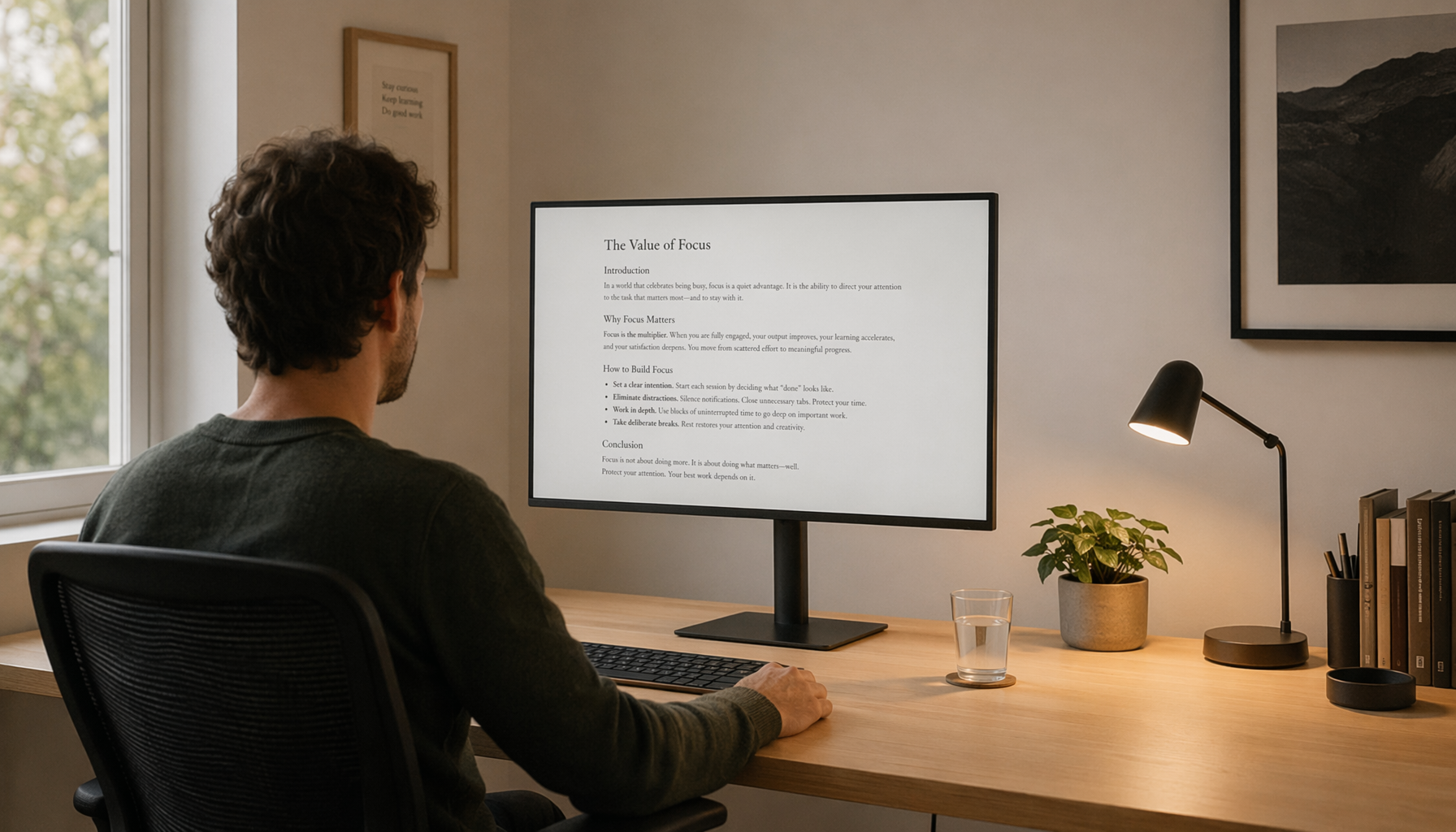
A practical check is to open a white document beside a printed page or notebook under your normal lighting. If the screen looks like a lamp, lower the brightness. If the screen looks gray and flat, raise the brightness or reduce room glare first.

Automatic Features Can Fight Your Calibration
Modern monitors and operating systems often adjust brightness, contrast, color temperature, high-dynamic-range behavior, or app color handling automatically. Those adjustments can break consistency.
Before blaming the calibration:

- Turn off automatic brightness or ambient light sensing.
- Disable eco mode, dynamic contrast, and vivid picture modes.
- Review scheduled blue-light or warm-color settings.
- Check high-dynamic-range switching between desktop apps and games.
- Confirm graphics settings and app-specific profiles are not overriding the display profile.
System-level color behavior also matters. Automatic color management can improve consistency across supported displays and apps, but you should confirm that the correct display and profile are selected.
If the monitor looks wrong only after sleep or wake, the issue may be a profile, high-dynamic-range, or signal-handshake problem rather than room lighting.
A Better Day-and-Night Calibration Workflow
Start by calibrating for the lighting you actually use most. If you edit photos at night, calibrate at night. If you work in a daylight-heavy office, calibrate under controlled daytime lighting.
Use the monitor’s hardware controls first: brightness, contrast, color temperature, gamma, and picture mode. Calibration guidance notes that brightness mainly controls backlight intensity, while color temperature strongly affects whether white appears neutral, bluish, or warm.
For a reliable baseline:
- Warm up the monitor for about 30 minutes.
- Use sRGB, Custom, or User mode instead of Vivid.
- Set the white point to a neutral daylight target for most screen work.
- Use gamma 2.2 for typical computer, gaming, and office use.
- Keep daylight off the screen with blinds or a monitor hood.

If you need both day and night accuracy, create two controlled environments instead of endlessly tweaking one profile. For gaming, office work, and creator workflows, the goal is not maximum brightness; it is repeatable lighting, stable settings, and a screen that lets your eyes trust what they see.