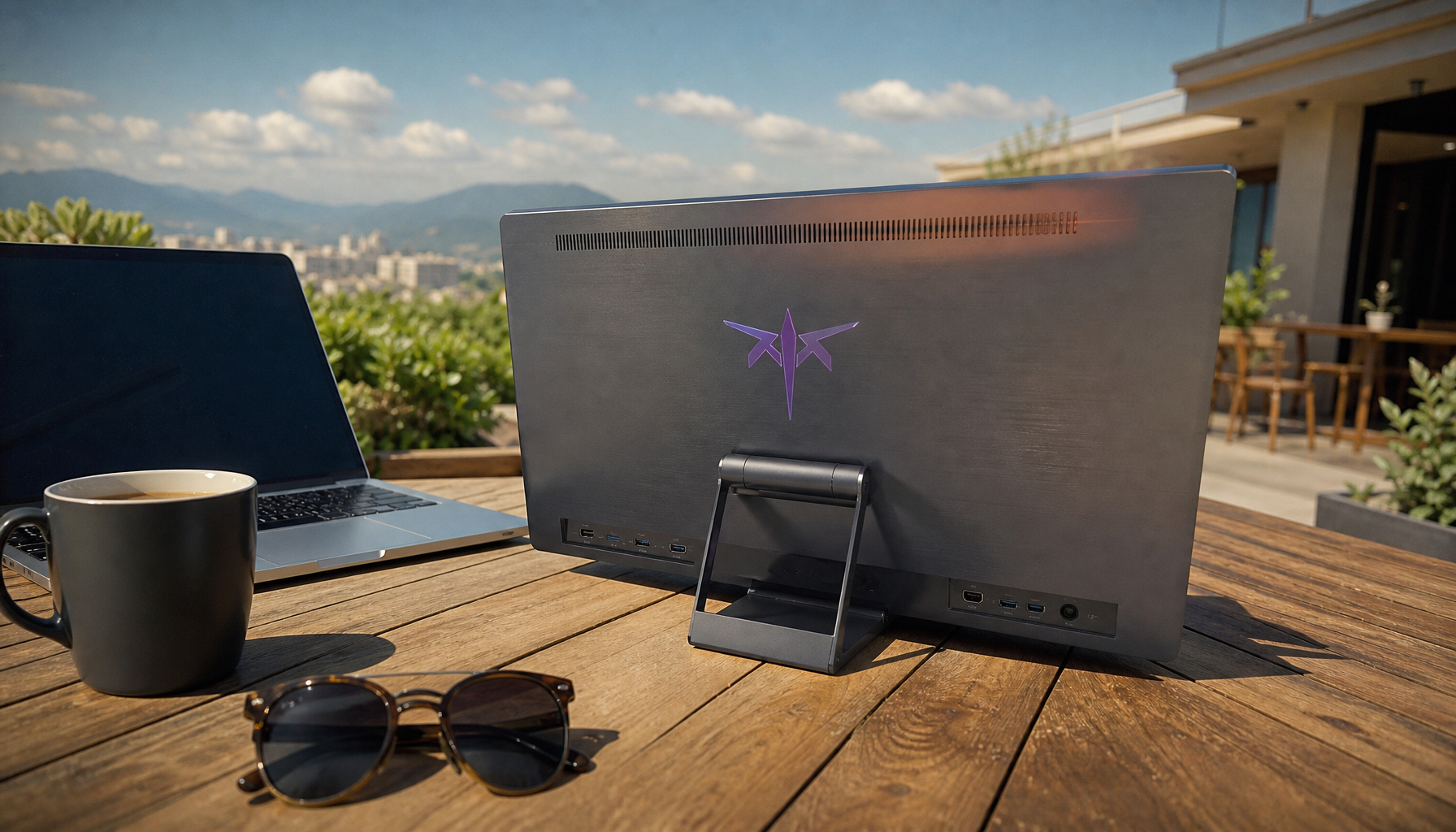
Your smart monitor can still use power with the screen off because its app platform, network radios, memory, voice features, and standby services may stay awake so the monitor can resume quickly, receive updates, detect inputs, or respond to smart commands.
Does your smart monitor seem “off,” while your power strip, smart plug, or utility graph shows it still using electricity overnight? A plug-in energy monitor can confirm whether the drain comes from standby services instead of the panel itself, then help you reduce wasted power without giving up the features you actually use.
The Short Answer: The Screen Is Off, But the Computer Inside Is Not
A traditional monitor is mostly a display panel with input electronics. A smart monitor is closer to a compact display computer: it may include wireless networking, short-range audio pairing, an operating system, app storage, speakers, voice assistant hooks, casting support, and quick-resume logic. That is why “screen off” is not always the same as “fully powered down.”

Smart monitors support streaming apps, wireless display, cloud productivity, screen mirroring, and smart home features, so the monitor may keep parts of its system active even when the backlight or pixels are dark. A smart monitor can connect to computers and cell phones, mirror content wirelessly, run apps, and switch inputs automatically, but that convenience depends on electronics that remain ready in standby.
This is not necessarily a defect. It is a design tradeoff: the app platform saves time, reduces cable clutter, and makes the screen more useful in a home office or gaming setup, but it can add standby power draw that a basic monitor would not have.

What Standby Drain Means
Standby drain, often called phantom energy, is electricity used by a device while it appears inactive. If a monitor wakes instantly, shows a small indicator light, responds to a remote, stays discoverable for casting, or updates apps in the background, it is still doing work.

Phantom energy is not unique to smart monitors. Many electronics use power while idle, and phantom energy can show up through clues like instant-on behavior, indicator lights, or a faint hum. With smart displays, the hidden load may come from the app processor, network connection, control-signal listening, USB power delivery, wireless pairing, or voice assistant standby.
The important distinction is between panel power and platform power. The panel creates the image. The platform is the smart layer that launches apps, handles wireless features, manages accounts, and keeps the device responsive. Turning off the screen usually cuts the largest visible load, but it may leave the platform in a lower-power state instead of shutting it down completely.
Why the App Platform Keeps Running
Quick Start and Resume Features
Fast wake is one of the biggest reasons smart monitors keep drawing power. If your display wakes like a TV, opens the home screen quickly, or remembers the last streaming app, it likely keeps memory and system services partially energized.
This can be useful during a workday. A remote worker can return to a desk, tap a key, and continue from a cloud document or wireless display session without waiting through a full boot. The downside is that convenience has an energy cost, especially if the monitor sits unused overnight or through the weekend.
Wireless Sharing, Pairing, and Remote Control
Wireless features need listening modes. A monitor that supports cell phone casting, wireless screen sharing, wireless audio, or second-screen use may remain visible to nearby devices even after the panel is off. That discoverability is what makes the experience feel seamless.
Smart monitors commonly include operating systems, apps, wireless networking, wired networking, screen mirroring, and external device support. Every always-ready connection adds another reason the platform may avoid a full shutdown.
For a gaming desk, this matters when a console, PC, and monitor are linked by display cables, USB-C, or wireless features. The monitor may watch for active inputs so it can switch automatically when a console turns on. That is convenient, but it can keep input-detection circuits awake.
App Updates and Account Services
Smart monitors often behave like streaming devices. They may check for app updates, refresh recommendations, sync account status, or maintain certificates and time settings. These services usually draw far less power than the active display, but they explain why a dark monitor is not electrically silent.
This pattern also appears across connected home systems. IoT platforms rely on real-time monitoring, remote control, automation, and cloud integration, and IoT monitoring works because devices keep sensors, controllers, and software services available instead of fully dormant.
How Much It Matters on Your Bill
The only honest answer is to measure your model. Standby draw varies by monitor size, chipset, firmware, network settings, USB-C power behavior, voice controls, and whether connected devices are also waking it.
Once you know the watts, you can estimate cost. Electricity is billed in kilowatt-hours, so a device using 5 watts continuously uses about 3.6 kWh over 30 days. At $0.16 per kWh, that is about $0.58 per month. If the standby draw is 15 watts because USB devices, speakers, or network features stay active, the same 30-day cost is about $1.73.
That may sound small for one screen, but workstation setups stack loads. A smart monitor, dock, powered speakers, console, printer, and laptop charger can create a meaningful overnight baseline. The Department of Energy recommends letting equipment enter sleep mode when inactive and turning off both computer and monitor for longer breaks, and low-power modes can also reduce heat and potentially extend equipment life.
How to Find the Real Cause
Start with a plug-in energy monitor or smart plug with energy tracking. Plug only the smart monitor into it, leave the monitor in normal screen-off standby overnight, and record the watts. Then disable one smart feature at a time and repeat. Good test candidates include voice assistant wake, quick start, automatic app updates, wireless pairing, wireless networking, control-signal wake, automatic input switching, and USB charging in standby.
Energy monitoring works best when you compare patterns instead of guessing. Home energy systems are useful because they reveal usage spikes, idle loads, and appliance-level behavior, and real-time usage tracking helps users spot waste that would otherwise stay invisible. For a display setup, one night of measurement shows the baseline; a week of measurement shows whether updates, casting, or connected devices cause periodic spikes.
A simple real-world workflow is to measure four states: active use at your normal brightness, normal standby with the screen off, standby with wireless and voice features disabled, and the monitor with the power strip switched off. The gap between normal standby and switched-off power is the avoidable drain.
Settings That Usually Reduce Standby Power
The best setting depends on how you use the screen. For a productivity display, sleep should be aggressive during work breaks, while full power-off can be reserved for overnight. For a gaming monitor, you may want instant input detection while playing, then a deeper shutdown when the console and PC are off.
Use the monitor’s energy-saving mode if available, and shorten the sleep timer. Disable quick start or instant-on behavior if you do not need the home screen to appear immediately. Turn off voice wake if you never use voice commands. Disable wireless casting when your monitor is connected by a display cable or USB-C most of the time. If the monitor powers USB devices while sleeping, turn off standby USB power unless you rely on it to charge peripherals.

There is a tradeoff. Disabling wireless networking can stop app updates and streaming access until you reconnect. Turning off device-control wake may prevent a console from waking the monitor automatically. Cutting power at the strip may require a longer boot and can occasionally interrupt updates. The practical move is not to kill every feature; it is to disable the features that provide no daily benefit.
When a Power Strip Is the Right Answer
A switched power strip is the cleanest fix for long idle periods. If your smart monitor is part of a desk setup that sits unused overnight, connect the monitor, speakers, printer, and nonessential accessories to the same strip and switch it off when you are done.

The Department of Energy recommends connecting monitors, printers, and accessories to a power strip or surge protector and switching it off during extended non-use to prevent standby draw. For a hybrid work setup, that means sleep during lunch, full shutdown after work, and switched-off power when you are away for the weekend.
The exception is any device that must remain available for remote access, scheduled recording, security, or accessibility workflows. If the monitor is used for remote support, smart home control, or assistive access, the always-ready state may be intentional. In those cases, measure the load, confirm it is acceptable, and optimize settings without breaking the service.
Smart Monitor Pros and Cons Behind the Power Tradeoff
Smart monitor advantage |
Power-related tradeoff |
Built-in apps reduce the need for a separate streaming stick or mini PC |
The app platform may draw standby power even with the screen off |
Wireless display and casting keep desks cleaner |
Wireless networking and discovery services may remain active |
Automatic input switching improves console and PC workflows |
Input detection can keep circuits awake |
Voice and remote control improve convenience |
Listening and remote receiver functions require standby power |
Cloud productivity and smart home features add flexibility |
Account sync, updates, and network services can create background activity |
Practical Rule for Display Buyers
If you want the lowest idle draw, a conventional monitor plus strict PC sleep settings is usually simpler. If you want a display that doubles as a streaming hub, wireless second screen, console display, and compact office screen, standby power is part of the platform cost.
The buying question is not whether smart monitors use power when off. They usually do. The better question is whether the smart layer replaces other devices you would otherwise leave plugged in. If one smart monitor lets you remove a streaming stick, wireless speaker, small TV, or spare dock, the net energy and desk-space tradeoff may still be favorable.
FAQ
Should I unplug my smart monitor every night?
If you do not need overnight updates, remote wake, USB charging, or casting availability, unplugging the monitor or switching off the power strip is the most reliable way to stop standby draw. If you use the monitor daily, try disabling quick start and voice wake first, then measure whether the improvement is enough.
Can standby drain damage the monitor?
Normal standby drain is expected behavior, not a sign of damage. Excessive heat, buzzing, firmware loops, or unusually high standby wattage may point to a setting, connected accessory, or hardware issue worth checking with the manufacturer.
Is sleep mode better than screen off?
Usually, yes. Screen off may only blank the panel, while sleep mode should reduce more system activity. The exact behavior depends on the monitor’s firmware, so measurement is the deciding test.
A smart monitor’s app platform drains power because it is designed to stay ready, connected, and responsive. Measure the standby load, disable the convenience features you do not use, and use a switched power strip for long idle windows. That keeps the flexible screen experience while cutting waste that does nothing for your work, games, or media.