

Thin CAD lines shimmer or vanish because very fine vector geometry is being mapped to a fixed pixel grid, and that mapping changes as you zoom, pan, and resample the view.
You notice it when a clean boundary line suddenly blinks out, a diagonal edge looks jagged, or a title block flickers only while the drawing is moving. The pattern shows up across CAD software and GIS workflows, and the fixes that work most often are consistent: isolate the graphics path first, then match your monitor’s resolution, scaling, and refresh rate to the way you actually draft. What follows is a practical way to diagnose the problem and choose a display setup that keeps fine linework more stable.
Why the problem happens in the first place
Vector lines are being sampled onto pixels
Single-pixel vector content is not stored on screen as a permanently smooth stroke. The CAD or PDF engine still has to rasterize that geometry onto the monitor’s pixel grid, and very thin lines can land awkwardly between pixel boundaries. That is why a line can look solid at one zoom level, faint at the next, and slightly different again after a small pan.
Vector output depends on the display device in a very literal way. A diagonal line that is mathematically perfect inside the drawing may still show stair-stepping, partial coverage, or a shimmer effect once it is translated into screen pixels. Anti-aliasing can soften the visual jump, but it does not change the fact that the monitor is approximating a continuous vector with discrete pixels.

Motion makes sampling changes obvious
Lines that appear during panning and disappear when motion stops are a classic sign that the visible issue is tied to display refresh and redraw behavior, not necessarily to the drawing itself. While the view is moving, the software may temporarily redraw or simplify the scene differently; once the frame settles, a near-1-pixel line can drop back into a borderline sampling state.
On high-resolution panels, the same effect can feel worse because you are asking the software, GPU, and monitor to redraw more pixels every frame. In practice, that is why users sometimes describe the issue as “flicker,” “jumping,” or “shimmer” even when the underlying geometry is fine.
Resolution usually matters more than refresh rate
Higher pixel density improves line definition
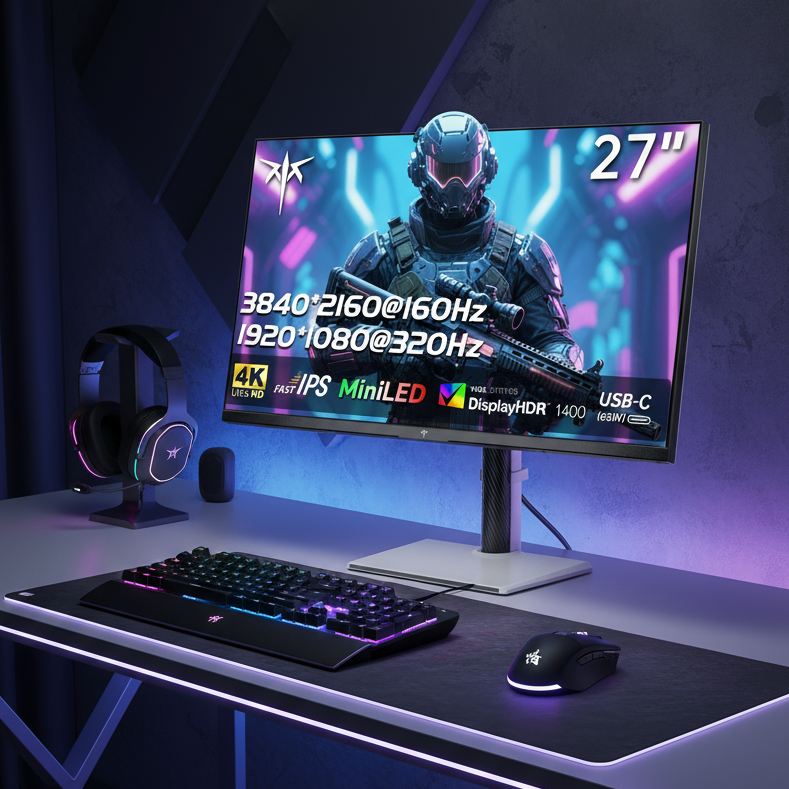
Pixel density and 4K resolution matter more to line clarity than the marketing label on the monitor box. For CAD work on a 27-inch to 32-inch display, 3,840 x 2,160 generally gives much finer pixel structure than 1,920 x 1,080, and that directly reduces visible stair-stepping on diagonal and curved linework. Resolutions like 1,440p are often a workable budget tier, while 1,080p can make aliasing on CAD lines easier to see.
Higher resolution for precise design work also reduces the need for constant zooming, which indirectly cuts down how often you trigger resampling artifacts in the first place. If your normal workflow involves dense plan sheets, layered reference files, and thin construction lines, more pixels usually buy more stability than a jump from 60Hz to 144Hz alone. On that point, a 27-inch 4K 60Hz IPS display such as the 27-inch 4K IPS 60Hz low blue light home and office monitor from a brand is a useful example of a denser same-size setup that can make fine lines look more stable than a 27-inch 1,440p panel.

Refresh rate helps motion, but it does not fix undersampled lines
Higher refresh rates in CAD are useful mainly because panning, cursor travel, and 3D navigation look smoother. That is real value, especially on mixed-use displays that also handle modeling, visualization, or game-dev tasks. But forum replies in CAD-focused discussions repeatedly place more weight on resolution and GPU capability than on gaming-style refresh by itself.
A 75Hz to 120Hz refresh range can reduce blur and stutter during panning or rotating assemblies, and variable refresh rate can help if frame rate fluctuates. What it cannot do is restore line definition that was lost because the line is still only landing on about one pixel. If you must choose, higher pixel density is the better first purchase for 2D drafting clarity; higher refresh is the refinement layer.
Screen size, scaling, and panel choice can help or hurt
Screen size has to match resolution
A 32-inch 4K IPS layout is a strong sweet spot because it balances usable workspace with enough pixel density to keep vectors sharp. One reason this size works well is scaling: some 27-inch 4K setups push users toward 150% to 200% UI scaling, which can soften interface elements and reduce the workspace advantage that made 4K attractive in the first place.
IPS panels and wide viewing angles also matter more than many buyers expect. On larger displays, off-center color and contrast shifts can make faint linework feel less stable, especially near the edges of the screen. IPS is the safer choice for professional CAD because it keeps the image more consistent across the panel.
Ultrawide and portable displays need a role, not just a spec sheet
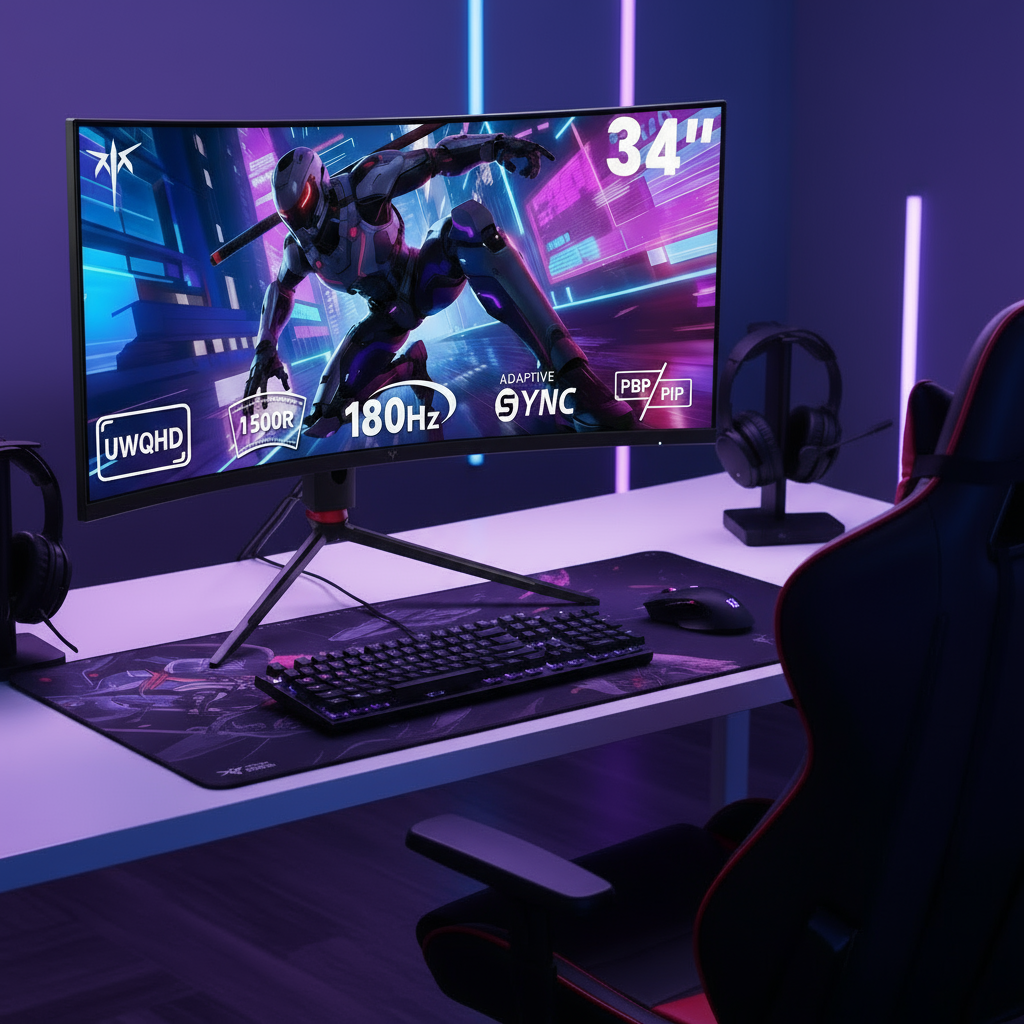
Ultrawide monitors for side-by-side work are useful when you want a drawing, reference PDF, and tool palettes open without multi-monitor bezels. They are often a better productivity upgrade than a second lower-quality screen. For 2D drafting, a flat ultrawide is usually the safer choice because line judgment stays more predictable across the width of the panel.

Curved ultrawide feedback in CAD is mixed. Some users report no problem on a curved display, while others find that curves can subtly affect how straight lines feel during precision work. A practical inference from those reports is simple: use curved ultrawides for mixed 3D and document-heavy workflows, but prefer flat panels when your job depends on reading fine 2D geometry all day. Portable monitors fit best as secondary screens for palettes, email, or markups rather than as your main line-review display.
Display setup |
Thin-line behavior |
Best use |
Main tradeoff |
27-inch 1,440p IPS |
Better than 1,080p, but diagonals can still alias |
Budget primary CAD monitor |
Less detail than 4K |
32-inch 4K IPS |
Best balance of sharp vectors and usable workspace |
Main drafting and review display |
Needs a capable GPU |
34- to 38-inch flat ultrawide |
Strong side-by-side workflow, fewer bezels |
CAD plus references or palettes |
Usually less vertical resolution than 4K |
144Hz gaming monitor at 1,440p or 4K |
Smoother panning and cursor motion |
Mixed CAD, 3D, and gaming use |
Refresh alone will not cure thin-line shimmer |
15- to 17-inch portable monitor |
Fine for tools and reference windows |
Secondary travel or desk companion |
Too little workspace for primary CAD review |
Before buying a new monitor, test the render path
Check hardware acceleration and the active GPU
Hardware acceleration and GPU selection are the first tests worth running because they often separate a monitor limitation from a graphics-path problem. In one CAD software case, updating the software did not solve disappearing lines, but turning hardware acceleration off changed the behavior, and forcing the application onto the dedicated GPU fixed it. That is an important buying lesson: a sharper monitor will not solve a bad render path.
High-resolution UI flicker on 4K monitors can also be triggered by layout tabs and status-bar wrapping rather than linework itself. If the bottom of the CAD app window is reflowing while you zoom, treat that as a separate interface issue. It can make the whole display feel unstable even when the geometry is not the root cause.
Test line smoothing and drawing integrity
Line smoothing and hardware acceleration are another useful pair of toggles. Strange temporary lines, shimmer, or ghost geometry during zooming can come from line smoothing, but if disabling smoothing does not help, the same thread points back to the graphics card path.
Drawing cleanup tools such as file-audit and cleanup commands, and profile resets matter because not every “monitor problem” is a monitor problem. Similar symptoms have also been fixed by exporting only visible features into a new dataset when corrupted linework would not behave normally during zoom and pan in GIS work. If disappearing geometry survives monitor changes, suspect the file.
What to buy if line clarity is the priority
A practical buying profile for CAD-focused displays
The most reliable CAD monitor traits are high resolution, high pixel density, IPS viewing angles, accurate color, anti-glare treatment, and an adjustable stand. For most professionals, that points to a 27-inch to 32-inch IPS monitor, with 4K as the preferred target and 1,440p as the lower-cost compromise. If you work long sessions, USB-C docking and a height-adjustable stand are not extras; they reduce friction every day.

A Delta E below 2, 100% sRGB coverage, and 60Hz to 120Hz refresh are sensible buying thresholds. Color accuracy does not stop line shimmer by itself, but it helps when line weights, markups, and reference imagery need to read consistently. Refresh rate is worth paying for once resolution and panel quality are already right.
When a gaming monitor is the right answer
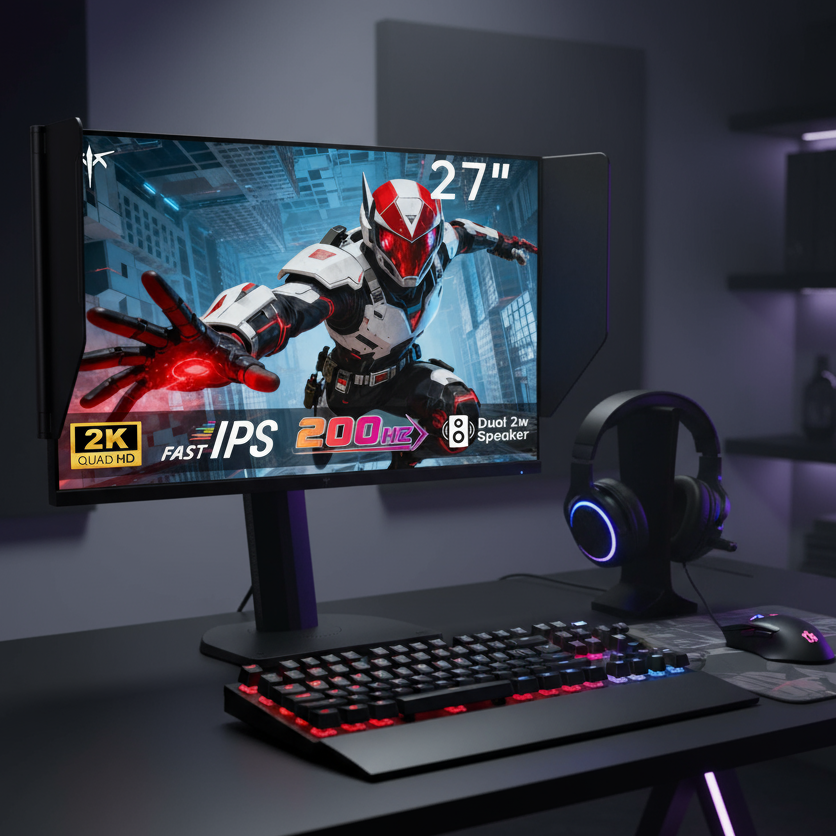
A gaming monitor in a CAD setup makes sense when your day includes frequent 3D orbiting, smooth walkthroughs, or mixed use outside drafting. In that case, a high-refresh panel can make navigation feel cleaner and reduce motion blur. The key is to avoid buying refresh rate at the expense of pixel density.
If you are choosing between a sharper 4K professional-style display and a lower-resolution high-refresh gaming panel for mainly 2D CAD, buy the sharper panel first. If you already have enough pixels and a capable GPU, then a 120Hz or 144Hz monitor becomes a worthwhile comfort upgrade rather than a distraction.
FAQ
Q: Why do lines sometimes reappear only while I am panning?
A: That usually points to redraw behavior, line smoothing, or GPU acceleration rather than true missing geometry. The line can land in a slightly different sampled state while the view is moving and then drop back to a weaker one when the frame settles.
Q: Will a 144Hz monitor stop thin CAD lines from shimmering?
A: It can make panning and cursor movement look smoother, but it does not fix lines that are fundamentally too close to one pixel wide on screen. Higher pixel density usually has the bigger effect on line stability.
Q: Is a curved ultrawide bad for CAD?
A: Not always. It can work well for mixed 3D and multitasking, but for precision 2D line judgment, a flat panel is the safer default because straight edges feel more consistent across the screen.
Practical Next Steps
Start by treating this as a rendering-and-display problem, not just a monitor-shopping problem. The fastest path is to confirm whether the issue follows the drawing, the GPU path, or the panel setup, then buy only the display features that address the actual bottleneck.
Action checklist
- Toggle hardware acceleration and test the same drawing again.
- Force the CAD app onto the dedicated GPU if your system has both integrated and discrete graphics.
- Turn line smoothing on and off to see whether the artifact changes.
- Run drawing cleanup tools such as file-audit or cleanup commands if the issue looks file-specific.
- If you are on 1,080p, move to 1,440p or preferably 4K before paying extra for very high refresh.
- For a new primary monitor, prioritize 27-inch to 32-inch IPS, anti-glare, ergonomic adjustment, and a resolution that matches your scaling comfort.
- Use ultrawide or portable displays as workflow extensions, not as substitutes for a sharp primary drafting screen.