Black text on a bright white background is readable because it creates strong contrast, but that same brightness gap can feel harsh during long, close-focus sessions. Your eyes are usually getting tired from sustained focus, glare, dryness, and display settings that do not match your room.
High Contrast Helps Reading, Until Brightness Becomes the Problem
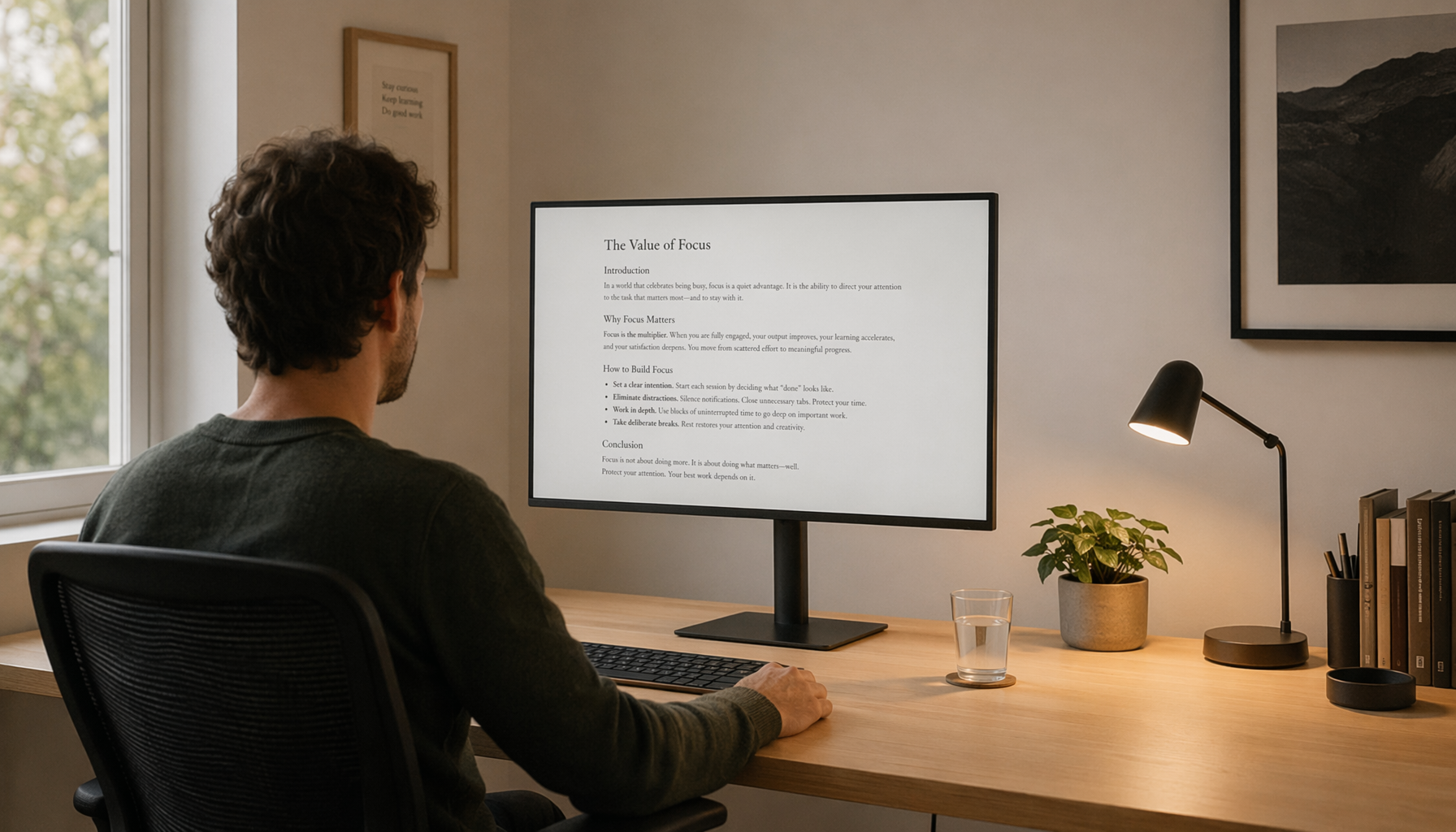
Black-on-white is popular for a reason: strong foreground-background separation improves legibility, especially for small text and detailed work. Good color contrast helps most readers, and it is essential for accessibility.
The issue starts when the white background is much brighter than the room. Your pupils constrict, your visual system keeps adapting, and the page can feel like a light panel instead of a reading surface.

For office displays, the better target is not maximum brightness. It is matched brightness: the screen should feel like it belongs in the room, not like it is fighting the room.
Your Focusing System Is Doing Reps
Reading is near work. Your eyes hold focus at a fixed distance, track line after line, and keep both eyes aligned on the same words. Over time, that continuous effort can cause fatigue, blurred vision, headaches, or trouble concentrating.
Medical sources describe eyestrain as fatigue from long periods of focused visual activity, including screen use and reading, where close-up viewing keeps the eye’s lens engaged. That is why the same article can feel fine for 10 minutes and punishing after two hours.
A useful quick check: if your monitor is closer than arm’s length, the text is tiny, or you lean forward to read, your setup is asking your eyes and posture to compensate.

Dryness Makes White Pages Feel Harsher
When you read, you blink less. On screens, that drop in blinking can dry the tear film that keeps the eye surface smooth, which makes light scatter more and text feel less stable.

Symptoms often include burning, watering, irritation, heavy eyelids, and blur. Digital eye strain is commonly tied to how people use screens, especially prolonged focus and reduced blinking, not just blue light; reduced blinking is a major comfort factor.
This is why a white document can feel sharp in the morning and painfully bright late in the day. The pixels did not change; your tear film and focus endurance did.
Tune the Display Like Performance Hardware
A gaming monitor or productivity display should be calibrated for the task, not left on showroom settings. High brightness and punchy contrast may look impressive in a store, but long-form reading needs visual stability.
Try these fast adjustments:
- Match screen brightness to the room, then fine-tune it slightly lower.
- Increase text size before increasing contrast.
- Keep the screen about 20 to 26 inches away.
- Place the screen at or slightly below eye level.
- Reduce glare from windows, lamps, and glossy surfaces.

For reading comfort, a warm off-white background, dark gray text, or a well-designed dark mode can reduce the lightbox effect. But dark mode is not automatically better for everyone; some readers see halos, smearing, or lower clarity.
When to Change Habits, and When to Get Checked
Use the 20-20-20 rule: every 20 minutes, look at something about 20 ft away for 20 seconds. Eye specialists commonly recommend this because regular breaks help your eyes refocus at different distances, and artificial tears can help when dryness is part of the problem.
If discomfort continues after you adjust brightness, font size, glare, and breaks, schedule an eye exam. The cause may be an outdated prescription, dry eye, binocular vision strain, or another condition that basic screen tweaks cannot solve.
The performance move is simple: treat reading comfort as part of display quality. A great screen should not just look bright and sharp for 30 seconds; it should help you stay clear, focused, and comfortable for the whole session.