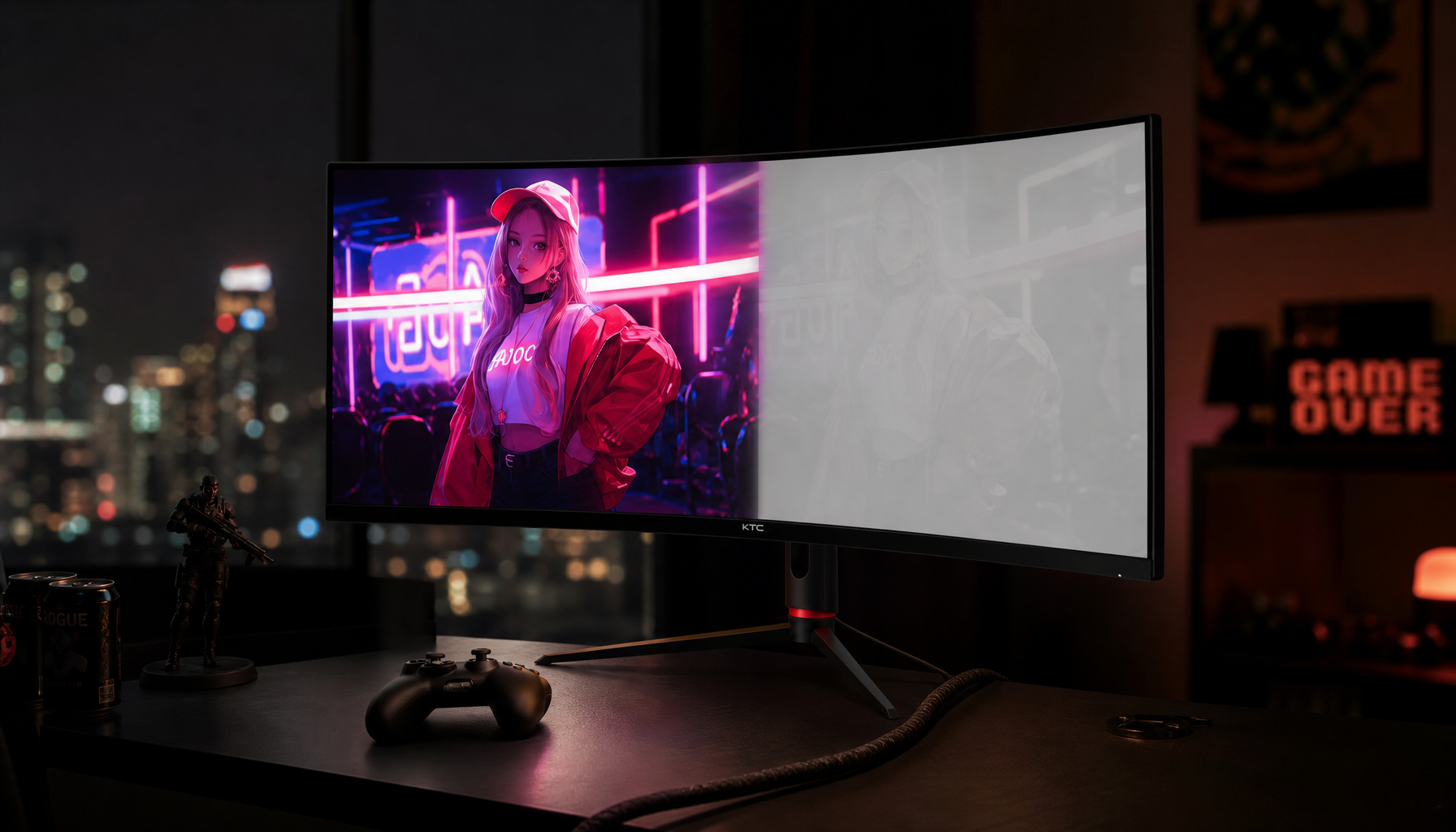
Ambient light raises the “black floor” your eyes see on a screen, so blacks look grayer and the image loses depth even when the monitor’s native contrast spec has not changed.
Native Contrast Is Only the Starting Point
Native contrast ratio describes how much brighter a display’s white is than its black under stable conditions, without dynamic dimming. A 300-nit white and 0.3-nit black output equals 1,000:1, while a lower black level at the same white output makes the image look deeper.
That spec matters, but it is measured in controlled conditions. In real use, your desk lamp, window, overhead lighting, and screen coating all change what your eyes perceive. For buying decisions, native contrast ratio is more useful than a huge dynamic number, but it still needs room-light context.
For office displays, 1,000:1 to 3,000:1 can feel clean and readable. For dark games, OLED, VA, or mini-LED with strong local dimming can feel much more immersive, especially when the room lighting is controlled.
Why Bright Rooms Wash Out Blacks
Ambient light reflects off the panel surface. That reflected light adds brightness to dark areas, so black no longer appears truly black. The result is lower perceived contrast, flatter depth, and less separation between shadow details.
This is why a monitor that looks punchy at night can look dull beside a sunny window. The panel did not get worse; the viewing environment raised the visible black level.

For example, if a screen’s black level appears to rise from 0.3 nits to 1.0 nit because of reflections, a 300-nit white no longer feels like 1,000:1. It feels closer to 300:1. That is a major visual downgrade for dark maps, cinematic scenes, spreadsheets with subtle grid lines, and photo editing.
Display contrast is often discussed as the gap between the brightest white and darkest black, but ambient contrast ratio is the version that matters most in actual rooms.
Bias Lighting Can Improve Perceived Comfort
A completely dark room is not always ideal. When the screen is the only bright object, your eyes constantly adapt between the display and the surrounding darkness. That can make bright highlights feel harsher and dark detail harder to judge over long sessions.
Soft bias lighting behind the monitor reduces that extreme brightness jump. It can make the screen feel more comfortable and help perceived contrast by giving your eyes a steadier reference point.

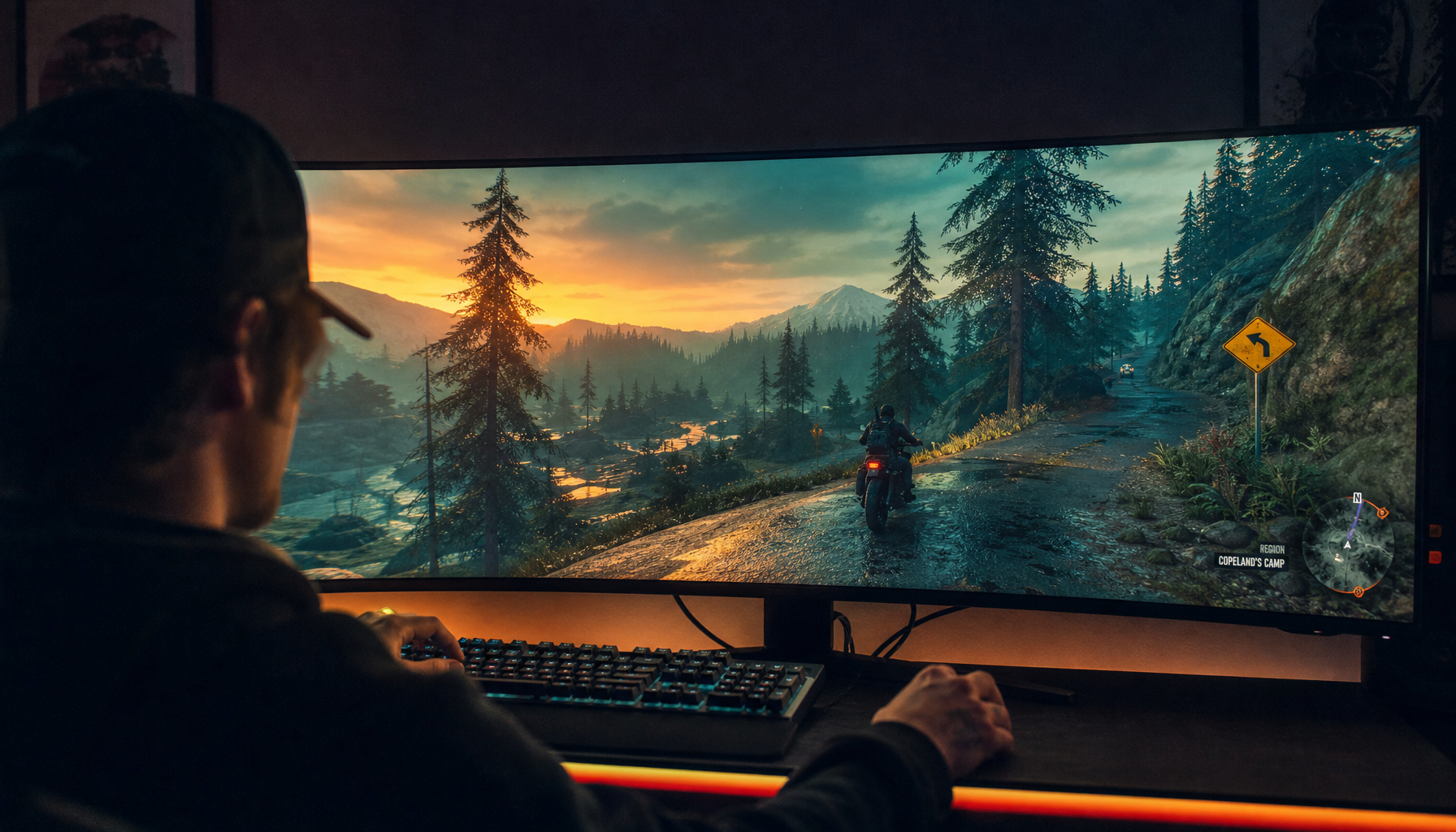
For gaming, use a low, indirect glow behind the display rather than bright colored light shining toward your eyes. For productivity, a neutral white bias light works better than saturated color because it keeps documents, charts, and creative work visually honest.
Bias lighting can help comfort and perceived depth, but too much light in front of the screen still causes glare and lowers contrast.
Best Setup for Gaming, Office, and Portable Screens
For competitive gaming, control reflections first. A higher-contrast panel helps, but a glossy screen facing a window can erase the advantage. Keep lighting behind or beside the monitor, not aimed at the panel.
For office productivity, prioritize readable contrast over maximum brightness. If whites feel harsh, lower brightness slightly, then check that dark gray text and grid lines are still visible. Misadjusted brightness can crush shadow detail, while aggressive contrast can clip highlights.
For portable smart screens, ambient light is even more important. Smaller displays move between cafes, conference rooms, flights, and bright workspaces, so coating quality and brightness can matter as much as the advertised contrast number. Many everyday LCD monitors sit in the 1,000:1 to 3,000:1 range, but reflections decide how much of that you actually see.
- Place the screen perpendicular to windows when possible.
- Use soft bias lighting behind the display for night work.
- Avoid lamps aimed directly at the panel.
- Raise brightness in bright rooms, but stop before whites feel glaring.
- Judge contrast with real content, not only spec-sheet numbers.

The Practical Takeaway
Ambient light does not change a monitor’s hardware contrast ratio, but it absolutely changes perceived contrast. The best image comes from matching the display to the room: strong native contrast, enough brightness, low reflections, and controlled lighting.
For a gaming or productivity setup, think beyond the panel spec. A well-lit desk can make a midrange screen look sharper, while a poor lighting layout can make a premium display feel washed out.