


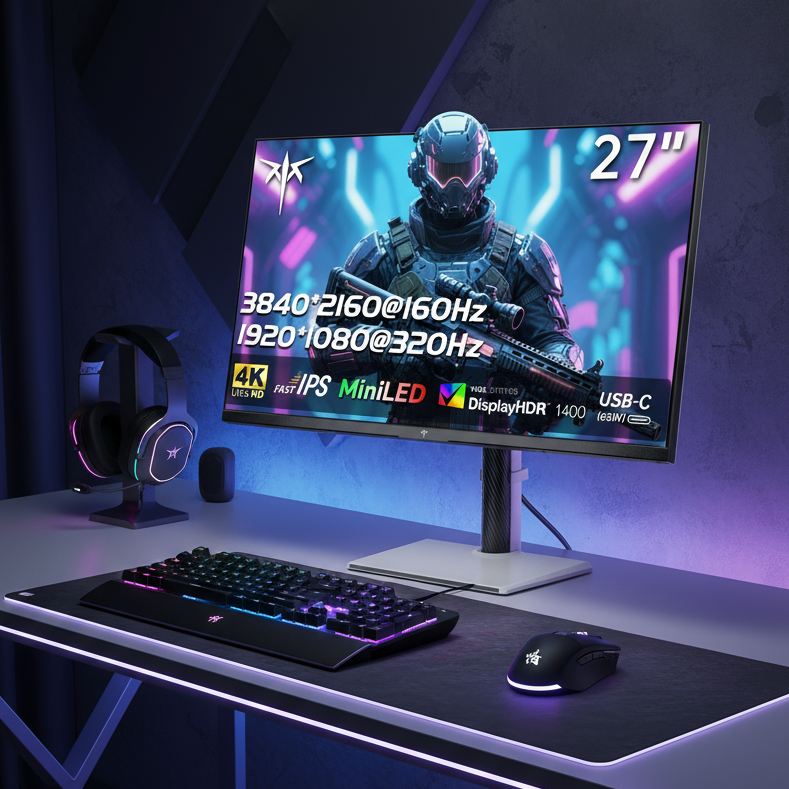
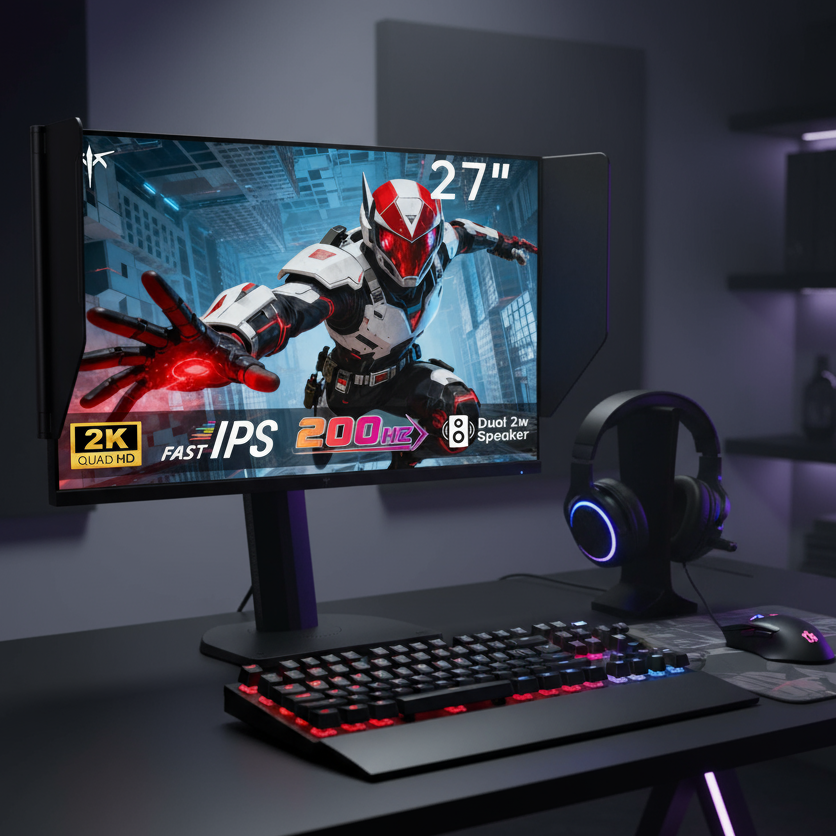
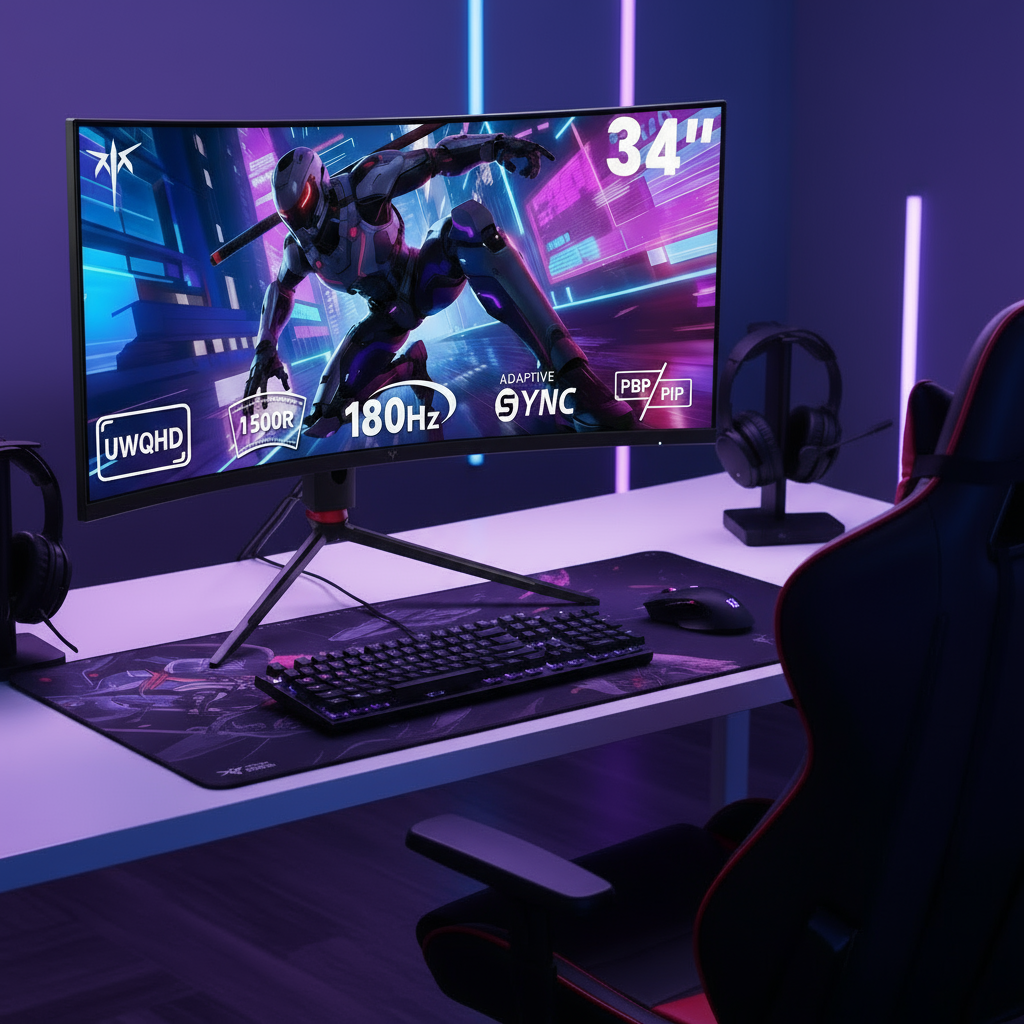


Backlight bleed makes black areas look uneven, often by lifting corners or edges into gray patches that distract from dark games, movies, and editing work. The real question is whether the flaw appears at your normal brightness, viewing distance, and room lighting.
Does a horror game cave, space scene, or dark loading screen suddenly look like one corner has a flashlight behind it? Practical testing can separate normal LCD limitations from a return-worthy defect in under 10 minutes, especially if you compare black screens with real dark content. You’ll learn what bleed does to black uniformity, how to judge severity, and when IPS, VA, Mini-LED, or OLED makes more sense.
What Backlight Bleed Is
Backlight bleed is unwanted light leaking through an LCD panel when the screen should be showing black or near-black content. On IPS and other LCD monitors, the backlight is always shining behind the liquid crystal layer, so imperfect panel pressure, edge sealing, diffuser alignment, or assembly tolerance can let light escape unevenly. Backlight bleed is most visible in dark scenes because there is little image detail to hide brighter corners or cloudy patches.
Black level uniformity describes how evenly a display shows black across the whole screen. A monitor can have a decent center black level but poor black uniformity if the edges, corners, or patches are brighter than the rest. In real use, that means a cinematic game may lose depth on one side, a movie letterbox bar may look blotchy, or a dark photo edit may tempt you to brighten or darken shadows incorrectly.
Why Dark Scenes Expose the Problem
Dark content is unforgiving because your eyes compare the center, corners, and edges at the same time. A bright strategy game map or office document can mask small luminance shifts, but a black loading screen or dim hallway makes uneven backlighting obvious. Monitor uniformity issues become easier to see in large dark, gray, white, or low-contrast areas because the screen gives your eyes broad, simple fields to compare.
In a practical gaming setup, a 27-inch IPS panel might look clean during daytime productivity but show a pale lower corner during nighttime play. That does not mean the panel suddenly changed; the room did. Lower ambient light makes your pupils more sensitive to luminance differences, so a flaw that was invisible at 2:00 PM can become distracting at 10:00 PM.

Backlight Bleed, IPS Glow, Clouding, and Blooming Are Not the Same
Backlight bleed usually stays fixed in the same physical area of the screen. If a bright patch appears in the lower-right corner when viewed head-on and remains there across different dark scenes, that is typical bleed behavior. IPS glow is more angle-dependent; it often shifts as your head moves or as you view the panel from above, below, or off-center. Enthusiast discussions often debate the definitions, but the user-facing test is simple: fixed bright patches are more likely panel bleed, while moving haze is more likely viewing-angle glow.

Clouding looks like irregular cloudy brightness across the panel rather than a clean edge leak. Mini-LED blooming is different again: it appears around bright objects on a dark background because local dimming zones light up larger areas than the object itself. OLED monitors avoid traditional backlight bleed because each pixel emits its own light and can turn off individually, but OLED can still have other near-black issues such as banding, tint variation, image retention, or text clarity trade-offs.
Issue |
What You See |
Usual Cause |
Changes With Viewing Angle? |
Backlight bleed |
Fixed bright edge or corner patches |
LCD backlight leakage or panel pressure |
Usually no |
IPS glow |
Hazy corner glow on dark screens |
IPS viewing-angle behavior and panel structure |
Often yes |
Clouding |
Uneven cloudy gray patches |
Backlight diffusion or panel uniformity variation |
Sometimes |
Mini-LED blooming |
Halos around bright objects |
Local dimming zone size and algorithm |
Content-dependent |
OLED near-black banding |
Lines or uneven dark-gray tones |
Pixel compensation or panel variation |
Usually no |
How It Affects Black Level Uniformity
Backlight bleed raises the local black floor. If the center of a dark scene looks deep but a corner leaks light, your brain reads that corner as gray, not black. That weakens perceived contrast even if the monitor’s advertised contrast ratio looks strong on paper.
A simple example makes the effect clear. Imagine a dark game scene where the center of the screen is acceptably black, but both lower corners are visibly brighter. The enemy silhouette in the center may still look sharp, while the same shadow detail near the corner looks washed out. For cinematic gaming, that breaks immersion. For video editing, it can bias your judgment because you may compensate for the monitor’s flaw instead of the footage.
Screen uniformity matters most when visual judgment needs to be consistent from center to corner. Display-uniformity guidance often treats even brightness as a foundation for accurate image presentation, which matches real editing experience: uneven brightness can make one part of the same image appear differently from another, even when the file itself is correct.
How Much Bleed Is Normal?
Some level of LCD non-uniformity is common, especially on IPS gaming monitors, but “common” does not automatically mean “acceptable.” Manufacturing tolerance, panel size, slim bezels, high brightness, and shipping pressure can all influence how much light escapes. Edge backlight bleed is described as particularly visible on black screens in dark rooms, with reported examples of edge brightness measuring 15% to 20% higher than the center on some 27-inch IPS panels.
Those numbers are useful as context, but consumer testing is rarely that precise without a meter. The practical threshold is simpler: if you only notice bleed on a full-black test pattern at maximum brightness in a dark room, the monitor may be acceptable. If you notice it in actual games, movies, dark-mode apps, or creative work at your everyday settings, it is affecting the product experience.
Forum experiences around specific 27-inch gaming models show why this becomes subjective. One buyer may tolerate a mild corner patch, while another returns the same class of monitor because the washed-out area ruins dark-scene immersion. Return discussions commonly point to the same decision rule: judge the flaw real viewing, not only exaggerated camera photos.
How to Test It Without Fooling Yourself
Test after the monitor has warmed up and after you set the brightness you actually use. A black screen at 100% brightness in a pitch-black room can make almost any LCD look worse than it will during normal use. Long-exposure cell phone photos also exaggerate glow, so they are useful for documenting a defect but poor for judging what your eyes will see.
Use a full-screen black image, then a dark-gray image, then real content such as a dark movie scene, a night mission, or a shadow-heavy game menu. Sit at your normal distance, keep your eyes near the center of the screen, and move slightly left and right to separate fixed bleed from angle-based IPS glow. OLED and LCD testing advice consistently favors realistic brightness, normal viewing distance, and real content over extreme torture-test conditions.

If you want a stricter check before a return window closes, dim the room, disable dynamic contrast and HDR for the test, and compare brightness levels. If the same corner stays visibly lifted at 30%, 50%, and 70% brightness, that is more concerning than a faint patch that only appears at maximum brightness.
Can Settings Fix Backlight Bleed?
Settings can reduce visibility, but they usually cannot repair physical leakage. Lowering brightness is the most effective first move because it reduces the amount of light available to leak. Bias lighting behind the monitor can also help because it raises the room’s perceived black reference, making bright patches less obvious without crushing the image.
Gamma and contrast need restraint. A darker gamma setting can make midtones feel richer in a dim room, but it may hide shadow detail. Raising black stabilizer can reveal enemies in competitive games, but it also makes blacks look lifted and can make bleed easier to see. Gamma settings mainly shape shadows and midtones, so start near 2.2 for mixed use and adjust game-level gamma only after the monitor is stable.
Physical pressure fixes are risky. Some users report that bezel pressure changes a bright patch, but pressing or twisting a panel can damage it or worsen uniformity. If the bleed is visible in normal use on a new monitor, a return or exchange is the cleaner value play.
Panel Choice: IPS, VA, Mini-LED, or OLED?
IPS remains strong for office productivity, color work, text clarity, and wide viewing angles, but it is not the best black-level technology. VA panels usually offer higher native contrast and often look better in dark scenes, though they can introduce viewing-angle shifts or dark smearing depending on model and overdrive tuning. Mini-LED improves LCD contrast through local dimming, but halos around subtitles, cursors, or HUDs can still appear.
OLED is the cleanest answer for traditional backlight bleed because there is no separate backlight to leak. Self-emissive pixels can turn off for true black, giving OLED a major advantage for dark-room gaming, HDR movies, and shadow-heavy visual work. The trade-off is that OLED is less ideal for long static productivity days with taskbars, spreadsheets, dashboards, or fixed UI panels because image retention and burn-in risk still matter.

For a mixed desk, the value decision is not one-size-fits-all. Choose OLED if dark-scene immersion is the priority and your workflow does not park static UI for 8+ hours daily. Choose a good IPS monitor if you mainly code, write, manage spreadsheets, or need stable brightness in a bright office. Choose VA if you want deeper LCD blacks at a lower price and can accept possible motion or angle compromises.
When to Return, Exchange, or Keep the Monitor
Keep the monitor if the bleed is faint, limited to test patterns, and invisible in your real content. Exchange it if a fixed bright patch distracts you during normal dark scenes, especially during the return window. Return and choose a different panel type if multiple units of the same model show the same flaw and your use case depends on dark-room contrast.
IPS backlight bleed is often debated as “normal,” but a premium monitor still has to perform for your actual room and workload. A $750.00 gaming display that ruins the mood in dark scenes is not delivering premium value, even if the defect fits within loose manufacturing expectations.
FAQ
Does backlight bleed get better over time?
Usually, no. It may appear slightly different as materials warm up or as panel pressure changes, but it is not something to count on. If it bothers you during normal use while the return window is open, treat it as a purchase decision, not a break-in issue.
Does calibration fix black uniformity?
Calibration can improve white point, gamma, grayscale balance, and color accuracy, but it cannot fully correct physical light leakage. It may make the overall image more accurate while the bright corner remains visible.
Is OLED always better for dark scenes?
OLED is usually better for black depth and traditional bleed-free dark scenes, but it is not automatically better for every desk. Static work, text rendering preferences, brightness behavior, and burn-in policy should matter before replacing a reliable productivity LCD.
Backlight bleed matters because it turns black uniformity from a specification into something you feel during play, editing, and nighttime viewing. Test at real settings, judge real content, and let the return policy work for you when the panel breaks immersion instead of supporting it.


