Backlight strobing can make fast motion look cleaner, but it can also increase eye strain for some players because it lowers brightness, adds flicker, and often demands steadier frame rates. Use it as a precision mode, not an all-night default.
Do your eyes feel sharp and focused for the first match, then dry, heavy, or headache-prone after a long ranked session? A well-tuned strobing mode can make targets easier to track without relying on in-game blur effects, but the practical result is testable: if motion looks clearer and your eyes still feel relaxed after 30 minutes, the setting fits your setup. This article explains the tradeoffs and gives you a reliable way to decide when to turn strobing on, tune it down, or leave VRR in charge.
What Backlight Strobing Actually Does
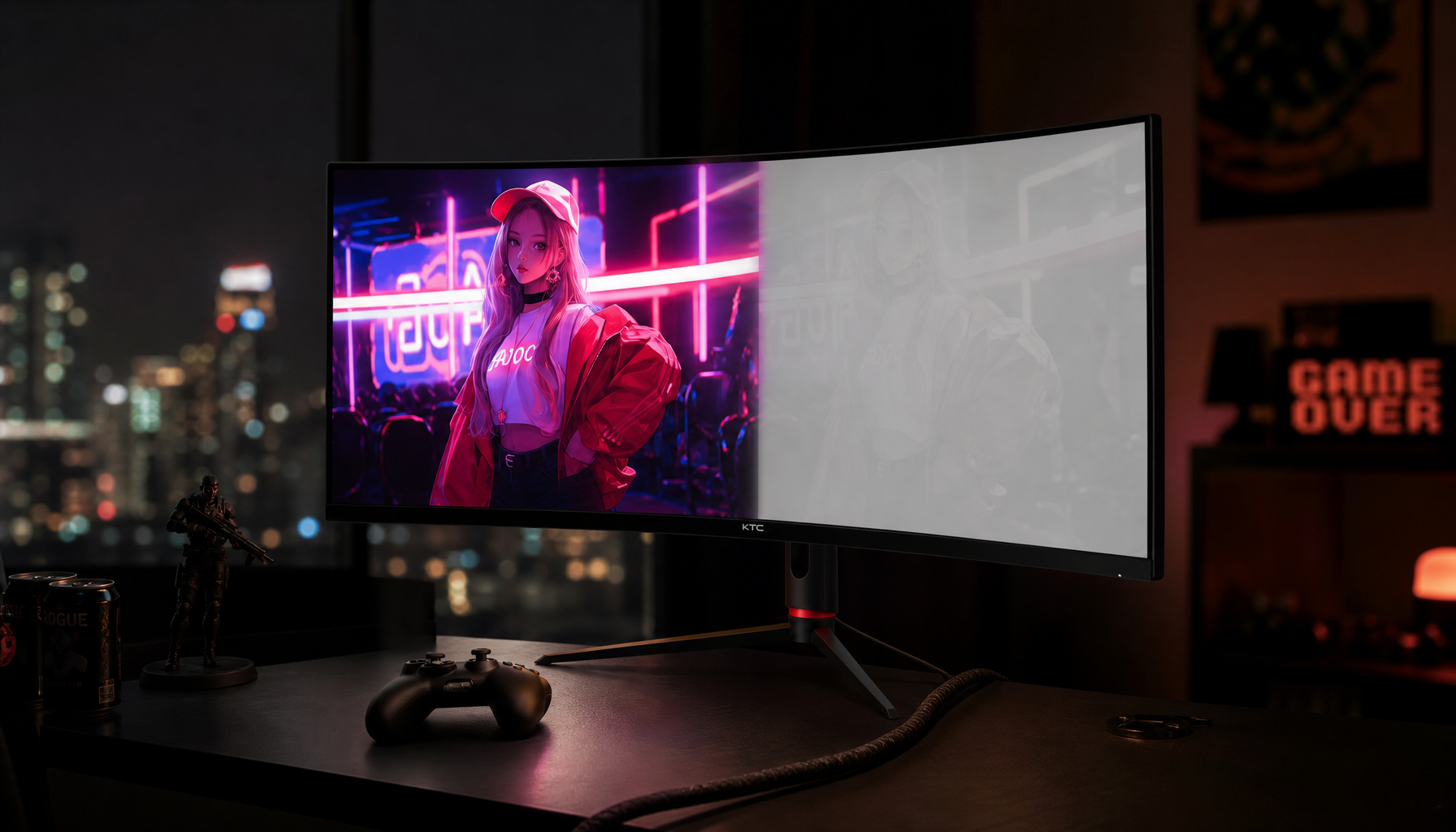
Backlight strobing is a motion-clarity feature often found under monitor settings such as MPRT, motion blur reduction, or aim stabilization. Instead of keeping the backlight continuously lit, the monitor flashes it in timed bursts between refreshes, which reduces the blur your eyes perceive while tracking fast movement across the screen.
The core problem is sample-and-hold blur. A normal LCD holds each frame onscreen until the next one arrives, so your eyes smear the image during motion tracking. Motion blur reduction improves perceived motion clarity by reducing visible persistence, which is why it can make strafing enemies, racing lines, and fast camera pans look sharper.

That benefit is different from fixing ghosting. Ghosting comes from pixel transitions that are too slow or poorly tuned, while strobing mainly reduces how long each frame remains visible. In practice, a monitor can have strong strobing and still show crosstalk, overshoot, or double images if the timing is off.
Why It Can Help During Competitive Gaming
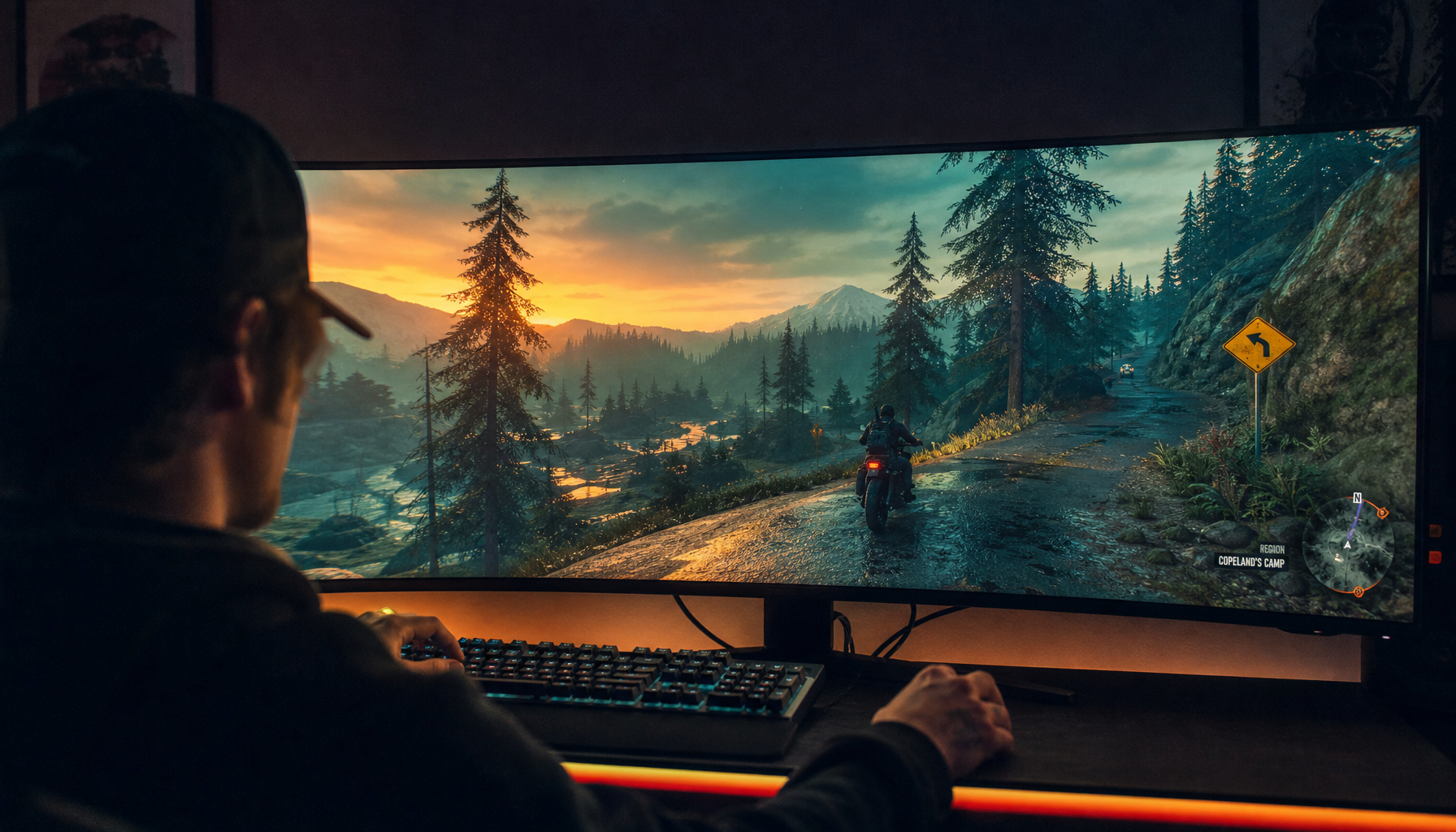
For esports play, the main advantage is visual separation. In a tactical shooter, a 240 Hz display with clean strobing can make a moving opponent’s outline easier to read during a quick flick or tracking spray. That does not guarantee better aim, but it can reduce the visual ambiguity that forces your brain to work harder.

The strongest setups are usually steady setups. Backlight strobing and VRR work best under different timing assumptions: strobing prefers a consistent refresh rhythm, while VRR adapts to changing frame delivery. If your game holds near 240 FPS on a 240 Hz monitor, strobing has a cleaner runway. If your frame rate swings from 170 to 240 FPS, VRR may feel calmer and less visually disruptive.
Evaluate strobing with a simple real-world check: load the game you actually play, cap FPS at the selected refresh rate, then test a fast horizontal pan in a bright training map and a darker live match. If the training map looks sharp but the live match feels dim, flickery, or doubled around outlines, that mode is not truly useful for your session length.
Why It Can Increase Eye Strain
The eye-strain risk comes from three linked changes: flicker, brightness loss, and harder visual adaptation. Strobing intentionally flashes the backlight, and some players are more sensitive to that flashing than others. LCD flicker can contribute to fatigue for sensitive users, especially when brightness control or display timing makes the fluctuation noticeable.

Brightness loss matters because strobing keeps the backlight off for part of each refresh cycle. A shorter pulse can improve clarity, but it also makes the screen darker. Push that too far in a dim room, and your eyes may strain to read UI text, spot dark enemies, or maintain focus across several hours.
Gaming itself also stacks strain factors before the monitor setting even enters the picture. Extended gaming can involve reduced blinking, intense concentration, rapid visual tracking, and long near-focus time, which may lead to dry eyes, blurry vision, burning, headaches, and difficulty focusing. Strobing can improve motion clarity, but it cannot compensate for poor lighting, dry air, bad posture, or an overly bright screen.
The Comfort Tradeoff: Strobing vs. VRR
For long sessions, the decision is less about which feature is better and more about which problem is hurting you more. If blur makes moving targets hard to resolve, strobing may reduce visual effort. If flicker, dimness, or frame pacing inconsistency makes the image feel unstable, VRR is usually the more comfortable choice.

Scenario |
Better Default |
Why It Usually Feels Better |
Competitive shooter at locked high FPS |
Strobing |
Sharper motion can make tracking and target edges easier to read |
Open-world game with variable FPS |
VRR |
Smoother frame pacing reduces tearing and uneven motion |
Late-night gaming in a dim room |
VRR or strobing off |
Less flicker and more brightness control usually help comfort |
Flicker-sensitive player |
Strobing off |
Continuous backlight operation is often easier to tolerate |
Short aim-training session |
Strobing |
Motion clarity benefit may outweigh comfort tradeoffs |
The gray area is sync-capable blur reduction. Some monitors advertise strobing with adaptive sync, but the implementation quality varies. Motion blur reduction can lose brightness, disable VRR on many displays, or show inconsistent results depending on panel response and strobe timing. Treat the feature as something to test, not something to trust from a spec sheet alone.
How to Tune Strobing for Less Eye Strain
Start with the refresh rate, not the marketing maximum. Many monitors look cleaner strobed at 120 Hz or 144 Hz than at their peak refresh rate because the pixels have more time to settle before each flash. If your 240 Hz monitor has obvious crosstalk at 240 Hz but looks clean at 144 Hz, the lower setting may be the smarter competitive mode for a two-hour session.
Next, match brightness to the room. A display that is too bright can fatigue your eyes, while a display that is too dark makes text and targets harder to resolve. Display brightness should be adjusted to the lighting around you rather than left at a default preset. A practical check is to compare a white page on the monitor with white paper under the same room light; if the screen looks dramatically brighter or darker, tune it closer.
Then remove avoidable blur before blaming the panel. Turn off in-game motion blur, depth-of-field blur, excessive bloom, and aggressive sharpening. These effects can mask the improvement from strobing or create fatigue by making motion look artificially smeared or over-edged.
Finally, test comfort in minutes, not screenshots. Use strobing for 20 to 30 minutes in the same game mode you normally play. If you notice eye pressure, headache, dryness, or a sense that the image is pulsing, turn it off and use VRR. A monitor setting that wins a five-second motion test but loses a full session is not a performance setting; it is a distraction.
Buying Advice for Eye-Friendly Gaming Displays
When shopping, do not buy a monitor only because it claims “1 ms MPRT.” MPRT is tied to perceived motion persistence, often with strobing enabled, while gray-to-gray response describes pixel transition speed. You want both motion clarity and clean transitions, plus enough brightness to keep the strobed image usable.

Look for independent testing that shows crosstalk zones, brightness with strobing enabled, supported refresh rates, overdrive behavior, and whether VRR can run at the same time. Productivity monitor selection also reminds buyers to value text clarity, viewing comfort, ergonomics, and flicker-free behavior, which matters if the same display handles work by day and gaming by night.
For a mixed-use desk, an adjustable stand is not optional. Keep the display about an arm’s length away, slightly below eye level, and avoid playing in total darkness. Gaming eye stress is easier to manage when breaks, blinking, room lighting, and screen distance work together instead of relying on one monitor feature to solve everything.
Should You Use Backlight Strobing for Extended Sessions?
Use backlight strobing when your FPS is stable, your game rewards motion clarity, the image stays bright enough, and you do not feel flicker discomfort after a meaningful test session. Turn it off when your eyes feel tired faster, when the screen looks dim, or when fluctuating frame rates make VRR the smoother and more comfortable option.
The best display setup is the one that preserves both speed and stamina. Sharp motion wins fights only when your eyes can stay relaxed enough to use it.