Most professional video editors still prefer standard widescreen or dual-monitor setups, usually built around 16:9 or 16:10 displays, because they match common delivery formats, preserve vertical workspace, and make preview, scopes, bins, and timelines easier to organize. Ultrawide monitors can help with long timelines, but they are not automatically better for color, framing, or overall editing speed.
Ever stretched a timeline across a huge screen and still felt like the program monitor, bins, and scopes were fighting for space? A 34-inch 3440 x 1440 ultrawide gives you 880 more horizontal pixels than a 2560 x 1440 16:9 monitor, but it gives you no extra vertical room. This guide breaks down which aspect ratios working editors actually benefit from, when ultrawide makes sense, and what display specs matter more than width alone.
The Aspect Ratio Most Professional Editors Prefer
For most professional editing desks, the practical default is still 16:9, often paired with a second screen. That is not because 16:9 is exciting; it is because most mainstream video work is still delivered, reviewed, or framed in widescreen formats. A software company defines aspect ratio as the width-to-height relationship of an image or video frame, and common video formats include 16:9 widescreen, 9:16 vertical, 1:1 square, 4:3 fullscreen, and 2.40:1 anamorphic.
A 16:9 editing monitor also keeps the preview window predictable. If you are cutting online videos, corporate interviews, online ads, course content, or streaming video, a 16:9 program monitor maps cleanly to the final frame. You can still edit vertical and square formats on it, but you are not constantly working around a display shape that is much wider than the content.
Why 16:10 Still Has a Place
A 16:10 monitor is often more comfortable than 16:9 for editing because it gives you slightly more vertical space. That extra height can make the timeline, source monitor, effects controls, and audio tracks feel less compressed, especially on a 27-inch or 32-inch display. For editors who spend long sessions trimming dialogue, managing captions, or adjusting keyframes, vertical room can matter more than extra width.
This is why many editors like layouts such as a main 16:9 or 16:10 display plus a second monitor for bins, scopes, scripts, notes, or client references. The setup is less dramatic than a 49-inch super-ultrawide, but it is often more flexible. You can dedicate one screen to full-screen playback and keep the other for the editing interface.

Why Ultrawide Is Not Automatically Better
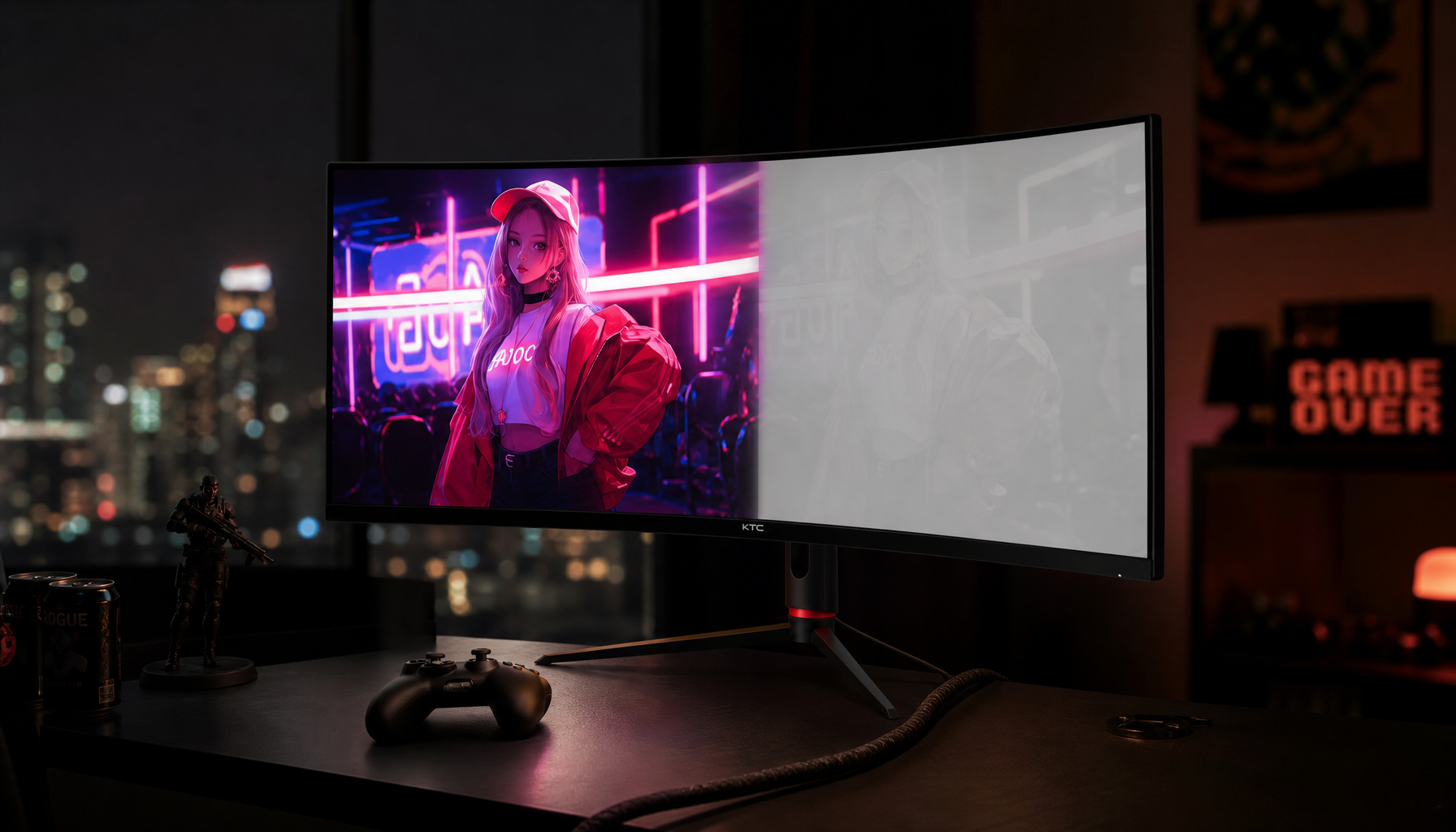
Ultrawide monitors are wider than standard 16:9 displays, with many models using 21:9 or 32:9 formats. A common 2K-class ultrawide is 3440 x 1440, compared with 2560 x 1440 on a standard 16:9 display, while a 4K-class ultrawide may be 5120 x 2160 compared with 3840 x 2160 on a standard 4K panel. The extra width is useful, but ultra-wide monitors also make the graphics card push more pixels than a similar-height 16:9 screen.
That pixel load matters in real editing work. If a laptop already struggles with 4K multicam footage, noise reduction, GPU effects, motion graphics, or high-bitrate codecs, moving from 2560 x 1440 to 3440 x 1440 can make the interface feel heavier. The monitor does not change the codec, but it does increase the desktop resolution the system has to draw while the editing software is also decoding, rendering, and previewing.
The Vertical Space Problem
A 34-inch 3440 x 1440 ultrawide sounds large, but its height is roughly in the same class as a 27-inch 2560 x 1440 monitor. That means the timeline can get wider, but the program monitor, scopes, and stacked audio tracks do not automatically get taller. For editors working with 4K footage, waveform displays, subtitles, adjustment layers, and many audio tracks, height can become the limiting factor.

This is one reason some editors prefer a 32-inch 4K 16:9 monitor over a 34-inch 1440p ultrawide. The 32-inch 4K panel gives 3840 x 2160 pixels, so it provides more vertical resolution for panels and a sharper preview area. If your work involves color checks, detailed graphics, captions, or interface-heavy editing, that extra vertical resolution can be more useful than a wider timeline.
Screen Sharing and Review Friction
Ultrawide displays can also be awkward during client calls, remote reviews, tutorials, and screen recordings. Sharing a 21:9 or 32:9 desktop often results in tiny text for viewers on standard laptops, tablets, or 16:9 monitors. If you regularly present edits over video calls, record workflow walkthroughs, or collaborate with producers, a standard 16:9 canvas is usually easier for other people to view.
There is also a practical window-management issue. A very wide screen can invite stretched panels that look impressive but are not always ergonomic. On a 49-inch super-ultrawide, important controls may sit far to the left or right, forcing more head movement than a centered dual-monitor setup where each display has a clear role.
Where Ultrawide Monitors Help Video Editors
Ultrawide is not a bad choice. It can be excellent for timeline-heavy work, especially when you are cutting long interviews, podcasts, documentaries, event footage, music videos, or multi-layer social campaigns. More horizontal space means you can see more of the sequence before zooming, which helps when moving between sections, comparing scene structure, or trimming around audio beats.
In video editing software, the extra width can support larger timelines, wider preview panels, more visible tool panels, transitions, audio meters, and scopes. The benefit is especially noticeable when you keep the program monitor centered and spread bins, effects, and timeline controls around it. For a compact desk where two physical displays will not fit, one ultrawide can reduce cable clutter and avoid the bezel gap between monitors.
The Best Ultrawide Use Case
The strongest case for ultrawide is an editor who values timeline width more than full-screen reference monitoring. A 34-inch 3440 x 1440 display can be a strong fit for online video channels, podcast video, gaming content, screen recordings, and social media production where speed, timeline navigation, and multitasking matter.
A larger 38-inch 3840 x 1600 ultrawide can feel better than a 34-inch model because it adds both width and some height. If you are considering ultrawide for serious editing, that extra vertical space is worth paying attention to. A wider screen with only 1440 pixels of height may feel less useful than expected once editing, color grading, motion graphics, or effects panels are open.
Dual Monitors vs. Ultrawide vs. 16:10
Dual monitors remain popular because video editing is not one single task. Editors move between source review, timeline trimming, audio cleanup, graphics, color correction, scopes, exports, file browsers, scripts, and client notes. Two displays let you separate those jobs instead of forcing every panel into one continuous desktop.

Color work is a good example. A software company’s Video Scopes panel analyzes color, luminance, and signal levels from the frame at the playhead, and its analysis reflects the final image-processing output after effects are applied. Those video scopes can include a Vectorscope, Waveform Monitor, RGB Parade, and RGB Overlay, so a dedicated second display can keep scopes visible without shrinking the program monitor.
Setup |
Best For |
Strengths |
Tradeoffs |
16:9 27-inch QHD, 2560 x 1440 |
Budget editing, gaming/editing hybrid desks |
Affordable, sharp enough for 1080p and light 4K editing, widely supported |
Less room for panels and 4K preview detail |
16:9 32-inch 4K, 3840 x 2160 |
4K editing, preview accuracy, general pro work |
Strong vertical resolution, clean 16:9 preview, good single-monitor productivity |
Needs scaling comfort; better panels cost more |
16:10 27-32-inch |
Timeline plus panel-heavy editing |
Extra height for timelines, bins, captions, audio tracks |
Fewer model choices than 16:9 gaming monitors |
21:9 34-inch, 3440 x 1440 |
Long timelines, multitasking, compact desks |
More horizontal timeline space, no center bezel |
Same 1440-pixel height as many 16:9 displays |
21:9 38-inch, 3840 x 1600 |
Premium single-screen editing |
Better height than 34-inch ultrawide, roomy workspace |
Higher cost, fewer high-end color options |
32:9 49-inch |
Extreme timelines, replacing two monitors |
Huge horizontal canvas, strong for dashboards and audio-heavy edits |
Awkward screen sharing, more head movement, higher GPU load |
Dual 16:9 displays |
Professional editing, color, client work |
Flexible separation of preview, scopes, bins, and timeline |
More desk space, more calibration work, bezel gap |
A practical edit bay might use a 32-inch 4K 16:9 monitor as the main editing display and a second 27-inch QHD monitor for bins, scopes, notes, and browser windows. That arrangement gives you a clean preview area while keeping technical panels visible. A single ultrawide can imitate this with window zones, but it cannot physically separate the reference display from the control surface in the same way.
The Specs That Matter More Than Aspect Ratio
Aspect ratio shapes the workspace, but panel quality determines whether the image can be trusted. For professional video editing, prioritize resolution, color accuracy, color gamut, brightness, contrast, uniformity, calibration support, and connectivity before chasing the widest possible screen. A high-refresh-rate gaming monitor can feel responsive, but refresh rate is usually less important than accurate color and sufficient pixel density for editing.
A 27-inch 4K IPS 60Hz display such as the a 27” 4K IPS 60Hz low blue light home and office monitor is a useful comparison point against wider screens: if preview clarity and panel specs matter more than a stretched timeline, a standard 16:9 4K layout may be the cleaner fit.

This is especially true for color correction and QC. Editing scopes can show signal levels using percentage scales, 10-bit values, or HDR nits, and HDR programs are often mastered at 1000 nits or 4000 nits. A bright, accurate, well-calibrated display matters more for that work than whether the desktop is 16:9 or 21:9.
What to Look For When Buying
For most editors buying one primary monitor, a 32-inch 4K 16:9 display is the safest recommendation. It gives enough resolution for 4K timelines, a familiar preview shape, useful vertical space, and broad compatibility with editing apps, screen sharing, and gaming hardware. If you also play games on the same setup, a 120 Hz, 144 Hz, or higher refresh rate can make the monitor more versatile, but do not trade away color performance just to get a faster panel.
For an ultrawide editing monitor, avoid choosing based on width alone. Look for at least 3440 x 1440 for general editing, and consider 3840 x 1600 or 5120 x 2160 if you need more vertical space or sharper previews. Also check laptop power delivery, digital display connection support, video input version, ergonomic adjustment, standard mounting, and whether your GPU can comfortably drive the resolution while editing.
Common Misconceptions About Ultrawide Editing
The biggest misconception is that a wider monitor automatically means a more professional workflow. In reality, a wide display can make the timeline easier to scan while making preview, scopes, effects controls, and vertical stacking feel cramped. If most of your day is spent trimming a single track, ultrawide may feel great; if you manage multiple camera angles, graphics layers, subtitles, and audio stems, height becomes just as important.
Another misconception is that ultrawide replaces color-critical monitoring. It does not. A good ultrawide can be calibrated, but aspect ratio alone tells you little about color accuracy, uniformity, black levels, HDR behavior, or panel consistency across the screen. Curved ultrawides can also feel natural for timelines but may be less ideal for judging straight lines, graphics placement, or layout work if the curve is aggressive.
Is Ultrawide Better for Gaming Editors?
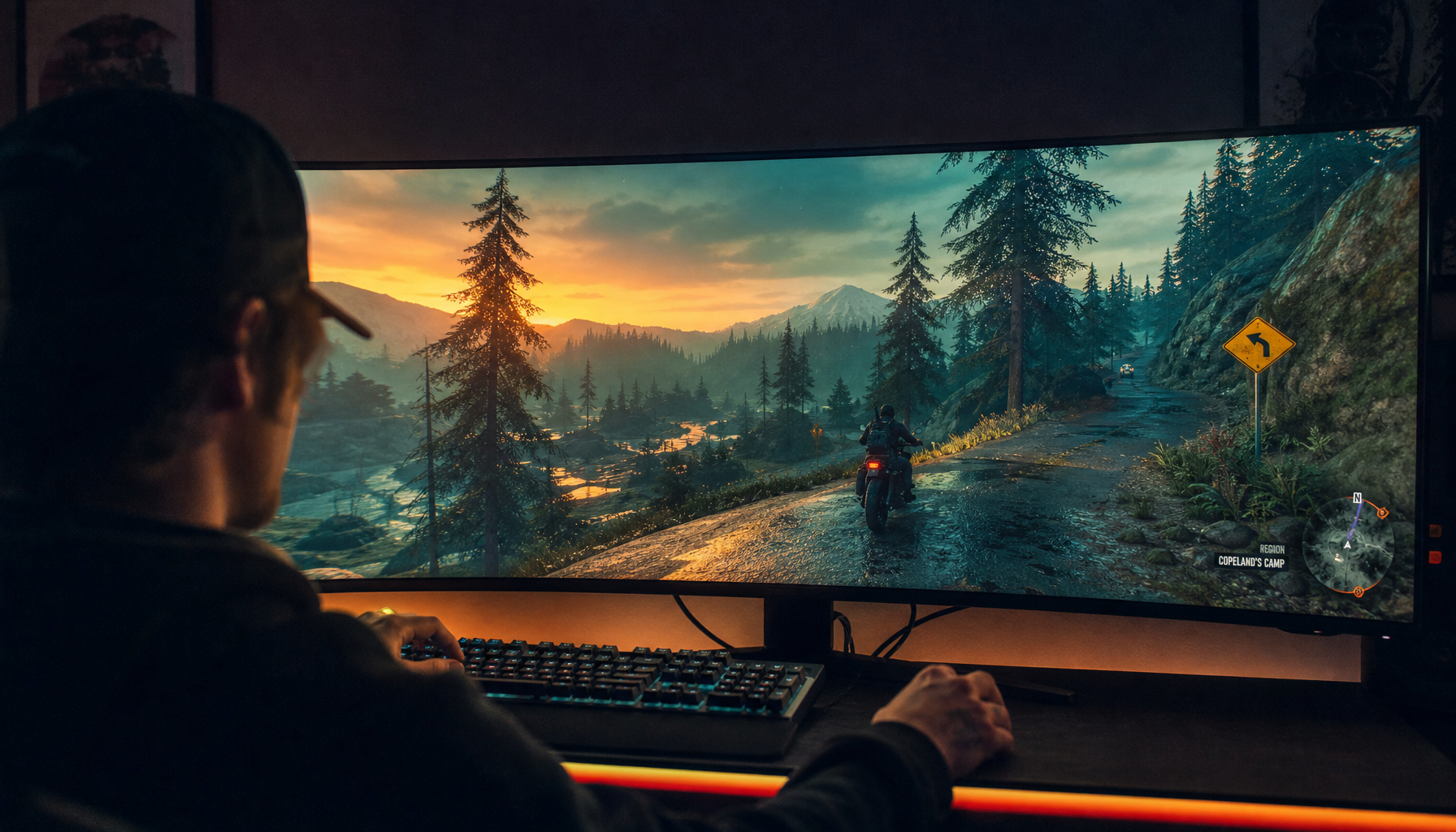
For editors who also game, ultrawide can be very appealing. A 21:9 gaming monitor can make games more immersive while giving editing software extra horizontal space. High refresh rates also make the desktop feel smoother when dragging windows, scrubbing timelines, and moving around complex interfaces.
The tradeoff is budget allocation. A fast ultrawide gaming monitor with mediocre color is usually a weaker editing purchase than a slower 4K display with stronger color coverage, better factory calibration, and better uniformity. If one monitor must serve gaming and paid editing work, aim for a balanced model: good color performance first, then high refresh rate, then ultrawide format if the desk and GPU can support it.
FAQ
Q: What aspect ratio do professional video editors usually prefer?
A: Many professional editors prefer 16:9 or 16:10 monitors, often in a dual-display setup. 16:9 aligns well with common video delivery formats, while 16:10 adds useful vertical space for timelines, panels, and audio tracks.
Q: Is an ultrawide monitor better than a 16:9 monitor for video editing?
A: It depends on the workflow. Ultrawide is better for long timelines, multitasking, and compact desks, but a 16:9 4K monitor is often better for preview clarity, vertical workspace, screen sharing, and general compatibility.
Q: What monitor resolution is best for 4K video editing?
A: A 32-inch 4K monitor at 3840 x 2160 is the most practical single-display choice for many 4K editors. It gives a sharp preview, enough room for editing panels, and a familiar 16:9 workspace. For ultrawide buyers, 3840 x 1600 or 5120 x 2160 is more comfortable than 3440 x 1440 if the budget and GPU allow it.
Practical Next Steps
The best monitor aspect ratio for video editing is the one that supports your actual workspace: preview, timeline, scopes, media bins, audio, color tools, and review habits. Choose 16:9 or 16:10 if you want predictable framing and strong all-around value; choose ultrawide if timeline width and multitasking are your biggest pain points; choose dual monitors if you want the most flexible professional layout.
Action checklist:
- List your main delivery formats: 16:9, 9:16, 1:1, or cinematic widescreen.
- Decide whether timeline width or vertical workspace is your bigger limitation.
- Choose 32-inch 4K 16:9 as the default single-monitor option for 4K editing.
- Consider 16:10 if you want more panel and timeline height without going ultrawide.
- Choose 21:9 ultrawide only if your GPU can handle the pixel load comfortably.
- Use dual monitors if you need constant access to scopes, bins, scripts, and full-screen preview.
- Prioritize color accuracy, calibration, resolution, brightness, ergonomics, and connectivity before refresh rate.
For many editors, the most balanced buying path is simple: start with a high-quality 32-inch 4K 16:9 monitor, then add a second display if your work grows. Ultrawide is a strong specialist choice, especially for timelines, but it is not the default professional answer because editing is about controlled viewing, reliable color, and efficient panel layout, not just horizontal space.