Display color gamut affects photo editing accuracy by setting the color range your screen can show, but gamut alone does not guarantee correctness. Reliable edits also need the right working gamut, calibration, accurate profiles, stable lighting, and an export color space that matches where the image will be viewed.
Does your sunset look rich in your editing app, then turn flat online or too intense on a cell phone? A calibrated wide-gamut workflow can preserve more camera color while editing, while an sRGB export remains the safer choice for broad web delivery. Here is how to choose, set up, and trust a display without overbuying the wrong specs.
What Color Gamut Actually Controls
Color gamut is the range of colors a display or color standard can reproduce. A monitor with a small gamut may be physically unable to show certain saturated greens, cyans, reds, or oranges captured by a modern camera, so you may edit without seeing the full color relationship in the file. A key distinction is that gamut size and gamut overlap are not the same thing.
That distinction matters when shopping. A spec such as “72% NTSC” can sound close to sRGB, but it does not prove the monitor covers all sRGB colors. The display could have a similar total color area while missing part of the sRGB triangle. For photo work, coverage claims such as 100% sRGB, 98% Adobe RGB, or strong DCI-P3 coverage are more useful than broad area claims that do not reveal overlap.
The practical example is simple. If you edit a product photo of a teal jacket on a monitor that cannot fully cover sRGB, you may push saturation higher to compensate for what the screen cannot show. On a better display, that same jacket can look exaggerated. The error was not in the camera file; it was in the editing reference.
Gamut Is Range, Not Accuracy
A wide-gamut monitor can show more colors, but it can also show the wrong colors more vividly. Color accuracy is about how closely the display reproduces intended reference values, while gamut is only the available color envelope. This is why a gaming monitor with punchy color can look exciting but still be a poor reference for skin tones, product photos, or print proofs.
For photo editing, the best display behavior is controlled, not dramatic. Serious photographic work benefits from a well-calibrated wide-gamut display, preferably Adobe RGB or at least DCI-P3, while wide-gamut display capability is not enough by itself. That matches real desk experience: a saturated monitor can make a portrait look “finished” before the skin tone is actually correct.
Treat gamut as capacity and calibration as steering. Capacity lets the monitor reach the colors. Calibration and profiling help it reach the right colors.
sRGB, Display P3, Adobe RGB, and DCI-P3 in Real Editing
sRGB remains the baseline for web images, general monitors, ecommerce, office displays, and many social platforms. If your client will view images on mixed devices, sRGB is still the most predictable final export. The practical tension around sRGB monitors is clear: many photographers edit in a wider space to preserve color, then export to sRGB for compatibility.
Display P3 is wider than sRGB and common on many modern premium screens. It can be useful when your audience is mostly viewing on P3-capable hardware, especially for portfolios, image review, and modern media delivery. Adobe RGB is especially relevant for photography and print because it covers more green-cyan color territory than sRGB, which can matter for landscapes, foliage, product packaging, and fine-art reproduction.
DCI-P3 began as a cinema-oriented color space and is now common in premium laptops, monitors, tablets, and phones. It is valuable for video, HDR-adjacent work, and visually rich screen delivery, but it is not automatically a print solution. For print, the right path depends on the printer, ink set, paper, lab profile, and soft proofing process.
Color Space |
Best Use |
Main Advantage |
Main Risk |
sRGB |
Web, social, ecommerce, general delivery |
Maximum compatibility |
Smaller color range |
Display P3 |
Modern phones, tablets, P3-capable audiences |
Richer screen color than sRGB |
Not universal everywhere |
Adobe RGB |
Photography and print workflows |
Stronger coverage for many print-relevant colors |
Needs color-managed workflow |
DCI-P3 |
Video, cinema, HDR-oriented displays |
Wide modern media gamut |
Not a substitute for print profiling |
Why Wide Gamut Helps Even When You Export to sRGB
A common objection is fair: if the final JPEG is sRGB, why edit on a wide-gamut monitor? The answer is that editing is not the same as delivery. RAW files often contain color information outside sRGB, and working in a wider space lets you make decisions before compressing the final result into a smaller output gamut.
Think of a landscape file with saturated wildflowers and deep green leaves. On an sRGB-only display, several strong colors may appear clipped or compressed into similar-looking tones. On a calibrated Adobe RGB or P3 display, you can better judge which colors need restraint before export. Then, with soft proofing, you can preview how those colors will convert into sRGB or a printer profile.

The advantage is control. You may still deliver a smaller file, but you are making the reduction deliberately instead of blindly. More headroom does not replace skill, but it gives you cleaner feedback.
When a Wider Gamut Can Hurt Accuracy
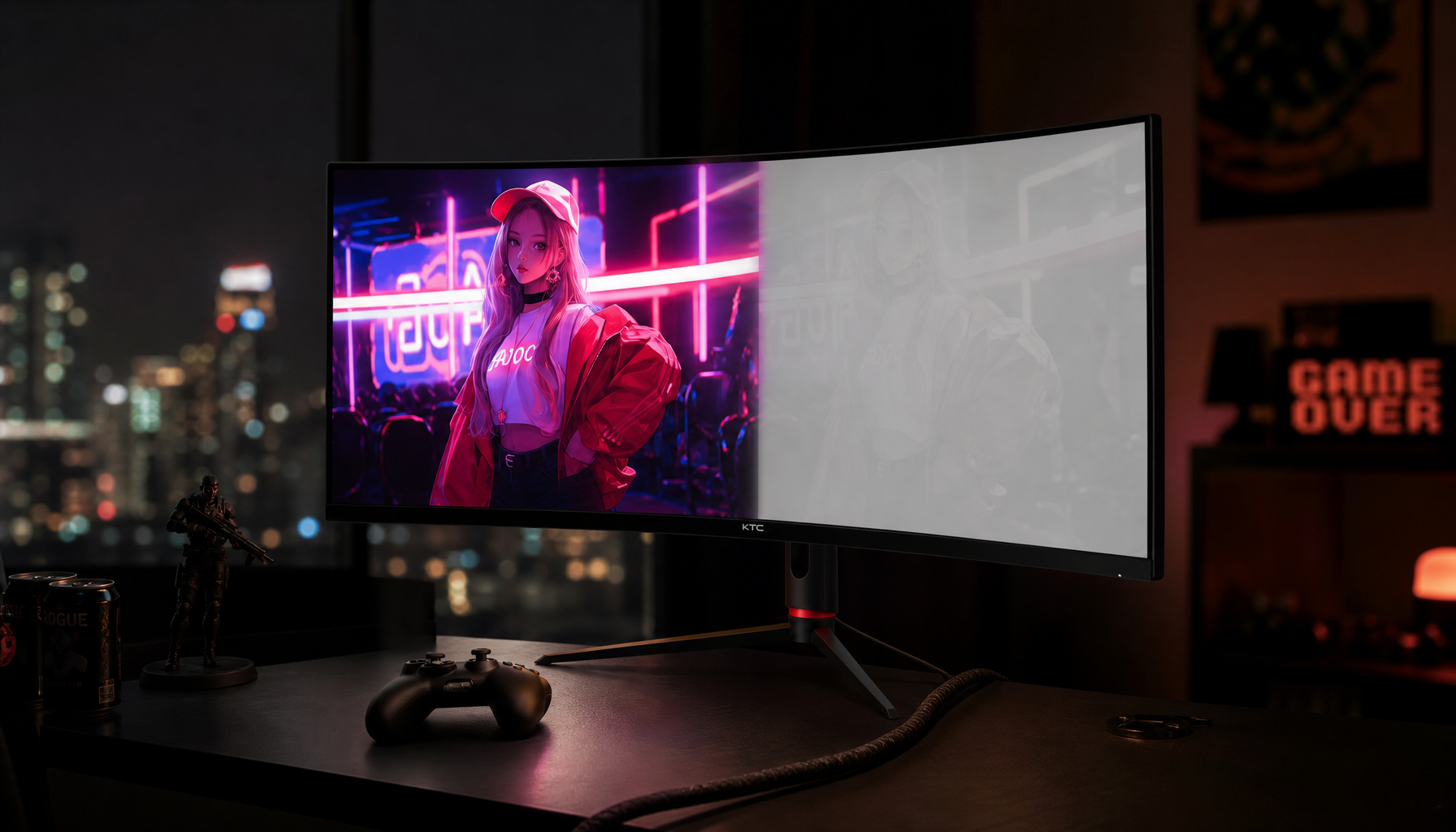
Wide gamut becomes a problem when standard sRGB content is displayed without proper color management. If a monitor stretches sRGB values across a larger native gamut, reds can become too hot, grass can look radioactive, and skin can pick up an artificial flush. That is why a strong sRGB mode is critical on wide-gamut monitors.
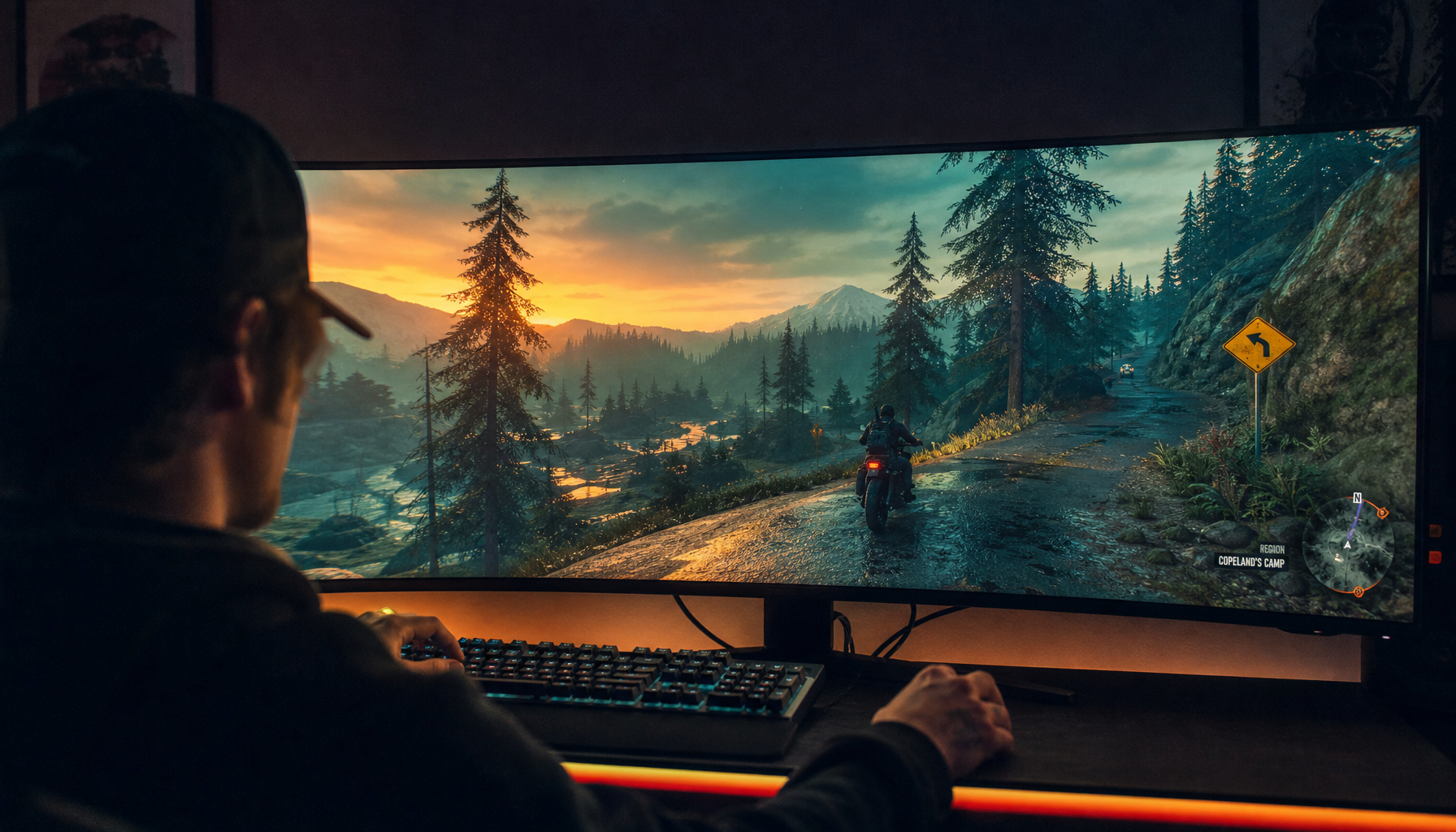
This is also why photo editors should be careful with vivid, movie, FPS, and dynamic contrast presets. KTC’s gaming-focused discussion of wide color gamut is useful because it separates immersion from reference accuracy. A mode that helps a game look more intense is not necessarily a mode that helps a photographer make dependable edits.
The fix is practical. Use a calibrated creator, custom, standard, or sRGB mode for editing. Save entertainment modes for games and movies. If the monitor has Adobe RGB, DCI-P3, and sRGB presets, match the preset to the project rather than leaving the screen in its most saturated mode all day.
Calibration, Profiling, and Delta E Matter More Than Marketing
Calibration adjusts the display toward targets such as white point, gamma, and luminance. Profiling describes the calibrated behavior to the operating system and color-managed apps through an ICC profile. In print workflows, ICC profiles help standardize color across monitors, printers, scanners, and other devices.
For many editing desks, sensible baseline targets are a D65 white point, gamma near 2.2, and luminance around 100 to 120 cd/m² for controlled indoor work. In brighter office environments, a higher brightness may be necessary, but the point is consistency. In typical office lighting, roughly 100 to 150 cd/m² can be a practical display brightness range, and matching the screen to the room helps reduce both eye fatigue and editing drift.
Hardware colorimeters are worth it when color affects income, client approvals, or print costs. Software calibration can improve obvious problems, but a measurement device is more repeatable. For a photographer sending $300.00 worth of test prints to a lab, a calibrator that prevents two bad proofing rounds pays for itself quickly.
Monitor Choice: What to Buy for Photo Accuracy
For serious still photography, prioritize color coverage, calibration support, uniformity, resolution, panel consistency, and ergonomic control. Photo-editing displays should offer at least 1440p, with 4K monitor resolution preferred when possible because it helps reveal fine detail during retouching and sharpening.
A 27-inch 4K IPS display is often the best value point for mixed photo editing, productivity, and occasional gaming. If you print often, look for strong Adobe RGB coverage and hardware calibration support. If you mainly publish online, a highly accurate sRGB display can be a smarter buy than a wide-gamut monitor with weak presets. Photographers who print frequently benefit more from Adobe RGB-oriented displays, while many non-printing photographers do not need the most expensive proofing monitors, so base the budget decision around actual output.
Panel type also matters. IPS is a reliable default because it holds color and brightness better off-axis than TN and many VA displays. OLED can deliver exceptional contrast and deep blacks, but cost, burn-in risk, brightness behavior, and calibration quality still matter. For portable smart screens, favor full-sRGB IPS or OLED panels with good glare control, stable USB-C connectivity, and a usable sRGB mode rather than chasing the widest advertised gamut.
Matching Screen to Print and Client Delivery
Print adds another layer because monitors emit RGB light while printers build color with inks on paper. Monitors and printers render color differently, and paper choice can change the final look enough to require separate profiles.
For a practical workflow, edit on a calibrated monitor, use the printer or lab ICC profile, soft proof before export, and run a small test print before committing to a large order. If you use a portable monitor for client review on location, treat it as a preview unless it has been profiled. This matters because portable displays vary by panel type, manufacturing tolerance, ambient light, and aging, so a travel screen should not silently replace your calibrated main reference.
For web delivery, export sRGB and embed the profile unless the platform and audience clearly support Display P3. For P3-capable portfolios or controlled review environments, a P3 export can look excellent, but keep an sRGB copy ready for broad compatibility.

A Practical Editing Setup That Holds Up
Start by warming up the monitor for about 20 to 30 minutes before critical work. Set the display to its best color-accurate preset, disable dynamic contrast and auto-brightness, choose a stable room-lighting setup, and calibrate with a colorimeter. Keep your editing app color-managed, embed profiles on export, and recalibrate monthly if color matters professionally.
The desk environment is part of the display system. Direct sunlight, glossy reflections, overly bright lamps, and shifting ambient light can make you chase corrections that are not in the file. Matte anti-glare coatings and measured brightness are practical usability factors, and a well-chosen 4K monitor can combine accurate-looking color with desk-friendly connectivity.
The final judgment should be output-based. If your images look consistent on your calibrated monitor, export cleanly to sRGB, and print predictably with the right ICC profiles, your gamut workflow is working. If your files only look good on one vivid screen, the display is entertaining you more than it is guiding you.
FAQ
Is 100% sRGB enough for photo editing?
Yes, for web, social media, ecommerce, and general photo work, a truly accurate 100% sRGB monitor can be enough. For frequent printing, high-end retouching, or color-rich landscape and product work, Adobe RGB or strong P3 coverage gives you more editing visibility.
Is Adobe RGB better than DCI-P3 for photographers?
Often, yes for print-oriented still photography, because Adobe RGB is more closely associated with photo and print workflows. DCI-P3 is excellent for modern screens, video, and media delivery, but print decisions should be based on printer and paper ICC profiles rather than gamut name alone.
Do I need 10-bit color?
10-bit color can reduce banding in skies, gradients, fog, and video work, but it does not fix poor calibration. A well-calibrated 8-bit display can be more trustworthy than an uncalibrated 10-bit wide-gamut screen.
A photo-editing monitor is not supposed to make every image look impressive; it is supposed to make your decisions transferable. Choose the gamut that fits your output, calibrate it, and let the screen become a reliable instrument instead of a guessing surface.