Display firmware can change how an HDR screen distributes brightness, protects highlight detail, handles dark scenes, and coordinates with a PC or source device. The same monitor may look different after an update or mode change.
Does a game that once looked punchy now seem dim, gray, or stripped of detail in bright skies and shadowy corridors? A disciplined before-and-after check using the same HDR clip, picture mode, and source path can quickly reveal whether display behavior changed. Here is how to identify the cause, judge an update fairly, and keep HDR performance reliable over time.
Why Firmware Matters to HDR
HDR tone mapping fits content with an extremely wide brightness and color range into the real limits of a display. A movie, game, or creative preview may contain highlights far brighter than your monitor can reproduce, so the display chain must decide what to preserve, compress, or clip.

The panel does not act alone. The tone mapping process depends on black detail, peak brightness, and color range, while firmware governs many monitor-side decisions that influence those results. It can adjust the HDR curve, local dimming response, OLED brightness management, metadata interpretation, certified mode behavior, and transitions between signal types.
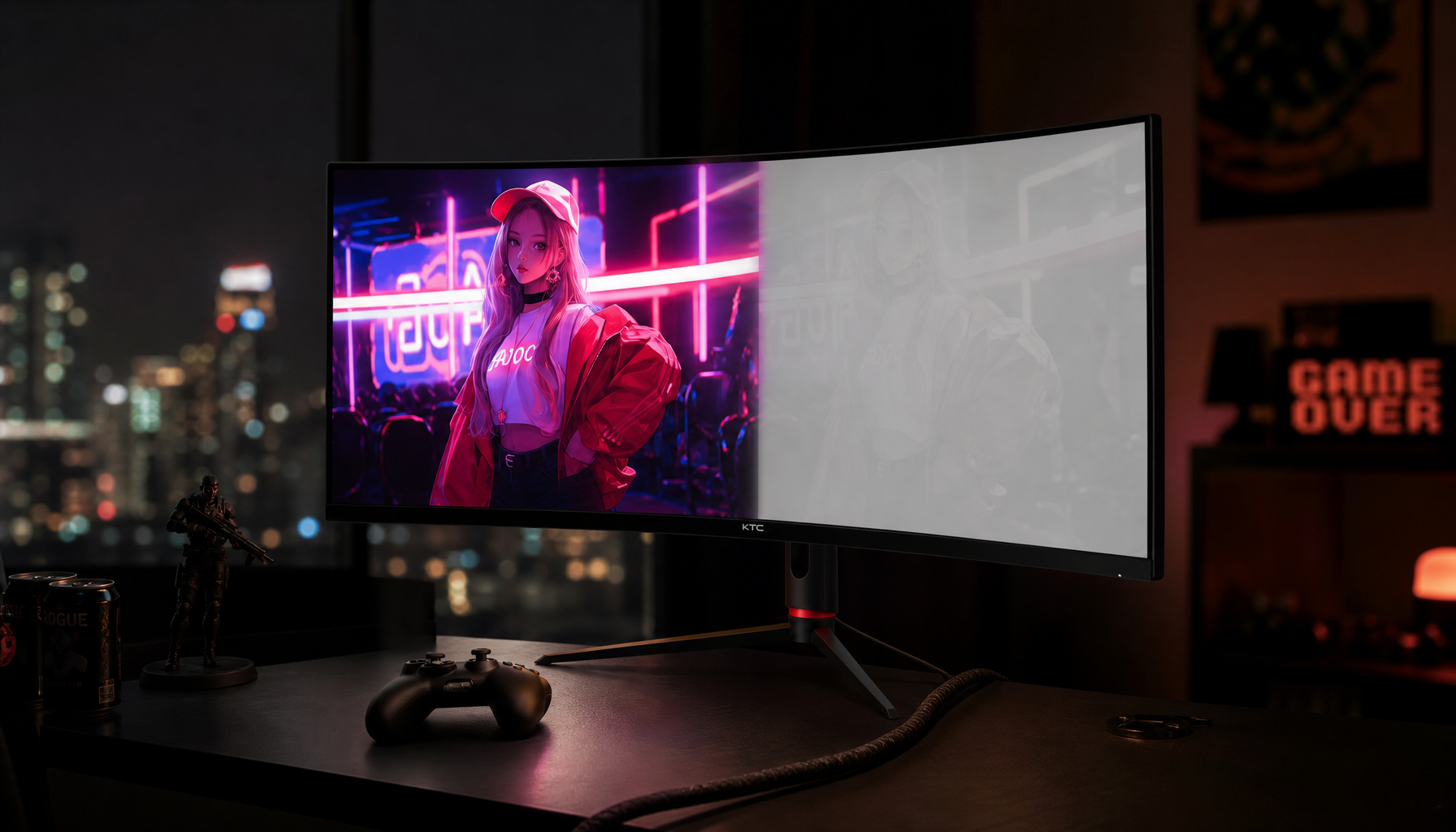
For example, consider a 1,000-nit HDR monitor playing a scene mastered with a sun reflection above its available output. One firmware release may compress the brightest region gently so texture remains visible in the glare. Another may lift midtones for a brighter overall image while sacrificing some highlight structure. Neither outcome is simply HDR on or HDR off; it is a behavioral choice.
What Can Change After a Firmware Update?
Highlights May Become Brighter or More Restrained
Firmware updates can alter how aggressively a display maps extreme brightness. This is most obvious in specular highlights: sparks in a game, chrome on a sports car, sunlight on water, or a bright office window in HDR video.
Strong HDR hardware still sets the ceiling. Displays intended for serious HDR work are often judged more credible when they can reach at least 1,000 nits, while displays below 600 nits may offer a limited HDR impression in demanding scenes, as discussed in HDR monitor evaluation. Firmware cannot turn a modest backlight into a reference-grade system, but it can change whether limited brightness is allocated to highlights, midtones, or both.
On an entry-level HDR400 monitor, an update that makes a desktop game look brighter may feel immediately appealing, yet the same change can flatten bright clouds or reduce the dimensional sparkle of weapon effects. On a Mini-LED or high-brightness screen, better-tuned firmware may hold more texture in those highlights without reducing impact.

Shadow Detail and Black Level Can Shift
Tone mapping is also a dark-scene decision. A firmware change may raise near-black detail to make enemies easier to spot in a nighttime map, or it may deepen blacks to increase cinema-style contrast. Either shift has a tradeoff: raised shadows can look washed out, while overly dark processing can conceal detail.
OLED and QD-OLED displays naturally produce very deep blacks, making HDR scenes appear exceptionally dimensional in a controlled room. However, QD-OLED black levels may look raised in bright surroundings, and brightness behavior remains a practical limitation compared with brighter competing displays, as reflected in HDR gaming monitor testing. Firmware can refine this balance, but room lighting still affects what your eyes judge as correct.
A reliable test is a familiar scene with dark clothing, dim architecture, and one bright light source. If a firmware update reveals formerly hidden texture without turning black areas charcoal gray, the change is likely beneficial. If every dark scene looks hazy, contrast may have been traded for visibility.
Local Dimming and OLED Protection Behavior May Evolve
Mini-LED HDR performance depends heavily on how firmware controls local dimming zones. A screen with hundreds or more than 1,000 zones can produce powerful contrast, but its processing must prevent halos around bright text, pulsing behind subtitles, and sudden brightness shifts in mixed desktop content.

Firmware can tune when zones engage, how quickly they react, and how strongly they dim nearby darkness. This is why two Mini-LED screens with similar peak brightness can feel very different in an HDR game or during video editing.
OLED displays face a different balancing act. Their pixel-level black control is superb, but brightness management can reduce output on large bright areas to protect the panel and manage power or heat. An update may modify how quickly a large white game menu, snowy landscape, or productivity window dims. That is not automatically a defect, but it matters if you purchased the display for bright HDR creation or consistent client review.
The Source Device May Already Be Doing the Mapping
One of the easiest diagnostic mistakes is blaming monitor firmware for tone mapping being performed elsewhere in the chain. On some PC systems, HDR tone mapping occurs on the GPU before the desktop image is composed in certified HDR modes. Official support documentation states that the monitor is not expected to add additional content-based tone mapping in those modes.
That means a perceived shift after an update could involve a monitor mode reset, a dynamic HDR or certified HDR selection change, a graphics driver change, operating-system HDR calibration, a game patch, or an altered HDMI or DisplayPort path. A monitor firmware update can still influence reported display capabilities or mode handling, but it is only one suspect.
A practical gaming example is a PC connected to a dynamic HDR-capable display. If the operating system begins selecting a dynamic HDR mode rather than a certified HDR mode, the same HDR10 game may appear different even though the game has not changed. Some displays may limit brightness to roughly 450 nits in certified modes while offering a separate non-certified HDR10 mode that can reach as high as 1,000 nits. The brighter mode may look more explosive, while the certified mode may be the better choice for controlled color reproduction.
Mobile operating systems show why consistency matters. Starting with a 2022 platform release, one system’s shared tone-mapping library was designed to reduce mismatches when HDR images move between processing paths. Before that shared approach, an HDR image could visibly change when device composition switched between hardware and GPU routes, including during rotation or different video rendering modes. The broader lesson for any smart screen is direct: firmware and system software must agree on the mapping behavior, or the user can see discontinuities.
Does Firmware Improve HDR Over Time or Create Risk?
Firmware offers genuine upside. Manufacturers can correct flicker, reduce color mismatches, improve dimming control, make HDR mode transitions cleaner, or align tone mapping more closely with a certified mode. A portable smart display that switches among streaming, console gaming, and desktop work particularly benefits from stable mode behavior.
There is also real risk. HDR is perceptual and path-dependent: an update that improves one format, app, or input can make another workflow appear less satisfying. User reports of washed-out HDR after firmware updates can be useful warning signs, but they are not proof of a general hardware failure unless they include a verified model, firmware build, cause, measurement, or remedy.
This is where value-oriented buying matters. A basic HDR label does not guarantee durable HDR quality. HDR400 is an entry-level brightness classification centered on a 400-nit peak, whereas more convincing HDR depends on brightness headroom, blacks, color capability, and dimming or pixel-level control. A well-supported monitor with dependable firmware, clear update notes, and separate HDR modes is usually a smarter long-term investment than a display chosen only for its badge.
Display situation |
Firmware can improve |
Firmware can compromise |
HDR gaming monitor |
Highlight visibility, dark-scene balance, mode switching |
Clipped effects, lifted blacks, changed brightness feel |
Mini-LED creative display |
Local dimming stability, halo control |
Pulsing, blooming, inconsistent UI brightness |
OLED or QD-OLED display |
Tone curve and protection behavior |
Reduced large-area brightness or altered shadow handling |
Portable smart screen |
Compatibility across apps and sources |
Different HDR results between built-in apps and external devices |
Office display with occasional HDR |
Predictable media playback |
Desktop whites or SDR content looking inconsistent |
How to Check Whether an Update Changed Your HDR
Establish a Repeatable Reference Before Updating
Before installing firmware, record the firmware release, input port, cable type, HDR mode, local dimming setting, brightness control, operating-system HDR state, graphics driver release, and in-game HDR calibration settings. Then photograph or visually assess two familiar scenes: one dominated by bright highlights and one with deep shadows plus small bright objects.

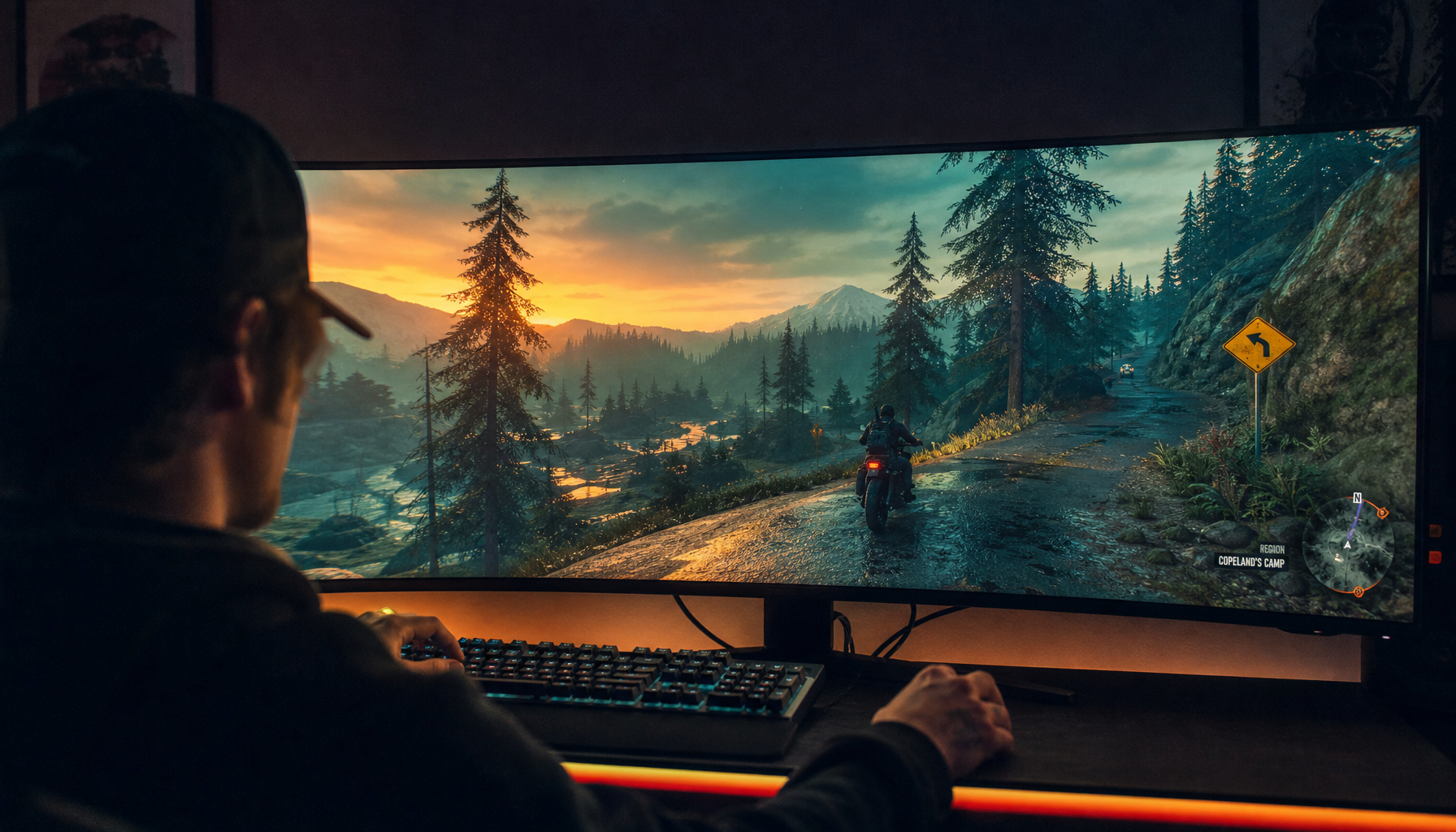
This does not require laboratory equipment. For an immersive game, use a fixed save point with neon, sunlight, explosions, or dark interiors. For creative work, use the same HDR photograph or graded clip every time. The objective is not to decide which image seems more dramatic at first glance; it is to detect clipping, crushing, gray blacks, color shifts, or unstable luminance.
Test One Signal Path at a Time
After an update, avoid changing operating-system calibration, display presets, GPU drivers, console HDR settings, and game sliders simultaneously. If your monitor changes from an HDR cinema mode to an HDR game mode while you also recalibrate the console, there is no clean way to determine what caused the visual shift.
For a PC gaming display, first restore the previously recorded display mode and replay the same scene. Then compare certified HDR and any higher-brightness non-certified mode only if both were previously available. For a smart screen, compare a built-in streaming app with the same content from an external device, because an internal app and HDMI source may use different processing paths.
Look for Meaningful Changes, Not Just More Brightness
A firmware update is not an upgrade merely because HDR looks brighter. A high-performance display should preserve detail while increasing impact. In a bright sky, you should still see cloud structure; in a dim room, you should retain subtle object edges without making the background milky.
For gaming, response and refresh rate still matter alongside HDR. The enthusiast market regularly prioritizes 1440p QD-OLED models with refresh rates from 240 Hz upward because deep contrast and fast motion reinforce immersion together, as reflected in current gaming monitor selections. A brighter tone curve is of limited value if it reduces visibility in competitive shadows or makes repeated brightness transitions distracting.
Practical Advice for Different Users
Competitive and Cinematic Gamers
Keep separate HDR presets when the monitor supports them. A competitive preset may favor slightly elevated shadow visibility, while a cinematic preset should preserve deep blacks and controlled highlight detail. After any firmware update, recalibrate the game only after confirming that the monitor mode itself has not changed.
If a title looks washed out across all scenes, confirm the operating-system HDR mode, the game’s HDR switch, the console or GPU output mode, and the monitor preset before concluding the panel has deteriorated. Firmware most often changes interpretation or processing behavior, not the physical panel overnight.
Creators and Color-Critical Users
For HDR photo or video review, consistency is more important than instant visual excitement. The absence of a universal HDR color-profile workflow makes factory accuracy and hardware calibration capability especially valuable. Displays positioned for color-critical work commonly support guided calibration tools and compatible meters, as illustrated monitor calibration workflows.
If firmware alters the HDR curve, document the new release and repeat your reference viewing before approving client work. Use SDR for layout, email, spreadsheets, and general editing unless HDR judgment is actually required; HDR desktop rendering can make ordinary white interfaces and brand colors less predictable.
Productivity Users and Portable Screen Owners
An office-focused display rarely becomes a better work monitor simply because HDR is left active all day. High-resolution text, stable whites, good ergonomics, and clean USB-C connectivity usually deliver more dependable daily value than modest HDR. When you do use HDR for a presentation, product video, or game break, a screen that switches modes cleanly is worth more than one that advertises HDR while constantly changing perceived brightness.
For portable smart screens, check whether firmware updates affect built-in apps, external HDMI sources, and USB-C video separately. Portability increases the number of devices and modes a display encounters, so predictable handoffs are part of performance, not a minor convenience.
Should You Install HDR-Related Firmware Updates?
Install firmware when the manufacturer identifies an issue that affects your input path, HDR format, flicker behavior, compatibility, or display mode reliability, but preserve a baseline before proceeding. If an update cannot be rolled back, waiting for detailed user reports or measurement-based reviews is sensible when your current HDR workflow is stable and revenue-critical.
The benefits are meaningful when an update resolves visible inconsistency, improves dimming behavior, or restores correct HDR handling. The disadvantages are equally practical: revised brightness curves can change a favorite game’s atmosphere, creative reference behavior can shift, and a high-brightness mode may be traded for stricter certified behavior. Firmware maintenance is therefore best treated as controlled performance management, not routine button pressing.
FAQ
Can firmware make an HDR monitor brighter than its rated hardware?
Firmware can redistribute how brightness is used and may expose or limit a mode already supported by the display, but it cannot create panel brightness, dimming zones, or black-level performance that the hardware does not possess.
Why does HDR sometimes look washed out after an update?
A washed-out image may result from raised shadows, changed tone curves, an altered HDR mode, an operating-system mapping change, a source setting reset, or an unexpected processing combination. Compare the same content and settings across inputs before assigning the cause to firmware.
Is Dynamic HDR Always Better Than Certified HDR Mode on a Monitor?
Not automatically. Some displays may restrict maximum brightness in certified operation while offering a brighter non-certified HDR10 option. Choose certified accuracy for controlled viewing, and compare higher-brightness modes for entertainment only after checking for lost highlight or color detail.
A great HDR display should remain compelling months after purchase, not just dazzling during the first demo. Treat firmware as part of the display engine: record your baseline, update with purpose, and judge success by preserved detail, stable behavior, and immersion you can trust.