Two monitors with the same model number can still show different colors because panel sourcing, factory calibration, uniformity, aging, ports, cables, and software profiles can all shift how red, green, blue, white, and gray appear.
Your “matching” dual-monitor setup may look perfect on paper, then one screen makes white pages look clean while the other looks warm, green, or washed out. A disciplined 20-minute check of settings, cables, profiles, and test images can tell you whether the issue is fixable or whether you should exchange the weaker unit. Here is how to separate normal variance from a bad panel and keep your gaming, office, or creative setup visually consistent.
What Panel Lottery Means for Color Accuracy
The panel lottery is the uncertainty that comes from buying a display whose real-world panel quality may vary even within the same model line. A company may sell one SKU, but panels can come from different production batches, suppliers, or calibration runs. That does not always mean fraud or poor design. It means consumer monitors are built within tolerances, and two units can pass factory checks while still looking different side by side.
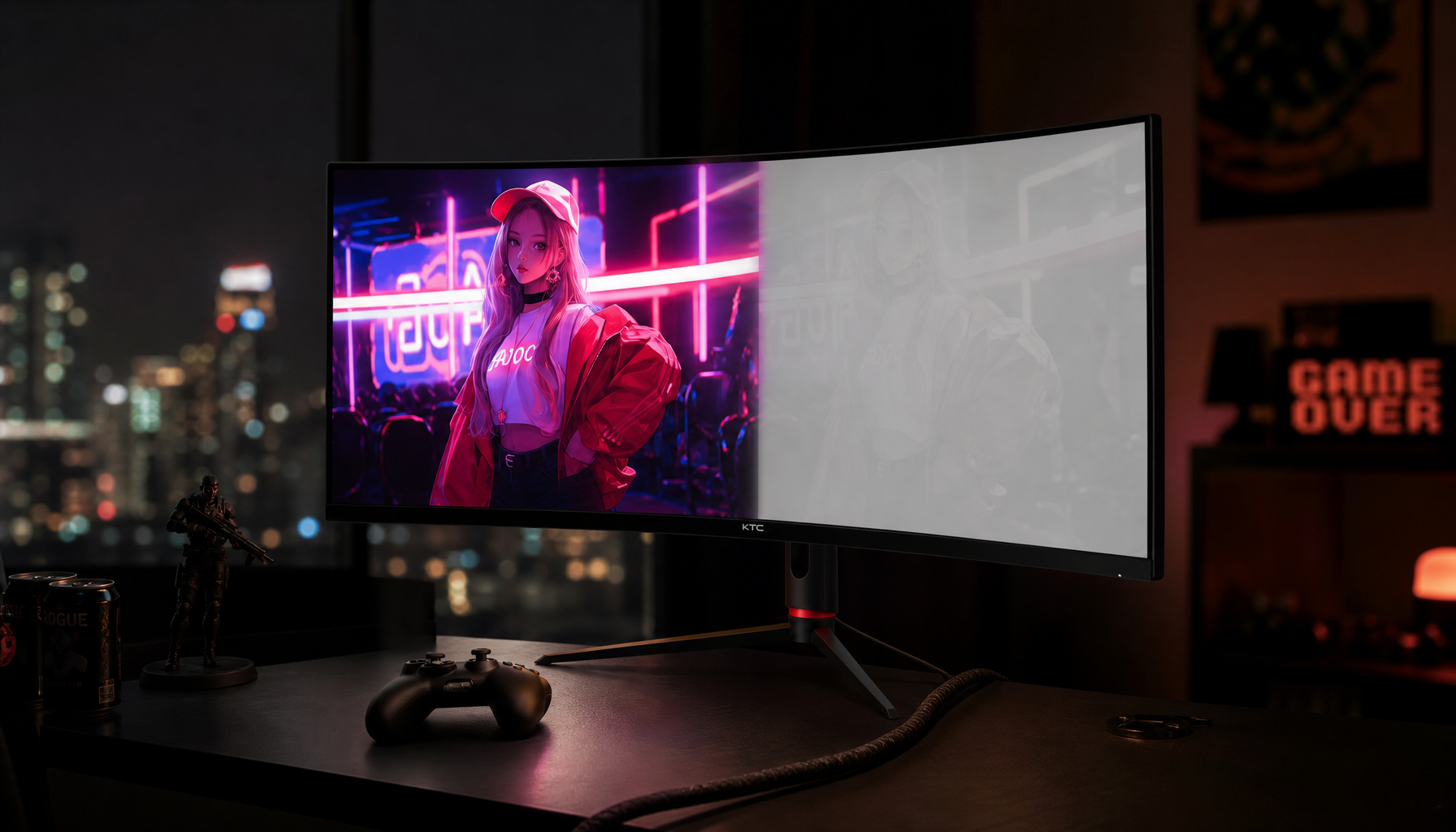
For color accuracy, the lottery usually appears as a different white point, uneven brightness, a warmer or cooler grayscale, weaker saturation, tinting in one corner, or visible gamma differences. On a single monitor, you may never notice. In a dual-screen setup, the mismatch is obvious because your eyes compare both panels at the same time.
This matters more today because many users are not buying a monitor in isolation. Competitive players may run a high-refresh display beside a chat or streaming monitor. Office users may keep spreadsheets, dashboards, and documents visible across two or three screens. Creative workers may place a calibrated reference display next to a secondary tool display. When the same gray toolbar, web page, or game menu looks different on each screen, trust drops quickly.
Why Identical Models Can Look Different
Panel Manufacturing and Supplier Variation
Even when two monitors share the same model name, the underlying panel can vary by batch or supplier. The advertised spec sheet may still be accurate because it describes target performance, not a guarantee that every unit will be visually identical. Differences in backlight behavior, LCD alignment, color filters, coating, and factory calibration can all affect final appearance.
The visible result is often subtle but frustrating. One unit may hit a neutral white at your preferred brightness while another leans yellow. One may show cleaner shadow detail while another crushes dark grays. A third may have a pink or green tint near one edge. These differences are especially easy to spot on large white browser windows, design canvases, and esports maps with pale skyboxes or fog.
IPS, VA, OLED, and the Type of Variation You See
Panel type shapes the kind of color variation you are likely to notice. IPS and VA panels are both LED-backlit LCD technologies, but IPS tends to preserve color and brightness better from wider angles, while VA tends to deliver stronger contrast and deeper blacks. That makes IPS easier to align in side-by-side office and multi-monitor layouts, while VA can look richer in dark rooms but more angle-sensitive.
Panel type does not automatically determine color accuracy. Input lag, brightness, reflection handling, text clarity, and color accuracy depend on the full implementation, not only whether a panel is IPS or VA. In practice, that means a well-calibrated VA monitor can look more accurate than a poorly tuned IPS monitor, even if IPS is often the safer choice for multi-screen consistency.
Display Trait |
How Panel Lottery Can Show Up |
Practical Impact |
White point |
One unit looks warmer, cooler, greener, or pinker |
Documents, web pages, and UI panels do not match |
Gamma |
Midtones look darker or flatter on one screen |
Photos, game shadows, and charts lose consistency |
Uniformity |
Corners or edges show tint or brightness shifts |
Large spreadsheets and design canvases look uneven |
Gamut |
One panel looks more saturated than another |
Brand colors, skin tones, and game art differ |
Backlight bleed |
Bright patches appear near edges in dark scenes |
Dark games, movies, and night-mode apps look inconsistent |
Not Every Color Mismatch Is the Panel Lottery
A strong troubleshooting mindset matters because many “bad panel” complaints are actually setup mismatches. A discussion of same-model monitors producing different colors highlights practical causes such as hardware settings, graphics outputs, software configuration, cables, signal formats, and age. Before returning a monitor, isolate those variables.
Start with the monitor’s own controls. Reset both units to factory settings, then match brightness, contrast, color temperature, gamma mode, overdrive mode, HDR mode, local dimming, blue-light reduction, and any “game,” “cinema,” or “dynamic” presets. Many monitors ship in vivid modes that look impressive in a store but distort color on a desk.
Next, check the signal chain. If one monitor uses DisplayPort and the other uses HDMI, or one connects through a dock while the other connects directly to the graphics card, you are not testing identical conditions. Swap the cables and ports. If the color difference follows the port, cable, dock, or GPU output, the panel may not be the problem.
Color profiles also matter. A display profile tells the operating system and color-managed apps how that screen maps RGB values to visible color. If one monitor uses a manufacturer ICC profile and the other uses a generic profile, identical RGB values may not render the same way in managed applications. For office work, this may look like a mild tint. For design, product imagery, and video, it can become a real approval risk.

Why Color Accuracy Variation Matters by Use Case
For competitive gaming, color accuracy is not only about pretty screenshots. A high-refresh display with poor grayscale tracking can make dark corners harder to read, while aggressive overdrive can introduce artifacts that look like color distortion. A 1ms GTG monitor is valuable because fast pixel transitions reduce blur and ghosting, but speed alone does not guarantee clean color. A fast panel that looks oversaturated, uneven, or too dark can still work against visual confidence.
For esports buyers, the tradeoff is clear. Prioritize response time, refresh rate, and input lag for the main gaming display, but do not ignore factory color modes. If your 240 Hz panel needs its “fastest” overdrive mode to hit a headline number and that mode causes inverse ghosting or color shifts, step down one overdrive level and use the clearer image. The best setting is the one that preserves target visibility without smearing or obvious artifacts.
For office productivity, matching matters because inconsistent screens add friction. The University of Utah multi-screen study found that multiple-monitor users were faster, produced more output, and made fewer errors than single-monitor users in simulated office tasks, with multi-screen displays improving both performance and usability. That benefit depends on the screens feeling coherent enough that your eyes move naturally between documents, spreadsheets, and reference material.
Multiple displays can also improve productivity for information workers, designers, and engineers. In that kind of workflow, color mismatch is not always mission-critical, but brightness and white-point mismatch can cause fatigue. If one monitor is your writing surface and the other is your reference surface, align brightness first, then white balance, then saturation.
For creative work, the stakes are higher. A secondary monitor can hold tools, timelines, files, and chat, but final color decisions should happen on the best-calibrated display. If you edit product photos, UI colors, thumbnails, or video grades, treat unmatched monitors as separate instruments, not interchangeable canvases.
How to Test Two Identical Monitors at Home
A practical test does not require a lab, but it does require control. Put both monitors side by side at the same height and viewing angle. Let them warm up for at least 30 minutes. Disable HDR unless you specifically need HDR. Use the same connection type if possible, ideally DisplayPort-to-DisplayPort or HDMI-to-HDMI with matching cables.

Open the same full-screen test images on both displays: pure white, neutral gray, near-black gray, red, green, blue, skin-tone photos, and a familiar game or work document. Match brightness by eye first, because a brighter screen often appears “better” even when it is less accurate. Then compare white point, gray neutrality, saturation, and corner uniformity.
If both monitors have sRGB mode, try it. sRGB modes often reduce oversaturation and provide a more predictable baseline for web, office, and standard content. However, some budget monitors lock brightness or other controls in sRGB mode, which can make practical matching harder. If sRGB mode is too dim or locked, use custom color mode and adjust RGB gain controls carefully.
A hardware colorimeter is the cleanest answer for color-critical users. Calibration can bring two decent panels much closer by correcting white point, tone response, and profile behavior. It cannot repair physical defects such as severe backlight bleed, dirty-screen effect, stuck pixels, poor viewing-angle behavior, or obvious color patches across the panel.
When to Keep, Calibrate, or Return
A small difference between identical models is normal. Keep the unit if the mismatch disappears after matching settings, if uniformity is acceptable in real work, and if the color difference is only visible on synthetic test screens. Calibrate if both panels are basically clean but the white point or gamma differs enough to distract you.
Return or exchange the monitor if the problem is visible during normal use and does not follow the cable, port, profile, or settings. Strong corner tint, severe backlight bleed, obvious dirty-screen effect, bad uniformity on white or gray pages, and major saturation mismatch are all reasonable return-window concerns. The panel lottery is exactly why return policy matters; inspect early, document with photos, and avoid waiting until the exchange window closes.
Buying Advice to Reduce Panel Lottery Risk
Choose models with strong independent testing, not just bold spec sheets. Match monitors to real use cases: esports buyers should prioritize refresh rate and low latency, while immersive players may prefer OLED, ultrawide, or curved formats. Measured brightness, gamut coverage, response behavior, and value can vary widely even among strong products in the same category of gaming monitors.
If you need two or three matching monitors, buy them at the same time from the same retailer when possible. That improves the chance of receiving units from a similar production batch, though it does not guarantee a perfect match. Keep all packaging until testing is complete, and check the return policy before you mount anything on arms or remove protective films.
For a performance-first setup, assign roles instead of expecting every screen to behave identically. Put the fastest panel in the center for FPS gaming. Put the most accurate panel in front for editing. Use the secondary screen for chat, documents, monitoring tools, or timelines. In office productivity, make the brightest and cleanest text display your primary work surface, then tune the side display to reduce eye strain.
The panel lottery affects color accuracy because “same model” does not mean “same measured panel.” Treat every new display like performance hardware: verify it, match the setup, calibrate when the work deserves it, and exchange the unit when the defect is physical. A reliable screen does not just show pixels; it gives you confidence that what you see is the signal, not the variance.