Variable Refresh Rate does not inherently make a monitor’s colors more or less accurate; it changes refresh timing, not the panel’s color target. Color shifts usually come from display mode, overdrive behavior, HDR settings, brightness, calibration profiles, or ambient lighting that changes alongside VRR.
Ever notice a game looking slightly different when adaptive sync kicks in, even though you never touched the color menu? In practical testing, the fix is usually measurable: lock the same picture mode, brightness, gamma, and ICC profile before comparing VRR on versus off. You’ll learn what VRR actually changes, what it does not, and how to keep your monitor fast without letting color drift sabotage the image.
What VRR Actually Does
Variable Refresh Rate, or VRR, synchronizes the monitor’s refresh timing with the GPU’s real frame output, so the display updates when the graphics card has a frame ready instead of forcing every frame into a fixed 60 Hz, 120 Hz, or 165 Hz cadence. A useful technical discussion frames VRR as synchronization between the display and GPU, with common implementations using adaptive sync.
That timing change is not a color-management system. VRR does not redefine sRGB, alter gamma to 2.4, expand a panel’s color gamut, or calibrate white balance. Its main job is motion consistency: fewer tears, less obvious stutter, and smoother frame pacing when your GPU is bouncing between, for example, 72 FPS and 118 FPS during a demanding game scene.
The confusion comes from how monitors package features. Many gaming displays tie VRR to a “Game,” “FPS,” “HDR,” or “Adaptive-Sync” preset. That preset may raise brightness, change color temperature, enable dynamic contrast, alter black equalizer settings, or switch overdrive. When the picture changes after enabling VRR, the culprit is often the preset stack around VRR, not VRR itself.
The Short Answer: Timing Changes, Color Usually Does Not
A calibrated monitor should show essentially the same color target with VRR enabled or disabled if every other setting stays identical. Color accuracy means the display reproduces colors close to a known reference, while color richness is more about perceived saturation, contrast, and depth; a forum topic on VA displays distinguishes color accuracy and color richness.
In real setups, the “same settings” condition is where things break. A monitor may use one gamma curve in Standard mode and a different curve in Game mode. It may disable the sRGB clamp when Adaptive-Sync is active. It may boost shadows to reveal enemies, making dark grays look flatter and less faithful. On some displays, HDR and VRR can coexist, but HDR itself changes tone mapping and brightness behavior, so you are no longer testing VRR alone.
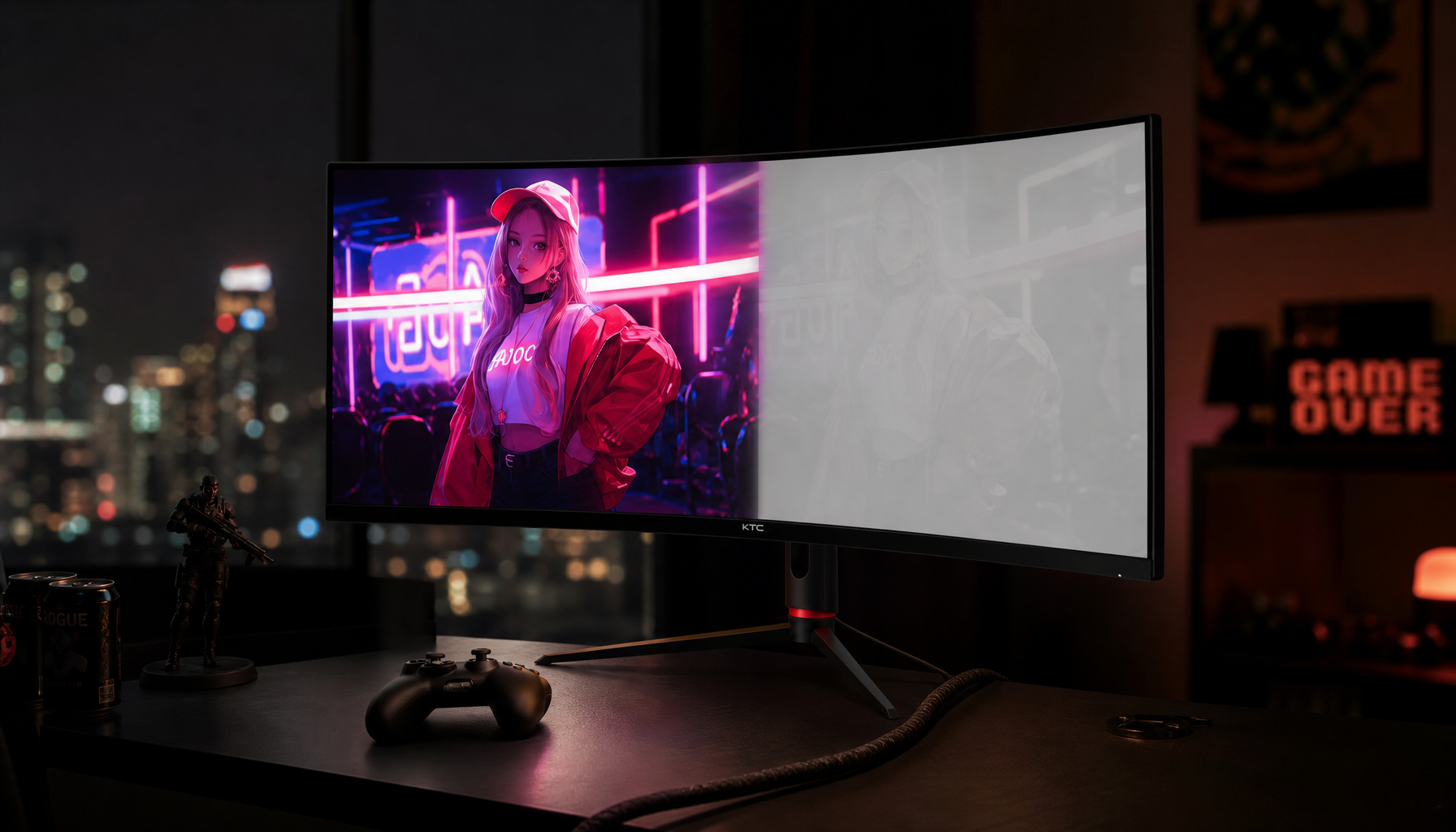
For a concrete example, imagine a 27-inch 1440p 165 Hz monitor used for both esports and photo review. With VRR off in sRGB mode, skin tones may look controlled and web graphics may match expected saturation. With VRR on in a Racing or FPS preset, the same image can look cooler, brighter, and more saturated. The refresh technology did not damage color accuracy; the monitor moved into a different image pipeline.

Where Color Accuracy Can Appear To Change
Brightness And Gamma Shifts
The most common visible change is not hue but tone. If enabling VRR also enables a gaming preset, shadows may lift and highlights may punch harder. That can be valuable in a shooter, where seeing a dark corner quickly matters more than preserving a reference gamma curve. It is less useful when editing thumbnails, product photos, or brand assets.
Calibration advice emphasizes that monitor color work depends on brightness, gamma, saturation, RGB levels, and color presets, with higher-end displays often offering deeper controls than basic office models. For print or design work, hardware calibration is the more reliable path because it measures the screen rather than trusting your eye.
A simple test is to open the same neutral gray ramp or skin-tone photo, toggle VRR, and confirm whether brightness, contrast, gamma, color temperature, local dimming, HDR, and picture mode remain unchanged. If one of those changes, you are seeing a mode shift.
Overdrive And Motion Artifacts
VRR changes frame timing, which can expose weaknesses in pixel response tuning. Overdrive is designed to push pixels faster, but aggressive overdrive can create inverse ghosting or bright trails. That is not traditional color inaccuracy, yet it can make moving objects look tinted, smeared, or artificially edged.

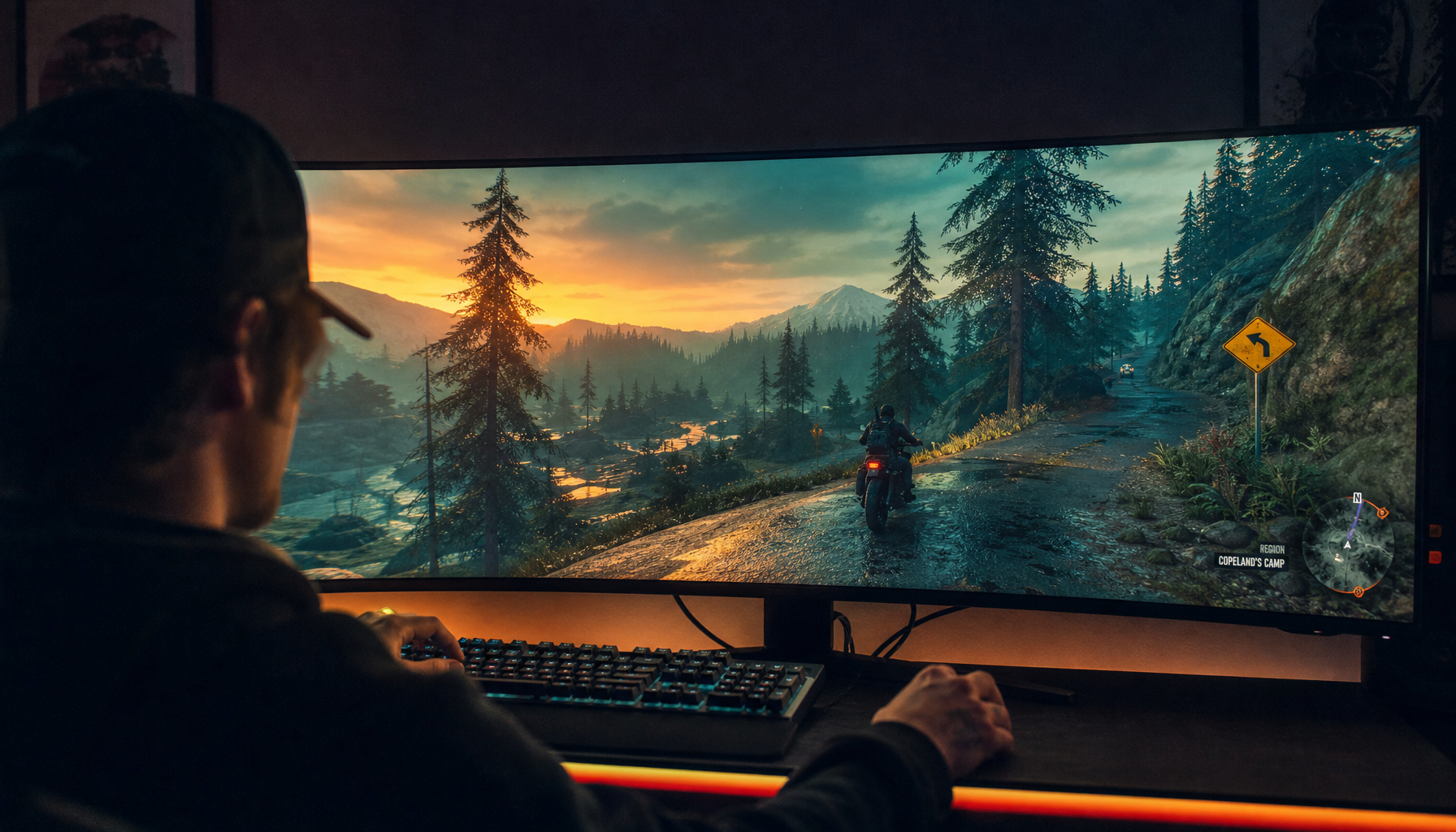
The issue is especially noticeable in games with fluctuating frame rates. A 165 Hz monitor can feel excellent when the GPU is feeding it high frame rates, and one refresh-rate overview notes that 165 Hz can improve smoothness, motion clarity, and responsiveness compared with 60 Hz or 144 Hz in fast games. Pairing that speed with adaptive sync can reduce tearing during FPS swings, but overdrive quality still determines whether moving color edges stay clean.
For competitive play, you may accept a slightly less accurate preset if motion clarity improves. For content creation, use the monitor’s most accurate mode and a conservative overdrive setting, even if that gives up a little speed.
HDR, Wide Gamut, And sRGB Clamping
VRR is often marketed beside HDR, wide color, and high refresh rate, which makes buyers assume the features are one unified upgrade. They are separate. A wide-gamut panel can show more saturated color, but it can also oversaturate standard web content if the monitor does not provide a good sRGB mode.
Gaming monitor guidance makes the useful buyer distinction: gaming displays are tuned for smoothness, response, and game visuals, while professional photographers, video editors, and designers should prioritize color-accurate creative monitors. That matters because a gaming monitor can be excellent for responsiveness while still being the wrong reference screen for paid color decisions.
If your monitor lets you run VRR inside an sRGB or calibrated user mode, that is ideal. If VRR only works in a vivid gaming preset, treat that mode as a performance mode, not a proofing mode.
Gaming, Office, And Creator Workflows Compared
Workflow |
VRR Benefit |
Color Accuracy Risk |
Best Practical Setup |
Competitive gaming |
Smoother motion, less tearing, better frame pacing |
Game presets may alter gamma, saturation, or black levels |
VRR on, fast overdrive tested by eye, color treated as secondary |
Story games and media |
Smoother camera pans and fewer visible stutters |
HDR or dynamic contrast may change tone mapping |
VRR on, accurate or cinema mode, avoid excessive sharpening |
Office productivity |
Smoother scrolling and pointer movement on high-Hz displays |
Usually low, unless power modes change brightness |
Use native resolution, stable brightness, and comfort settings |
Photo, design, print prep |
Minimal direct benefit unless motion previews matter |
Preset changes can break consistency |
VRR optional, calibrated mode locked, hardware profile active |
Better smoothness if supported by GPU and panel |
USB-C power limits may affect brightness consistency |
Stable power, full-sRGB mode when available, avoid vivid modes |
How To Test VRR Color Accuracy At Home
Start with one controlled baseline. Set the monitor to its most accurate picture mode, usually sRGB, Standard, Custom, or a calibrated user mode. Turn off dynamic contrast, night mode, automatic brightness, unnecessary sharpening, and any “enhance color” feature. Let the display warm up for about 20 to 30 minutes before judging color, a step calibration sources also recommend because displays can shift as they stabilize.
Then toggle VRR in the GPU control panel and the monitor menu while keeping the same image on screen. Use a familiar reference: a grayscale ramp, a skin-tone photo, a saturated red logo, and a dark scene with near-black detail. If the image changes instantly when VRR is enabled, check whether the monitor silently changed presets.
For stronger confidence, use a colorimeter. KTC’s calibration guidance explains that hardware calibration uses measured light output rather than visual guessing, and it is most justified when color mistakes create reprints, client revisions, or unreliable multi-screen decisions. A practical example from that guidance is direct: if one bad product-color approval costs $250.00, a $150.00 to $300.00 calibration device can pay for itself quickly through measured correction.

Should You Leave VRR On?
For gaming, yes, unless it causes flicker, artifacts, or forces a bad picture mode. VRR is especially valuable at 4K because frame rates fluctuate under heavy rendering loads, and a technical discussion notes that even a 4K VRR range around 45 Hz to 75 Hz can still be useful when high frame rates are not guaranteed.
For office work, VRR is usually harmless, but it is less important than a comfortable refresh rate, good text clarity, ergonomic positioning, and stable brightness. A 34-inch WQHD productivity display, for example, focuses on a wide 3,440 x 1,440 workspace, USB-C docking, webcam, speakers, and ergonomic adjustability rather than gaming-grade VRR as the core value. For many desk setups, single-cable productivity and screen space matter more than adaptive refresh.
For creative work, VRR should be treated as optional. If you can enable it without leaving your calibrated mode, leave it on for general comfort. If enabling it changes color mode, disables your ICC workflow, or forces HDR tone mapping, turn it off while making final color decisions.
Pros And Cons For Color-Sensitive Users
VRR Advantage |
Practical Meaning |
Less tearing |
Moving images stay visually continuous without forcing rigid VSync behavior |
Better frame pacing |
Fluctuating FPS looks smoother, especially at 1440p and 4K |
Lower performance penalty than VSync in many cases |
The GPU does not have to wait for fixed refresh intervals as aggressively |
More immersive play |
Camera movement and animation feel more connected to input |
VRR Tradeoff |
Practical Meaning |
Possible preset switching |
Some monitors alter brightness, gamma, or saturation when Adaptive-Sync is enabled |
Overdrive inconsistency |
Motion artifacts can appear at different frame rates |
HDR interaction |
Tone mapping can change the image more than VRR itself |
Calibration uncertainty |
Color-critical users must verify that the same profile and mode remain active |
Buying Advice: What To Look For
Choose a monitor that lets performance and accuracy coexist. The best all-around displays give you VRR, a strong sRGB mode, usable custom color controls, stable overdrive, and enough brightness control for your room. Avoid assuming a high refresh rate automatically means weak color; high refresh and accurate color are not inherently opposed, but cheaper gaming displays often spend the budget on speed before uniformity and factory tuning.
For a single display used across gaming and work, prioritize a panel that stays consistent in the modes you actually use. IPS and OLED are usually stronger choices for color stability across wide viewing angles, while VA can deliver excellent contrast but may need more care with viewing position and dark-level transitions. On ultrawide screens, edge consistency matters because you naturally view the left and right sides off-center.
For paid color work, the rule is stricter: buy for calibration support first and VRR second. A fast monitor that cannot hold a reliable white point, gamma, and color profile is a gaming tool, not a reference display.
FAQ
Does Adaptive Sync Reduce Color Accuracy?
Not by design. Adaptive-sync technologies adjust refresh timing to match GPU output. If color changes, the likely cause is a monitor preset, HDR mode, overdrive behavior, brightness change, or color profile switch.
Can I Use VRR For Photo Editing?
Yes, but it usually adds little value during still-image editing. Keep VRR only if your calibrated picture mode, ICC profile, brightness, and gamma remain unchanged. For final edits, measured calibration matters more than adaptive refresh.
Why Does My Monitor Look More Saturated When VRR Is On?
Your monitor may be switching into a gaming preset or disabling an sRGB clamp. Check the on-screen display menu before and after enabling VRR, then compare color temperature, gamma, contrast, HDR, and picture mode.
Is VSync Better For Color?
No. VSync changes frame synchronization behavior, not color accuracy. It can reduce tearing, but it may introduce performance drops when the GPU cannot maintain the target refresh rate. VRR usually handles fluctuating frame rates more gracefully.
Final Word
VRR is a motion technology, not a color technology. Keep it on for fluid gaming, lock your accurate preset for serious color work, and verify that the monitor is not quietly changing brightness, gamma, HDR, or saturation behind the scenes. A great display should let you move fast without giving up trust in what you see.