Display response time does not change the parry window coded into an action RPG, but it can change how clearly and quickly you see the visual cue that tells you when to press block, parry, or dodge.
Ever feel like you pressed parry on time, but the boss still clipped you during a fast combo? A monitor with slow pixel transitions, visible ghosting, or extra input lag can make attack animations harder to read, especially when the window is only a fraction of a second. This guide explains which display specs actually matter for defensive timing and how to tune a gaming monitor for cleaner reads.
Response Time Is About Clarity, Not the Game’s Parry Window
Display response time is the time it takes a pixel to change from one shade or color to another, usually listed in milliseconds as Gray-to-Gray, or GtG. Lower response times reduce blur and ghosting during fast motion, which matters when an enemy’s weapon swing, shoulder movement, or flash cue is your signal to parry. However, response time is separate from input lag, which is the delay between your button press and the result appearing on screen.
That distinction is important. A 5 ms pixel transition does not mean your parry input is delayed by 5 ms. It means the image itself may take longer to settle from one frame to the next. In a slow exploration scene, that is barely noticeable. In a boss fight with a quick overhead slash, it can smear the startup animation enough that your eyes receive a less precise cue.
For action RPGs, response time affects the readability of timing. Input lag affects when your input appears to take effect. Refresh rate affects how often the monitor can show updated frames. A good defensive-timing setup balances all three.
Why Motion Blur Makes Defensive Timing Feel Worse
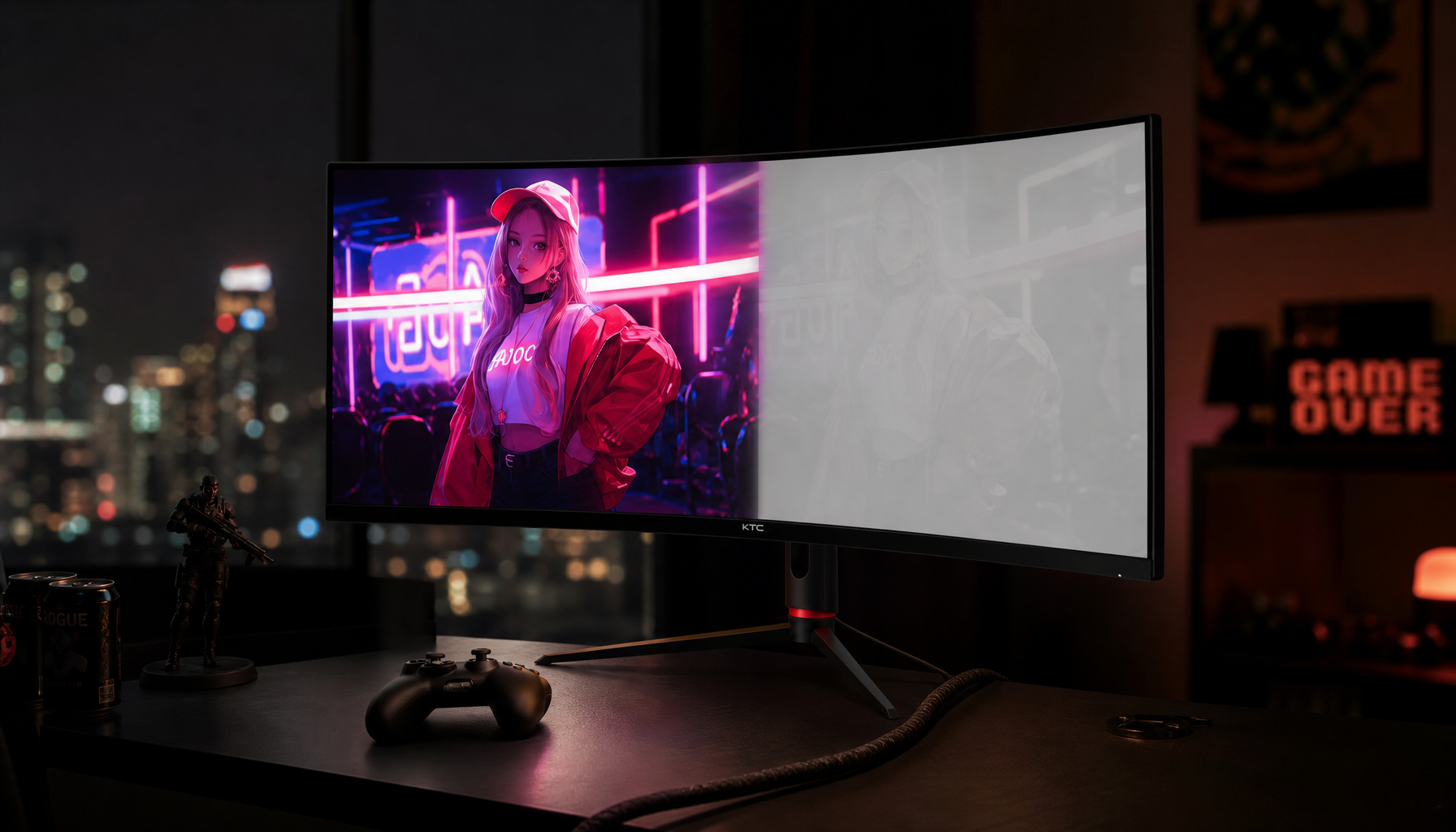
When a boss lunges across the screen, your eyes track the moving target. If the monitor’s pixels do not finish transitioning before the next frame arrives, the old image blends into the new one. Slow transitions can create ghosting, smearing, and motion blur, making it harder to tell exactly when the attack changes from windup to active strike.

Frame Windows Get Smaller at Higher Refresh Rates

Refresh rate determines how much time each frame has before the next one arrives. At 60 Hz, each refresh window is 16.67 ms. At 120 Hz, it is 8.33 ms. At 240 Hz, it is 4.17 ms. A pixel transition around 6 ms may look acceptable at 60 Hz, but at 240 Hz it can trail into the next refresh window and reduce the benefit of the higher refresh rate.
That is why advertised refresh rate alone is not enough. A 240 Hz monitor with poor pixel response can still show visible smearing in fast action. For parry-heavy games, the goal is not just “more Hz”; it is enough refresh rate paired with fast enough pixel transitions to make the enemy animation readable.
Practical Example
If you play a game at 60 FPS on a 240 Hz monitor, you do not automatically get 240 FPS motion clarity. Motion clarity depends on both frame rate and refresh rate; Hz alone or FPS alone does not fully solve blur. Still, the 240 Hz panel may reduce scanout-related latency and make tearing less visible, so it can feel cleaner than a basic 60 Hz display when properly configured.
Input Lag Is the Timing Spec Players Often Confuse With Response Time
Input lag is the delay between pressing a button and seeing the result on screen. It can come from the game engine, controller or keyboard, GPU render queue, display processing, refresh rate, and monitor electronics. A company’s overview notes that standard monitors may have roughly 10 to 30 ms of input lag, while gaming displays can reduce that depending on model and settings.
For blocking and parrying, input lag matters because it shifts your feedback loop. If a display adds noticeable lag, you may begin pressing earlier to compensate, even if the game’s actual parry window has not changed. Over time, that can make timing feel inconsistent when switching between a living room TV, a portable monitor, and a high-refresh gaming monitor.
Settings That Often Reduce Display Lag
Use the monitor’s gaming mode or low-latency mode when available. Disable heavy image processing features such as dynamic contrast, motion smoothing, noise reduction, and extra sharpness filters. On TVs used as large gaming displays, “Game Mode” is often essential because TV processing can add more delay than a purpose-built gaming monitor.
For desktop action RPGs, also check whether your display is running at its maximum refresh rate in the operating system and in-game. A 144 Hz monitor accidentally set to 60 Hz will not give you the timing benefit you paid for.
Refresh Rate vs. Response Time: Which Matters More for Parries?
For most action RPG players, refresh rate is the first upgrade to feel, while response time determines how clean that upgrade looks. Moving from 60 Hz to 120 Hz or 144 Hz can make camera motion, enemy tracking, and animation startup cues feel more continuous. But if pixel response is too slow, motion trails can still blur the exact frame where a parry cue appears.
A balanced monitor is usually better than a spec-sheet extreme. A well-tuned 144 Hz or 165 Hz gaming monitor with good real-world response behavior can feel better for defensive timing than a cheap 240 Hz display with aggressive overshoot, weak dark transitions, or smeary motion.
Display Factor |
What It Affects |
Why It Matters for Parries and Blocks |
What to Prioritize |
Refresh rate |
How often the screen updates |
More frequent visual updates can make attack cues easier to track |
120 Hz or higher for action RPGs |
Pixel response time |
How fast pixels change |
Slow transitions create blur or ghosting around moving enemies |
Fast GtG performance with minimal smearing |
Input lag |
Delay from input to visible result |
High lag makes timing feel late or inconsistent |
Low-lag gaming mode |
Overdrive |
Pixel acceleration |
Can reduce ghosting, but too much creates halos |
Medium or balanced setting |
VRR |
Sync between GPU and display |
Helps reduce stutter and tearing during variable frame rates |
Useful if FPS fluctuates |
How to Set Up a Monitor for Better Defensive Timing
Start with the refresh rate. Set the monitor to its highest stable refresh rate in the operating system, then match the game settings. If your game runs at 90 to 140 FPS, a 144 Hz, 165 Hz, or 240 Hz VRR display can smooth out frame pacing better than a fixed 60 Hz panel.
Next, tune overdrive. Overdrive pushes pixels to change faster, but excessive overdrive can create inverse ghosting, where bright or dark halos appear around moving objects. For action RPGs, that can be just as distracting as ordinary ghosting because the outline of an incoming weapon may look doubled or artificially sharpened. Use a middle overdrive mode first, then test fast camera pans and boss attacks before choosing the highest setting.
Action Checklist
- Set your monitor to its maximum refresh rate in the operating system or your GPU control panel.
- Enable the monitor’s low-lag, game, or instant mode if available.
- Use VRR if your frame rate varies during boss fights.
- Start with medium overdrive, then increase only if ghosting is visible without halos.
- Disable motion smoothing, dynamic contrast, and extra image processing.
- Cap frame rate near the monitor’s stable VRR range if the game stutters.
- Test settings in a repeatable fight, not only on the desktop or title screen.
What to Buy for Action RPG Timing
If you mainly play action RPGs, prioritize a low-lag gaming monitor with at least 120 Hz refresh, strong real-world response behavior, and usable overdrive settings. A 27-inch 1440p 144 Hz to 180 Hz monitor is a practical sweet spot for many desktop setups because it offers sharp image quality, high refresh, and manageable GPU demand. Competitive players or those who also play fast shooters may prefer 240 Hz, but only if the panel has response times fast enough to keep up.
For players prioritizing motion clarity in a 27-inch 2K setup, an OLED 27-inch 2K 240Hz/0.03ms USB-C gaming monitor is one example of an OLED option that pairs 240 Hz refresh with a 0.03 ms response time.

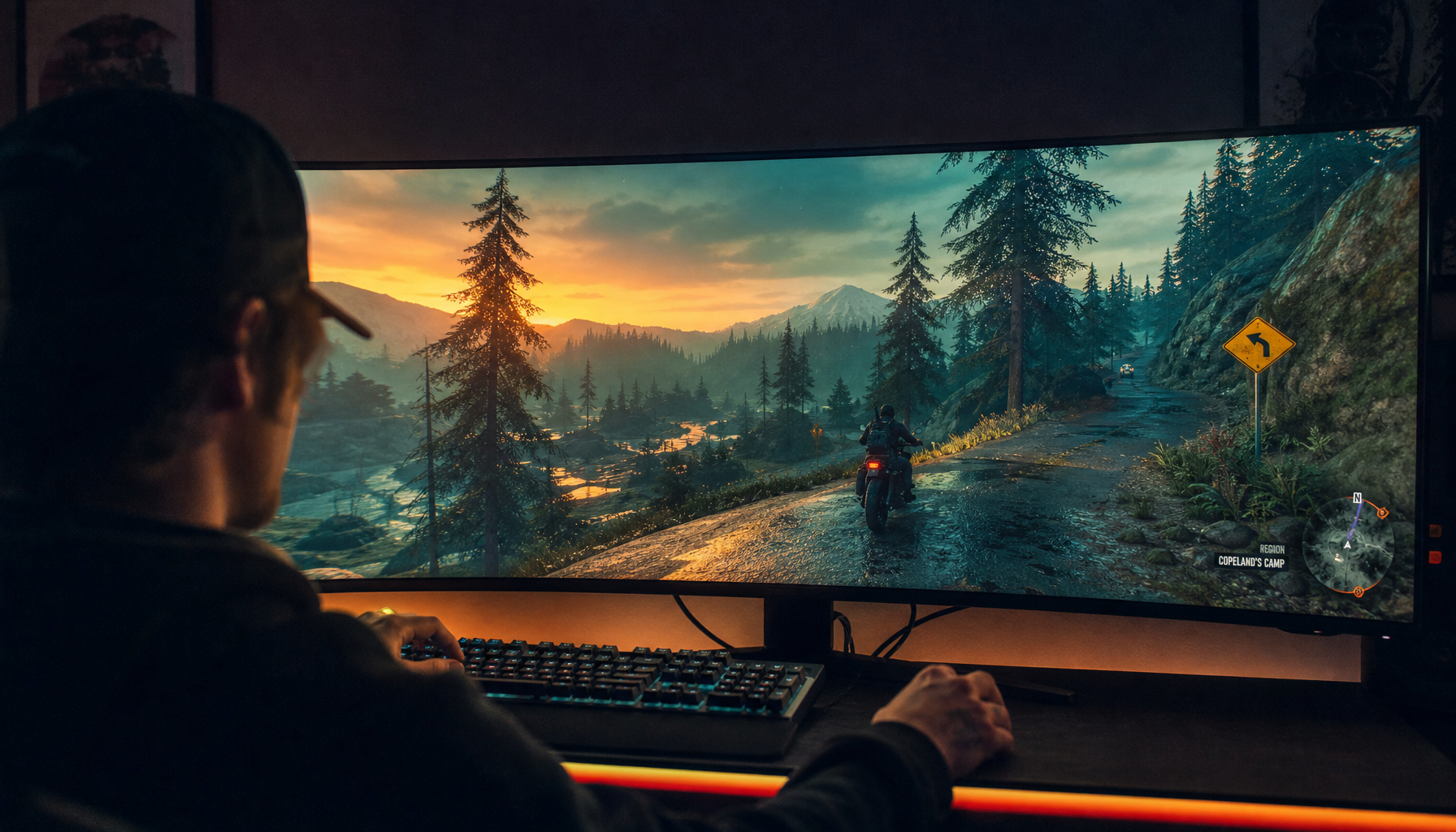
Ultrawide monitors can be excellent for immersion, especially in exploration-heavy RPGs, but check game support and GPU headroom. If the frame rate drops heavily at ultrawide resolutions, defensive timing may feel worse despite the wider view. Portable monitors are useful for travel or compact setups, but many models prioritize thinness and convenience over low input lag, so look carefully for gaming-focused specs rather than assuming all 120 Hz portable displays behave the same.
The best buying test is simple: can the display show fast enemy motion clearly, with low lag and no distracting overdrive halos? If yes, it will help you make better timing decisions. If no, a higher number on the box may not translate into better parries.
FAQ
Q: Does a faster response time make parry windows longer?
A: No. The game’s parry or block window is controlled by the game engine. Faster response time can make the visual cue clearer, which may help you react more accurately.
Q: Is 240 Hz always better than 144 Hz for action RPGs?
A: Not always. A good 144 Hz monitor with clean pixel response and low input lag can feel better than a poor 240 Hz monitor with smearing or inverse ghosting.
Q: Should I use the fastest overdrive setting?
A: Only if it looks clean. The fastest setting often reduces normal ghosting but may add bright or dark halos, which can make attack animations harder to read.
Practical Next Steps
For parry-heavy action RPGs, treat your monitor as part of the timing system. Choose a display with low input lag, at least 120 Hz refresh, and pixel response fast enough for that refresh window. Then tune the settings in a real combat encounter until enemy attacks look clear, stable, and free of distracting trails.