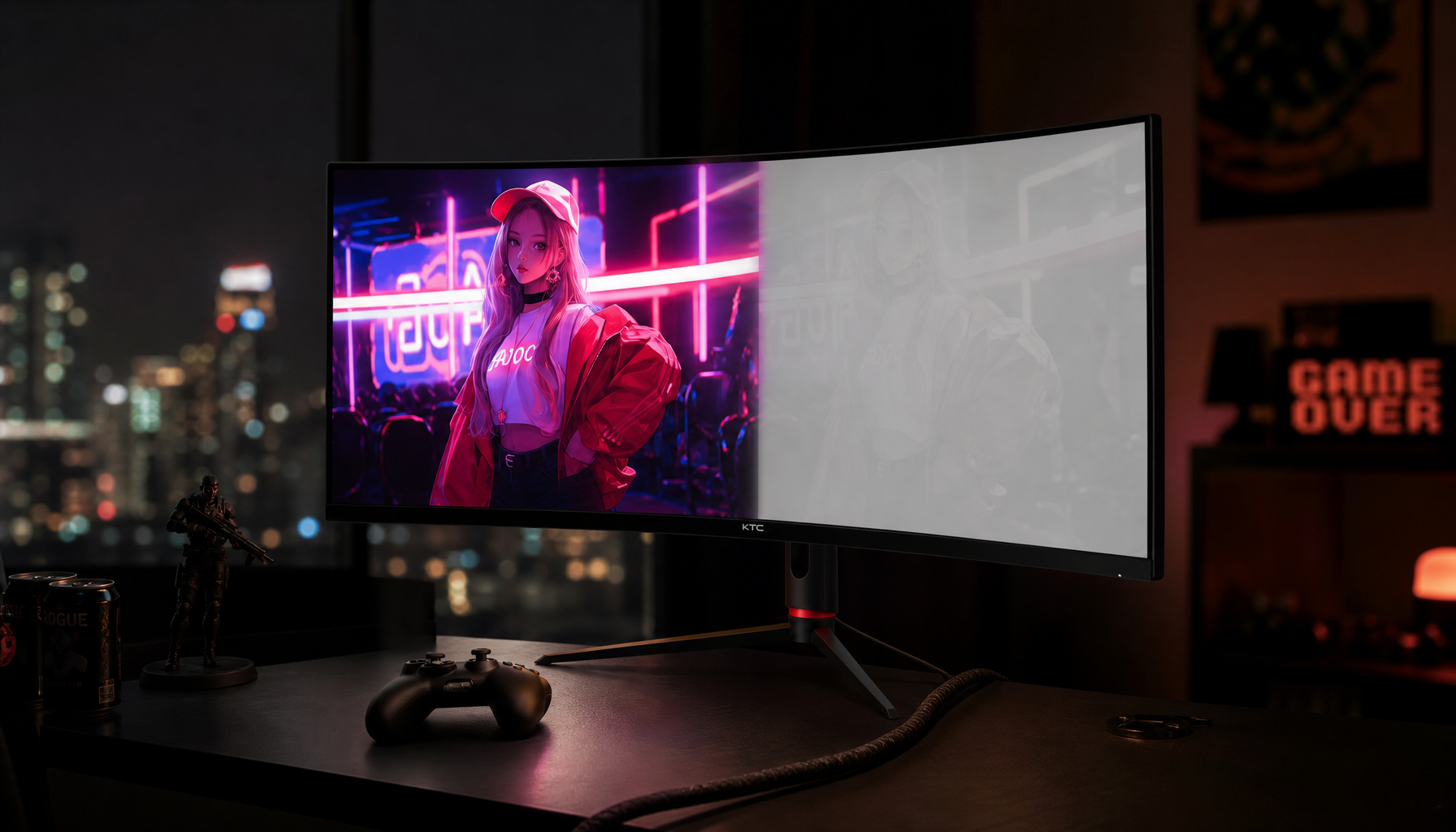
Hardware calibration makes a monitor reliably repeatable, which matters more for daily work than for a single impressive image. It helps reduce bad decisions caused by screens that are too bright, too cool, or subtly drifting over time.
Does your screen look fine in the morning, then seem harsh by late afternoon, or slightly different every time you switch between your laptop and external display? In day-to-day setups, the biggest benefit is not prettier color but fewer bad decisions caused by a screen that is too bright, too cool, or subtly drifting. Here is a practical way to decide whether hardware calibration is worth it, how to set it up, and how to keep your display dependable for real work.
Why daily work breaks down without it
A monitor calibration is not all-or-nothing; it is a chain of adjustments that affects shadow detail, highlight detail, grayscale neutrality, and text comfort. For office and hybrid work, the usual problem is not that a document becomes unusable. It is that the screen keeps nudging your judgment: white backgrounds look bluer than they should, dark charts lose separation, and one display in a two-monitor setup makes the other feel wrong.
That drift shows up in practical ways. A bright factory preset can make a presentation look clean on your desk but washed out on a conference room display. A cooler white point can make a browser, spreadsheet, and PDF all feel mismatched even when the files are correct. In long work sessions, that mismatch often translates into eye fatigue, repeated brightness changes, and wasted time second-guessing whether the file is off or the screen is.

A common factory-brightness problem is that many monitors ship far above a comfortable everyday target, often because they are tuned to stand out on a retail shelf. In real office lighting, the first improvement is usually reducing brightness and settling the display near a known target instead of leaving it in a showroom mode.
What hardware calibration actually adds
A hardware calibrator measures the monitor’s real output, rather than relying on your eyes alone. That is the overlooked advantage. Software wizards can help you get closer, but they still depend on human perception, room lighting, and visual adaptation. A colorimeter gives the same display the same test every time, then builds an ICC profile so color-managed apps can render more predictably.

In practice, that changes the nature of the work. With manual calibration, you often ask, “Does this gray look neutral enough?” With hardware calibration, you ask, “Did the display hit the target?” That is a better question for anyone who uses one screen for email in the morning, budget review at noon, and photo-heavy reports or web assets later in the day.
The difference between calibration and profiling matters here. Calibration changes the display toward target behavior such as white point, gamma, and luminance. Profiling records how the display behaves after that, so the system and compatible applications can compensate correctly. For daily consistency, that second step is what keeps the result from becoming a one-time tweak.
Why software-only tuning helps, but still leaves gaps
Built-in tools in Windows and macOS are worth using because they can quickly improve gamma, black level, and grayscale balance. They are also free, and for many office users that is the right first move. If your screen is painfully bright or has an obvious blue cast, software adjustment can fix much of the discomfort.
The limitation is repeatability. True color accuracy usually requires hardware measurement, and even careful by-eye tuning cannot guarantee that today’s adjustment matches next month’s, or that your laptop panel and external monitor are genuinely aligned. That matters even more if your work moves across devices, or if you review creative assets, dashboards, and marketing visuals that need to look stable from session to session.
There is also a unit-by-unit issue that many buyers miss. Full calibration must be done per individual unit, which means copying someone else’s ICC profile or OSD numbers is only a rough starting point, not a finished answer. Two monitors of the same model can still behave differently enough to matter.
The settings that matter most for work comfort and consistency
A sensible baseline for LCD calibration is gamma 2.2, a 6500K white point, and luminance around 120 cd/m2 in normal lighting. Those are not magic numbers, but they are dependable anchors. Gamma 2.2 keeps midtones natural for standard computer use. A 6500K white point usually avoids the overly cool, blue-white look that many default presets push. A luminance target around 120 cd/m2 is often much easier on the eyes than a factory max-brightness setting.
Real rooms still matter. Ambient light changes what looks correct, so the best target for a dark home office is not always the best target for a sunlit studio. If you work near a window that changes dramatically through the day, you may benefit more from stable blinds or a hood than from endlessly chasing settings. That is one reason hardware calibration pays off: once the room is controlled, the screen can be measured back to a dependable baseline quickly.
For most daily work, brightness can be adjusted for room comfort without wrecking color accuracy, but white point and grayscale neutrality are less forgiving. If your whites lean blue on one screen and warm on another, documents feel inconsistent even when brightness is matched. That is often where a colorimeter earns its keep fastest.
When the investment makes sense
A hardware device is the most accurate method, but that does not mean everyone needs one. If you use a single budget office monitor mainly for text and your discomfort comes from obvious excess brightness, free tools may solve enough of the problem. If you use two displays, switch between laptop and desktop, review branded visuals, compare product colors, soft-proof images, or simply dislike the constant sense that one screen is off, hardware calibration becomes much easier to justify.
Approach |
Best for |
Main upside |
Main drawback |
Software-only adjustment |
Single-display office use |
Free, fast, noticeably better comfort |
Subjective and less repeatable |
Hardware calibration |
Multi-display or color-sensitive work |
Measured, consistent, unit-specific results |
Upfront device cost and setup time |
That tradeoff is more practical than theoretical. Spending even 10 minutes a week nudging brightness, changing presets, or rechecking exported visuals adds up. A calibrator does not just improve image quality; it reduces routine uncertainty.
A practical setup that works
Pre-calibration setup matters more than most people expect. Put the monitor where you actually use it, keep lighting consistent, disable dynamic contrast and automatic brightness features, and let the panel warm up for about 30 minutes. On laptops, plug into wall power before starting so brightness behavior stays stable.
A custom or user picture mode is usually the better starting point, because vivid, cinema, or heavily processed presets can lock controls or build in artificial saturation. From there, set the display to native resolution, choose a neutral color mode, and use the calibrator software to target D65, gamma 2.2, and a luminance that matches your room. For many workspaces, 100 to 120 cd/m2 is a sensible range, while brighter offices may need more.
After the profile is created, verify it the way real users work. Test images for gradients, shadow detail, and highlight separation are useful, but so are plain documents: a spreadsheet with faint gridlines, a presentation with white backgrounds and light gray boxes, and a browser window next to a PDF. If the screen is calibrated well, those common tasks usually feel quieter and more stable, not more dramatic.

What affects long-term results
Panel type influences calibration outcomes but does not guarantee accuracy. IPS often gives more stable viewing angles, which helps in office layouts where you move around or use two screens, but a well-calibrated VA or TN panel can still perform better than an uncalibrated IPS display. The smarter move is to judge the whole chain: panel behavior, room light, controls available in the OSD, and whether you can profile the specific unit.
Recalibration schedules also deserve a practical reading. Some guidance suggests every 1 to 3 months, while other sources support longer intervals for stable LCDs and shorter ones for OLED because of panel aging. That difference is more likely about use case and technology than contradiction. If your room is stable and the monitor is a conventional LCD used for office work, you may go much longer without meaningful drift. If lighting changes often, or the panel type is more variable, recalibrating sooner makes more sense than following a calendar blindly.
The best result is not a screen that looks punchy. It is a screen that stops interrupting your judgment. When the monitor is measured, profiled, and matched to the room, daily work becomes more consistent, less fatiguing, and easier to trust.