Usually not. Firmware can fix compatibility bugs, but it cannot turn a limited HDMI implementation into true 4K120 support.
You plug in a PS5 or Xbox Series X, expect 4K at 120 Hz, and instead the screen falls back to 60 Hz or looks oddly soft. The problem is often the display chain, not the console, because HDMI 2.1 only helps when the monitor exposes the mode correctly and the cable can carry it reliably.

The Short Answer
If the monitor has genuine HDMI 2.1 support for 4K at 120 Hz, you usually do not need a special firmware version just to unlock it on a console. What you do need is a proper end-to-end path: the console, monitor port, and cable all have to support the mode correctly.
The confusion usually comes from the label. A display can be marketed as HDMI 2.1 without offering the full 48 Gbps of bandwidth, and that can change what the console sends to the panel. In practice, firmware may help the monitor recognize the signal correctly, but it cannot turn a 24 Gbps port into a 48 Gbps one.
Where Firmware Actually Helps
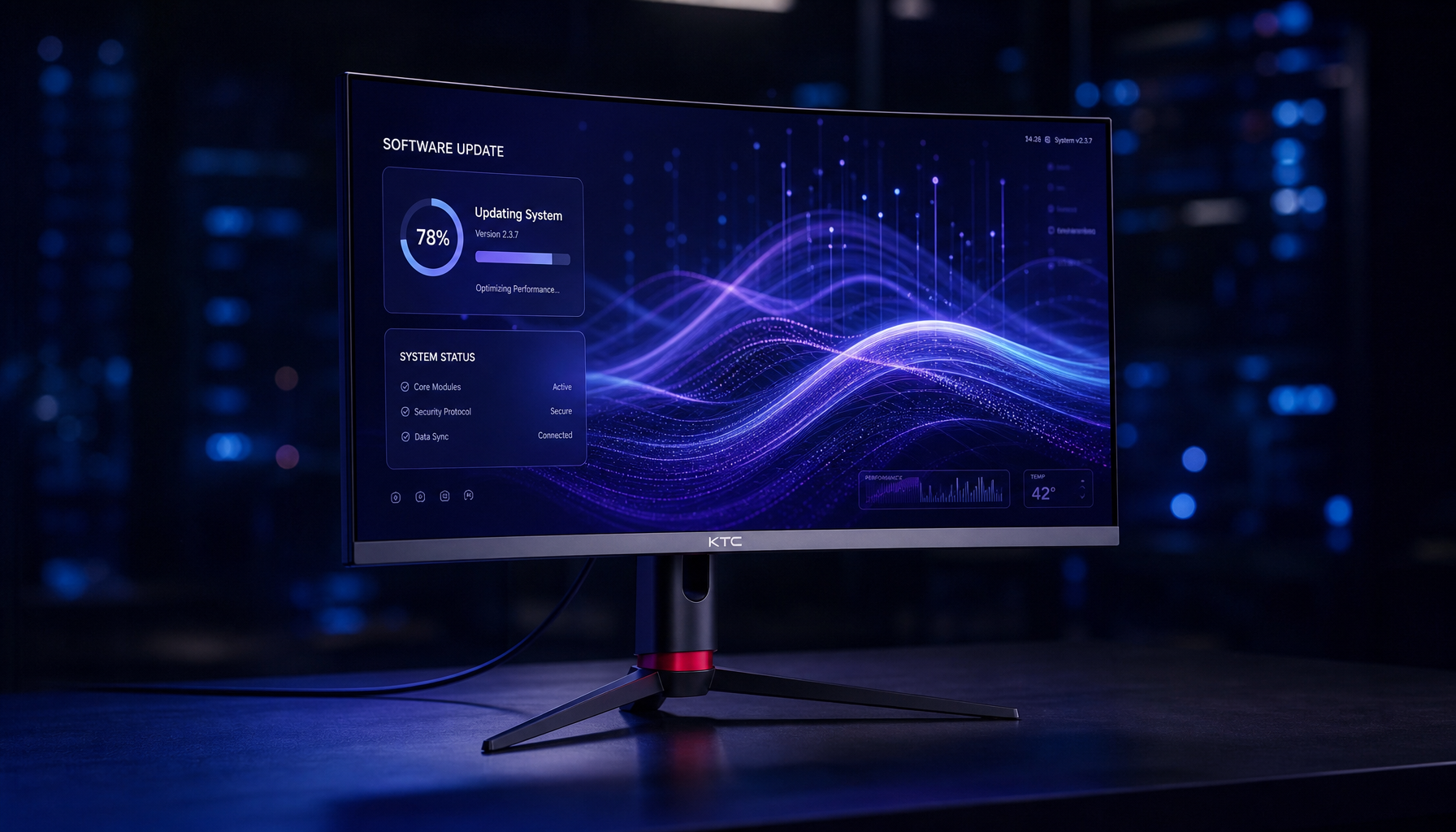
Firmware matters when the monitor has a handshake bug, a mode-detection problem, or an on-screen display setting quirk that blocks the higher refresh rate. Many supposed firmware issues are really input or configuration problems that only look like hardware failures.
On a console, this usually appears in three ways:

- 4K at 60 Hz works, but 4K at 120 Hz never appears.
- VRR or HDR behaves inconsistently.
- The monitor accepts the signal, but the image looks wrong until you change an on-screen setting.
Those are the kinds of issues firmware can sometimes fix because they affect how the monitor interprets the incoming signal, not the physical bandwidth of the port itself.
A simple example is a monitor with a known update that improves HDMI compatibility. In that case, the update may save you from returning a display that is otherwise fine. But if the panel only supports reduced bandwidth over HDMI, no update will make it behave like a different model.
Where Firmware Will Not Help
Firmware cannot fix missing hardware capability or a port that is limited by design. HDMI 2.1 has a maximum bandwidth of 48 Gbps, and that headroom is what makes 4K at 120 Hz practical. If the monitor uses a lower-bandwidth implementation, firmware will not change that.
This matters most on consoles because they do not offer the same flexibility as a PC. A 24 Gbps HDMI 2.1 port can still accept 4K at 120 Hz, but it may rely on chroma subsampling instead of full RGB or 4:4:4. That can make menus, HUD text, and other interface elements look softer, even when gameplay itself still looks acceptable.

Cable quality is also outside firmware’s reach. A certified Ultra High Speed HDMI cable is the practical baseline for full HDMI 2.1 behavior, and the real sign of certification is the official logo plus QR verification, not vague marketing language such as “HDMI 2.1 compatible.” If the cable is marginal, firmware will not rescue an unstable connection.

What To Check First
Start with a direct console-to-monitor connection. Remove AV receivers, docks, splitters, and adapters until you know the basic path works. Then set the console to 4K at 120 Hz and confirm that the monitor reports the active mode correctly in its on-screen display and in the console settings.
If 4K at 60 Hz is stable but 4K at 120 Hz fails, the first suspect is usually the cable or an intermediate device, not the panel itself. If a second certified cable fixes the problem, that tells you more than any claim on the box. If the console still will not offer 4K at 120 Hz after you have a clean direct connection, firmware becomes a much more relevant suspect.
Another useful check is text clarity. If the console is outputting 4K at 120 Hz but menus and interface text look unexpectedly soft, you may be seeing a bandwidth compromise rather than a firmware failure. That distinction matters because the fixes are different: firmware helps with compatibility, while port capability determines image quality.
Practical Buying Advice
For console gaming, prioritize monitors that explicitly state support for 4K at 120 Hz, VRR, and ALLM rather than just printing “HDMI 2.1” on the box. A monitor with full-bandwidth HDMI 2.1 is the safer choice if you want the best chance of getting clean 4K at 120 Hz without compromise.

Firmware updates are still worth checking, but only for the exact model and hardware revision from the manufacturer’s official source. They can improve compatibility and reduce handshake problems, but they cannot upgrade the monitor’s HDMI hardware.
Bottom Line
HDMI 2.1 does not inherently require a special firmware version to enable 4K at 120 Hz on consoles. What it does require is a monitor that truly supports the mode, a certified cable, and a setup that is not being limited by a weaker port, adapter, or display setting. If you buy for the hardware first and treat firmware as a compatibility fix, you avoid most of the frustration.