Yes, if you control when and how you use it. The key is timing, brightness, and what you do in the last one to two hours before bed.
Do you feel sleepy all afternoon, then suddenly alert when your monitor lights up at 10:30 PM? That pattern is common because evening screen habits can push your brain toward daytime mode, while well-timed morning light can do the opposite. You can use screens, room lighting, and a bedtime cutoff more deliberately to shift your schedule without guessing.
Why blue light changes sleep timing at all
Your sleep schedule is guided by circadian rhythm, the internal clock that helps determine when you feel alert and when you feel ready for sleep. Blue light has the strongest effect on circadian timing, largely because it suppresses melatonin, the hormone that helps signal nighttime to the body.

That does not make blue light bad. Daytime blue light supports attention, reaction time, and mood, which is why morning daylight can help reset a drifting schedule. The problem starts when bright, blue-rich light arrives late in the evening from LED room lights, laptops, gaming monitors, tablets, and cell phones.
In real display use, this is easy to recognize. A bright office monitor at 8:00 AM can help you lock into work mode, but the same setup at 11:00 PM often leaves you mentally sharp when you wanted to feel drowsy. For anyone trying to shift bedtime earlier, that late alertness creates avoidable friction.
Yes, you can use blue light strategically, but timing matters more than the screen
Morning light exposure supports wakefulness and helps align sleep timing, so the strategic move is simple: get bright light early when you want your schedule to move earlier, and reduce bright screen exposure at night when you want sleep to arrive sooner.

If you are trying to move bedtime earlier, use bright light soon after waking and keep your display-heavy work front-loaded. Open the blinds, step outside, or work near strong daylight during the first part of the day. Then start reducing display brightness and room lighting after sunset, with a firm screen cutoff before bed.
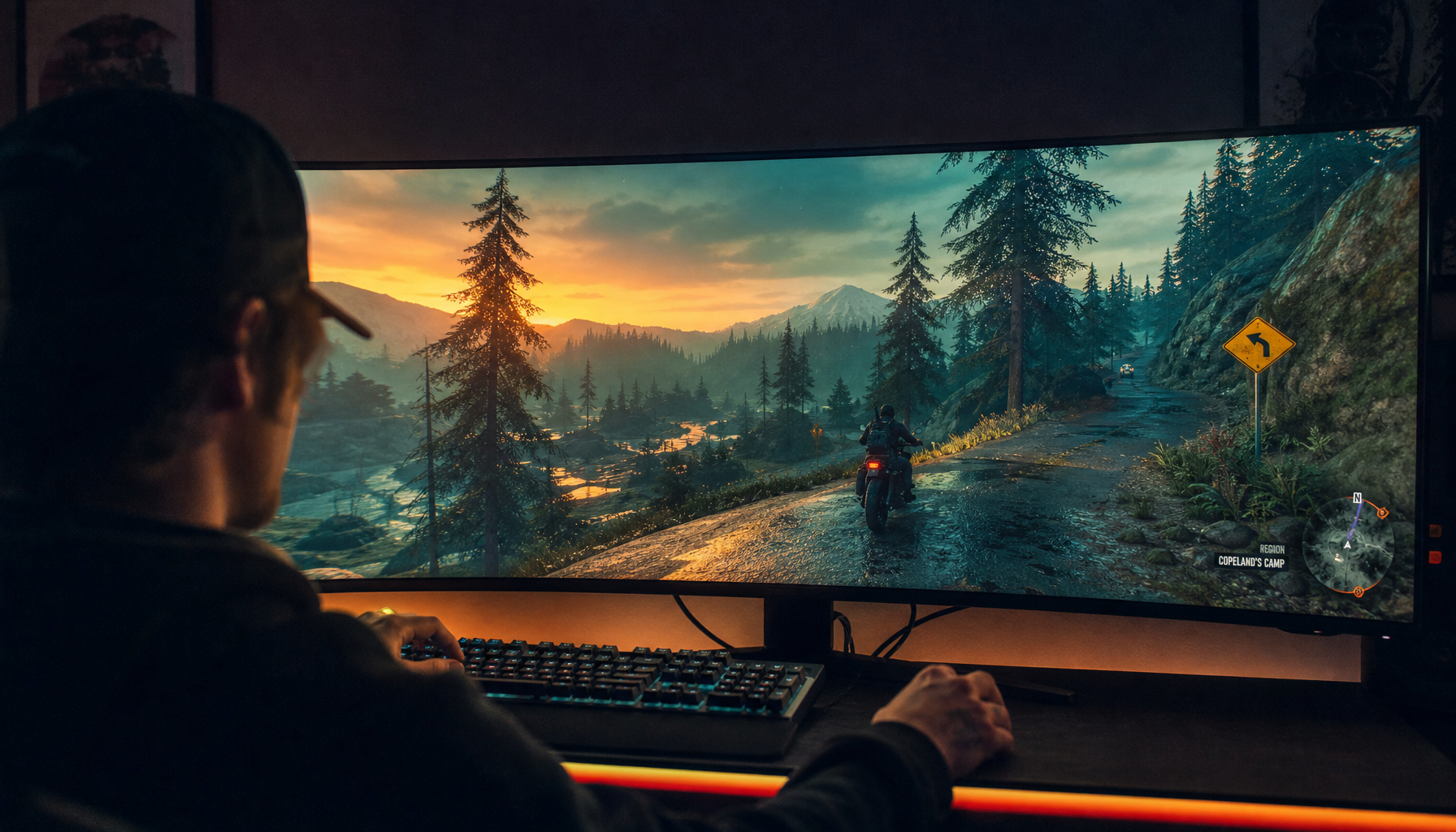
If you are a gamer, editor, or remote worker pushing a late shift, the opposite mistake is common. You may think the issue is a lack of discipline, when the real problem is that your environment is telling your brain it is still performance time. Screen use within two hours of bedtime can disrupt sleep, especially when the activity is interactive rather than passive.
How much evening screen use is too much?
Different sources give slightly different cutoff windows, and the variation is practical rather than contradictory. The American Academy of Ophthalmology recommends limiting screens, while Harvard advises avoiding bright screens for two to three hours before sleep when possible. Other clinical sleep guidance often lands around 30 to 60 minutes as a minimum.
The most useful way to read that range is this: one hour is a realistic baseline, while two hours is a stronger move if you are sensitive to late-night alertness or actively trying to shift your bedtime earlier. If your target bedtime is 11:00 PM, a solid first test is ending active monitor use at 10:00 PM. If you still lie awake until midnight, move the cutoff to 9:00 PM for the next week.
Research on real-world screen behavior supports taking this seriously. A large student study linked each extra hour of screen time to worse sleep. The mechanism is not just the light itself. Gaming, messaging, work email, and streaming also keep your brain engaged, which makes “I’m tired but not sleepy” more likely.
Do night mode, low-blue-light settings, and blue-light glasses actually help?
They can help, but they are support tools, not a free pass for unlimited late-night screen time. Night mode can reduce glare and shift displays toward warmer tones, and lower brightness usually makes a display less stimulating at night.

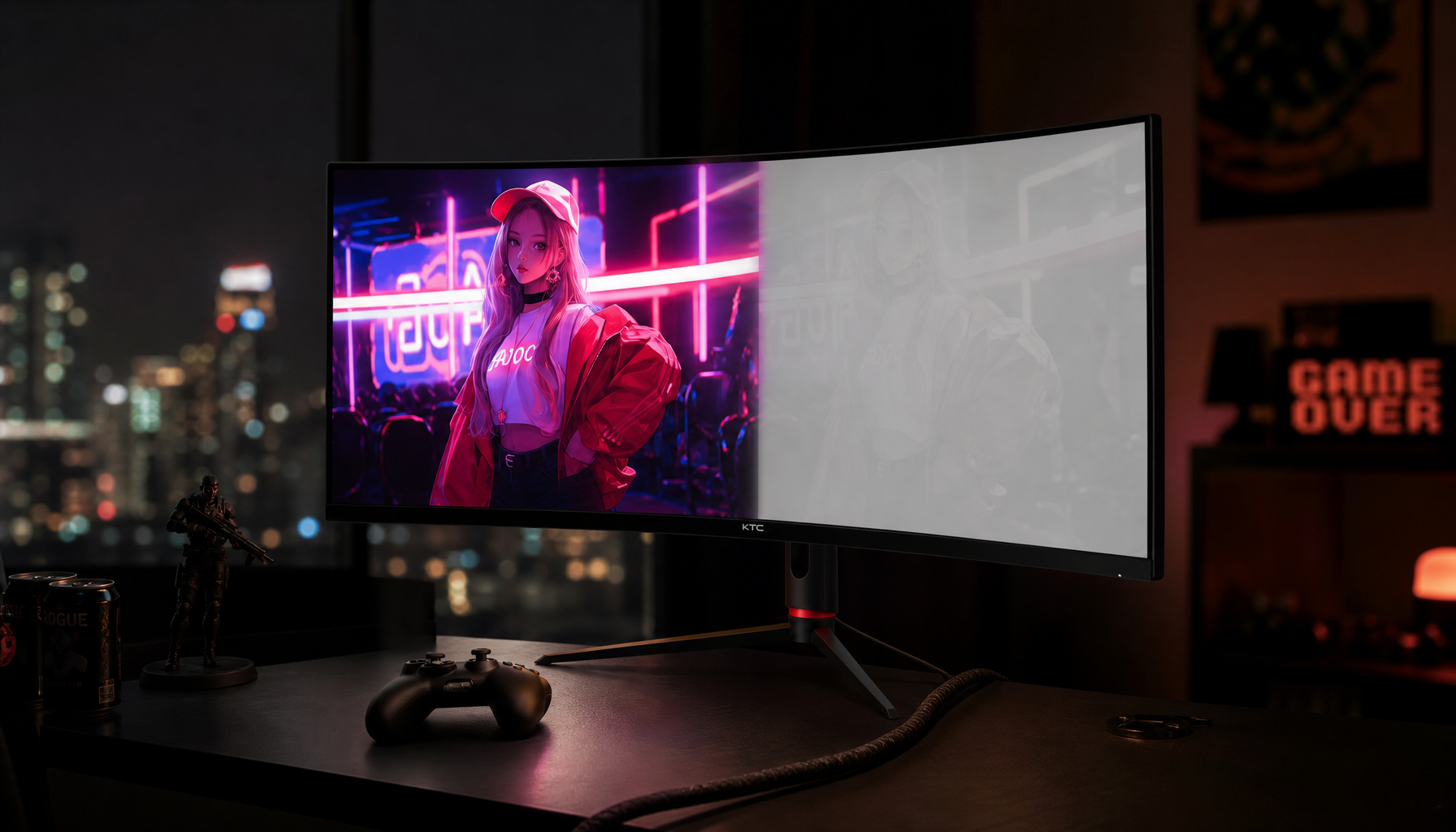
That said, warmer settings and lower brightness do not fully eliminate sleep disruption. If you play competitive games under a bright ceiling light until 12:30 AM, turning on a low-blue-light preset is better than nothing, but it is not the same as stopping at 11:00 PM and dimming the room.
Blue-light-blocking glasses may help some people, especially if evening screen use is unavoidable. Harvard highlights research showing blue-blocking goggles can reduce some of the sleep-related effects of evening light. The limitation is that glasses do not remove mental stimulation, notifications, or the habit of playing one more round.
A practical strategy for shifting your sleep schedule
If your goal is to fall asleep earlier, start with the strongest lever first: consistency. Sleep hygiene works best when your sleep and wake times stay stable. Choose a target wake time you can keep even on weekends, because morning timing helps anchor the rest of the day.

Then make your light exposure directional. Give yourself bright light early in the day and dimmer, warmer light at night. If you need a simple rule, think of your monitor as a performance display: high output in the morning, comfort mode at night. Lower the brightness after dinner, enable warmer color settings, and avoid using a brightly lit room once your wind-down starts.
Phone controls can make this easier. Built-in tools such as Screen Time on iPhone and Digital Wellbeing on Android let you set app limits, downtime, and blocking schedules. For a practical example, if your target bedtime is 10:30 PM, you can schedule social, video, and gaming apps to lock at 9:30 PM, then keep only essentials available. That removes the common “I’ll just check one thing” spiral.

A simple way to test whether your screen cutoff is working is to track sleep onset for one week. If it usually takes you 45 minutes to fall asleep, and moving your cutoff 30 minutes earlier reduces that to 20 minutes, the strategy is doing what it should. If nothing changes, look at caffeine timing, stress, and wake-time inconsistency next, because blue light is only one part of the system.
Why the evidence is more nuanced
One useful nuance is that not all blue light behaves identically. ACS notes that the circadian effect is strongest, which helps explain why blue light is not a perfectly uniform target. In practice, though, consumer displays and room lights are mixed-spectrum sources, so exact wavelength control is not something most people can manage precisely at home.
Another nuance is that some studies focus on children or students rather than adults. A school-age study found poorer sleep efficiency with more screen exposure, but it was correlational and included home-environment differences such as screen-free bedrooms and stronger bedtime routines. That means the lesson is still useful, but it should be applied carefully: the screen is part of the problem, not always the whole problem.
When blue light strategy is most useful, and when it is not enough
Blue light strategy is especially useful if your schedule slips later because of work screens, gaming, revenge bedtime procrastination, or heavy phone use in bed. It is also useful if you travel, work rotating hours, or feel alert at night and foggy in the morning. In those cases, adjusting light exposure can remove a major source of timing mismatch.
It is not enough if you keep drinking caffeine late, sleep in for hours on weekends, or use your bed as an entertainment zone every night. General sleep hygiene still matters, including a cool, dark bedroom, fewer notifications, and a wind-down routine that does not keep your brain in reaction mode.
A display can be an excellent tool for work, play, and immersion. It should not be the thing steering your body clock in the wrong direction. Use bright, blue-rich light when you want performance and alertness; use dimmer, warmer light when you want recovery and sleep. That is the strategic split that actually moves the needle.