HDR usually does not make pixels physically slower than SDR, but it can make a display feel slower if it triggers extra processing, changes refresh rate, alters overdrive, or reduces game frame rate.
Does your aim feel heavier after switching your system or console into HDR? A clean A/B check can often isolate the cause in under 10 minutes by confirming refresh rate, Game Mode, frame rate, and motion clarity before blaming the HDR toggle itself. You’ll leave with a practical way to decide when HDR is worth using and when SDR is the sharper performance choice.
HDR vs SDR: What Actually Changes
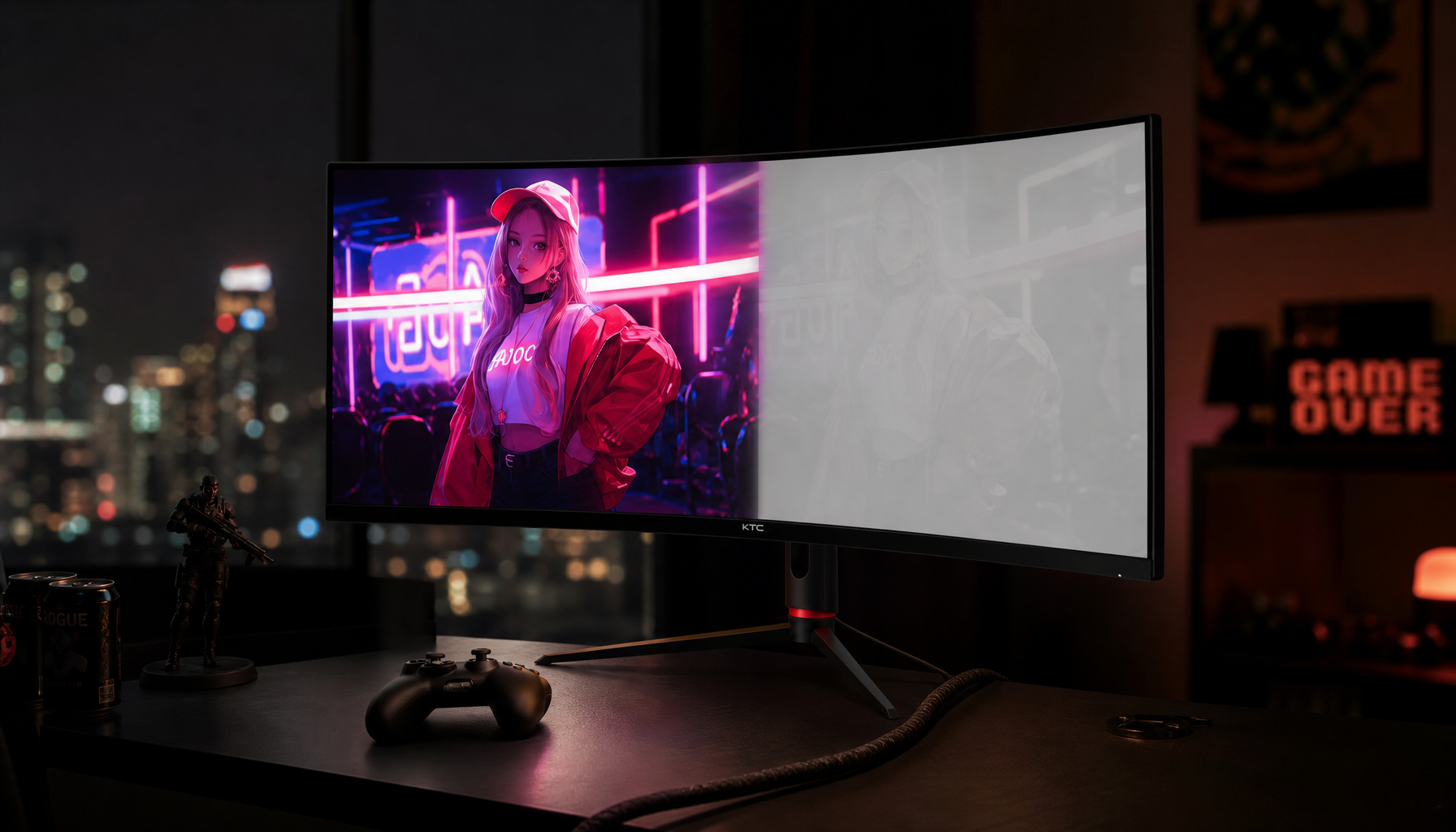
HDR changes the brightness, contrast, color depth, and tone-mapping workload of the image. SDR is the older, more predictable format with a narrower brightness and color range, while HDR expands the range a display can represent, allowing brighter highlights, deeper shadow detail, and wider color when the panel is capable enough.
That visual upgrade does not automatically mean higher input lag. Input lag is the delay between your action and the visible result, while response time is the pixel transition speed after the display has already begun drawing the frame. Input lag is different from response time because one describes system and display delay and the other describes pixel behavior.
The practical distinction matters. If you move the mouse and the camera turns late, you are dealing with latency. If the image smears during a fast pan, you are dealing with motion clarity, response behavior, overdrive, strobing, or frame persistence. HDR can touch several of those indirectly, but it does not rewrite the physical limits of an OLED subpixel or LCD crystal just because the signal carries HDR metadata.
Does HDR Increase Input Lag?
HDR can increase input lag on some displays, but the cause is usually the display’s processing path rather than HDR itself. Image processing features such as HDR processing, scaling, interpolation, and deinterlacing can add display lag, especially on TVs or monitors that leave gaming modes disabled.
A common real-world example is a console connected to a living-room TV. In SDR Game Mode, the TV may bypass heavy video processing. In HDR Movie or Vivid mode, the TV may enable tone mapping, dynamic contrast, noise reduction, motion smoothing, or local contrast enhancements. The HDR picture may look punchier, but your controller can feel less direct because the display is doing more work before showing the frame.
Gaming monitors usually handle this better than TVs, especially high-refresh models designed for low latency. Still, the setting stack matters. If HDR switches your monitor out of its low-lag preset, or if a TV applies HDR processing outside Game Mode, the latency difference can become noticeable in shooters, rhythm games, and fighting games.
Does HDR Affect Response Time?
HDR should not meaningfully change true pixel response time in the strict sense. The panel still has the same underlying LCD, OLED, or Mini-LED LCD hardware. However, HDR can change how motion looks because it may alter brightness behavior, overdrive tuning, local dimming, or strobing availability.
For LCD monitors, overdrive is the big variable. A monitor may use one overdrive curve in SDR and another in HDR. If the HDR mode becomes too aggressive, you may see bright inverse ghosting around moving objects. If it becomes too conservative, you may see more smearing. That is not HDR making the pixel chemistry slower; it is the monitor’s HDR tuning changing the motion tradeoff.
For Mini-LED monitors, local dimming can add another layer. Higher tiers often depend on local dimming and stronger contrast hardware, not just peak brightness. Local dimming improves HDR depth, but in fast mixed-brightness scenes it can create blooming, brightness shifts, or a sense that motion is less clean.

OLED behaves differently. Because OLED pixels transition very quickly, HDR usually preserves excellent motion clarity, but peak brightness control and automatic brightness behavior can still affect perceived stability. This is why a good OLED can feel both cinematic and fast, while a weak HDR LCD can look brighter on paper yet feel less controlled in motion.
The Biggest Hidden Risk: Refresh Rate Fallback
The most performance-critical HDR problem is not vague “HDR lag.” It is refresh rate fallback. HDR needs more bandwidth because it often uses higher bit depth and richer color data, so a weak cable, limited HDMI port, older adapter, or incorrect GPU setting can drop a display from 120 Hz or 144 Hz to 60 Hz.
That change is immediately meaningful. At 60 Hz, a new refresh arrives every 16.67 ms. At 120 Hz, it arrives every 8.33 ms. At 240 Hz, it arrives every 4.17 ms. Even before counting the rest of the PC, console, game engine, or display pipeline, lower refresh gives you fewer visual updates and a heavier control feel.
This is where HDR gets blamed unfairly. The HDR image may not be adding much processing delay, but if enabling it silently changes 144 Hz to 60 Hz, your mouse will feel worse. Always confirm the active refresh rate in your operating system, GPU control panel, game menu, and monitor’s own information screen after turning HDR on.
SDR vs HDR for Different Display Uses
Use case |
Better default |
Why it makes sense |
SDR or carefully tuned HDR |
Lowest latency, stable fps, clean overdrive, and maximum refresh matter more than highlights. |
|
Single-player RPGs, racing sims, horror, cinematic action |
HDR |
Better contrast, specular highlights, and shadow detail can deepen immersion when performance remains stable. |
Office work, coding, spreadsheets, web browsing |
SDR |
Brightness is usually steadier, colors are more predictable, and long sessions are easier to manage. |
Creative HDR review or HDR video playback |
HDR |
You need to see the wider brightness and color range the content was made for. |
Budget “HDR supported” monitors |
Usually SDR |
Many accept HDR signals without enough brightness, contrast, or dimming hardware to make HDR worthwhile. |
General SDR and HDR guidance aligns with this split: SDR is often the better fit for productivity, web use, PvP games, and non-HDR content, while HDR belongs with native HDR games and movies on displays that can actually show the benefit.
Practical Testing: How to Compare HDR and SDR Fairly
Start with the same game, same scene, same graphics settings, and same refresh rate. If SDR is running at 240 Hz and HDR is running at 120 Hz, you are not testing HDR against SDR; you are testing two different performance modes.
Use the monitor or TV’s Game Mode, Instant Mode, or low-latency mode in both SDR and HDR. Disable motion smoothing, dynamic contrast, unnecessary noise reduction, and monitor-side scaling. If the display has separate SDR and HDR presets, check both because HDR sometimes lands in a more cinematic picture mode by default.
Then look at frame rate. HDR can be slightly more demanding in some game pipelines, especially if it changes rendering format, color output, or post-processing behavior. If SDR holds 180 fps and HDR drops to 135 fps, the input feel may change because the game is delivering frames less often, not because the monitor’s pixels suddenly became slow.
Finally, check motion clarity. Pan the camera across bright UI elements, tree branches, subtitles, or a high-contrast wall. In SDR, note the blur, trails, and overshoot. In HDR, look for the same artifacts plus brightness pumping or haloing from local dimming. If HDR looks richer but the crosshair feels smeared, try a different overdrive setting or reduce local dimming aggressiveness if your monitor allows it.
Buying Advice: Don’t Shop by the HDR Badge Alone
A monitor can advertise HDR and still deliver a mediocre HDR gaming experience. Entry-level HDR 400 displays can be useful, but without strong contrast or local dimming they often feel like brighter SDR rather than a true HDR upgrade. For immersive HDR gaming, prioritize strong contrast, wide color, useful brightness, high refresh, and independently respected motion performance.
The best gaming monitors tend to balance these traits instead of chasing one spec. Independent gaming monitor picks emphasize contrast, motion clarity, refresh rate, and HDR behavior, which is the right buying lens for anyone who works by day and games hard at night.
Spec sheets can still help when read carefully. Detailed monitor testing highlights how premium OLED gaming displays combine high refresh rates, strong HDR brightness, deep contrast, and fast response, but the same reviews also show that price, resolution, GPU demands, and input lag still matter.
When Should You Turn HDR Off?
Turn HDR off when it drops your refresh rate, lowers frame rate enough to affect aim, disables your preferred motion clarity mode, causes distracting brightness shifts, or makes non-HDR content look washed out. SDR is not a downgrade when the task is precision.

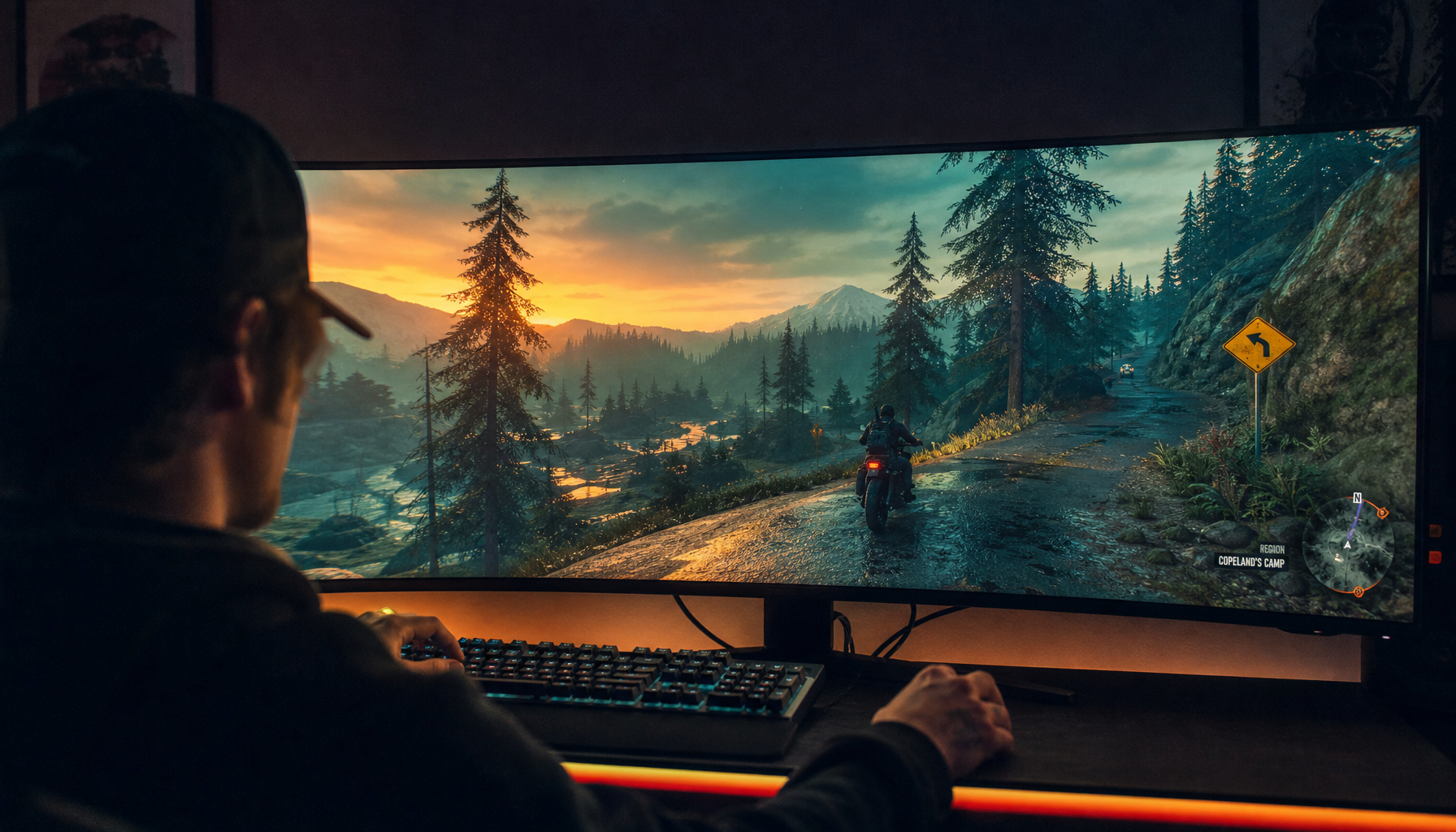
Keep HDR on when the game has native HDR, your monitor has real HDR hardware, the refresh rate stays intact, Game Mode remains active, and the image gives you useful detail without making motion feel worse. In a dark racing sim, HDR headlights and sunset glare can be worth more than a tiny theoretical latency difference. In a ranked shooter, stable frames and clean motion usually win.
FAQ
Is HDR bad for competitive gaming?
HDR is not automatically bad, but it has to earn its place. If it preserves your maximum refresh rate, keeps input lag low, and does not hurt motion clarity, it can stay on. If it changes presets, drops refresh, or adds processing, SDR is the better competitive mode.
Why does system-level HDR feel different even in non-HDR games?
System-level HDR can remap SDR content into an HDR output space, which changes color and brightness behavior. A forum discussion reflects the common user concern that system-level HDR may feel different even when a game is not native HDR, although that thread is subjective rather than benchmark evidence.
Is 1 ms response time more important than HDR?
For competitive play, clean real-world response behavior and low input lag matter more than HDR. For immersive single-player gaming, strong HDR can matter more than chasing a tiny response-time spec difference, especially on OLED or well-tuned Mini-LED displays.
HDR is best treated as a performance mode, not just a picture toggle. If it keeps your refresh rate, frame rate, Game Mode, and motion clarity intact, use it for the visual upgrade. If it compromises any of those, SDR remains the reliable high-control setting.