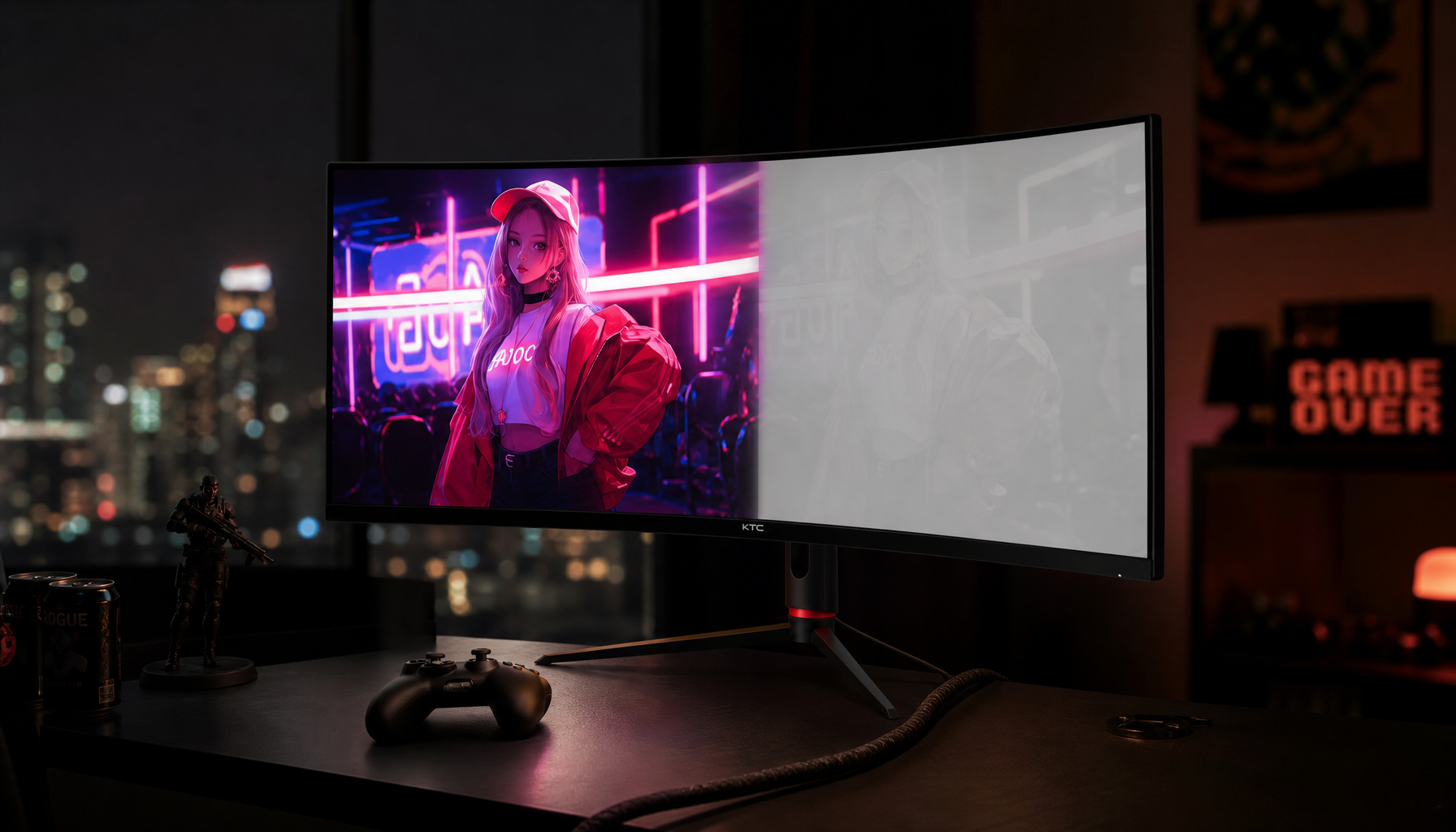
Panel lottery means two monitors with the same model name can still have different real-world screen quality. Matching specs do not guarantee matching brightness, color, uniformity, or motion performance.
Why Panel Lottery Happens
A monitor model is a product line, not a promise that every individual screen is optically identical. Manufacturers may use panels from different suppliers, different production batches, or slightly different internal components while keeping the same retail name.
That is why the panel lottery matters most when image quality is part of the purchase decision. A gaming display can still hit its advertised refresh rate yet show more backlight bleed, tint shift, dirty screen effect, or uneven brightness than another unit with the same design.
This is not always deception. It is often manufacturing tolerance. But for someone who paid for a precise, immersive screen, tolerance still has consequences.
Why Two Identical Monitors Can Look Different
The biggest differences usually appear in white balance, black depth, gamma, brightness uniformity, and motion behavior. One monitor may look slightly yellow, while another looks cooler and blue. One may handle dark scenes better, while another shows grayish blacks or edge glow.
Same-model panels can vary in measurable ways. In one TV panel comparison, contrast, response time, and input lag changed between panel suppliers, even though the units shared the same model family. The contrast differences were large enough to explain visible dark-room variation.
For desk setups, the effect is amplified. Place two 27-inch displays side by side, sit 28–40 inches away, and your eyes compare them constantly. A small tint or brightness difference becomes obvious when a spreadsheet, code editor, or white browser window spans both screens.

Panel lottery does not mean every alternate supplier is worse. Sometimes a panel from a different supplier performs as well as, or better than, the expected one.
What Calibration Can and Cannot Fix
Calibration can bring two screens closer, especially for white point, brightness, gamma, and color balance. A common target is 6,500K white, because mismatched white points are a major reason one screen looks warm while another looks cold.
But calibration is not magic. Users should not copy another unit’s settings or ICC profile because same-model monitors vary. A value that fixes one panel may push another in the wrong direction.
Calibration also cannot fully repair hardware flaws. If your panel has a 1–2 inch strip of edge bleed, a dead pixel near the crosshair area, or visible gray banding during normal work, software tuning may reduce the annoyance but not remove the defect.

Quick Acceptance Test After Unboxing
Test the exact unit you received, not just the model’s reputation. Specifications can help you shortlist a monitor, but the panel in front of you has to earn the desk space.
Use this quick check within the return window:
- Show full-screen white and look for tint shifts or dim corners.
- Show 50% gray and check for bands, stains, or dirty patches.
- Show black in a dim room and inspect glow, bleed, and clouding.
- Open real work, including games, documents, video, and split windows.
- Match brightness by eye, because identical menu numbers are not enough.

Professional uniformity standards treat brightness, tint, gray balance, black consistency, and edge behavior as acceptance criteria, not bonus polish. Uniformity checks are especially important for editing, CAD review, esports analysis, and office fleets.
Should You Return It?
Return or exchange the monitor if the flaw distracts you during normal use, appears in your main viewing zone, or undermines the reason you bought that display. A competitive gamer should not accept central dead pixels, a designer should not accept obvious white-point mismatch, and an office user should not tolerate harsh brightness imbalance across a dual setup.
Keep it if the variation is minor, invisible in real content, and correctable with basic settings. Panel lottery is real, but the practical move is simple: test early, calibrate sensibly, and judge the unit by the work and play it must actually deliver.