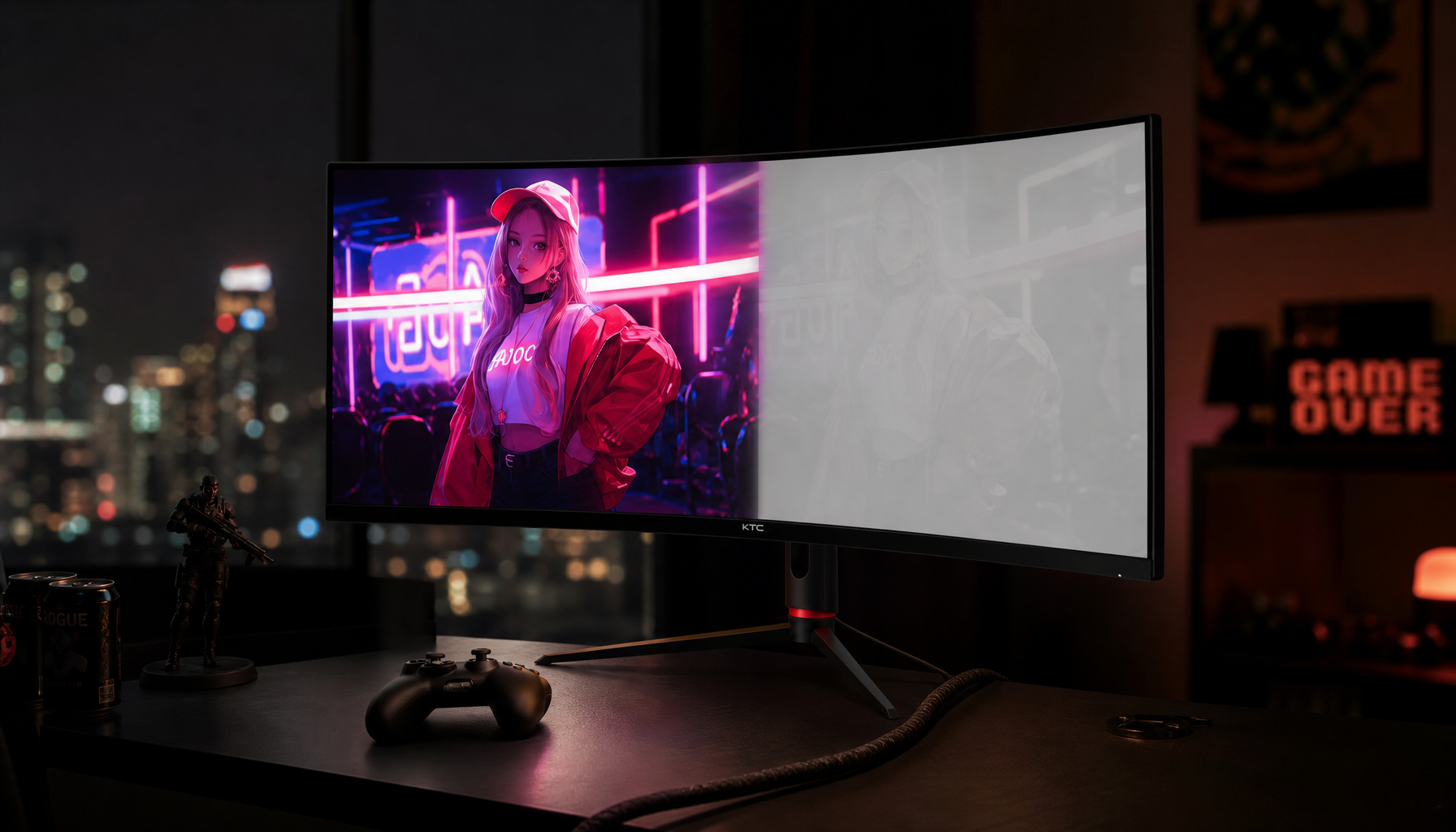
Display age slowly changes color accuracy because backlights, pixels, optical layers, and factory settings drift with use. Calibration can correct mild drift, but it cannot reverse uneven wear, burn-in, or a panel that has physically dimmed beyond useful accuracy.
Does your once-crisp monitor now make whites look yellow, skin tones look too red, or two “identical” screens disagree side by side? A measured calibration routine can catch drift before it causes bad edits, mismatched brand colors, reprints, or unreliable game visuals. Here is how display aging changes color, when calibration still helps, and when replacement is the smarter move.
Why Display Age Changes Color Accuracy
A display is not a static reference tool. It is a light-producing device that changes as electrical, optical, and thermal stress accumulate. On LCD and LED monitors, the backlight usually does the heaviest aging work. As LEDs lose output and optical films shift, the same brightness setting may produce a dimmer, warmer, cooler, or less even image than it did when the screen was new.
On OLED and QD-OLED displays, the aging mechanism is different. Each pixel emits its own light, so subpixels can age unevenly depending on what content stays on screen. A creator who leaves editing timelines, toolbars, and white browser panels open all day can age certain screen zones faster than the center preview window. That is why OLED color accuracy is powerful but more maintenance-sensitive than a predictable IPS workflow.
The practical result is simple: a display can still look good while no longer being trustworthy. A gaming monitor may keep its speed and contrast yet push skin tones too warm. A portable monitor may remain sharp enough for spreadsheets yet compress color compared with your laptop. A five-year office display may still turn on every morning but no longer show neutral gray.
What Color Drift Looks Like in Real Use
Color drift rarely announces itself with one dramatic failure. It usually shows up as small disagreements. A white document may look cream-colored. A gray app background may lean green or pink. Product photos may look fine on your monitor but too saturated on a client’s screen. A dual-monitor setup may force your eyes to adapt every time you drag a window from left to right.

For photo editing, the cost is obvious. If the monitor is too bright or too blue, you may darken or warm the image unnecessarily, then wonder why prints look dull. Color management guidance makes the same core point: accurate editing depends on a calibrated and profiled display because edits are made from what the screen shows, not from the file alone.

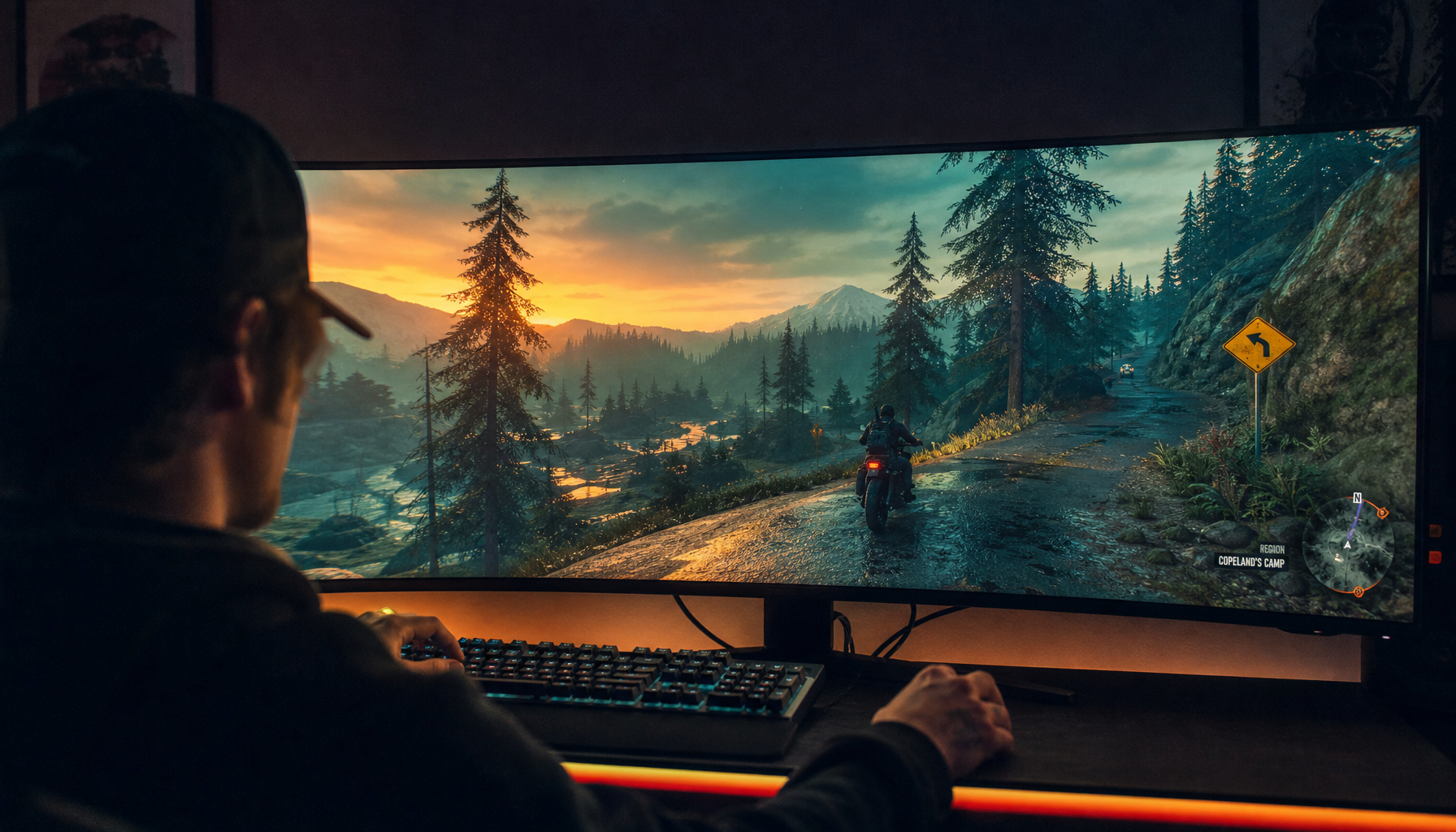
For gaming, age-related color shift can be less mission-critical but still noticeable. Shadow detail may become crushed or washed out, HUD colors may feel inconsistent, and HDR presets may exaggerate saturation. Competitive players often care more about refresh rate and response, while immersive players want deep contrast, stable tone, and readable dark scenes. The best setup is not the brightest one; it is the one that stays consistent across the games and modes you actually use.
LCD, IPS, OLED, and Portable Screens Age Differently
IPS panels are often the safer long-term choice for office productivity, design review, UI work, and multi-monitor consistency. IPS is valued for viewing angles, stable color, and predictable calibration, and monitor buying guidance also positions IPS as a strong option for graphic design, photo editing, and general use. The tradeoff is that IPS blacks and contrast usually cannot match OLED.
OLED is the immersion champion. Perfect blacks, fast pixel response, and wide-gamut color make OLED and QD-OLED superb for HDR gaming, cinematic content, and dark-room impact. The age tradeoff is static content risk. Taskbars, health bars, scoreboards, code editors, trading dashboards, and browser tabs can all contribute to uneven pixel wear if they sit in the same place for months.
Portable smart screens add another layer: mobility. They may be plugged into laptops, consoles, tablets, and cameras in changing rooms with changing brightness. Many portable displays use USB-C for simple power and video, and their value is convenience, but color consistency still depends on panel quality, brightness control, and the target color space. A portable monitor can be a serious field tool, yet it needs the same discipline as a desktop screen if color decisions matter.
How Aging Usually Shows Up |
Best Fit Over Time |
Main Risk |
|
IPS LCD |
Gradual dimming, white point drift, edge variation |
Office, design, print-adjacent work, multi-screen setups |
Lower contrast than OLED |
VA LCD |
Contrast changes, viewing-angle inconsistency |
Movies, general work, dim-room use |
Color shifts off angle |
OLED/QD-OLED |
Pixel wear, image retention, tint shift in grays |
HDR gaming, video, immersive media |
Static UI burn-in risk |
Portable IPS/OLED |
Brightness inconsistency, profile mismatch across devices |
Travel productivity, client previews, mobile editing |
Variable lighting and power modes |
Calibration: What It Fixes and What It Cannot Fix
Calibration is measured correction. A colorimeter or spectrophotometer reads the screen, then software adjusts targets such as white point, gamma, luminance, and RGB balance. Profiling is related but different: it describes the calibrated display so color-managed apps can render files more accurately. For color-critical work, hardware calibration is workflow protection, not a luxury accessory.
Calibration can correct a monitor that has drifted mildly warmer, cooler, brighter, dimmer, or less neutral. It can help two screens agree more closely. It can restore confidence when an editor, designer, or product team needs repeatable color decisions. It is especially useful after a major hardware change, a move to a new room, or months of heavy daily use.
Calibration cannot fix physical wear. If one corner has dimmed, if an OLED taskbar shadow is permanent, or if the backlight has uneven patches, a profile may improve the average measurement while the visible screen remains inconsistent. That distinction matters. A monitor can pass a center-screen calibration and still be unreliable for layouts, retouching, or brand color review if the left and right sides no longer match.
How Often Should You Recalibrate an Aging Display?
For paid color work, monthly calibration is a practical baseline. For serious enthusiast photography, digital art, video editing, or product review, every few months is usually enough unless the screen is older or the room lighting changes. For office productivity, spreadsheets, dashboards, writing, and casual gaming, you may not need formal hardware calibration, but you should still keep brightness, color mode, and lighting consistent.
A simple real-world calculation explains why cadence matters. A monitor used eight hours per workday sees about 10,400 hours of use over five years. If that screen spends most of its life at high brightness with static toolbars and white documents, the wear pattern will not be the same as a monitor used at moderate brightness with sleep timers and varied content.
Before calibrating, let the display warm up, set it to native resolution, disable night-light modes, turn off dynamic contrast, and use the same room lighting you use for real work. For many creative and office workflows, a D65-style white point, 2.2 gamma, and a brightness level matched to the room create a more reliable starting point than a vivid factory preset.
Aging, Eye Comfort, and Screen Immersion
Aging affects more than color charts. It affects comfort. A screen that has drifted too blue, too bright, or too uneven can make long sessions feel harsher, especially in a dim room. Research on screen exposure notes that LED-backlit displays can have meaningful blue-spectrum light output, and screen use has been studied in relation to eye strain and circadian timing.
That does not mean every user needs a laboratory-grade display. It means the display should serve the task. For a pro gamer, aging that reduces dark-scene readability can be performance-relevant. For an office user, uneven brightness across a wide spreadsheet can be fatiguing. For a creator, inaccurate white balance can turn every edit into a guess. The best monitor is the one that remains stable for your actual workload, not the one with the most aggressive store-demo mode.
When to Keep, Calibrate, or Replace
Keep the monitor if the image is even, brightness is still sufficient, and your work is not color-critical. A five-year IPS office display can still be excellent for documents, email, coding, and dashboards if it remains comfortable and consistent.
Calibrate it if colors have drifted but the panel is still uniform. This is the right move when photos, brand assets, client previews, or product images no longer match across devices. It is also the right move for dual-monitor setups, because even matching models can age differently.
Replace it when calibration no longer holds, visible patches remain after warm-up, burn-in affects normal work, or the screen cannot reach a comfortable brightness without looking tinted. Replacement also makes sense when your workload has changed. Moving from casual gaming to HDR content creation, or from office work to paid product photography, raises the accuracy bar.
Buying for Long-Term Color Accuracy
If you want color accuracy to age gracefully, buy for stability first. Look for strong factory calibration, a reliable sRGB mode, good uniformity, accessible RGB controls, and support for hardware calibration if your work demands it. For professional creative workflows, creator displays are often built around reliable color output and simplified USB-C workspace setups, which reflects the broader priority: accuracy must be repeatable, not just impressive on day one.
For office productivity, prioritize ergonomics, clarity, connectivity, and moderate brightness control. For gaming, prioritize refresh rate, response, and motion clarity, but do not ignore color modes if you also stream, edit clips, or use the same display for work. For portable screens, choose the panel and gamut based on the job: sRGB is sensible for everyday web and office use, while wider-gamut displays need better color management to avoid oversaturation.
Aging is not a reason to distrust every screen. It is a reason to treat a display like performance hardware. Set it up well, run it at sane brightness, avoid static high-contrast layouts when possible, recalibrate when the work justifies it, and replace it when the panel itself stops being consistent. A monitor that stays honest over time is worth more than one that only looks spectacular out of the box.