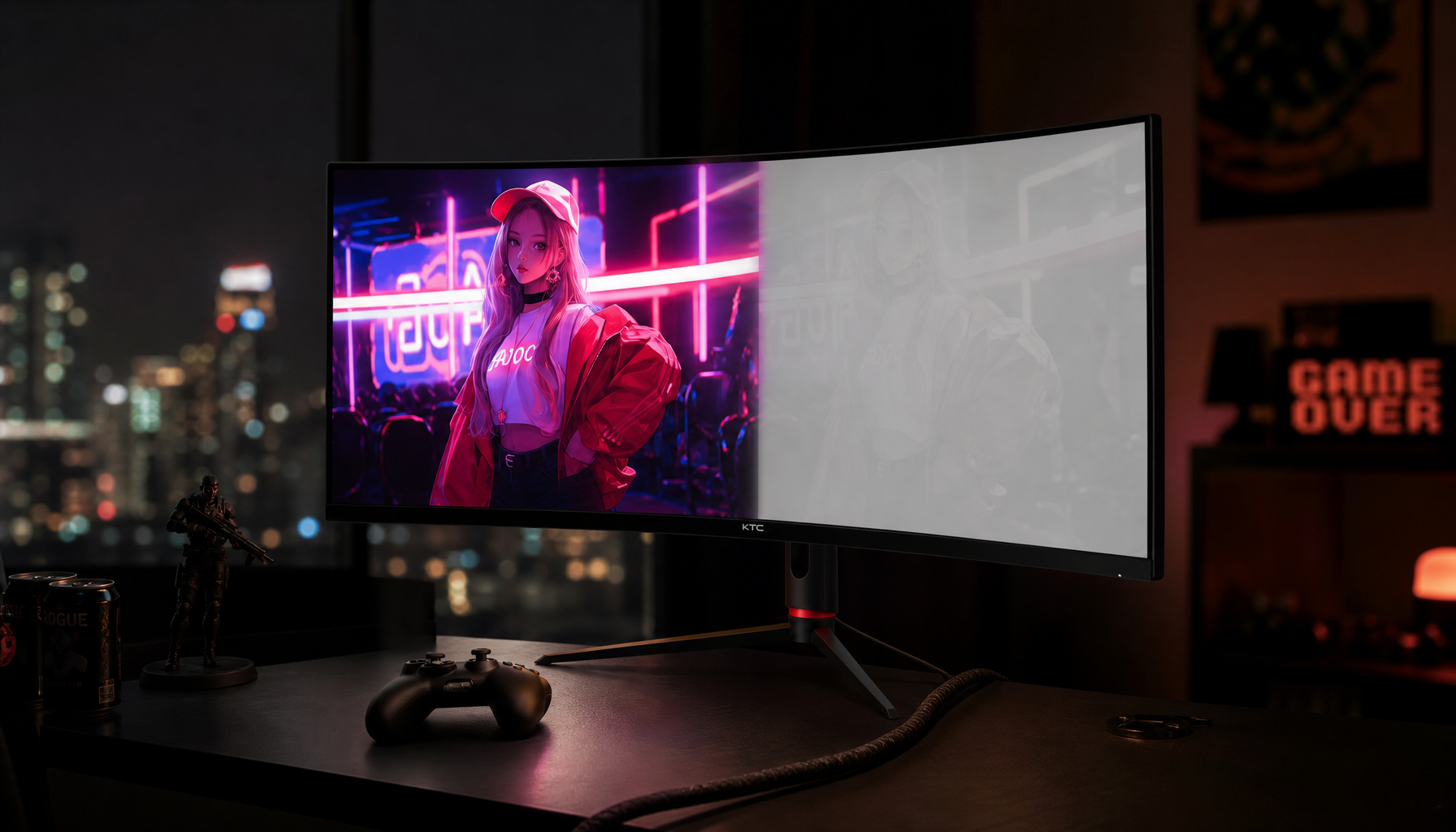
Dynamic HDR metadata is the instruction layer that travels alongside HDR video. Instead of sending one fixed brightness and color map for an entire movie or game, the source can update those instructions scene by scene or even frame by frame, so the display can map the image more intelligently to its own limits. That is the core promise HDMI makes for Dynamic HDR, and it matches Dolby’s plain-language explanation that HDR metadata tells the display how to adapt the image to the display it is actually driving HDMI Dynamic HDR Dolby Vision primer.
Action Checklist
- Confirm that the source, any AVR/switch/dock, and the display all support the same HDR format, not just generic “HDR.”
- Test the chain directly from source to display first, with no dock, adapter, splitter, or AVR in the middle.
- If HDR disappears at higher refresh rates or resolutions, lower the video mode and test again; link bandwidth and mode support still matter for HDMI HDR paths HDMI 2.1 release.
- On Windows, use Extend these displays instead of duplicate mode, then enable HDR for the target display Microsoft HDR settings.
- If the display supports DisplayPort HDR cleanly but HDMI shows artifacts, test DisplayPort as a control path Microsoft HDR settings.
- Before any EDID override, save the current EDID and write down the last known-good resolution, refresh rate, and HDR mode, because invalid EDID data can make Windows choose the wrong display mode.
- If a change causes a black screen or strips HDR, roll back to the last known-good path first: reconnect the source directly, switch to a lower-bandwidth mode, and retest with HDR enabled only on the target display HDR settings.
- Before any EDID override, save a raw EDID export, note the current resolution, refresh rate, and HDR state, and make the first retest at a lower-bandwidth mode; Microsoft notes that invalid EDID information can make Windows choose incorrect display modes.
- If a change leaves you with a black screen or unsupported mode, recover on a known-good direct connection first, remove the override, then retry in SDR or a lower resolution and refresh rate; Microsoft’s unsupported mode and invalid format cases show why a reversible path matters.
What Changes Compared With Plain HDR10
The easiest way to think about this is:
- HDR10 uses static metadata: one set of mastering and brightness hints for the content as a whole. CTA’s HDR static metadata extension standard is literally named that way CTA-861.3-A.
- Dynamic HDR updates those instructions as the content changes. HDMI describes the benefit as optimization on a scene-by-scene or frame-by-frame basis HDMI Dynamic HDR.
That matters because a dark cave scene and a bright snow field stress a display in very different ways. Static metadata gives the display one broad map. Dynamic metadata gives it fresh guidance as the image changes.
The Actual HDMI Path
1. The display first tells the source what it can handle
When HDMI devices connect, they exchange capability information before playback. ANSI’s overview of CTA-861.4 describes this as devices exchanging information about their capabilities so the source can choose a signal both sides can handle CTA-861.4 overview.

In monitor terms, that capability data is part of the display descriptor path. Microsoft’s driver documentation defines EDID as the format monitors use to communicate their capabilities to a video source, and notes that bad EDID data can cause wrong display modes or other problems Microsoft EDID overview. Microsoft also states that Windows relies on accurate display descriptors for HDR, including luminance and HDR metadata data Microsoft display guidance.
2. Dynamic-HDR support is advertised as a capability
In the CTA/HDMI signaling family, dynamic-HDR support is not guesswork. ETSI’s public annex for CTA-861-H says the sink advertises its supported HDR dynamic metadata capabilities to the source using an HDR Dynamic Metadata Data Block, and the source uses an HDR Dynamic Metadata Extended InfoFrame to identify and deliver HDR dynamic metadata to the sink ETSI TS 103 433-1, Annex G.
This is spec-required signaling rather than a brand-specific behavior: ETSI TS 103 433-1 V1.4.1, Annex G is the public locator for the HDR Dynamic Metadata Data Block and HDR Dynamic Metadata Extended InfoFrame names, so readers can verify whether a failure happened in advertised capability or in live transport.
Plain English version: the display says “I understand these HDR metadata types,” and the source only sends a matching one.
3. The source chooses a common HDR format
After capability exchange, the source picks the best common option. If both ends support a dynamic format, that format can be used. If not, the source falls back.
This is easy to see in real-world formats:
- HDR10+ is explicitly backward compatible with HDR10, and HDR10+ says an HDR10-only device that receives an HDR10+ signal will play it in HDR10 HDR10+ FAQ.
- Dolby says that if a device does not support Dolby Vision but does support HDR, playback falls back to HDR10; if it is SDR-only, it falls back to SDR Dolby Vision primer.
That is why many “HDR works, but dynamic HDR does not” problems are really format-negotiation problems, not total HDR failures.
4. During playback, the metadata keeps arriving with the video
Once playback starts, the source does not just send pixels. It also sends the matching HDR metadata over the HDMI link using the agreed signaling path. HDMI’s public overview describes the effect: every moment can be shown at its ideal values, scene by scene or frame by frame HDMI Dynamic HDR.
This metadata guides tone mapping, which is the process of fitting content mastered for a brighter or wider display into the real capabilities of the screen in front of you. Dolby describes metadata as the instructions that tell the display how to act, and HDR10+ describes its own dynamic metadata as enabling dynamic tone mapping that adapts content to the brightness of the display Dolby Vision primer HDR10+ overview.
A compact comparison sample looks like this: healthy path, the sink advertises a supported dynamic-metadata type and live playback carries the matching signal; failure path, the title still plays in HDR but only the plain HDR10 path remains; repaired path, removing the dock or AVR restores the original dynamic-metadata type. The key clue is that CTA-861-H signaling separates sink capability from the live Extended InfoFrame, so you can tell whether the loss happened at negotiation time or in the middle of the chain.
5. On PCs, the source may do more of the work than you expect
For living-room video devices, people often imagine the display doing all the mapping. On Windows PCs, that is not always the practical model. Microsoft says HDR10 content on Windows is tone-mapped on the GPU using content metadata before desktop composition, and that no additional content-based tone mapping is expected from the monitor in either DisplayHDR or Dolby Vision mode Microsoft HDR settings.
Treat this as platform behavior, not an HDMI rule: Windows also relies on EDID for monitor capability data, so a PC can lose the expected HDR path because the OS or driver sees a different sink description even when the panel itself has not changed.
That is a useful monitor-specific nuance: on a PC, the “source vs display” split can be different from a standalone media player feeding a TV.
Comparison Table
The table below summarizes the main behaviors described by CTA’s static HDR extension, HDR10+, Dolby Vision, and HDMI SBTM.
Option |
Metadata behavior |
What happens if full support is missing |
Best way to think about it |
HDR10 |
Static metadata |
Usually remains the baseline HDR path |
One fixed guidance set for the content |
HDR10+ |
Dynamic metadata |
Falls back to HDR10 on HDR10-only devices |
HDR10 plus changing instructions |
Dolby Vision |
Dynamic metadata |
Falls back to HDR10 on HDR-capable non-Dolby devices, or SDR on SDR devices |
Dolby-managed dynamic HDR ecosystem |
HDMI SBTM |
Source-side HDR mapping aid |
Complements existing HDR formats rather than replacing them |
Extra HDMI help for source-driven mapping, especially mixed HDR/SDR/graphics |
Where Monitor and TV Setups Usually Break
The middle device lies, strips, or simplifies the path
A dock, switch, AVR, capture device, or active adapter is not transparent just because it passes a picture. Since the source chooses output based on reported capabilities, a middle device that exposes a reduced capability set can force the source into a safer fallback mode CTA-861.4 overview Microsoft EDID overview.
Practical inference from those standards: this is why direct source-to-display testing is the fastest way to isolate dynamic-HDR failures.
The problem is bandwidth, not metadata
HDMI 2.1 highlighted both Dynamic HDR support and higher-bandwidth video modes such as 4K120 and 8K60 HDMI 2.1 release. A practical inference is that many failures blamed on “dynamic HDR” are really failures of the chosen video mode: resolution, refresh rate, chroma, and bit depth push the link too far, and HDR drops out as a side effect.
If 4K60 HDR works but 4K120 HDR does not, suspect the mode budget first.

PC operating-system behavior gets in the way
Windows has a few HDR-specific gotchas that matter in monitor setups:
- Duplicated displays can disable HDR on an external monitor; Microsoft says to use Extend these displays instead Microsoft HDR settings.
- If HDMI causes visible color issues and the display also supports HDR over DisplayPort, Microsoft explicitly recommends trying DisplayPort instead, or lowering refresh rate or resolution Microsoft HDR settings.
- On Dolby Vision certified monitors, Windows may automatically choose Dolby Vision when available, and Microsoft says that mode can sometimes limit peak brightness compared with a non-certified HDR10 mode Microsoft HDR settings.
Troubleshooting Flow: Hardware First, OS Second
Start at the cable path, not the software menu.
- Connect the source directly to the display.
- Verify the display’s on-screen info page or status badge during playback. If it shows only HDR, you may already be in HDR10 fallback instead of HDR10+ or Dolby Vision.
- Reintroduce the AVR, dock, switch, or adapter one device at a time.
- If the format appears only at lower refresh or resolution, treat it as a mode-capability issue, not a metadata mystery HDMI 2.1 release.
- On Windows, switch from duplicate to extended desktop, enable HDR on the correct display, and retest Microsoft HDR settings.

For each retest, record the active resolution and refresh rate, the display OSD HDR label, a one-line sink EDID summary, and whether the result changes when you add one device back into the chain. EDID is the capability record Windows and drivers use, so a pass means the direct path and final path report the same HDR format and mode, while a fail usually looks like the label dropping to plain HDR or HDR10, the mode shrinking, or the sink identity changing.
The key takeaway is simple: dynamic HDR only works when the source, the entire HDMI chain, and the display all agree on one format and one video mode.
FAQ
Q: Do dynamic HDR and HDMI Source-Based Tone Mapping mean the same thing?
A: No. HDMI says SBTM is an additional HDR capability and explicitly says it does not replace HDR10, HLG, or HDR dynamic metadata systems HDMI SBTM. Dynamic HDR is about changing metadata guidance over time; SBTM is about letting the source do more of the mapping work.
Q: Why do I still get HDR even when HDR10+ or Dolby Vision fails?
A: Because fallback is normal. HDR10+ says its format is backward compatible with HDR10, and Dolby says unsupported Dolby Vision devices can fall back to HDR10 if they still support HDR HDR10+ FAQ Dolby Vision primer.
Q: Why does HDR work on my console or streamer but look wrong on my PC monitor?
A: PC HDR often involves different source-side behavior. Microsoft says Windows tone-maps HDR10 on the GPU before desktop composition, can disable HDR in duplicate-display mode, and may behave better over DisplayPort than HDMI in some problem cases Microsoft HDR settings.
References
- HDMI Dynamic HDR
- HDMI Forum Releases Version 2.1 of the HDMI Specification
- HDMI Source-Based Tone Mapping (SBTM)
- CTA-861.3-A: HDR Static Metadata Extensions
- CTA-861.4-2019: Updates to Dynamic HDR Metadata Signaling
- ETSI TS 103 433-1, Annex G: Signalling in CTA-861-H
- HDR10+ official overview and FAQ
- Dolby Vision explained: A primer for content creators
- Dolby Vision: Discover the Dolby difference
- Microsoft: HDR settings in Windows
- Microsoft Learn: Display guidance for HDR and descriptors
- Microsoft Learn: Using an INF file to override EDIDs