Input lag usually does not change because sRGB, DCI-P3, or Adobe RGB is slower by itself; it changes because a monitor may use different processing paths, picture modes, gamut mapping, HDR behavior, or scaling when you select them.
Does your aim feel crisp in Game Mode, then slightly heavy after switching to a richer DCI-P3 or Adobe RGB preset? In practical testing, the fastest setup is usually the one that keeps native resolution, the highest refresh rate, and extra image processing off while preserving the color mode that fits the content. The goal is to separate real latency from color preference, then tune the display for both speed and believable color.
Color Space Is Not the Same Thing as Input Lag
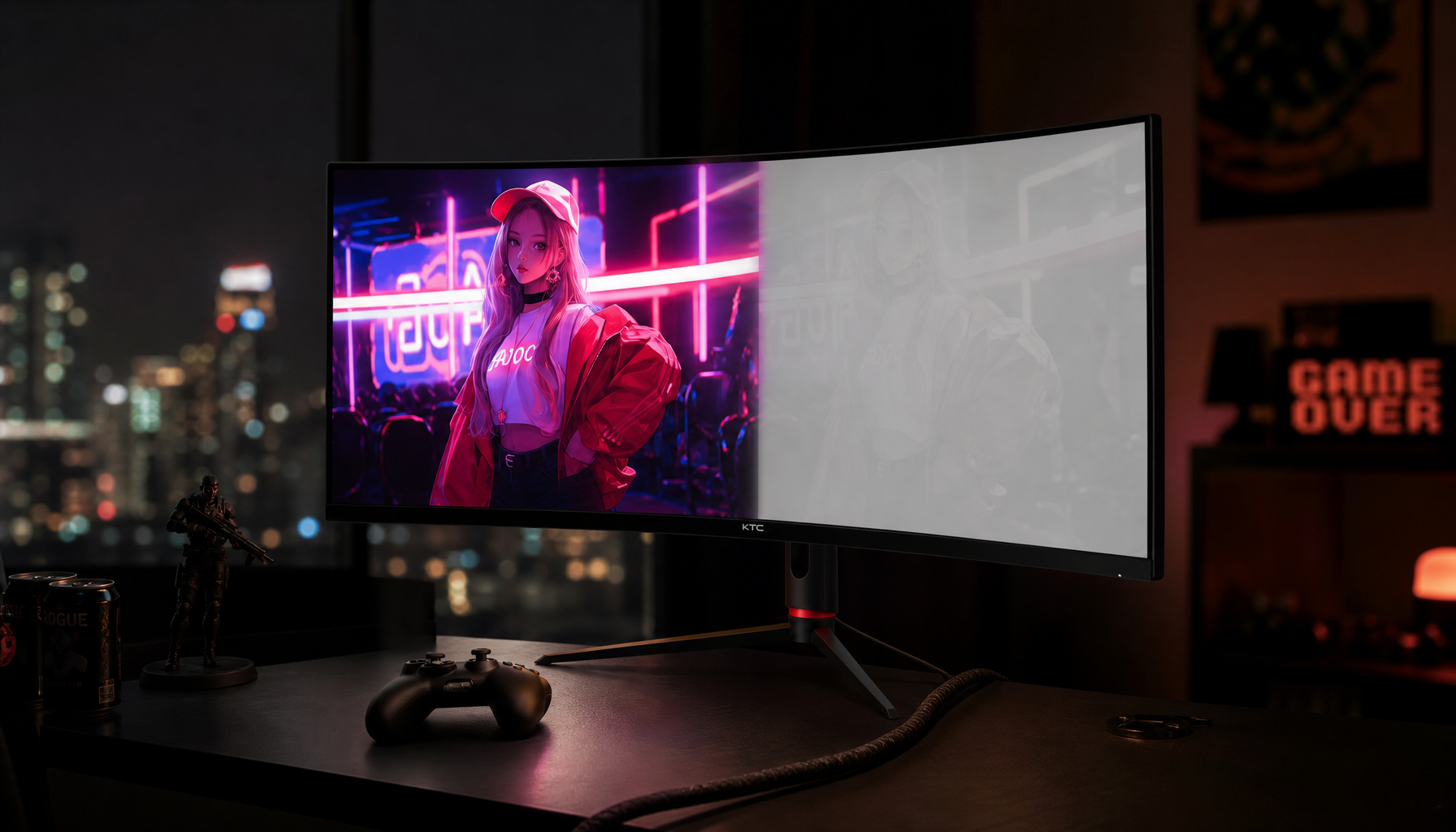
A color space is the target range of colors a display or workflow is trying to reproduce. sRGB is the everyday standard for web pages, office apps, and most games; DCI-P3 is common in HDR and cinema-oriented content; Adobe RGB is wider than sRGB in areas useful to photography and print-minded workflows. A gaming monitor’s color gamut is commonly described as a percentage of standards like sRGB, Adobe RGB, or DCI-P3, and wider gamut can make games and media look more vivid when the content supports a wider color range.
Input lag is a timing problem, not a color-range problem. It is the delay between your mouse click, controller input, or keyboard press and the updated image appearing on screen. The color space selected in the on-screen display can still matter because manufacturers often bundle color space choices with different processing behavior. That is why two modes labeled “sRGB” and “DCI-P3” can feel different even at the same resolution and refresh rate.

A simple example helps. If your monitor runs at 120 Hz, each refresh is about 8.33 ms apart from the next full refresh cycle, while center-screen scanout can appear roughly halfway through that cycle. If a color preset adds even one extra frame of processing, a competitive player can feel that difference in tracking, peeking, and parry timing.

Why sRGB Often Feels Faster
sRGB modes on gaming monitors are frequently designed as restrained, standards-based presets. They clamp a wide-gamut panel so ordinary content does not look neon or oversaturated. Most internet and typical game content is authored around sRGB, so using it often gives the most predictable color for SDR play.
The reason sRGB may feel faster is not that a smaller color space is easier for light to display. It is that an sRGB or Game/FPS mode may disable enhancement layers such as dynamic contrast, heavy sharpening, tonal cleanup, noise reduction, motion smoothing, or non-native scaling. KTC’s gaming monitor notes make the key distinction clearly: Game Mode, FPS Mode, and Instant Mode usually reduce input lag by minimizing extra processing before the picture appears Game Mode.

In first-person shooters, sRGB is usually the safest baseline. It keeps enemy outlines, UI colors, and shadow detail closer to the creator’s SDR intent, and it reduces the chance that a vivid preset is quietly adding processing. If the sRGB preset locks brightness too low or disables overdrive controls, use a Custom or Gamer preset with an sRGB clamp if your monitor offers it.
Why DCI-P3 Can Add Delay on Some Displays
DCI-P3 is valuable when the content actually uses it. HDR games, modern streaming media, and some creator workflows can benefit from a wider color range. But on many monitors, DCI-P3 is not just a color target; it may be part of an HDR, Cinema, Movie, or Vivid preset. Those presets often chase impact over immediacy.
Projector and display testing repeatedly shows that image processing can add meaningful delay. One projector test measured frame interpolation and noise reduction at roughly 50–70 ms, then saw lag improve to about 10–30 ms when both were disabled frame interpolation and noise reduction. The lesson applies beyond projectors: color-rich modes become risky when they also turn on motion processing, noise cleanup, dynamic tone mapping, or other enhancement stages.
For a cinematic RPG, DCI-P3 with HDR may be worth it if the game’s color grading looks more natural and the controls still feel responsive. For ranked shooters, fighting games, and rhythm games, treat DCI-P3 as something to test, not assume. If the monitor has separate toggles, keep the wide gamut but turn off motion interpolation, black frame insertion, aggressive sharpening, and noise reduction.

Why Adobe RGB Can Feel Different
Adobe RGB is strongest for creative work, especially photography and print-adjacent editing. Print and screen color are fundamentally different because monitors use additive RGB light while printing uses subtractive ink behavior, so creative workflows often need deliberate color management rather than a punchy preset additive RGB light.
On a monitor, Adobe RGB mode may route the image through a more accuracy-focused pipeline. That can include tighter color mapping, factory calibration tables, uniformity compensation, or locked white point controls, depending on the model. The available notes do not prove that Adobe RGB inherently adds input lag across monitors, so the practical position is conservative: Adobe RGB is not automatically slow, but it may be attached to a picture mode that prioritizes accuracy over minimum delay.
For office productivity and photo review, this trade-off is usually acceptable. A 10–20 ms difference is rarely a problem when you are editing a spreadsheet, grading a photo, or reviewing a deck. In a tactical shooter, that same delay can make the mouse feel like it is arriving late.
The Real Causes Behind Color-Space Lag Differences
The most common cause is preset bundling. A monitor may pair sRGB with a simpler SDR path, DCI-P3 with HDR tone mapping, and Adobe RGB with color-accurate processing. The label on the menu looks like a color choice, but the internal behavior can be a full picture-mode change.
Scaling is another frequent culprit. If the console, PC, or portable screen is not running at native resolution, the display may need to resize the image. KTC’s monitor guidance recommends native resolution because scaling from non-native settings can create responsiveness issues on some displays.
HDR can also complicate the picture. HDR itself is not guaranteed to be slow, and many modern gaming monitors handle it with little penalty. The risk comes from the extra tone mapping, local contrast behavior, brightness management, or cinematic processing that may activate with HDR-oriented DCI-P3 modes.
Finally, perceived lag can come from color management outside the monitor. Forum discussion around ICC profiles suggests results can be monitor-specific and subjective, with some users finding default sRGB best while others test profile changes differently. That is not lab-grade proof that ICC profiles change hardware input lag, but it is a useful reminder: if the mouse feels different after a profile or color-mode change, test it on your exact setup.
Practical Setup for Gaming, Work, and Portable Screens
For competitive gaming, start with the fastest picture mode, highest supported refresh rate, native resolution, and wired input path. Then choose sRGB if you are playing SDR games or web-based content. If your monitor offers a low-lag wide-gamut mode, test DCI-P3 only after confirming that motion smoothing, noise reduction, black frame insertion, and heavy sharpening are off.
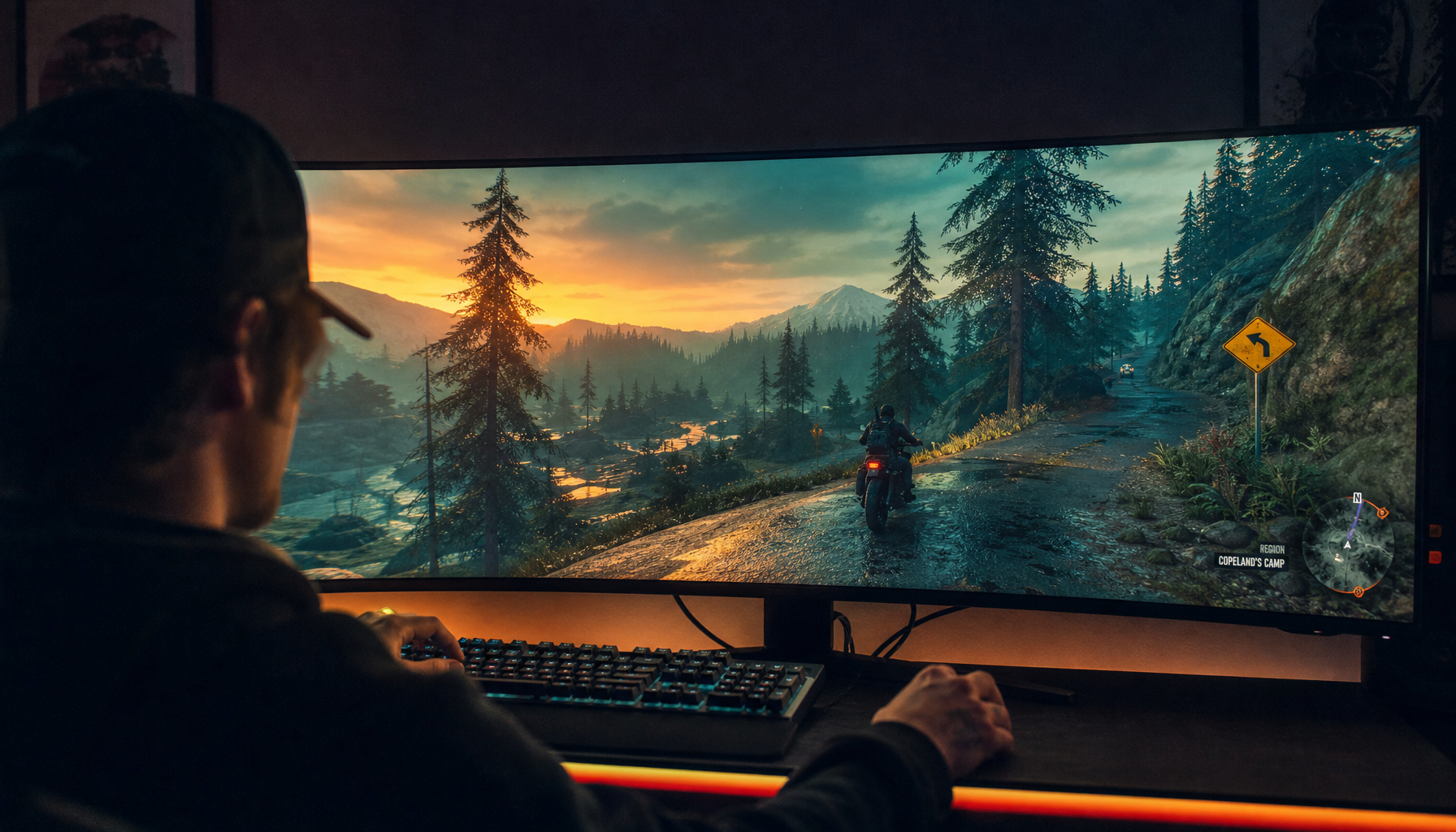
For single-player immersion, DCI-P3 or HDR can be the better experience. A forest scene, neon city, or cinematic cutscene can look flatter in strict sRGB on a wide-gamut display. The smart move is to keep two presets: one for speed and one for depth. A good display should let you enjoy both without digging through menus every night.
For photo editing and design, Adobe RGB belongs in the workflow when your content and final use need it. It is a color decision first, not a gaming decision. If you also game on the same monitor, save Adobe RGB for creative apps and switch to sRGB or a tuned Gamer preset when latency matters.

For office productivity displays and portable smart screens, prioritize readable text, native resolution, stable brightness, and low processing. Color accuracy matters for comfort and trust, but wide gamut is rarely worth a laggy or oversaturated desktop. A portable screen used for a laptop gaming session should be tested at its native resolution with enhancements disabled before judging its responsiveness.
Quick Comparison
Mode |
Best Use |
Latency Risk |
Practical Move |
sRGB |
SDR gaming, web pages, office work |
Usually low when paired with Game Mode |
Use as the default competitive baseline |
DCI-P3 |
HDR games, movies, immersive play |
Medium if tied to HDR or cinema processing |
Test with enhancements off |
Adobe RGB |
Photography, design, print-aware workflows |
Model-dependent |
Use for creative work, not ranked play |
How to Test Your Own Monitor
Use the same game, same refresh rate, same resolution, and same frame-rate cap when comparing modes. Change only the color space or picture preset. If your aim, cursor movement, or button timing feels different, check whether the monitor silently enabled HDR, motion smoothing, local contrast, scaling, or extra enhancement.
A practical real-world check is to play a familiar aim trainer, fighting-game input drill, or fast desktop cursor movement test for five minutes per mode. You do not need lab gear to notice a bad preset. Lab measurements are better for buying decisions, but consistent hands-on comparison is enough to avoid the slowest settings on your own desk.
The performance-first answer is simple: sRGB, DCI-P3, and Adobe RGB do not carry input lag like a built-in tax. The delay comes from the processing path your display chooses around them. Lock in native resolution, high refresh, and minimal processing first; then pick the color space that matches the content and the stakes of the session.