Measured input lag changes because Game Mode usually removes extra image processing. The size of that change depends on refresh rate, frame rate, sync settings, and test conditions.
Does your screen suddenly feel snappier in one preset, then oddly heavy in another even though it is the same monitor? That shift is real. Independent testing shows that settings like Game Mode, refresh rate, and frame pacing can move measured lag enough to matter in fast games. The key is knowing what changed, why the number moved, and which settings are actually worth keeping.
What input lag really is, and why Game Mode affects it
The delay between your input and the image appearing on screen is input lag, while response time is about how quickly pixels change color. Those numbers are often confused, but they describe different problems. If controls feel delayed, that is input lag. If moving objects leave trails or look smeared, that is mostly response time and motion handling.
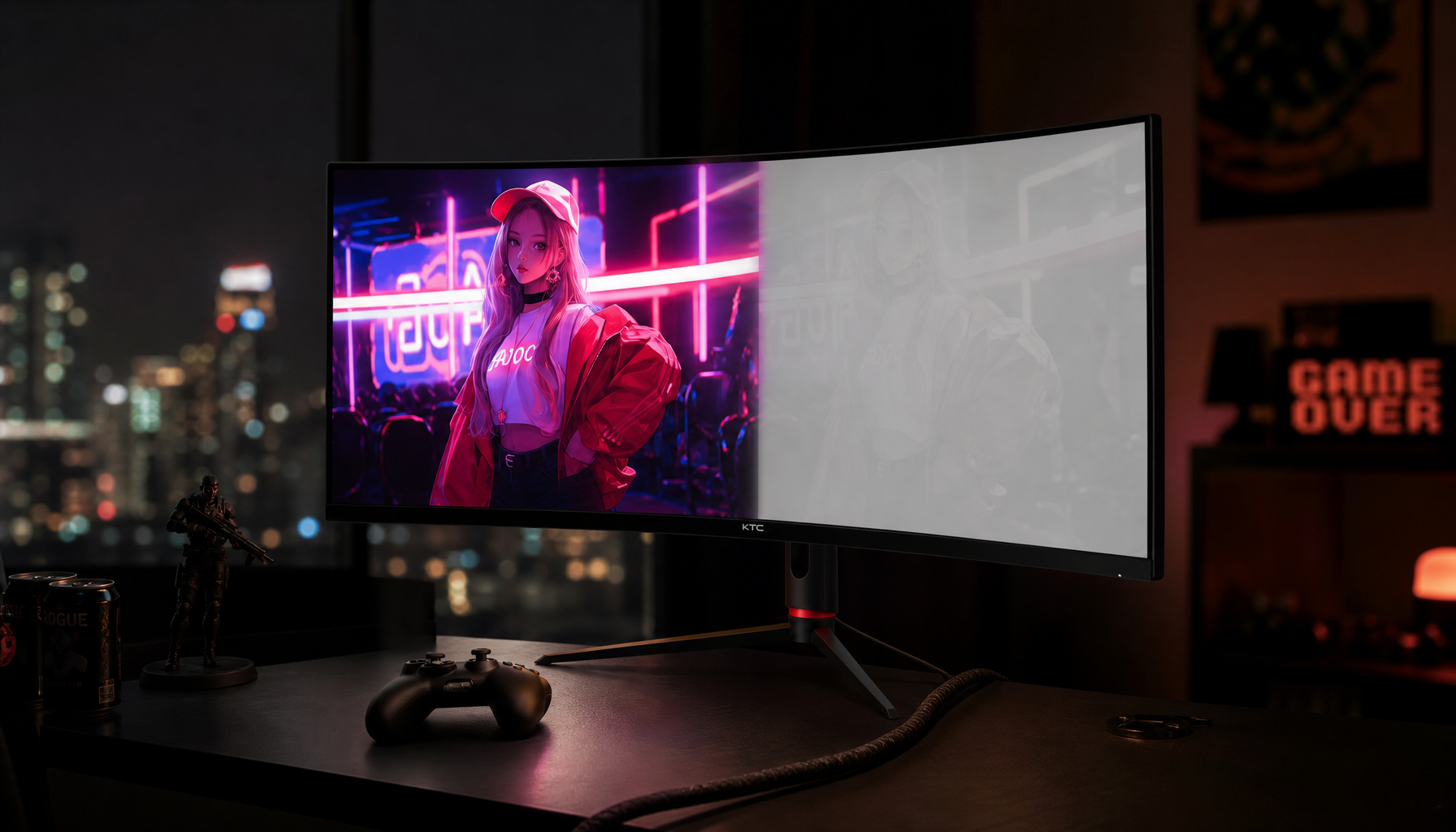
Game Mode changes measured lag because it often bypasses parts of the monitor’s image-processing pipeline. Independent testing notes that low-latency presets commonly reduce delay, and some comparison databases use Game Mode at 60 Hz as a baseline. In practice, that usually means less scaling, less enhancement, less smoothing, and fewer picture “improvements” between your mouse click and the pixels.
That is why the same panel can post different lag numbers in different presets. A monitor in a cinema-style, color-enhanced, or heavily processed mode may look richer, but it can also take longer to deliver the frame. A gaming preset often looks simpler because it is designed to feel faster first.

The main reasons the number changes when you switch modes
Extra image processing adds delay
Monitor latency is strongly affected by signal-processing delay in the display. When you switch out of Game Mode, the monitor may enable sharpening, dynamic contrast, local dimming behavior, noise reduction, motion enhancement, or internal scaling paths that were previously reduced or disabled.
This is one of the easiest changes to spot on a console or laptop. If you feed a 1080p signal into a higher-resolution monitor and let the display upscale it, the monitor has more work to do. Independent testing specifically recommends letting the graphics card handle upscaling instead of the monitor when possible, because reducing display-side processing helps keep lag down.
Refresh rate changes the floor
Refresh rate sets a lower bound on how quickly a new image can appear. At 144 Hz, a refresh cycle is about 6.94 ms. At 240 Hz, it is about 4.17 ms. That does not mean total system lag equals those numbers, but it does mean the screen has more chances each second to show the next completed frame.
This is one reason measurements can change even when the preset name stays similar. The 144 Hz to 240 Hz frame-time difference is about 2.77 ms. In actual play, that difference is modest for casual use but valuable in esports, where target tracking and click timing are tested constantly.
Frame rate, V-Sync, and render queues can matter more than the monitor preset
A gaming monitor feels fast only when the rest of the system keeps up. If your system is running at 30 FPS, each frame takes about 33.3 ms to render. At 144 FPS, each frame takes about 6.9 ms. That alone can overwhelm the gains from a better monitor mode.
This is where players sometimes misread reviews. A Game Mode might shave meaningful delay off the monitor, but standard V-Sync, deep render queues, or unstable frame pacing can add more lag right back into the chain. In practice, a low-lag preset cannot fully rescue a badly tuned game pipeline.
Some monitor features improve clarity, not control delay
Motion clarity and input lag are related but not interchangeable. That matters because some game-related monitor settings are marketed as “faster” even when they mainly improve blur rather than input latency.
Backlight strobing modes can make motion look cleaner, but they are primarily a motion-clarity tool. They may feel more precise because the picture is easier to read during movement, yet that is not the same as reducing signal-processing delay. If you switch modes and the image suddenly looks crisper in motion, you may be seeing better motion clarity rather than a major drop in true control latency.
Why measurements from different sites sometimes do not match
One monitor database standardizes its comparisons at 60 Hz, while another major testing source measures the lowest lag a monitor can achieve and also checks lower-refresh-rate behavior. Those approaches are not contradictory, but they answer different buying questions. One shows how a display behaves at a fixed comparison point; the other shows how it behaves more broadly across settings.
That difference in method is one reason you might see one outlet call a monitor excellent while another shows several lag figures. The mode tested, the refresh rate used, whether the signal was at native resolution, and whether picture features were active all change the number. When two results seem far apart, the first thing to check is not which site is wrong. It is whether they measured the same mode under the same conditions.
What changes are usually worth making
Independent monitor testing and practical latency guidance line up on a few settings that consistently help. Enable Game Mode or any equivalent low-latency preset first. Then disable unnecessary picture-enhancement features, especially if you care more about responsiveness than post-processing.
If your system can sustain it, a higher refresh rate reduces the display’s update interval and usually improves responsiveness and motion smoothness together. The 144 Hz versus 240 Hz comparison makes the tradeoff clear: 144 Hz remains the value sweet spot for most players, while 240 Hz is where competitive players start extracting smaller but meaningful gains.
Sync settings deserve more care than many setup guides give them. Independent testing notes that VRR and HDR usually do not add meaningful monitor input lag, while several gaming-focused sources treat adaptive sync as a better compromise than traditional V-Sync for smoothness without the same latency penalty. If you want tear control without the heavier feel of old-school V-Sync, VRR is usually the better choice.
A practical way to test your own monitor
Independent testing describes a simple mirror-and-photo method using a timer with milliseconds on a known low-lag display and the monitor you want to check. It is only approximate, but it is useful for comparing one mode against another on your own desk. Test with the same cable, refresh rate, resolution, and game or timing source each time. Otherwise, you are not isolating the mode change.

A good home test is to compare Standard mode and Game Mode at 60 Hz first, then repeat at your actual play refresh rate, such as 144 Hz or 240 Hz. If the gap is large at 60 Hz but much smaller at high refresh rates, that is normal. If the image looks cleaner in one mode but the timer barely changes, you likely improved motion presentation more than true latency.
When lower measured lag should not be your only goal
General gaming monitor buying advice and broader responsiveness analysis point in the same direction: the fastest-feeling monitor is not always the one with the absolute lowest lab number. Color quality, overshoot control, VRR behavior, brightness, and resolution still shape the experience.
For office displays and portable smart screens, the best choice is often balanced responsiveness rather than chasing esports-grade numbers. For competitive shooters, though, the balance shifts toward minimal processing, stable high frame rates, and the fastest clean preset your panel can hold without obvious image artifacts.
The right move is not to obsess over a single spec-sheet number. It is to build a signal path where the monitor, GPU, frame rate, and display mode are all working in the same direction, so every action on screen lands with speed you can actually feel.