Competitive gamers often choose matte screens because stable visibility matters more than maximum color pop. A glossy panel may look richer in a dark room, but a matte gaming monitor is usually easier to read under real lighting, especially during long, fast matches.
Ever lose sight of an opponent because a window, lamp, or bright shirt reflected across a dark corner of the map? In competitive play, reducing that kind of distraction can matter more than squeezing out the deepest blacks or most vivid colors. This guide explains when matte makes sense, what image quality you give up, and when glossy still deserves a place on your shortlist.
The Competitive Priority: Visibility Before Vibrancy
Competitive gaming is not judged by how cinematic a monitor looks in a showroom. It is judged by whether you can identify movement, track targets, read dark areas, and maintain focus for hours without fighting the screen.
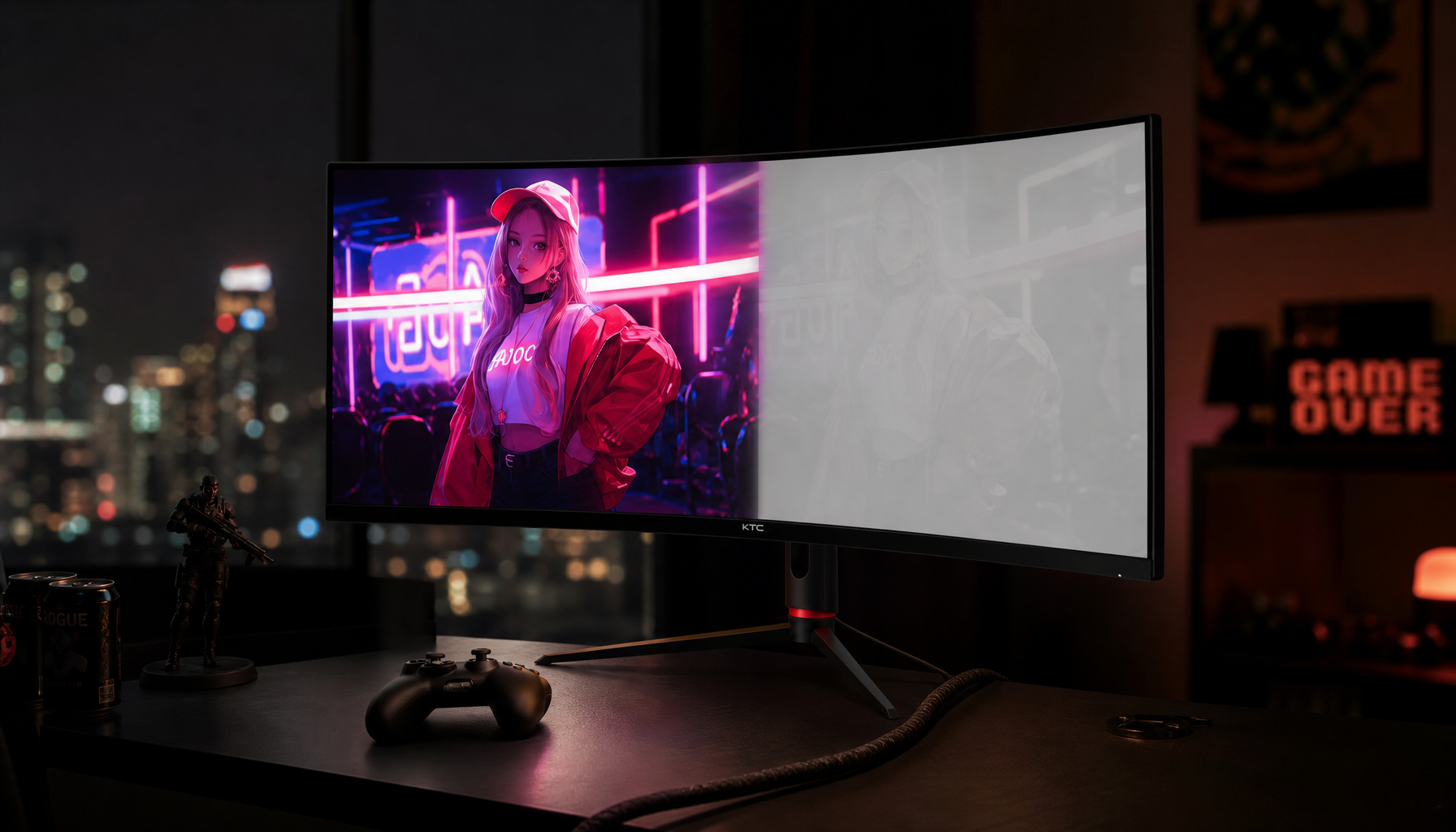
Matte coatings help because they scatter incoming light instead of reflecting it sharply back at you. That makes windows, ceiling lights, RGB strips, and desk lamps less likely to appear as mirror-like shapes over the game image. For esports players using high-refresh-rate displays, that consistency is often more valuable than the cleaner contrast of a glossy panel.
Why Reflections Hurt More in Fast Games

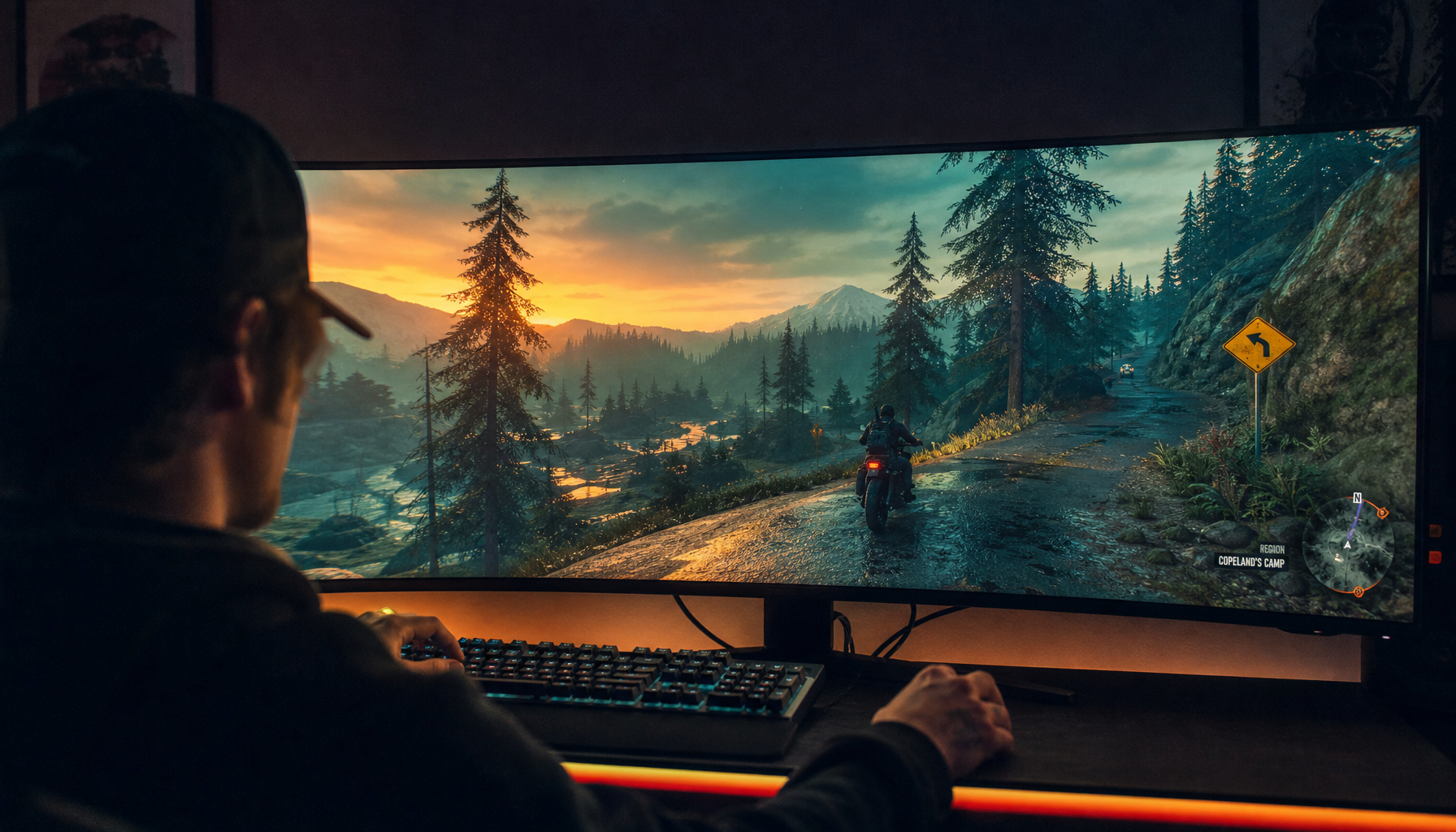
In tactical shooters, battle royale games, racing sims, and arena shooters, the problem is not just “glare looks annoying.” A sharp reflection can cover small visual cues: a shoulder peeking from cover, a muzzle flash, a tire edge, or a dark character model moving through shadow.
A glossy display may preserve stronger contrast and cleaner color, but reflections are sharper. Matte screens trade some image purity for fewer hard distractions, which is why they are common on practical gaming monitors used in bedrooms, apartments, dorms, shared offices, and tournament-style setups.
Matte vs. Glossy: What You Actually Trade
The matte-versus-glossy debate is not about one coating being universally better. It is about which weakness hurts your use case less.
Glossy coatings usually deliver more perceived depth, stronger color “pop,” and clearer blacks in controlled lighting. Matte coatings reduce reflection intensity, but they can slightly soften the image, lift perceived blacks, or create a faint haze on dark scenes. Heavy matte finishes can also show a subtle grain or sparkle on bright white backgrounds.
Screen coating |
Best environment |
Main advantage |
Main drawback |
Best fit |
Glossy |
0-50 lux dark room |
Strongest perceived contrast and color clarity |
Sharp reflections in mixed lighting |
Cinematic gaming, OLED showcase setups |
Semi-gloss |
100-300 lux mixed room |
Balanced clarity and reflection control |
Still reflects bright light sources |
Hybrid gaming and media use |
Matte |
500+ lux bright room |
Diffuses glare and improves usability |
Slight haze or reduced color depth |
Competitive gaming, long sessions, shared spaces |

Glossy OLED coatings can transmit over 99% of light, which helps preserve clarity and contrast. Matte OLED coatings use microscopic surface texture to diffuse light, making the screen more usable in bright or mixed rooms, even though blacks may appear slightly raised under ambient light.
The Color Loss Is Real, But Often Overstated
If you play story-driven games at night with the lights off, glossy can look spectacular. Water, metal, glass, and dark scenes often appear deeper because the coating interferes less with the panel’s native contrast.
But competitive players usually tune monitors differently. They may lower graphics settings, disable distracting effects, use SDR instead of poor HDR, choose balanced overdrive, and favor visibility-oriented presets. In that context, the small color and contrast penalty from matte is often less damaging than a bright reflection sitting over the center of the screen.
Room Lighting Decides More Than Spec Sheets

A monitor coating should be chosen in the room where the display will actually be used. A glossy gaming monitor that looks outstanding in a dark review setup can become frustrating beside a window at 3:00 PM.
Matte coatings work best when you cannot fully control lighting. That includes daytime gaming, overhead lights, shared rooms, LAN events, college apartments, and desks where lamps sit near the screen. Matte coatings reduce glare by spreading reflections across a wider area, so the image is less likely to be interrupted by a crisp reflection.
A Practical Lighting Test
Before buying, test your current setup with the screen off during the time you normally play. If you can clearly see a window frame, lamp shade, keyboard reflection, or your own face in the panel, glossy will likely make that more visible during dark game scenes.
For competitive gaming, the better question is not “Which coating has better color?” It is “Which coating keeps enemies visible under my actual lighting?” If you use a 240 Hz or 360 Hz gaming monitor but keep fighting glare, you are not getting the full practical benefit of that speed.
Reflections Inside the Game Are Different From Reflections on the Screen
Modern games already use complex reflection techniques, and those can affect both performance and visibility. Screen space reflections, or SSR, create real-time reflections from the image already being rendered. They can make puddles, glass, metal, and glossy floors look more dynamic, but they also add GPU cost and can introduce visual noise.
SSR is limited because it relies on visible scene data. It cannot reliably reflect off-screen objects, hidden objects, transparent effects, or certain sky details. In one technical example, a game implementation used 37 samples over a maximum reflection distance of about 10.5 ft, then added search and blur techniques to make reflections less artificial.
Why Competitive Players Often Simplify Visuals
A fast monitor cannot compensate for an overloaded image. If reflections, HDR, extreme overdrive, and glare all compete for attention, target tracking gets harder.
Poor HDR can look washed out or uneven on displays without strong brightness control and tone mapping. Maximum overdrive can create inverse ghosting, halos, or bright trails. At the same time, 4K gaming renders about 8.3 million pixels per frame, compared with about 3.7 million at 1440p, increasing GPU load. For competitive play, many gamers choose 1440p, high refresh rate, VRR, normal or fast overdrive, and a matte surface because that combination keeps motion readable.
When Glossy Still Makes Sense
Glossy is not a bad choice. It is just a more demanding one. If you can control the room, avoid direct light, and mostly play in the evening, glossy can deliver a more immersive image.
A glossy or semi-gloss OLED gaming monitor may be the better fit for single-player games, movies, HDR showcases, and visually rich titles where contrast and color depth matter more than distraction control. In a dark room, glossy can make blacks look cleaner and colors look more immediate.
Competitive Use Cases for Glossy
Glossy can still work for competitive gaming if the setup is controlled. That means no window behind you, no lamp facing the panel, no bright wall reflected in the screen, and no strong ambient light during your normal play hours.
It also makes sense if you split time between ranked matches and media consumption. For example, a player who competes at night but watches movies on the same ultrawide monitor may prefer semi-gloss or glossy for better overall image impact. The key is accepting that lighting discipline becomes part of the setup.
Buying Checklist for Competitive Gamers

Use this checklist before choosing a matte or glossy gaming monitor:
- Check your room with the display off at your normal play time.
- Choose matte if you see clear reflections from windows, lamps, or bright walls.
- Choose glossy only if you can keep the room consistently dark or controlled.
- Prioritize refresh rate, response tuning, and VRR before chasing maximum color pop.
- Avoid extreme overdrive if it creates halos or bright trails.
- Test SDR and HDR separately; use SDR if HDR reduces visibility.
- For competitive 4K, confirm your GPU can hold stable frame rates before buying.
FAQ
Q: Does a matte screen directly improve gaming skill?
A: No coating makes you aim better by itself. Matte helps by reducing visual interruptions, which can make target tracking, dark-scene visibility, and long-session comfort more consistent.
Q: Will matte make an OLED gaming monitor look worse?
A: It can reduce perceived black depth and slightly soften the image, especially in bright rooms. The trade-off is that the screen remains more usable when light sources would otherwise create sharp reflections.
Q: Is glossy better for HDR gaming?
A: Glossy can make HDR look richer in a controlled room, but HDR quality also depends on brightness, black control, and tone mapping. A weak HDR implementation may look washed out, so competitive players often test SDR as well.
Final Takeaway
Matte screens win with competitive gamers because they solve a practical problem: uncontrolled reflections. Glossy screens can look more vivid, but matte gaming monitors usually deliver steadier visibility in the rooms where people actually play.
If your desk has daylight, overhead lights, or shared-room glare, choose matte. If your setup is dark, controlled, and used heavily for cinematic games or media, glossy or semi-gloss may be worth the extra care.