Running a monitor below its native resolution usually makes the image softer because the screen must stretch fewer rendered pixels across a fixed physical pixel grid. It can improve game performance, but text, fine lines, UI icons, and distant details often lose precision.
Why Native Resolution Looks Sharpest
An LCD or OLED monitor has a fixed pixel grid. A 2560 x 1440 display physically contains that many addressable pixels, so the cleanest image happens when the source image maps one-to-one to the panel’s physical pixels.
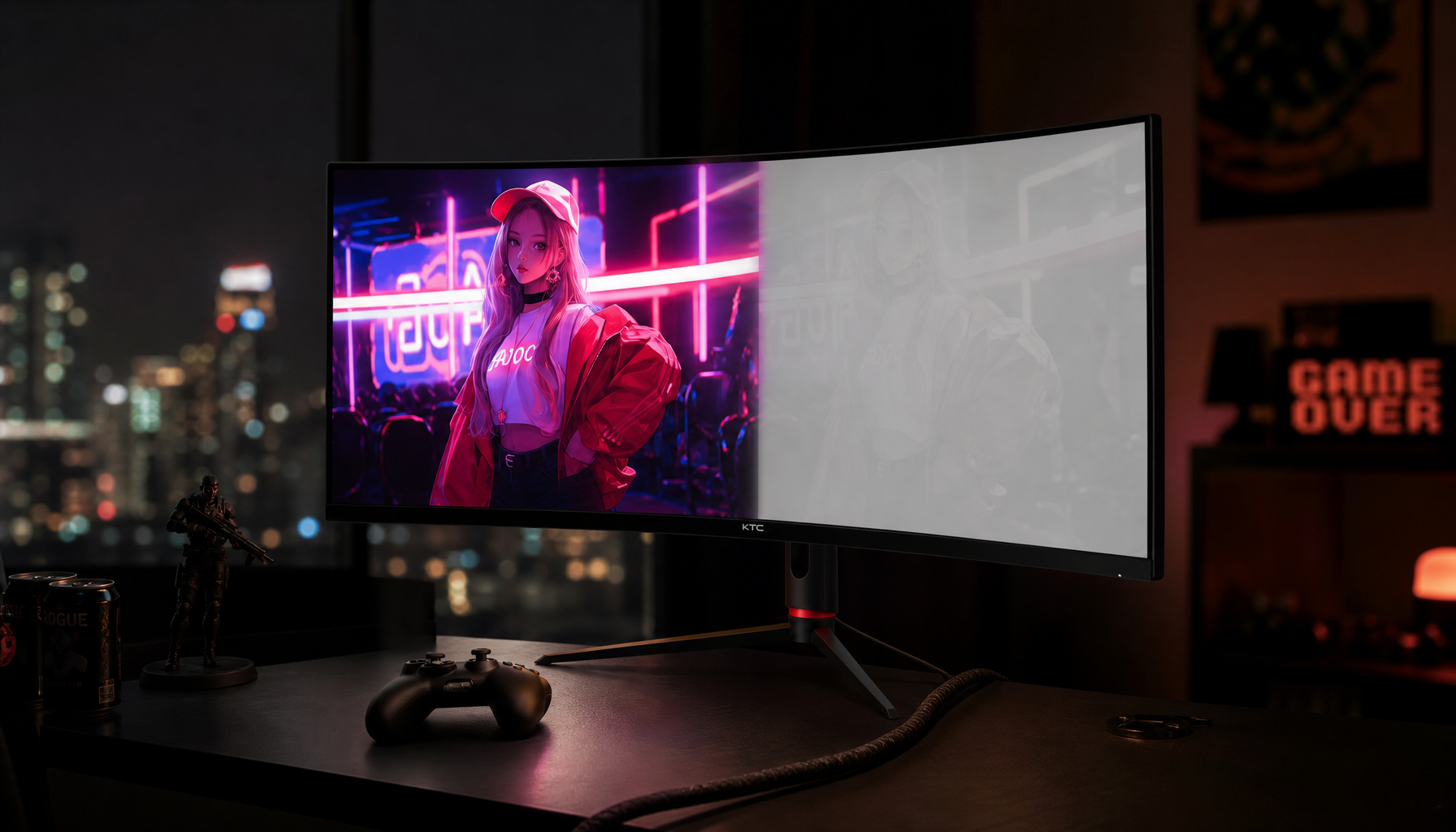
Drop that same 1440p monitor to 1920 x 1080, and the math no longer lines up cleanly. The monitor or graphics processor has to scale the 1080p image upward, estimating how each source pixel should spread across the panel.

That estimate is why edges can look smeared, small text can look less crisp, and thin UI elements may appear uneven. You are not damaging the monitor; you are feeding it a lower-detail signal than the panel was built to show.
What You’ll Notice First
The most obvious hit is sharpness. Games may still look playable, especially in motion, but menus, HUD text, crosshairs, spreadsheets, browser tabs, and code editors tend to reveal softness quickly.
Pixel density also matters. A lower resolution on a smaller portable screen may look acceptable, while the same setting on a large desktop display can look visibly coarse because pixels are spread over more screen area. More pixels generally support clearer detail and workspace, but resolution should still be balanced with screen size, refresh rate, and hardware capability, not chosen in isolation from the visual experience.

Aspect ratio is the second issue. Scaling 1920 x 1080 to a 2560 x 1440 panel keeps the same 16:9 shape, so it looks soft but not distorted. Scaling a 5:4 or 16:10 source to a 16:9 screen can add black bars or stretch shapes unless the display preserves aspect ratio.

Some monitors and graphics processors scale better than others, so blur can range from barely noticeable in video to unacceptable for text-heavy work.
Gaming: Performance Gain, Clarity Trade-Off
For gaming, lowering resolution reduces the number of pixels your graphics processor must render. Moving from 2560 x 1440 to 1920 x 1080 cuts the rendered pixel load from about 3.69 million to 2.07 million pixels, a drop of roughly 44%.
That can mean higher frame rates, lower latency pressure, or more room for demanding graphics settings. It is a practical move when a system cannot hold a stable refresh target.
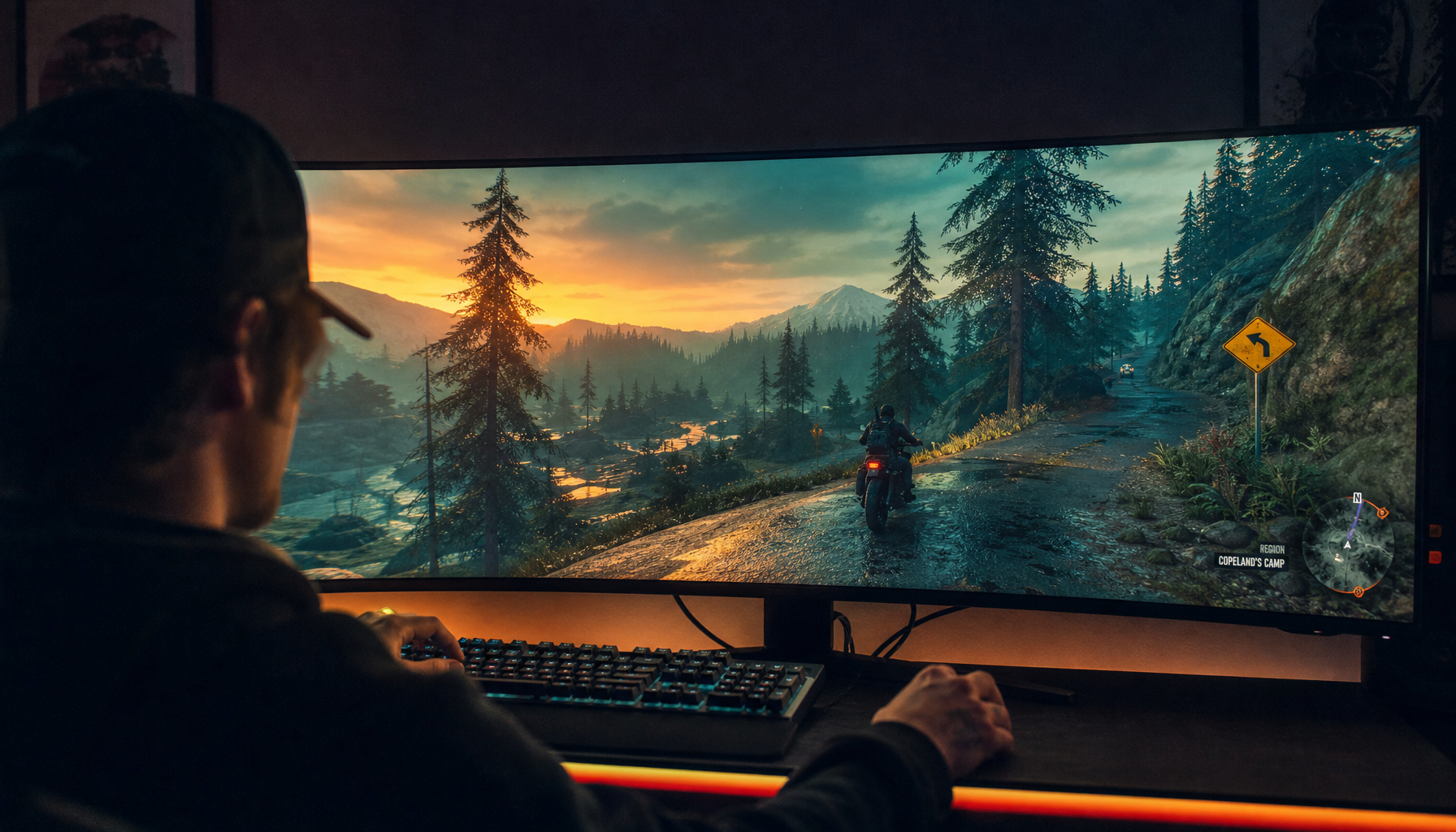
The trade-off is visibility. In competitive shooters, lower resolution can make distant targets, fine textures, and small UI elements less defined. In cinematic games, the softness may be less distracting if motion, anti-aliasing, and built-in upscaling are tuned well.
Quick decision points:
- Use native resolution for desktop work, reading, editing, and design.
- Lower resolution for games only when frame rate matters more than clarity.
- Prefer in-game render scaling or built-in upscaling when available.
- Keep the monitor’s aspect ratio matched to avoid distortion.
- Test sharpness with text, not just video or gameplay.
Better Ways to Reduce Strain Without Blurring
If the reason you lowered resolution is that everything looks too small, use operating system scaling instead. Most systems let you change both resolution and layout scaling in display settings, so you can keep native sharpness while making text and interface elements larger.

For office productivity, that is almost always the better value. A 4K monitor at native resolution with 150% scaling typically looks much cleaner than forcing it to 1080p.
For portable smart screens, native resolution is especially important because smaller panels are often used close to your eyes. Keep native resolution, then adjust scaling, brightness, contrast, and font size for comfort.
For gaming monitors, tune performance in this order: lower heavy graphics settings, enable smart upscaling, adjust render scale, then reduce output resolution only if needed. Native resolution remains the clarity baseline; dropping below it is a performance tool, not an image-quality upgrade.