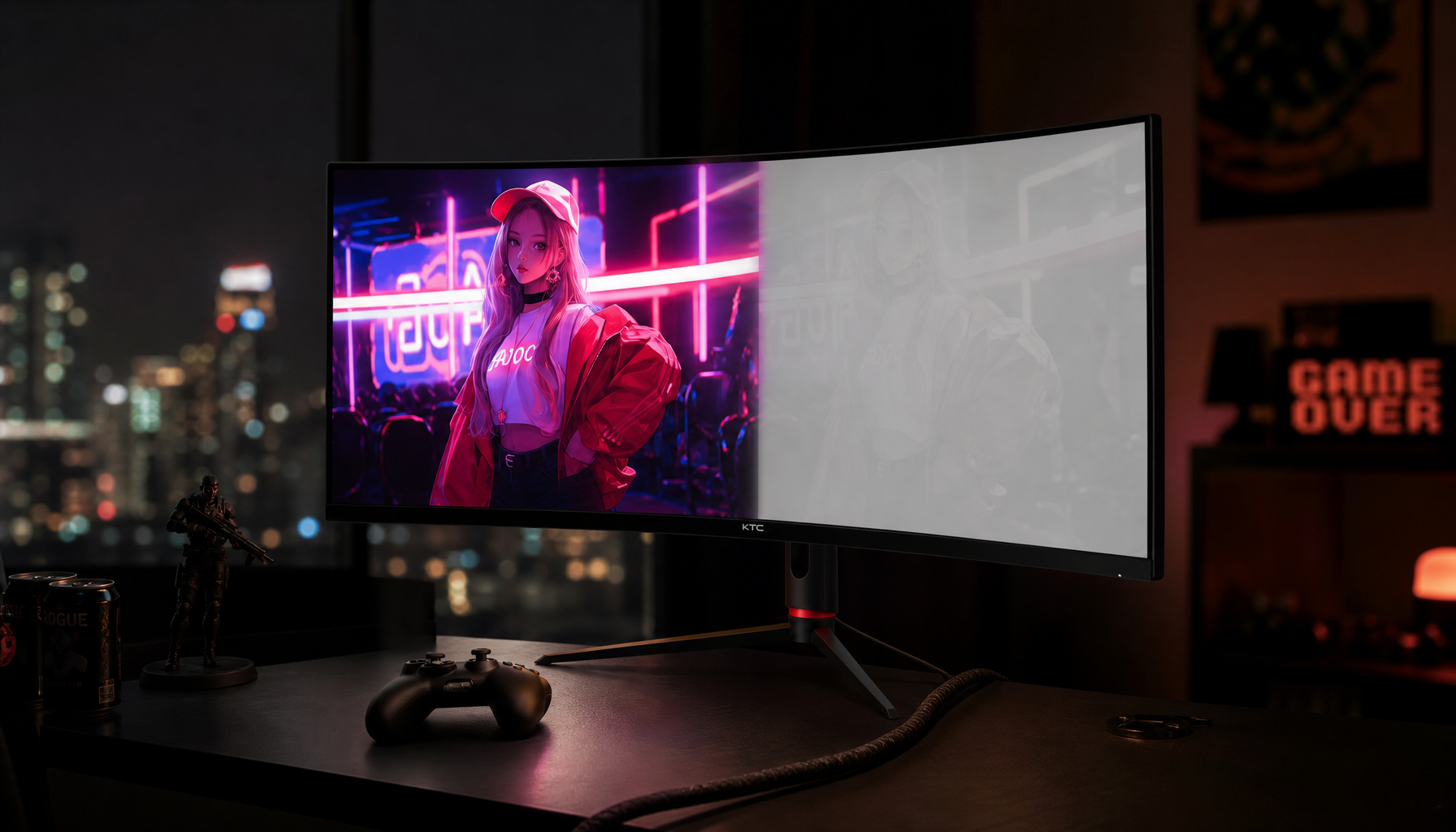
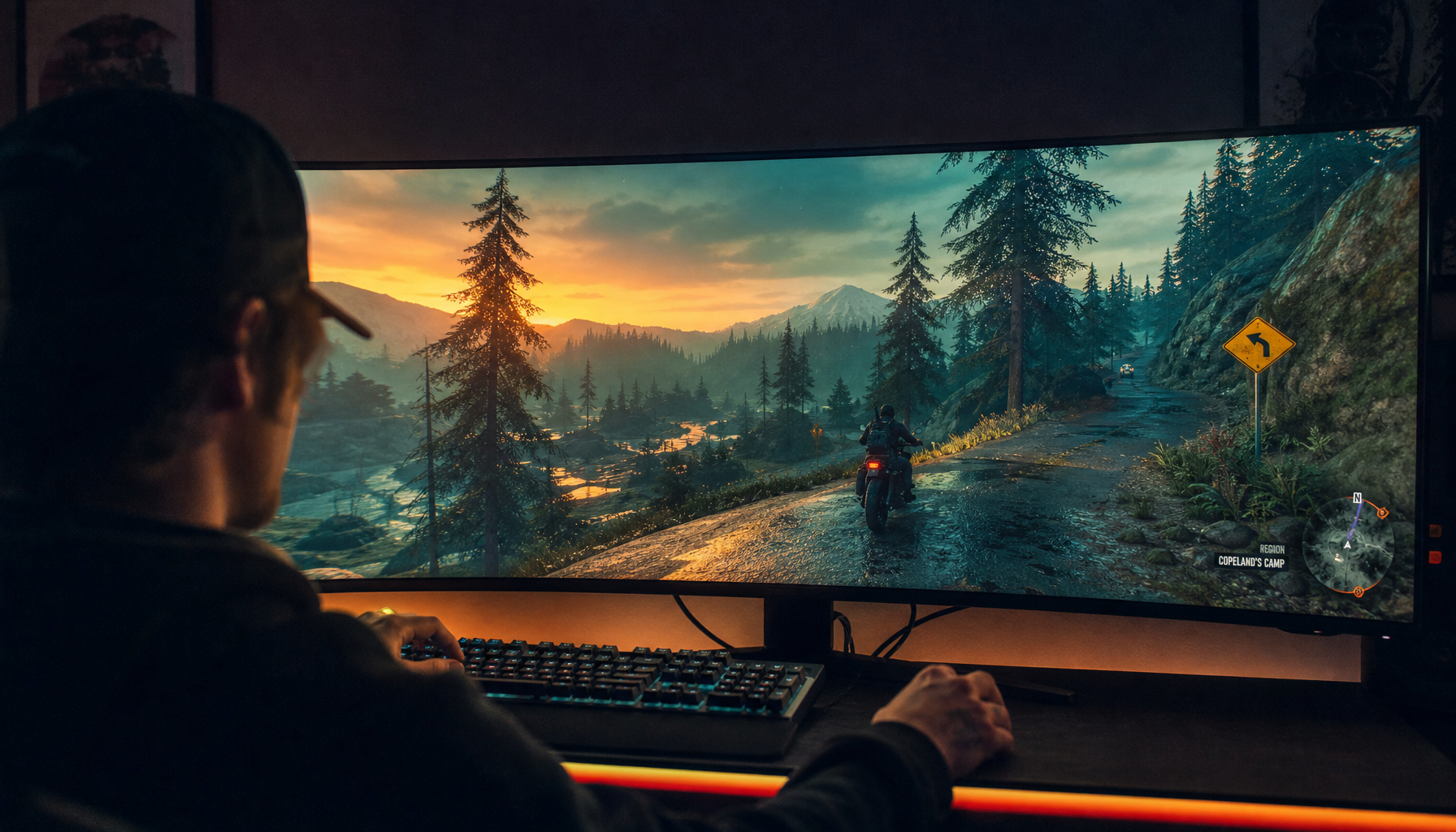
Brightness changes how clearly your eyes separate moving edges, shadow detail, and glare. That can make the same monitor feel faster or slower even when its rated response time stays the same.
Do fast games look oddly smeared in daylight, or does desktop motion feel harsher after you crank your monitor to full brightness? This happens often because many monitors ship far brighter than most rooms need, and a small brightness adjustment can improve both comfort and motion clarity. The goal is to tune brightness so the screen feels more responsive, not just more intense.
Measured Brightness Changes What Your Eyes Can Track
A monitor’s brightness rating is usually expressed in nits, and screen luminance in nits measures light output rather than motion speed itself. That distinction matters because response time is a panel behavior, while perceived response time is what your eyes and brain conclude when moving objects, text, or enemy outlines move across the screen. If the image is easier to separate from reflections, gray haze, or crushed shadow detail, motion tends to look cleaner and faster.
In practice, brightness affects the visual contrast your eyes work with from moment to moment. One calibration discussion notes that brightness changes how dark black areas appear, while contrast changes how bright white areas appear. That means brightness is not just a comfort slider; it also affects black level and, therefore, the edge definition of moving objects. When edge definition improves, pixel transitions are easier to notice as distinct steps instead of a soft trail.
This is why two monitors with similar rated response times can feel different in daily use. One may stay readable in a bright room, while the other washes out against ambient light. The weaker image often gets blamed for “slow pixels,” when the bigger issue is that glare and low scene separation are hiding motion detail.
Why a Dim or Overbright Screen Can Feel Slower
Too Dim in a Bright Room
In bright rooms, ambient light strongly affects visibility, and that directly changes how motion is perceived. If your monitor is too dim relative to daylight, overhead lighting, or a window behind you, dark game scenes and moving UI edges lose definition. Motion can look muddy because your eyes are fighting reflections and low contrast at the same time.
A simple example is a tactical shooter setup near a window in the afternoon. If enemy movement starts in a dark doorway, insufficient effective brightness can make that doorway look flat and gray. The panel did not suddenly become slower, but your detection time increases, and that feels exactly like slower response.

Too Bright in a Normal Room
The opposite problem is just as common. Most monitors ship with brightness at 100%, which works on a showroom wall but is often excessive on a desk. During long gaming or office sessions, excess brightness can increase fatigue, make white-heavy scenes harsh, and reduce your tolerance for fine motion detail. When your eyes are strained, even normal scrolling or camera panning can feel rougher than they should.

There is also a picture-quality penalty if you push settings without checking the image. The same calibration guidance warns that lowering brightness too far can crush dark gray detail into black, while poor contrast settings can clip brighter tones. Both problems remove visual information from moving scenes. Missing shadow detail makes dark motion disappear, and clipped highlights make bright motion blend together. Neither changes the advertised response-time number, but both can make the display feel less precise.
Brightness, Contrast, and Fast Feel Work Together
Brightness alone does not determine display quality. The viewing experience also depends on ambient light and contrast. For perceived response time, contrast matters because motion is easiest to follow when the display preserves separation between dark and bright regions during movement.
That is why a moderate-brightness monitor with solid contrast can feel more responsive than a brighter monitor with a flatter image. Some business-monitor roundups include models around 300 to 400 nits with anti-glare treatment and balanced contrast for everyday work, showing that practical responsiveness is not just about chasing the highest nit number. On office screens, crisp text while scrolling usually comes from enough brightness for the room, decent contrast, and controlled reflections rather than extreme peak luminance.
The same principle applies in gaming. Some gaming advice recommends features such as Black Equalizer or Shadow Boost because they brighten dark regions without blasting the whole panel. That matters because selective visibility improvement helps you track motion in low-contrast areas more effectively than raising overall brightness until the entire image becomes harsh.
Measured Brightness Is Not the Same as the Right Brightness Setting
A common mistake is confusing a monitor’s capability with your ideal operating point. Even if a panel can reach a high peak, you may not want to use it there all day. Recommended target brightness for a standard room is often around 120 to 150 nits, which on many monitors lands somewhere near 30% to 50% in the on-screen display. That range is far more useful for perceived speed than a maximum-brightness brag number if your real environment is a normal bedroom, office, or studio.
Portable screens are a good example of how context changes the answer. Some guidance notes that portable monitors often need higher brightness in bright environments, especially when fighting sunlight and glare. A portable display that feels perfectly responsive at night in a hotel room may look dull and slow near a cafe window unless you raise brightness enough to recover image separation.
How to Tune Brightness So Motion Looks Cleaner
If you want the screen to feel faster, start by matching the display to the room rather than chasing the panel’s maximum. One practical rule is that if the screen looks much brighter than the wall behind it, it is probably too bright. If it looks weaker than the reflections on its surface, it is probably too dim for that space.
You can also measure instead of guessing. A phone-based app for approximate screen luminance can provide a quick estimate of screen brightness, and the notes say direct, perpendicular measurement works best when you keep the device very close to the panel. It is not a replacement for a colorimeter, but it is useful for consistency if you are comparing a gaming setup, an office display, and a portable screen.
Glare control is part of the same performance chain. The monitor light bars with asymmetrical lighting reduce screen glare instead of spilling light onto the panel. That matters because reducing reflections often improves perceived motion more effectively than adding raw brightness. In other words, a cleaner light path can make the monitor feel faster without changing the response-time spec.

For office displays, current business-monitor recommendations reinforce a practical range: many strong work monitors sit around 300 to 400 nits and focus on anti-glare coatings, ergonomics, and readable contrast. That is a reminder that usable visual speed depends on balance, not excess.
Where the Sweet Spot Usually Lands
For most indoor gaming and productivity setups, the sweet spot is rarely the maximum setting. It is the point where dark scenes still hold detail, bright areas do not feel punishing, and reflections no longer compete with the content. In many rooms, that means a calibrated SDR-style brightness closer to the middle of the range than the top. For bright offices, desks near daylight, and portable use, the right answer can move upward, but only until visibility improves without making the image harsh.
When your monitor’s measured brightness matches the room, moving objects gain cleaner edges, shadow motion becomes easier to detect, and eye fatigue drops. That is why brightness affects perceived response time so strongly: panel speed is only half the story, and visual clarity finishes the job.