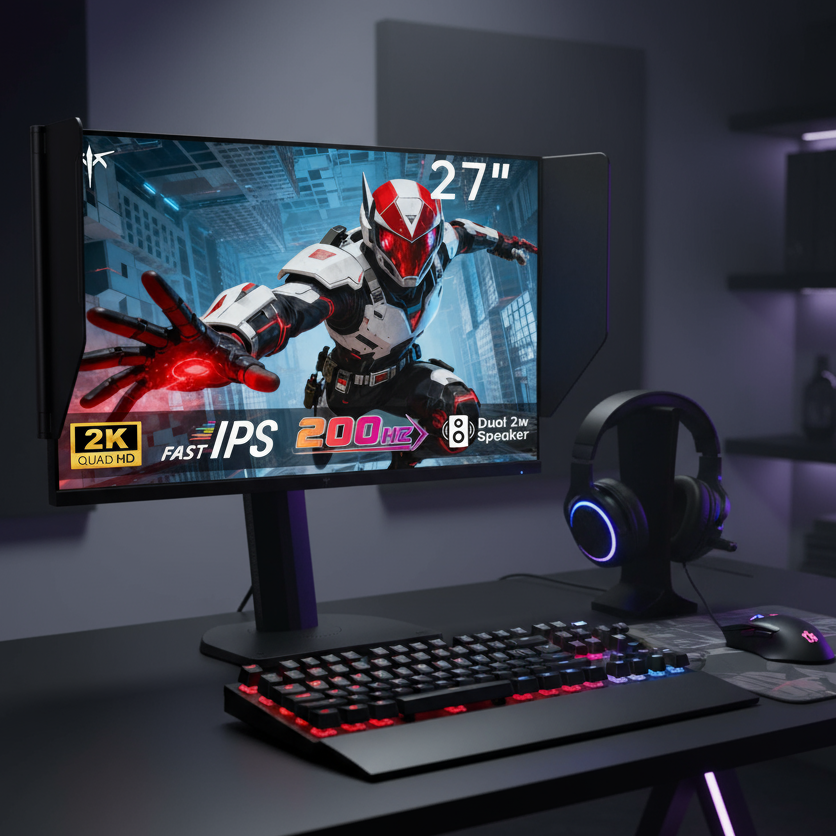
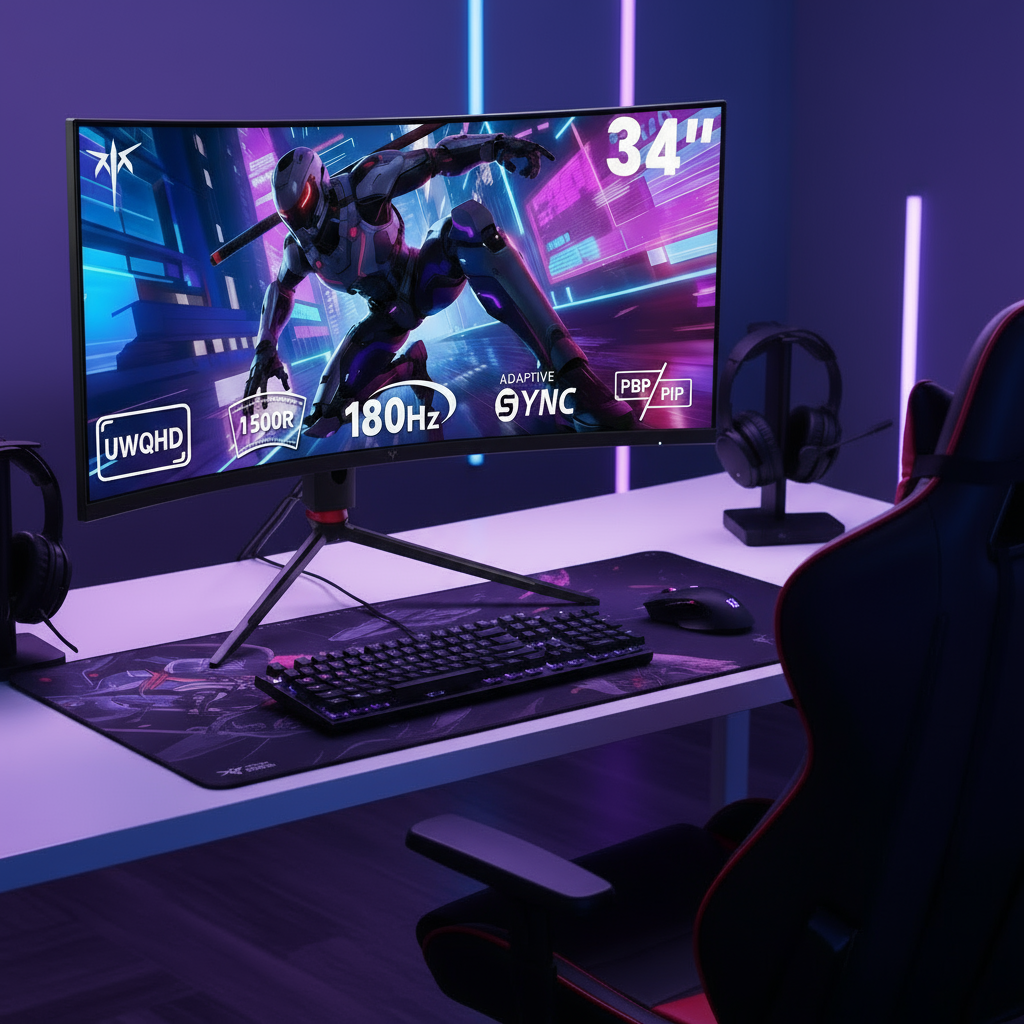




Response time affects how cleanly motion appears when you scroll, drag windows, scrub timelines, or track fast-moving dashboards. For most office work, it matters less than sharp resolution, steady refresh, ergonomic adjustability, and reliable connectivity.
Why Response Time Still Matters at Work
Response time describes how quickly pixels change from one shade to another. In office use, slow pixel transitions can appear as smearing behind text while scrolling, faint trails when moving windows, or blur in video calls and training clips.

That does not mean every spreadsheet user needs a 1 ms esports panel. The real productivity benefit is visual stability: when text stays readable during motion, your eyes do less recovery work between actions.
Many modern work displays now pair office features with smoother motion specs. Business monitor roundups increasingly include models with 100 Hz, 120 Hz, or higher refresh rates because smoother movement supports daily tasks like scrolling, multitasking, and conferencing in business monitor roundups.
The Sweet Spot for Non-Gaming Productivity
For standard office work, a 4 ms to 8 ms rated response time is usually fine when the panel is well tuned. The bigger difference is whether the monitor avoids obvious ghosting, overshoot, flicker, and harsh motion artifacts.
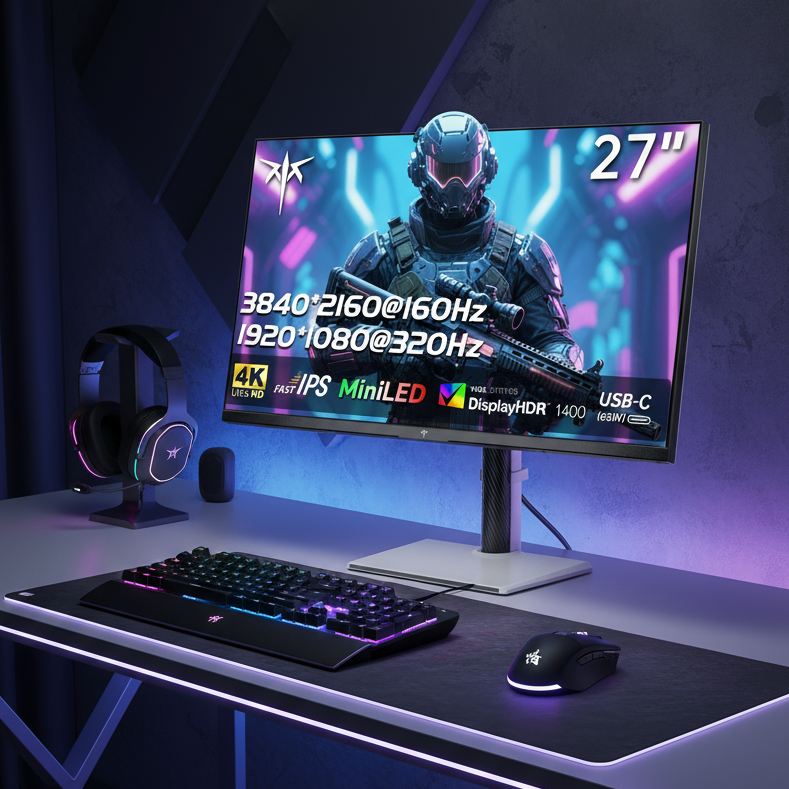
A practical target is QHD or 4K resolution, 75 Hz to 120 Hz refresh, low-smear pixel behavior, and comfortable brightness control. That combination feels more responsive without pushing you into gamer-first hardware you may not need.
Resolution still carries more day-long value than response time alone. A 4K monitor has about 2.25 times as many pixels as QHD, which can make text and fine UI details easier to read in productivity workflows.
Where Faster Pixels Actually Help
Response time matters most when your non-gaming work includes motion or constant navigation. Think of a financial analyst scanning live charts, a developer scrolling long code files, or a video editor dragging through a timeline.

It also helps in multi-monitor setups. When you move windows between screens, compare documents, or keep dashboards visible beside your main workspace, cleaner motion reduces the visual lag that makes a setup feel less precise.

Multiple displays can improve productivity by keeping apps visible and reducing window switching, especially for development, finance, creative, and technical roles in multi-monitor workflows. Faster response time will not create that productivity gain by itself, but it can make the expanded workspace feel more fluid.
What to Prioritize Before Chasing 1 ms
A monitor with fast response time but poor text clarity, weak ergonomics, or bad scaling can still slow you down. Productivity is a system, not a single spec.
Use this buying order for non-gaming work:
- Choose the right size: 27 inches is a strong baseline for multitasking.
- Choose sharp resolution: QHD for value, 4K for clarity-heavy work.
- Check refresh rate: 75 Hz to 120 Hz is a meaningful office upgrade.
- Confirm ergonomics: height, tilt, swivel, and pivot matter daily.
- Look for USB-C: one-cable video, data, and charging can simplify desks.

You should also run the monitor at its native or recommended resolution because incorrect scaling can make text less sharp in display settings.
The Bottom Line
For non-gaming productivity, response time is a comfort and clarity enhancer, not the headline feature. A reliable 4 ms to 8 ms office monitor can feel excellent if it has sharp resolution, smooth refresh, good ergonomics, and clean motion tuning.
Choose ultra-fast response only if your work involves constant motion: video editing, dashboards, coding, design timelines, or heavy multi-screen navigation. Otherwise, spend first on the specs that stay visible all day: resolution, panel quality, adjustability, and connectivity.