


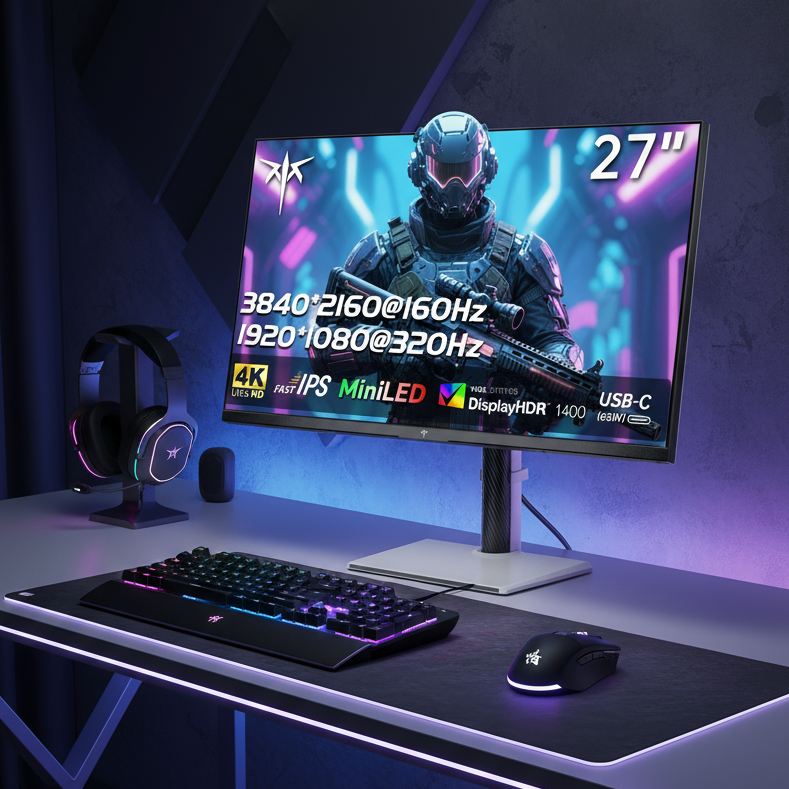
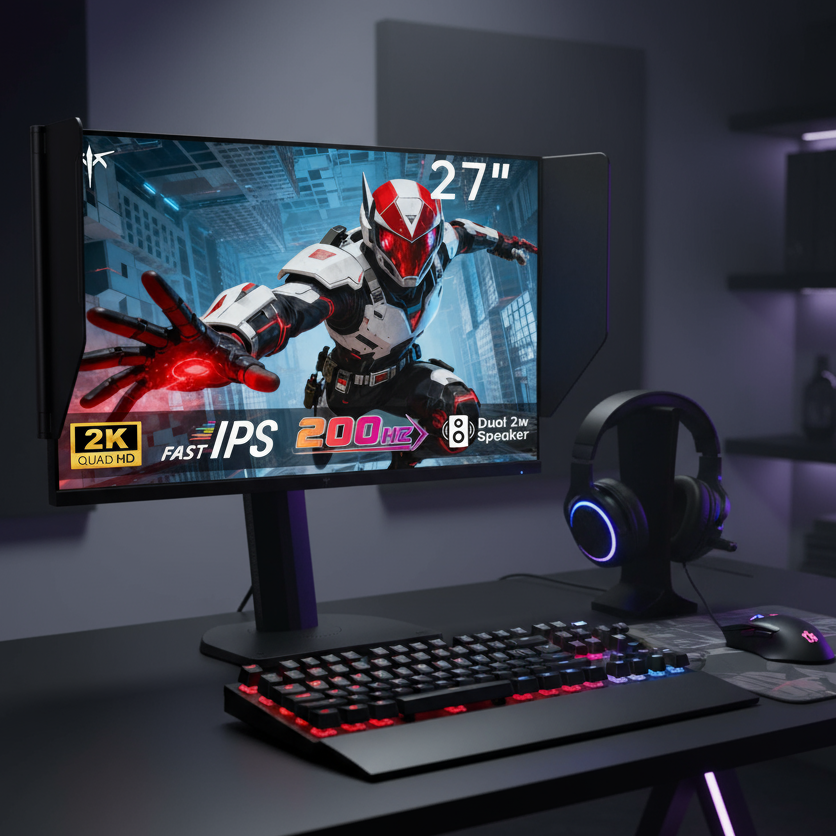
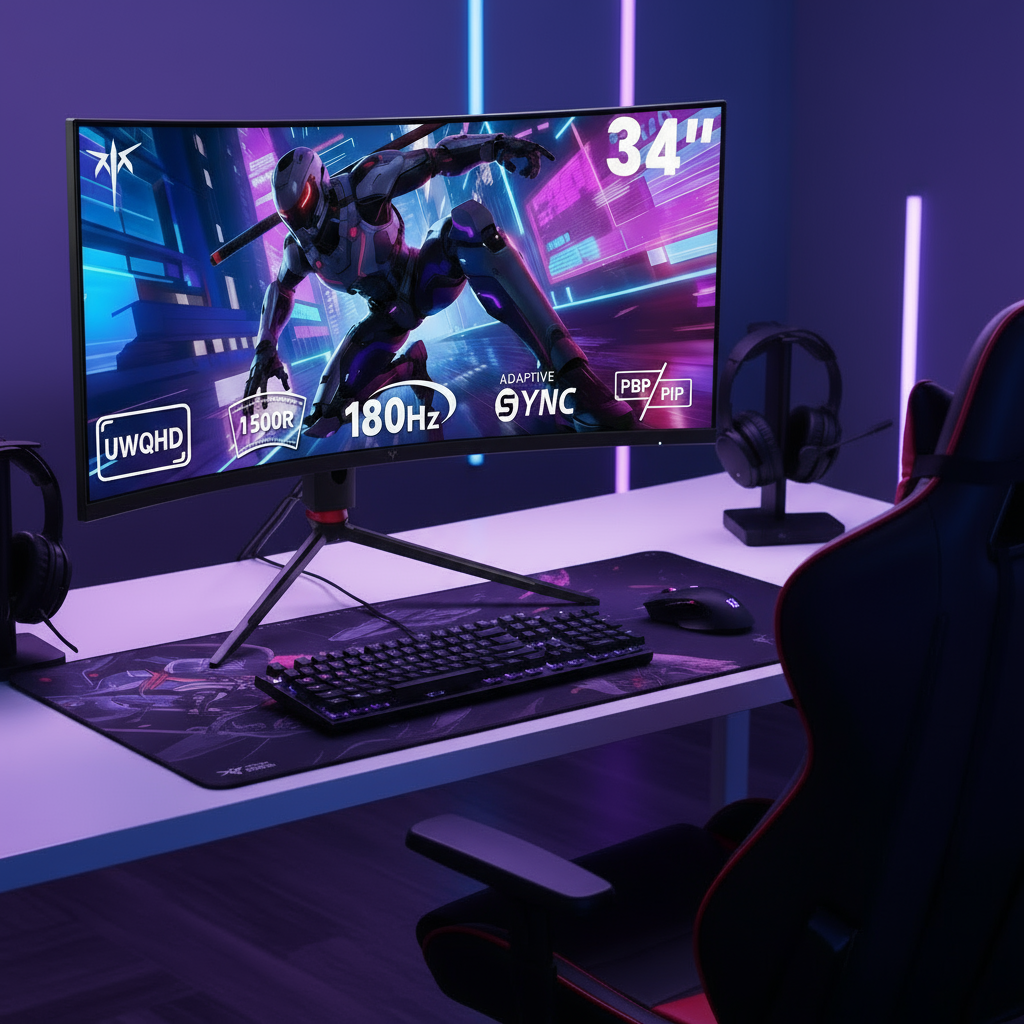


Ambient light does not change a panel’s native black capability, but it can make black areas look gray, hazy, purple, or mirror-like depending on coating, panel type, and light placement.
Are dark scenes on your expensive OLED turning gray the moment a desk lamp comes on? Controlled 0 to 500 lux testing shows that black depth can collapse differently across WOLED, QD-OLED, VA, IPS, glossy, and matte finishes. Here is how to choose and set up a screen so the blacks you paid for actually survive your room.
Why Reflections Raise “Black” Before the Panel Fails
Perceived black level is what your eyes see after the display image mixes with room light bouncing off the screen surface. In display science, ambient contrast ratio describes contrast under surrounding light, and it depends on emitted brightness, off-state brightness, ambient light level, and surface reflectance.
That matters because most contrast specs are measured in ideal conditions. A contact meter against a black test screen may show an OLED pixel switching fully off, but a real viewer sits several feet away in a room with windows, lamps, walls, clothing, keyboard LEDs, and overhead fixtures. Controlled testing on OLED black depth makes this practical point clear: real black perception depends on panel type, coating, light-source position, and viewing setup, not just the published contrast ratio.
A simple desk example explains it. If a glossy OLED faces a dark wall and the light is behind the monitor, black game scenes can look dense and cinematic. Move the same screen opposite a bright window, and the black scene may become a mirror. A matte IPS monitor in that same window-facing setup may not look as punchy, but the reflection is spread out instead of appearing as a sharp rectangle across the image.
Glossy Coatings: Best Blacks, Worst Reflections
Glossy coatings reflect light more directly, so less ambient light is scattered across the whole image. That is why glossy screens often look clearer, sharper, and deeper in controlled rooms. Glossy displays can deliver stronger color vibrancy, higher contrast, sharper detail, deeper blacks, and brighter whites when reflections are managed.
The weakness is precision glare. A lamp, window, white shirt, or bright wall behind you can appear as a hard reflection in dark content. In a stealth game, that reflection can hide an enemy in a shadow. In a photo-editing workflow, it can trick you into lifting shadows too much. In a portable smart screen at an airport gate, glossy can become unusable if ceiling lights sit at the wrong angle.

The practical rule is direct and unforgiving: glossy is a performance finish for controlled light, not a magic finish for every room. It is excellent for a single-player OLED setup, a dark gaming room, a console display, or a creator desk where blinds and lamp placement are part of the workstation.
Matte Coatings: Cleaner Workday Visibility, Higher Haze
Matte coatings diffuse reflections. Instead of showing a crisp window or lamp shape, the coating spreads incoming light across a wider area. That improves usability in bright offices, shared spaces, and travel setups, but it can raise the perceived black floor by laying a faint haze over dark areas.

Eye-fatigue guidance often favors reducing glare and reflections for regular PC work, and that matches real desk experience. A matte productivity monitor may not give you the deepest movie-night blacks, but it is usually easier to stare at for spreadsheets, code, email, and dashboards under mixed lighting.
The tradeoff becomes obvious on dark UI themes. A heavy matte coating can make black sidebars look charcoal instead of black, and on some high-pixel-density displays it can add a faint grain to white documents or gray tool panels. For office productivity, that is often acceptable. For HDR gaming or color-rich media, it can feel like the screen has a thin film over it.
Semi-Glossy and Light Matte: The Balanced Middle
Semi-glossy is not a panel technology. It is a coating behavior, usually closer to light matte or low-haze anti-glare. The appeal is balance: less mirror effect than glossy, more perceived contrast and sharpness than heavy matte.
This is often the most reliable choice for mixed-use setups. A 27-inch 4K work-and-game monitor in a room with one side window benefits from some reflection control, but heavy matte haze may soften text and reduce visual punch. A semi-glossy or light matte surface gives you fewer hard reflections while keeping UI edges, HDR highlights, and dark-game detail more intact.
The caution is labeling. “Semi-glossy” can mean different things by model. The best quick test is to turn the monitor off and look at a lamp reflection. If the lamp is crisp, the screen behaves glossy. If the lamp is softened but still visible, it behaves semi-glossy. If the lamp becomes a broad glow, it behaves matte or heavy matte.
Panel Type Still Matters, But Coating Can Override Expectations
OLED is famous for black depth because self-emissive pixels can shut off. IPS is known for stable viewing angles and color work. VA typically has stronger native contrast than common IPS. But ambient reflection can reorder the real-world ranking.
Controlled testing found that QD-OLED loses perceived black depth faster than WOLED as ambient light rises, partly because QD-OLED designs can scatter external light back toward the viewer. Testing also showed that VA LCDs can look deeper than some QD-OLEDs in moderately bright rooms, even though OLED dominates in ideal dark-room contrast.
That does not make VA better than OLED overall. It means the environment can punish the theoretically superior display. A QD-OLED on a bright desk may show grayish or purplish blacks, while a VA monitor with a suitable coating may hold a more stable dark appearance for productivity and SDR gaming. In HDR, the OLED can still pull ahead because bright highlights and pixel-level control raise perceived contrast where it counts.
Coating |
Best Environment |
Black-Level Behavior |
Main Tradeoff |
Glossy |
Dim gaming room, controlled creator desk |
Deepest perceived blacks when reflections are blocked |
Sharp mirror reflections |
Semi-glossy |
Mixed gaming and productivity room |
Strong contrast with moderate glare control |
Inconsistent by model |
Light matte |
Office, coding, ultrawide desk |
Stable visibility with limited haze |
Less image pop than glossy |
Heavy matte |
Bright office, travel, window-facing desk |
Reduces obvious glare |
Can lift blacks and soften fine detail |
Brightness Helps, But It Cannot Fully Beat Reflection
Raising brightness can improve image visibility, but it is not the same as preserving black. A brighter white point can increase perceived contrast in a bright room, yet the black floor still rises when ambient light reflects off the surface.
Research on micro-LED and mini-LED displays identifies brightness as a major factor in high ambient contrast, but it also highlights reflection suppression, anti-reflection coatings, and structural optimization as key strategies. That is important for buyers because simply chasing nits can increase power use, heat, and cost without solving glare.
For productivity, sustained brightness matters more than peak brightness. KTC’s brightness guidance notes that sustained brightness is the practical metric for documents, dashboards, portable monitors, and bright full-screen work. A glossy 500-nit portable display can still lose to a matte 400-nit screen if reflections dominate the view.
Practical Setup: Control the Light Path
The fastest improvement is not a new monitor. It is moving light out of the reflection path. If you can see a lamp, window, or bright wall reflected in a black screen while the monitor is off, that same object will lift blacks during use.
Place strong lights beside or behind the display rather than behind your chair. Use blinds on windows facing the screen. For glossy OLED, bias lighting behind the monitor can reduce eye strain while keeping direct reflections away from the panel. For large ultrawides and multi-monitor rigs, remember that more screen area catches more room light, so a light matte finish can be more practical than maximum gloss.

For office comfort, match screen brightness to the room instead of leaving it at factory default. A common recommendation is around 100 to 150 nits in typical 300 to 500 lux offices, and a simple copy-paper comparison works well: open a white document and adjust the screen until it feels close to a sheet of white paper under the same lighting.
Buying Guidance by Use Case
For competitive gaming, choose usable shadow visibility over showroom contrast. Matte or light matte can be the better weapon in a bright room because it prevents reflections from masking corners, enemies, and HUD elements. A glossy display only wins if the room is controlled enough that reflections do not compete with the game.
For cinematic OLED and HDR gaming, glossy or semi-glossy makes sense when you can control light. A WOLED with careful lamp placement can deliver the deep, saturated look people expect from premium OLED. QD-OLED remains excellent for color and HDR impact, but it deserves extra attention to room lighting.

For office productivity, coding, and spreadsheets, matte or light matte is usually the dependable choice. Monitor guidance often recommends matching brightness and color needs to the actual environment rather than chasing one headline spec.
For portable smart screens, lean matte or semi-glossy. Hotels, cafes, airports, client offices, and shared desks are uncontrolled spaces. The best portable screen is the one that remains readable when the lighting is not yours to fix.
Final Word
The best black level is not always the lowest number in a lab. It is the coating, panel, brightness behavior, and room setup that keep dark detail visible where you actually play, work, edit, and travel. Control reflections first, then choose the panel that matches your performance target.


