Peak brightness shows how bright a display can get in brief highlights; sustained brightness shows how bright it can stay during real use without dimming, overheating, or draining power too quickly.
Ever bought a “1,000-nit” screen that looked explosive in a demo but oddly flat during a long work session, full-screen spreadsheet, or bright game map? Separating peak from sustained brightness gives you a testable buying advantage: you can predict whether a monitor will only sparkle in highlights or actually hold clarity across a full desktop, video timeline, or portable second-screen setup. You’ll leave with a practical way to read display specs before spending on a gaming monitor, office display, or travel screen.
Peak Brightness vs Sustained Brightness: The Plain Difference
A nit is a unit of screen luminance, and one nit equals one candela per square meter, which is why monitor specs often list nits and cd/m² interchangeably. That number matters because it describes light coming from the screen surface, not total light output like a projector’s lumens.
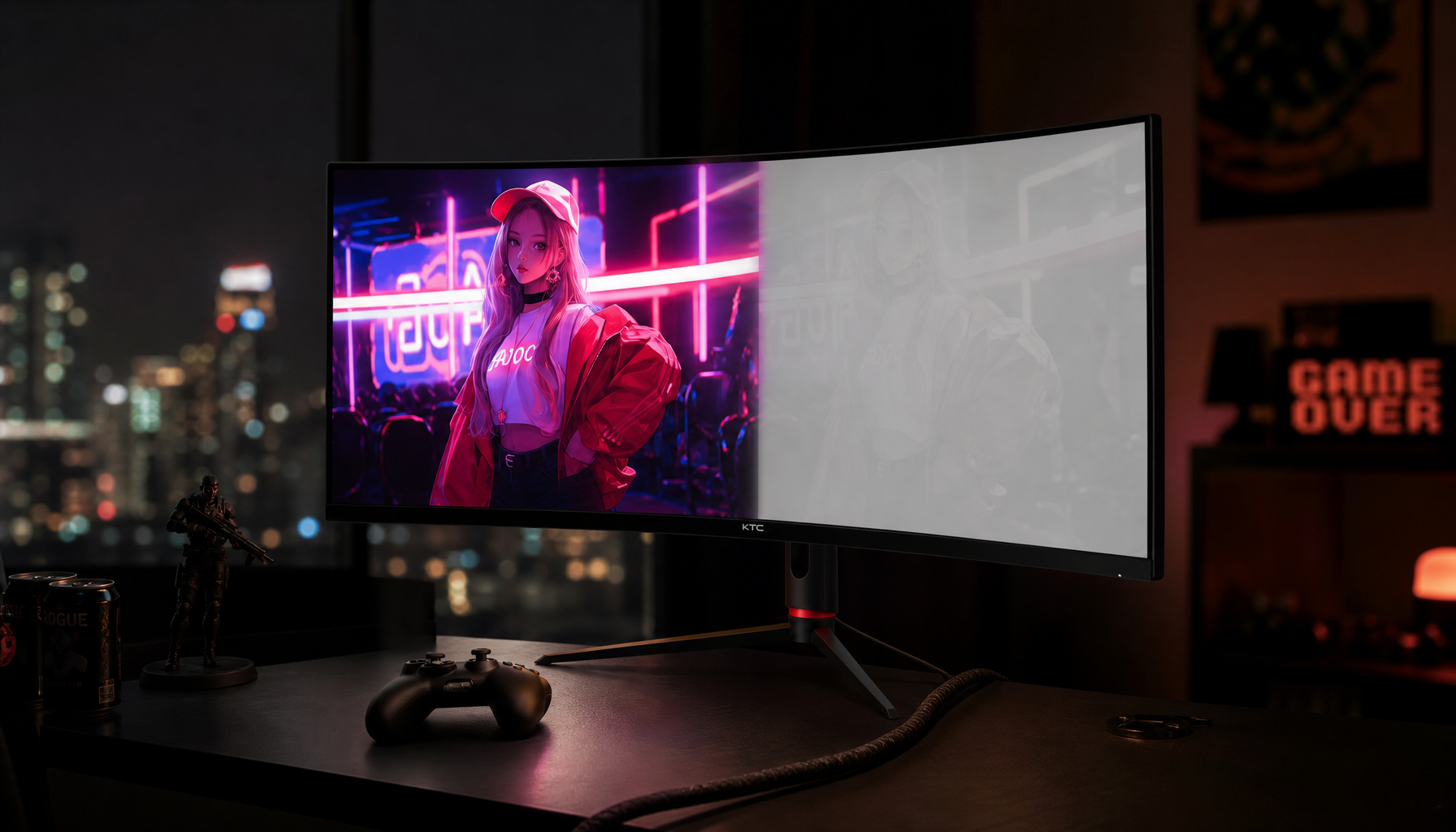
Peak brightness is the display’s highest short-term output, usually measured on a small bright area. Think of sunlight glinting off armor in a game, a muzzle flash in an HDR scene, a white cursor over a dark canvas, or a small specular reflection in a movie. Peak brightness is about punch, highlight detail, and perceived HDR impact.

Sustained brightness is the level a display can hold over a larger area or longer period. In real monitor use, this is the number that affects an all-white document, a browser window, a productivity dashboard, a full-screen snowy game scene, or a portable monitor used beside a window. It is less glamorous than peak brightness, but it is often more important for comfort and reliability.

Why Specs Can Look Better Than the Screen Feels
Brightness claims depend heavily on test method. TV brightness testing often separates peak and full-screen measurements, using a small 10% white window for peak brightness and a 100% white pattern for full-screen brightness. That distinction maps cleanly to monitor buying: a display can look impressive with a small bright patch yet become much dimmer when the entire panel is bright.
The gap exists because displays have power budgets and thermal limits. OLED panels often dim large bright areas to manage heat and image retention risk. Mini-LED LCD monitors can drive small zones very hard, but a large white desktop may still be limited by backlight power, local dimming behavior, or firmware. Portable screens are even more constrained because USB-C power, battery capacity, and thin chassis cooling all reduce how long high brightness can be held.
A simple example makes the spec sheet less slippery. If a monitor advertises 1,000 nits peak but only holds 350 nits across a full white screen, HDR sparks and UI highlights may look vivid, while a full-screen document or map will feel closer to a good office monitor than a sunlight-ready display.
Which Brightness Number Matters for Gaming?
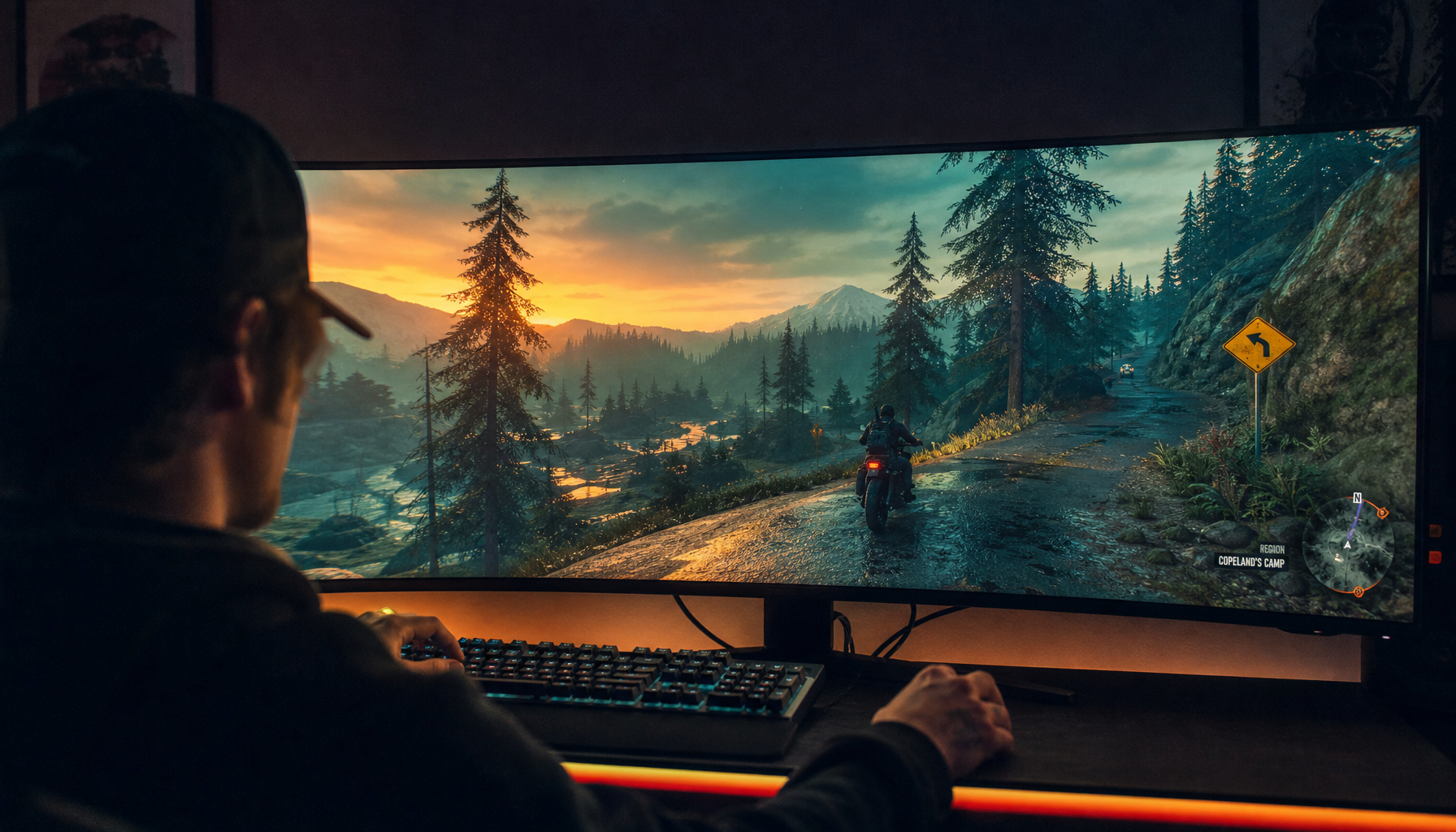
For immersive gaming, peak brightness matters when the game uses HDR well. A higher peak lets small highlights hit harder, so neon signage, explosions, reflections, and sunlight shafts feel more dimensional. HDR movies and shows are commonly mastered with highlights up to 1,000 nits, and a screen that can reach that level can show more of the intended highlight range without as much tone mapping.
For competitive gaming, sustained brightness and visibility tools matter more than raw peak. A 1,200-nit flash does not help if the screen crushes shadow detail or dims during a bright arena map. The practical target is a display that can hold enough brightness for your room while preserving contrast, motion clarity, and black-level visibility. For a desk setup in controlled lighting, a strong 300- to 500-nit sustained experience can be more useful than a brief 1,000-nit headline number.
Gaming example: in a dark RPG or tactical shooter, you may run the monitor around 140 to 180 nits for comfort, then rely on HDR peak output for torches, reflections, and effects. In a sunny room with glare, you may need more sustained brightness just to keep the whole image readable.

Which Brightness Number Matters for Office Work?
For office productivity, sustained brightness is the workhorse. Your display is often showing large bright surfaces: email, documents, white dashboards, spreadsheets, browser tabs, and design tools. A high peak rating will not help much if the screen cannot maintain comfortable full-screen luminance.

For standard indoor monitor use, 120 to 150 nits is a practical target in a normal room, while many displays reach that at roughly 30% to 50% brightness. That is why a 250- to 400-nit office monitor can be completely adequate if your lighting is controlled and the panel has decent contrast and an anti-glare coating.
The buying mistake is assuming “brighter is always better.” Too much brightness in a dim room increases fatigue, washes out perceived contrast, and can make white backgrounds feel harsh. For long work blocks, match screen brightness to the room instead of maxing the slider. If a white document looks like a light panel compared with the wall behind it, it is too bright.
Which Brightness Number Matters for Portable Screens?
Portable displays need a different reading. Their spec sheets may list 300, 400, or 500 nits, but your real experience depends on whether they can sustain that brightness from your laptop, tablet, phone, battery pack, or wall adapter. A portable monitor that can technically hit 500 nits may step down when powered from a low-output USB-C port.
For travel, bright rooms, and window-side work, laptop display guidance offers a useful parallel: 300 nits is helpful for office work, 500 nits is better for bright rooms, and higher brightness uses more battery. That same tradeoff applies to portable screens. More brightness improves readability, but it costs power and heat.
If you use a portable display in airports, cafes, coworking spaces, or client sites, sustained brightness plus anti-glare treatment should outrank a peak number. A matte 400-nit portable screen can outperform a glossier 500-nit model when reflections are the real problem.
Peak vs Sustained Brightness by Use Case
Use Case |
More Important Spec |
Practical Reading |
HDR gaming and movies |
Peak brightness |
Look for strong small-window brightness and good tone mapping. |
Competitive gaming |
Sustained brightness |
Prioritize stable visibility, contrast, and dark-scene controls. |
Office productivity |
Sustained brightness |
Comfort around 120 to 150 nits indoors often beats maximum output. |
Portable work |
Sustained brightness |
Check power behavior, glare handling, and battery impact. |
Outdoor signage or kiosks |
Sustained brightness |
High output must be held safely for long operating hours. |
The Pros and Cons of High Peak Brightness
High peak brightness gives HDR its snap. It makes highlights feel more lifelike, increases perceived contrast, and helps premium panels show why they cost more. For OLED, mini-LED, and high-end gaming monitors, this is a real advantage when paired with proper local dimming, wide color, and accurate tone mapping.
The downside is that peak brightness can be easy to overvalue. A small-window number does not guarantee a bright desktop, consistent full-screen output, or comfort during long sessions. It can also hide thermal behavior, automatic brightness limiting, and battery drain on portable devices.
The Pros and Cons of Strong Sustained Brightness
Strong sustained brightness is what keeps a screen usable in the real world. Display-brightness references note that brightness values are often reported under standardized test conditions, and vendors may separate typical and maximum brightness for sunlight-readable displays. That separation is exactly what serious buyers should look for.
The advantage is stability. A monitor with solid sustained output stays readable through long editing sessions, office work, control dashboards, and bright game scenes. The tradeoff is power and heat. Large LED display guidance ties high brightness to higher power demand and cooling needs, with power consumption rising as brightness requirements increase. The same engineering logic applies at smaller scale, even if the exact numbers differ by panel type.
How to Read Brightness Specs Before You Buy
Start by asking what the number describes. If the spec says “peak brightness,” assume it may apply to a small part of the screen for a limited moment. If it says “typical brightness,” “full-screen brightness,” “SDR brightness,” or “sustained brightness,” it is more relevant to everyday work. If the listing does not say how it was measured, treat the claim as incomplete.
Then compare brightness to your room. Most indoor display needs around 300 to 500 nits, with higher ranges for bright indoor or outdoor environments. For a home office, you rarely need maximum output all day. For a gaming display near a bright window, a stronger sustained number and anti-glare coating are worth paying for.
Finally, check reviews that measure both small-window and full-screen output. If only the manufacturer claim is available, look for clues such as HDR certification tier, SDR brightness, typical brightness, power adapter rating on portable screens, and whether reviewers mention automatic dimming.
A Practical Buying Rule
If your priority is HDR immersion, buy for peak brightness, contrast, and tone mapping together. If your priority is work, travel, coding, spreadsheets, trading dashboards, or competitive play, buy for sustained brightness, glare control, and ergonomic comfort first.
A screen is not better because it gets bright once. It is better when it delivers the right brightness, in the right area of the image, for as long as your session demands. That is the spec-reading advantage that turns display shopping from hype chasing into performance matching.