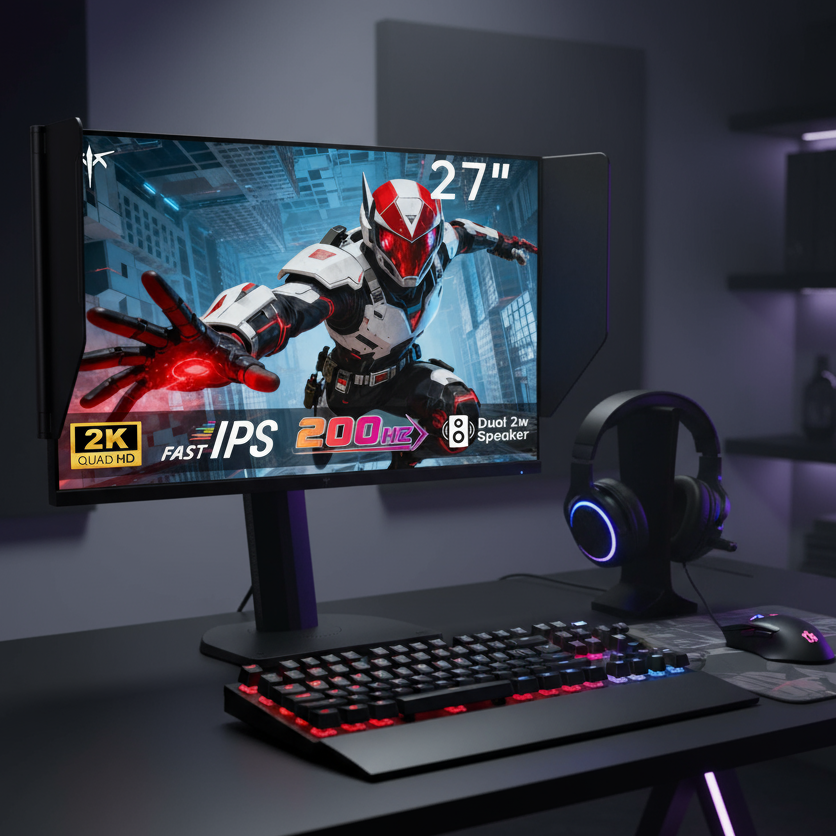
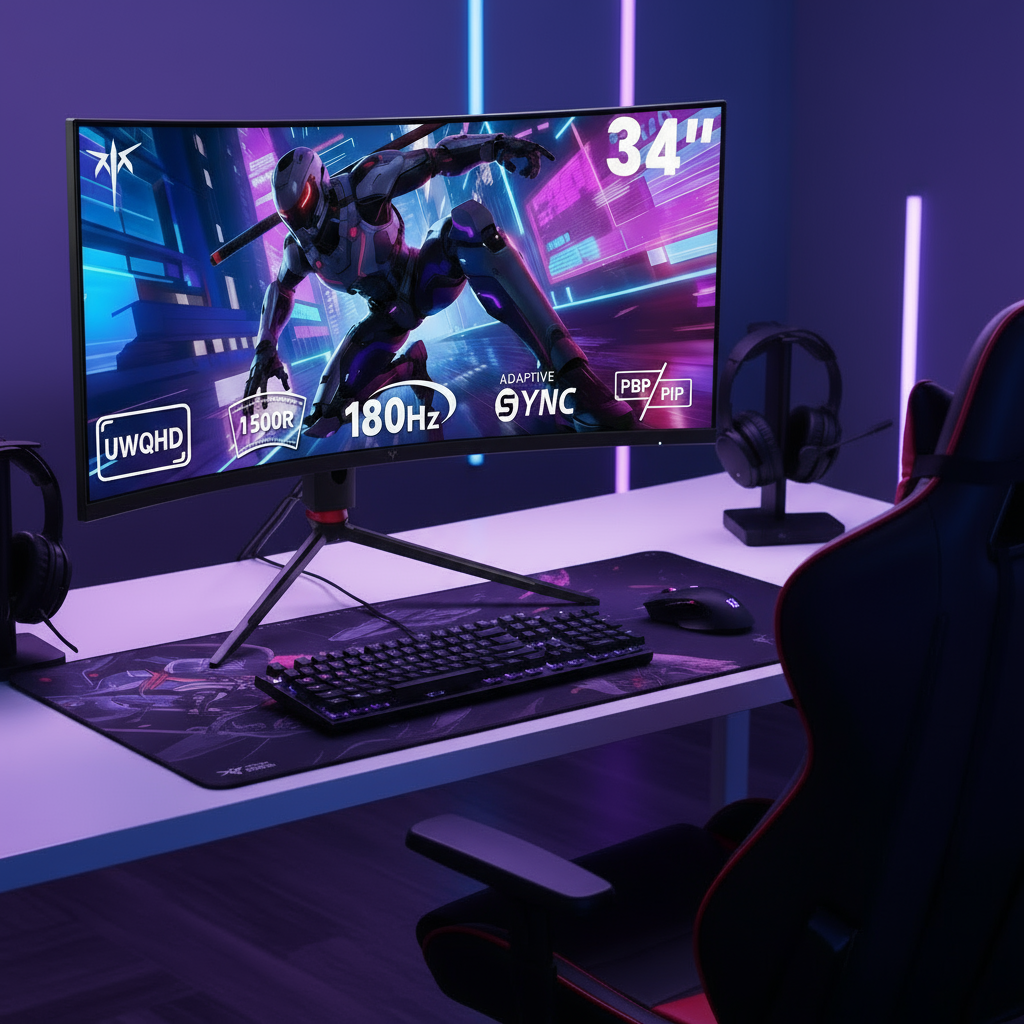


A quantum-dot layer makes an IPS or VA LCD look brighter, more saturated, and better suited to HDR. It improves the backlight, but it does not change the panel’s core behavior.
It upgrades the backlight, not the panel type
Most QD or QLED monitors are still LCDs. The quantum-dot layer improves the quality of the light source before that light passes through the LCD stack.

That matters because narrow emission bandwidths reduce wasted light and improve color purity. In real use, that usually means a wider color gamut, higher brightness, and better color volume than a standard white-LED IPS or VA display.
What it does not do is rewrite the panel’s fundamentals. A quantum-dot layer cannot give IPS true VA-style blacks, and it cannot remove VA ghosting if the panel’s pixel transitions are slow. Most commercial QLED screens are still backlit LCDs, not self-emissive quantum-dot displays.
On an IPS panel, color improves, but black depth does not
IPS already performs well for viewing angles, multitasking, and color consistency across the screen. Add quantum dots, and the image usually looks more vivid without losing that IPS stability.
The biggest improvement is color volume. Some wide-gamut monitors reach up to 97% DCI-P3 and 82% Rec. 2020, which is a meaningful upgrade for HDR games, photo work, and creator-focused setups. Sunsets look less chalky, UI accents stand out more, and bright highlights keep their saturation instead of fading toward white.
The limit is black depth. In a dark room, a QD-IPS display can still show the usual IPS glow or grayish blacks because the liquid-crystal structure has not changed. Quantum dots improve the palette, not the black floor.

On a VA panel, contrast and HDR impact get stronger
VA panels start with better native contrast, so dark scenes already look deeper than they do on most IPS screens. Add a photo-enhanced quantum-dot design, and that contrast is backed by cleaner color and stronger brightness.
That is why QD-VA can feel especially immersive in RPGs, racing games, and movie-heavy use. Neon signs, spell effects, and headlights stand out more against dark backgrounds, while color stays fuller under HDR load. Some reports also cite 25% to 50% higher brightness than conventional LED-backlit LCDs, although the real result depends on the backlight and dimming quality.
The catch is motion. If the VA panel itself is slow, dark-level smearing can still appear in fast scenes. Quantum dots raise color and brightness performance, but they do not automatically turn a midrange VA into an esports-class panel.
Which pairing makes more sense?
If two 27-inch 1440p 165 Hz monitors are otherwise similar, paying extra for quantum dots usually buys better image quality, not faster motion handling. QD-IPS makes more sense if you want wide viewing angles, stronger color for work, and a brighter all-around display. QD-VA is often the better fit if you want deeper-looking dark scenes, higher perceived punch, and better value for cinematic gaming.

If your use is mostly spreadsheets, web browsing, and SDR content, a solid standard IPS display may already be enough. The label alone is not enough to judge a monitor, because quantum-dot displays still vary widely in backlight quality, local dimming, and factory tuning.
The practical takeaway is simple: quantum dots act like a performance multiplier for LCDs. They push IPS toward richer, more expressive color, and they push VA toward brighter, more vivid contrast without changing each panel type’s core strengths and weaknesses.