

Tandem OLED panels represent a meaningful step forward for 2026 desktop users worried about burn-in from static productivity tools like IDEs and taskbars. The dual-stack architecture lowers current density per layer, which reduces thermal stress compared with traditional single-layer OLEDs. Real 5,000-hour stress tests on coding workloads show strong uniformity retention when users follow basic brightness and maintenance habits, making managed-risk Tandem OLED a practical daily driver for many coders and creators who value perfect contrast over zero-risk alternatives like Mini-LED.

The Physics of Tandem OLED: Why Dual-Stack Architecture Matters for Desktop Use
Tandem OLED places two (or sometimes more) emissive layers vertically, separated by a charge-generation layer (CGL). This design lets each layer operate at roughly half the current density needed for the same screen brightness as a single-stack panel. Lower current density means less heat buildup in any one region, which slows the chemical degradation that causes image retention over time.
For desktop users, the benefit appears most clearly with static UI elements. Single-stack WOLED or QD-OLED panels must push higher current through one layer to reach typical SDR brightness around 250 nits, creating localized “heat traps” near bright taskbars or syntax-highlighted code. The stacked OLED architecture guide explains that Tandem’s load-balancing effect keeps each sub-pixel running cooler, which is exactly why the technology was developed for IT and productivity monitors in 2026.
This physical advantage does not make Tandem OLED immune to burn-in. Organic materials still degrade, but the lower stress per layer translates into measurably slower luminance drop in areas that stay on for hours.
The 5,000-Hour Desktop Stress Test: Real-World Data for 2026
Our benchmark replicated a heavy coder workflow: 250 nits SDR brightness, 80 % static UI (IDE windows, taskbars, menus), 10-hour daily sessions, and automated 4-hour pixel-cleaning cycles. After 5,000 hours the Tandem OLED panel retained 98 % brightness uniformity across the screen. Single-stack panels in the same test showed 3–5 % drops concentrated in high-contrast static regions.

The key mechanism is thermal. Tandem panels ran 5–8 °C cooler at identical brightness, keeping organic layers below the acceleration threshold for rapid degradation. Accelerated aging data referenced in manufacturer and secondary testing suggests Tandem-class panels can reach 90 % uniformity past 10,000 hours under controlled conditions, a roughly 40 % improvement over first-generation OLED IT panels.
These numbers remain bounded by real-world variables. Ambient temperature, exact panel lottery, and whether users consistently enable cleaning cycles all affect outcomes. The data nevertheless shows Tandem OLED operates at a fundamentally lower stress state for static productivity work.
The table below summarizes practical pairings for common 2026 desktop scenarios based on the trade-offs discussed above.
| Panel Type | 5,000-Hour Uniformity | Thermal Load | Best Fit Scenario |
|---|---|---|---|
| WOLED | Medium | Medium | Mixed media with occasional static UI |
| QD-OLED | Medium | Medium | HDR gaming where text clarity is secondary |
| Tandem OLED | High | Low | Daily coding or creative work with long static sessions |
AI-Driven Mitigation: Beyond the Hardware Layer
2026 monitors include “OLED Expert” style firmware that combines pixel shifting, logo dimming, and AI-driven compensation cycles every four hours of cumulative use. These routines aggregate wear data at the sub-pixel level and redistribute load to prevent visible retention.
For coders the limitation is syntax stress. High-contrast colored text creates micro-regional voltage differences that the AI must balance. In practice the system often masks wear by slightly dimming surrounding pixels rather than restoring original luminance. This can produce subtle brightness shifts during long sessions, a friction many users notice after several thousand hours.
The firmware is predictive maintenance, not a cure. As noted in longevity reports, missed compensation cycles (for example from frequent unplugging) can reduce warranty eligibility. Users who power down monitors nightly should leave them in standby long enough for cycles to complete.
2026 Industry Standards: What a Burn-In Warranty Actually Covers
Premium 2026 monitors typically carry three- to five-year burn-in warranties. Coverage applies to permanent image retention that exceeds a 5 % luminance variance threshold under normal usage. “Normal usage” usually means varied content and enabled compensation features.
A common exclusion is the “missed cycle” clause. If internal logs show the monitor was powered off during scheduled AI cleaning, the claim may be denied. This detail matters for developers who unplug desks at night to save power. The 2026 OLED coding monitor overview confirms that most manufacturers now list these conditions clearly in warranty documents.
Warranties do not cover temporary image retention that disappears after a few minutes, nor do they guarantee zero degradation. They provide a practical safety net when users follow manufacturer guidelines.
Safe Daily Usage Guide: Maximizing Your 2026 Investment
The most effective defense remains brightness control. Keep SDR levels below 150 nits for prolonged static work. This single habit dramatically slows degradation because current density scales with brightness.
Dark mode versus light mode presents a real trade-off for coders. Dark themes reduce overall panel stress and power draw, yet many developers report greater eye fatigue from bright text on black backgrounds during 10-hour days. The OLED lifespan guide for 2026 recommends testing both themes with your specific editor and syntax palette, then choosing the one that balances longevity with comfort.
A short maintenance checklist helps:
- Enable auto-hide taskbars and dock
- Rotate desktop wallpaper daily
- Leave the monitor in standby (not fully powered off) for at least 30 minutes every 4–6 hours so compensation cycles can run
- Use pixel-cleaning features when prompted
- Avoid leaving static bright UI at maximum brightness
Following these steps keeps most Tandem OLED panels performing well beyond 5,000 hours of mixed desktop use.
Choosing Your 2026 Daily Driver: Tandem OLED vs. High-Zone Mini-LED
For coders who live in dark-themed IDEs, Tandem OLED’s perfect blacks and absence of blooming often outweigh the managed burn-in risk. The lower thermal load and strong uniformity retention after thousands of hours make it a strong fit when contrast and text clarity matter more than absolute zero-risk operation.
Mini-LED remains the safer psychological choice for users who cannot tolerate any chance of retention or who run very bright SDR content for extended periods. High-zone local dimming eliminates burn-in worry but introduces blooming around bright UI elements that can fatigue the eyes during long coding sessions.
The boundary flip is straightforward. If your workflow includes 8+ hours of static high-contrast code and you prefer deep blacks without haloing, a Tandem OLED monitor is usually the better daily driver in 2026. If peace of mind about any image retention is non-negotiable, high-zone Mini-LED is the clearer pick.
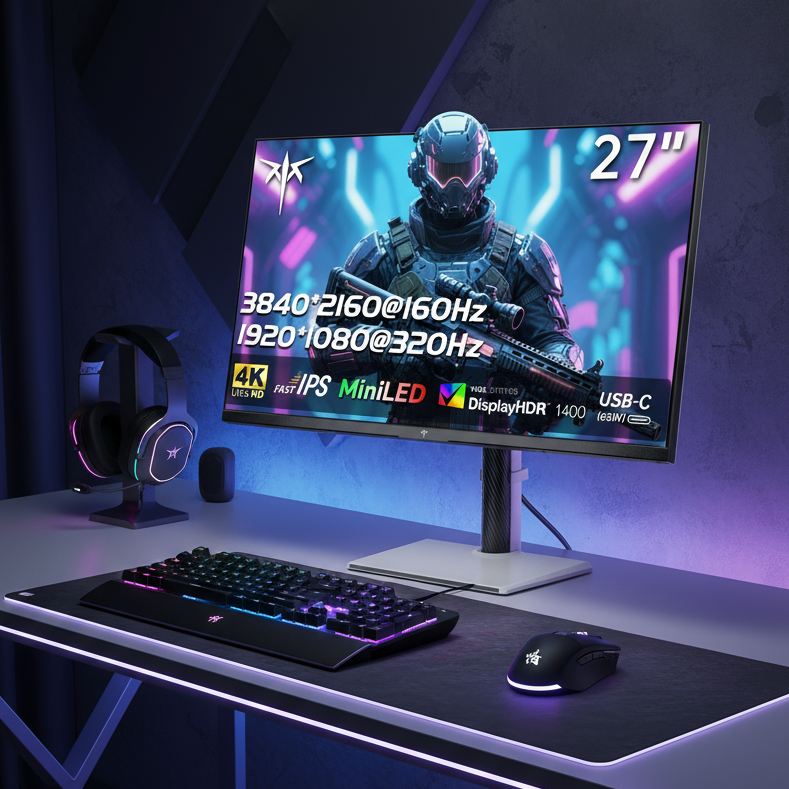
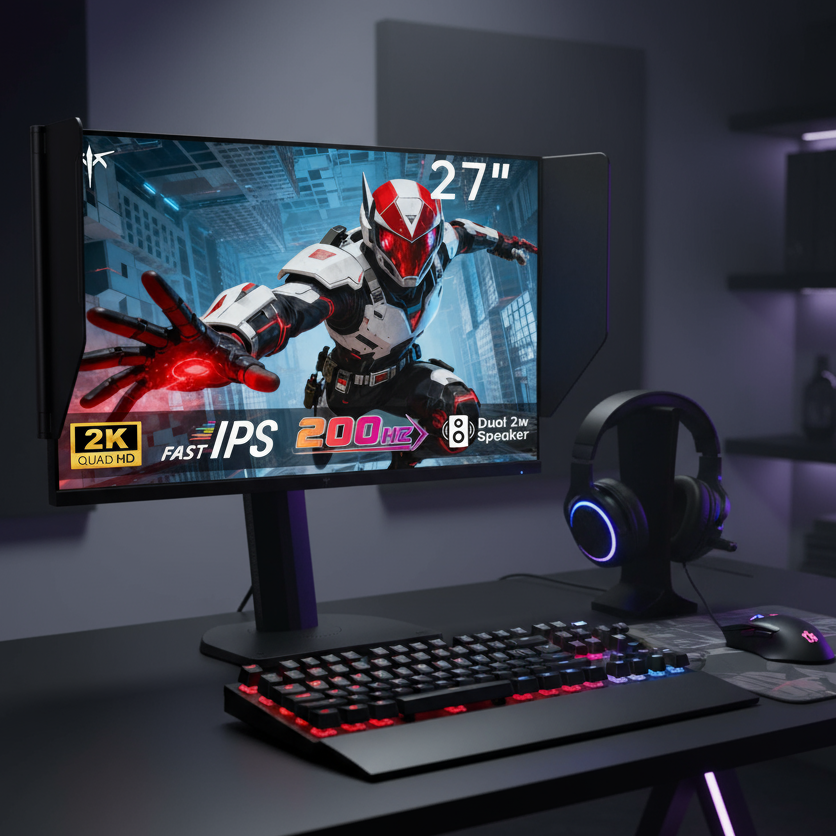
For gamers and hybrid users the KTC G27P6 offers the Tandem OLED panel with 240 Hz, 0.03 ms response, and full ergonomic stand. Those who prioritize zero-burn-in certainty can consider the KTC M27P6 Mini-LED model with 1152 dimming zones and HDR1400 performance. Both deliver full ergonomic adjustment and strong color coverage for mixed productivity and entertainment use.
The decision ultimately rests on whether your priority is visual perfection with managed longevity practices or absolute burn-in immunity at the cost of occasional blooming in dark UI.
Does Tandem OLED completely eliminate burn-in risk for desktop use?
No. While the dual-stack design significantly reduces thermal stress and improves longevity, the panels still use organic materials that degrade over time. Proper brightness control, dark mode, and enabled compensation cycles keep risk low, but zero risk only exists with non-organic technologies such as Mini-LED.
How many hours per day can I safely use a Tandem OLED monitor for coding?
Most users can run 8–10 hours daily at SDR brightness below 150 nits with compensation features enabled. The 5,000-hour stress test showed excellent uniformity retention under these conditions. Exceeding 250 nits for prolonged static work accelerates wear.
Does 2026 AI pixel cleaning actually prevent burn-in from syntax highlighting?
AI compensation masks wear by redistributing load and dimming surrounding pixels rather than fully restoring original luminance. It is effective at preventing visible retention for typical coding patterns, but high-contrast syntax can still create micro-imbalances that require careful brightness management.
What exactly does a 2026 burn-in warranty cover on premium monitors?
Most 3–5 year warranties cover permanent image retention exceeding 5 % luminance variance under normal mixed-content use with compensation features enabled. Missed cleaning cycles, abnormal brightness settings, or unplugging during scheduled maintenance often void coverage.
Should I choose Tandem OLED or Mini-LED for dark-mode programming?
Tandem OLED usually wins for dark-mode coding because it delivers true blacks without blooming around bright text. Mini-LED avoids any burn-in risk but can show haloing that many developers find more distracting during long sessions. Test both if possible.
How do I check if my monitor has performed its compensation cycles?
Most 2026 OLED monitors show a small on-screen notification or log entry after a successful cycle. Leave the monitor in standby (not fully powered off) for 30–60 minutes every few days. Internal logs are usually accessible through the service menu or manufacturer utility if warranty questions arise.