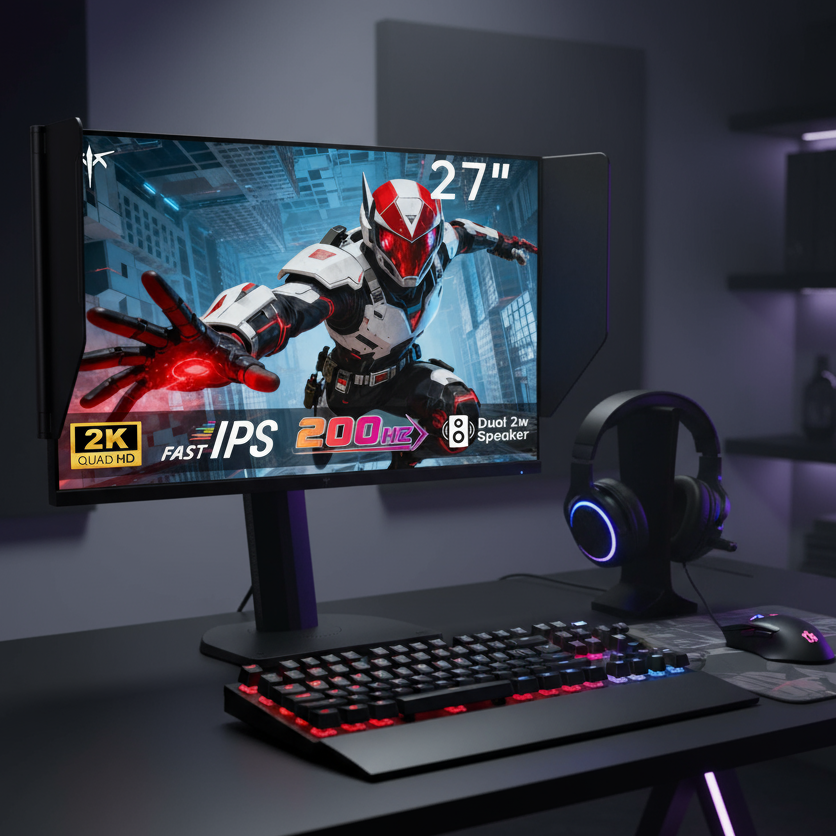
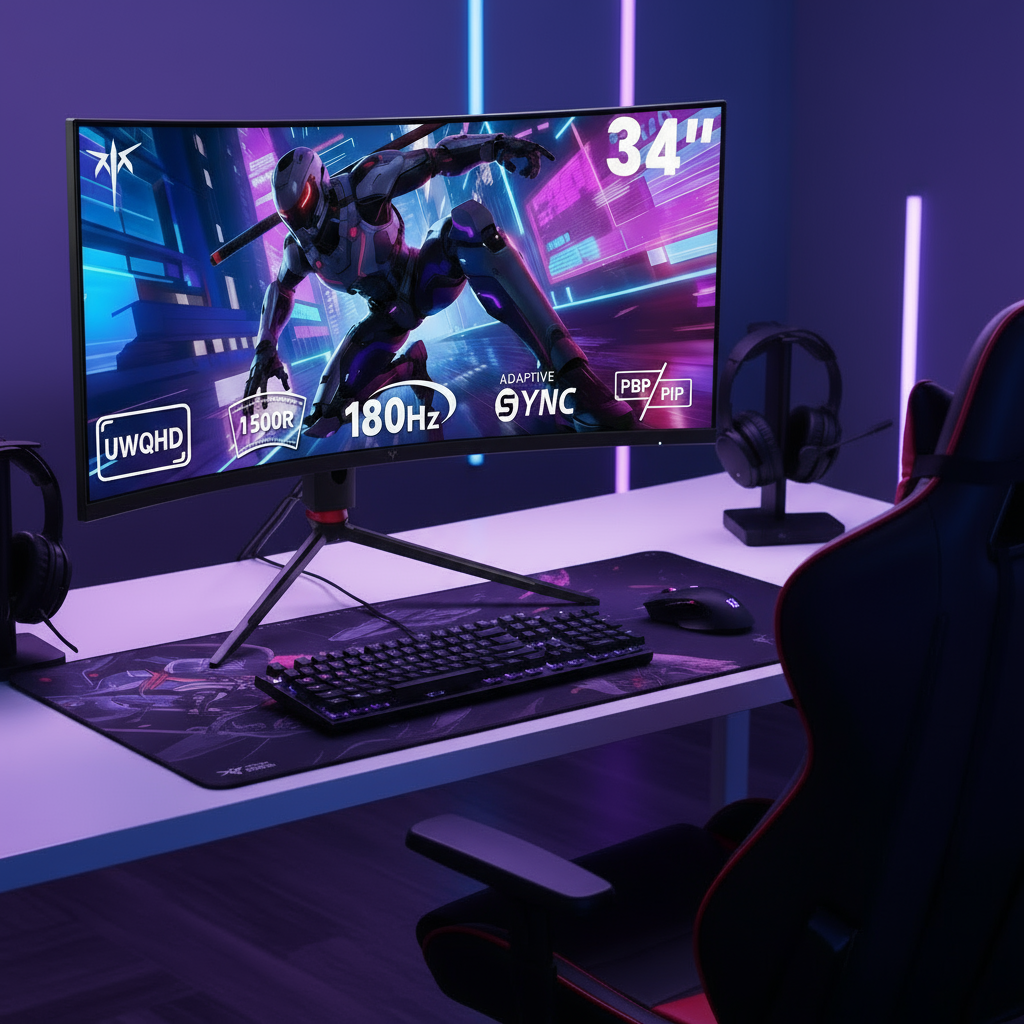


PS5 and Xbox Series X/S work with ultrawide monitors, yet the consoles output only 16:9 signals. This means you see black bars on the sides or a stretched image, and no native 21:9 field of view is available in 2026.

The Core Compatibility Question: Does PS5 or Xbox Support Ultrawide?
As of 2026, the PS5 and Xbox Series X/S remain limited to 16:9 output. Connecting an ultrawide monitor does not unlock wider gameplay or remove the aspect-ratio mismatch. Xbox documentation confirms that supported resolutions stay within the 16:9 family, so pillarboxing (black bars on the left and right) is the expected result.
The practical takeaway is simple: ultrawide monitors can display console games, but the image always fits inside a centered 16:9 window. Gamers hoping for true ultrawide FOV on consoles will be disappointed.
What Actually Happens: Black Bars vs. Image Stretching
When a console signal reaches a 21:9 panel, the monitor can either preserve the original geometry with pillarboxing or stretch the picture to fill the screen. Stretching is controlled in the monitor’s on-screen menu and always introduces horizontal distortion. Characters and UI elements appear wider than intended, which hurts precision in competitive games and breaks immersion in story-driven titles.

Most users find the black-bar presentation cleaner. It keeps proportions correct and avoids the “fat character” effect that stretching produces. Stretching remains a visual compromise rather than a fix.
Resolution Reality: Navigating 1440p and 4K on Ultrawide Panels
A useful middle ground exists on 34-inch 3440x1440 ultrawide monitors. Both the PS5 and Xbox Series X support native 1440p output, which matches the vertical resolution of these panels. The result is a sharp, pixel-perfect 16:9 image centered on the screen without the softness that comes from upscaling 1080p.
Monitors that include Console Mode or 4K downscaling can accept a 2160p signal from the console and downsample it for even better clarity. This approach works well when you want maximum sharpness from a console that cannot output native ultrawide.
Essential Features: What Makes an Ultrawide Good for Consoles?
HDMI 2.1 ports remain valuable even when the image stays 16:9. They enable 120 Hz refresh rates and Variable Refresh Rate (VRR) inside the centered window, reducing tearing and judder. Look for an on-screen menu that offers Aspect Ratio, 1:1, or Full scaling modes so you can choose between black bars and stretching on the fly.
A 34-inch curved model such as the H34S18S gives you the vertical height needed for clean 1440p centering plus enough width for PC multitasking. Larger 49-inch options like the H49S66 add horizontal workspace when the same desk also serves as a PC station.
The Mixed-Use Verdict: Is an Ultrawide Worth It for You?
If console gaming is your primary activity, a dedicated 16:9 4K monitor usually delivers the simplest experience with no black bars or scaling choices. Ultrawide becomes worthwhile when you also spend significant time on PC and want one display that handles both workloads.
Native 16:9 4K vs Ultrawide 1440p for PS5/Xbox
Use this as a decision aid: consoles are natively 16:9, so ultrawide 1440p is usually about fit and flexibility rather than a native-format gain. Ultrawide can make sense when you also use the display with a PC and want a centered 16:9 console image; native 16:9 4K is the safer choice if you want the cleanest console-first setup with no black bars or scaling trade-offs.
View chart data
| Scenario | Visual quality | Compatibility | Black bars | Sharpness | Mixed console + PC use |
|---|---|---|---|---|---|
| Native 16:9 4K | 3.0 | 3.0 | 3.0 | 3.0 | 2.0 |
| Ultrawide 1440p | 2.0 | 2.0 | 2.0 | 2.0 | 3.0 |
In mixed-use setups, a 34-inch ultrawide paired with a high-refresh 4K monitor such as the M27P6 or H27P6 gives you the best of both worlds: wide desktop space for productivity and a clean, centered console window when you switch to the PS5 or Xbox.
Common Questions About Ultrawide Console Gaming
Does PS5 Support 3440x1440 Ultrawide Output?
No. The PS5 outputs 16:9 resolutions only, including 1440p and 4K. A 3440x1440 ultrawide simply displays the 16:9 image in the center with black bars on the sides.
Can I Remove Black Bars on Xbox Series X?
You can stretch the image through the monitor’s on-screen menu, but the console itself cannot output a native 21:9 signal. Stretching always distorts the picture.
Is 1440p Better Than 4K on an Ultrawide for Consoles?
1440p gives a pixel-perfect match on 34-inch ultrawide panels. 4K downscaling can look even sharper on monitors that support it, but the aspect ratio remains 16:9 in both cases.
Should I Buy an Ultrawide If I Only Game on Console?
A standard 16:9 4K monitor is usually simpler and avoids black bars. Ultrawide makes more sense when the same display also serves a PC.