


An E-Marker chip is the tiny ID system inside higher-capability USB-C cables, telling your charger, laptop, dock, or monitor what the cable can safely handle. For high-wattage charging, fast file transfers, and stable external displays, it can be the difference between full performance and a frustrating bottleneck.
What an E-Marker Actually Does
USB-C is a connector shape, not a guaranteed performance level. The same oval plug can carry basic charging, high-speed data, video, or all three, depending on the cable and devices. The broader USB-C connector standard supports many roles, but the cable still needs to identify its real limits.
An E-Marker chip stores cable capability data, including current rating, voltage range, data speed class, cable type, and sometimes Alternate Mode support for video. During USB Power Delivery negotiation, connected devices read that information before allowing higher power or advanced modes.
Think of it as a performance passport. Without it, the system plays safe.
Power: Why 60W Is the Key Line
Most basic USB-C cables are treated as safe up to 3 amps and 20 volts, or 60W. That is enough for phones, tablets, portable monitors with modest power draw, and many light office accessories.
Once you move into laptop-class charging, gaming handhelds, workstation docks, or USB-C displays with power pass-through, the cable matters more. A cable must advertise higher capability before devices can use 5 amps or newer high-power USB PD levels.

For serious charging, an E-Marker is required when a standard USB-C cable needs to support higher current or voltage. Unmarked cables are treated as limited to safer defaults, as explained in this discussion of higher current or voltage.
Quick buyer check:
- Up to 60W: a basic 3A USB-C cable may be enough.
- 65W to 100W: choose a 5A, E-Marked cable.
- Up to 240W: choose a USB PD 3.1 EPR-rated cable.
- Dock plus laptop charging: match the dock, charger, and cable wattage.
Data: The Plug Does Not Promise Speed
A cheap USB-C cable may charge your laptop but still move data at USB 2.0 speeds. That means up to 480 Mbps in theory, which is fine for a keyboard or mouse but poor for an external SSD, capture card, or creator workflow.

For performance setups, look for explicit labels such as USB 3.2, USB4, 10Gbps, 20Gbps, or 40Gbps. University guidance notes that most USB-C cables support at least USB 2.0 data, while faster transfer requires certified higher-speed cables.
For office productivity, that affects backups and docking reliability. For gaming monitors and creator screens, it affects capture devices, high-speed hubs, and external storage used for large video files or game libraries.
Video: Why “USB-C to Monitor” Can Fail
USB-C video usually depends on video Alternate Mode or high-bandwidth USB support. The port must support video, the display must accept it, and the cable must be built for the required bandwidth.
This is where many “no signal” problems start. A charging-only USB-C cable can look identical to a full-featured display cable, but it may lack the wiring, shielding, or E-Marker data needed for stable video.

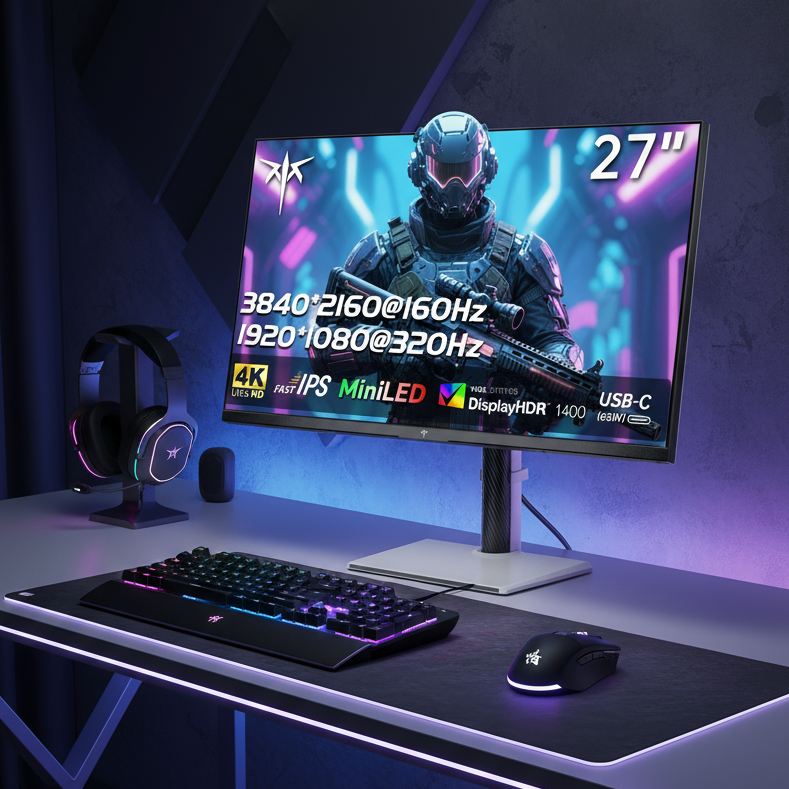
For portable smart screens, 4K productivity displays, and high-refresh gaming monitors, buy a cable that explicitly lists video support, video Alternate Mode, USB4, or equivalent high-bandwidth support. Not all USB-C cables support video, and video output depends on both cable and port compatibility.
How to Buy the Right Cable
Do not buy by connector shape alone. Buy by the workload.
For a clean one-cable desk setup, prioritize a certified cable rated for the charger wattage, data speed, and display mode you actually need. Reputable labeling matters because low-quality cables can cause unstable connections, slow transfer, overheating, or underpowered charging; certified cable labeling is a useful quality signal.
The practical rule: if your setup involves a laptop, dock, external SSD, portable monitor, 4K display, or gaming screen, choose an E-Marked USB-C cable with the exact wattage and speed printed in the specs. It costs a little more, but it protects the performance you already paid for.