


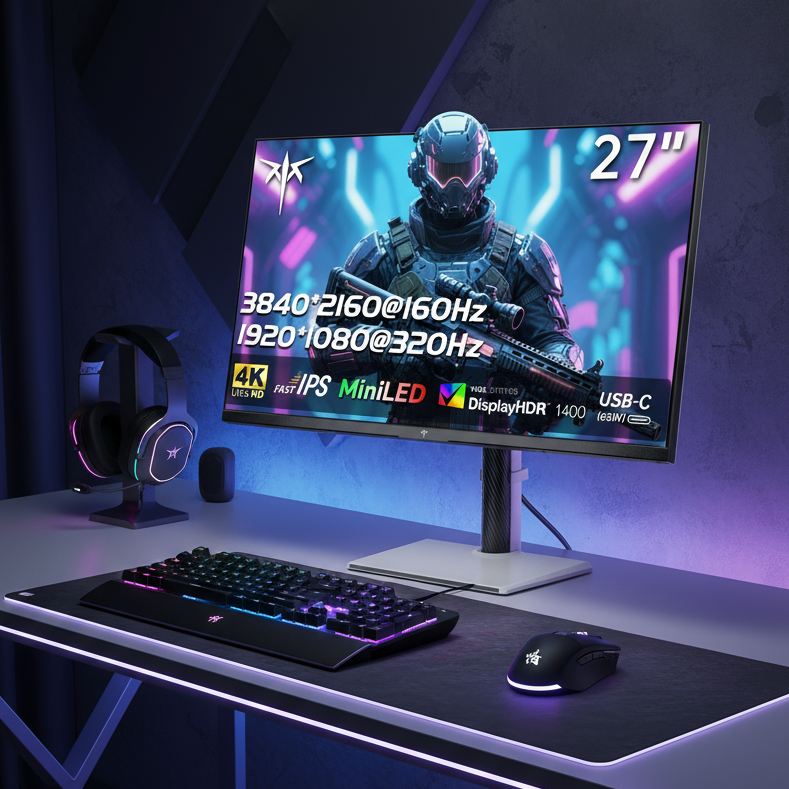
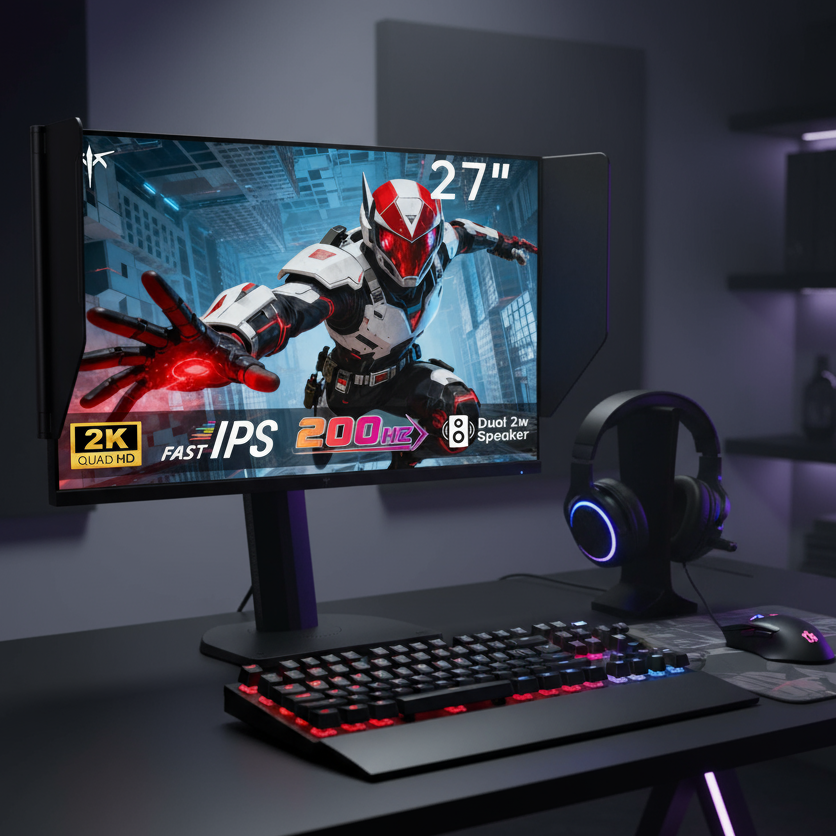
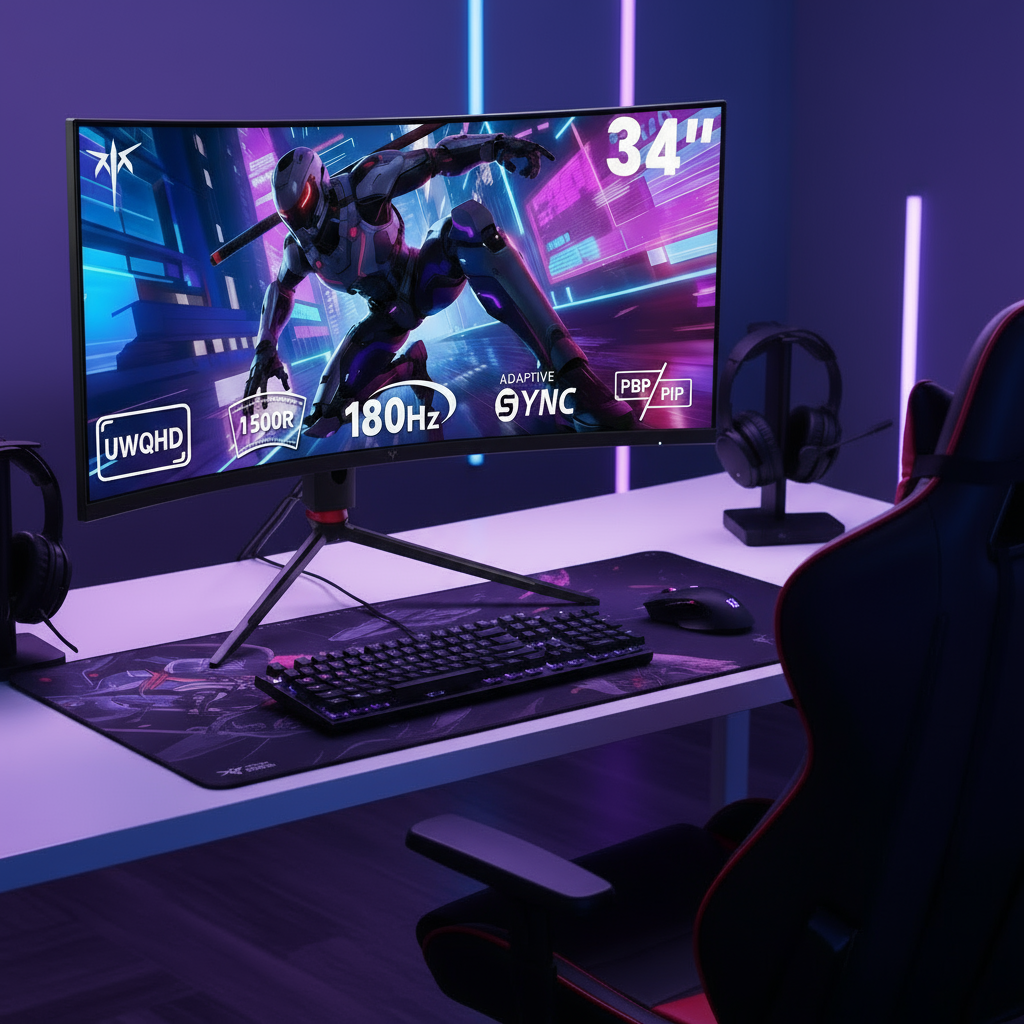


Warm and cool color temperatures shift your screen’s white point, so your eyes judge every color against a different “white.” Warm settings can make colors feel softer and redder, while cool settings can make whites look cleaner and blues sharper, even when the underlying image data has not changed.
Does your monitor look perfect in a game, then suddenly make skin tones look orange in a video call or product photos look too blue beside your phone? A practical calibration pass can give you a stable reference for editing, gaming, and office work instead of chasing every preset. Here’s how warm and cool color temperatures change perceived accuracy, when each helps, and how to set your display with confidence.
Color Temperature Is Really a White-Point Decision
Color temperature describes whether white light appears warm, neutral, or cool, and it is measured in Kelvin; lower values appear warmer, while higher values appear cooler. On displays, this is less about making one color “better” and more about defining what the screen treats as white. Once white shifts, grays, skin tones, shadows, highlights, and brand colors shift with it.

A warm screen mode usually adds a yellow, amber, or reddish cast. A cool mode usually adds a blue cast. The image file may still contain the same RGB values, but your visual system adapts to the new white point and reinterprets surrounding colors. That is why a spreadsheet can look cleaner at a cooler setting, while a portrait can look healthier or too orange at a warmer one.
For most general monitor calibration, the common target is D65, roughly 6500K, because many web, video, and office workflows are built around that neutral daylight-style reference. The goal is not to make the display emotionally pleasing in every room; it is to make white predictable enough that red, green, blue, gray, and skin tones fall into place.
Why Warm Settings Can Feel Less Accurate
Warm color temperatures often feel comfortable because they reduce the blue-white intensity many people associate with office lighting. That comfort has value, especially at night or in a dim room. The tradeoff is that warm modes can pull neutral grays toward beige and shift whites toward cream, which makes color judgment less reliable for editing, shopping, design review, and print preview.
In monitor terms, that means a white product background can look slightly aged, a gray UI can look brown, and pale skin can look more saturated than it really is. If you edit a product photo under a warm screen mode, you may compensate by cooling the image too much. When the same file appears on a calibrated display or a customer’s phone, it can look thin, blue, or lifeless.

Warm light is not automatically wrong. A controlled workspace study found that white walls with warm light could support favorable visual perception and mood in certain office-like conditions. The important nuance is that room surfaces and display settings interact. A warm monitor in a warm-lit room with tan walls can double down on yellow perception, while the same monitor in a cooler room may feel balanced.
Why Cool Settings Can Look Sharper but Still Be Wrong
Cool color temperatures often make whites look brighter, text look crisper, and blue UI elements feel more vivid. That is why many factory monitor presets lean cool: the screen grabs attention in a showroom and feels “clean” in a bright office. But perceived clarity is not the same as color accuracy.
Research on workspace lighting found that cool white light increased perceived brightness and reduced perceived warmth across different wall-color environments. That helps explain why a cooler monitor can feel more accurate at first glance. Your eye reads the bluish white as sharp and modern, even if the display is pushing skin tones pale, making grays icy, or exaggerating cyan in game worlds and creative work.
For competitive gaming, a cooler preset may improve the feeling of visibility in bright maps, especially when paired with lifted shadows or high contrast. For color-critical work, that same setting can mislead you. Snow, chrome, white jerseys, clouds, and UI backgrounds may look punchy but not faithful.
Perceived Accuracy Depends on the Room, Not Just the Panel
Your monitor does not live in a vacuum. Ambient light, wall color, screen brightness, and your eye’s adaptation all change how color accuracy feels. A neutral display in a warm room may look cool by comparison. A cool display in daylight may feel normal. A warm display in a dark room may feel relaxing but unsuitable for judging brand colors or skin tones.
Lighting research is not perfectly uniform because different studies measure different outcomes. One workspace study found benefits from pairing lighting with surface color, while a controlled-environment study reported that red and blue visual cues did not significantly improve thermal sensitivity and may have added distraction. The practical reading is simple: color associations can affect comfort and preference, but they are not a dependable substitute for measurement when accuracy matters.
For a real-world setup, imagine a 27-inch IPS productivity monitor beside a gaming OLED. If the IPS is set to sRGB at D65 and the OLED is in a vivid cool mode, the OLED may look more exciting while being less neutral. If you match them by eye in a warm room, you may make both worse. The better workflow is to establish one calibrated reference display, then use the second screen as a preview for how content may feel on consumer hardware.

Warm vs. Cool: Practical Tradeoffs
Setting Tendency |
What It Usually Improves |
What It Can Distort |
Best Use |
Warm white |
Evening comfort, reduced harshness, relaxed viewing |
Whites, grays, skin tones, product color |
Reading, casual browsing, late-night office work |
Neutral white |
Predictable color judgment, balanced grays, safer editing |
May feel less dramatic than vivid presets |
Design, photo review, office productivity, web content |
Cool white |
Perceived brightness, crispness, alert feel |
Blue cast, pale skin, oversaturated cool tones |
Bright offices, visibility-focused gaming, daytime task work |
The table is a starting point, not a replacement for calibration. If your display has an sRGB mode, Custom mode, User mode, or hardware calibration option, those are usually better starting points than Movie, Vivid, FPS, or Eco modes.
Panel Type Changes the Perception Layer
Panel technology affects how strongly warm and cool settings show up. IPS displays are often favored for stable viewing angles and repeatable color work, while OLED displays can produce deep blacks and high perceived contrast that make colors feel richer. A display can look more immersive without being more accurate.
For creative and professional use, calibrated IPS monitors remain a dependable choice for repeatable sRGB, wide-gamut, and print-adjacent workflows. OLED can be excellent for HDR video, cinematic gaming, and contrast-sensitive work, but its vividness can mask white-point errors. On either panel type, color temperature must be controlled before you trust what you see.
Portable smart screens add another wrinkle. They are often used in cafés, client rooms, airports, and mixed lighting. In those spaces, a slightly brighter neutral mode is usually more reliable than a warm comfort mode or a cool showroom mode. If the screen is for presentation, use neutral color temperature and adjust brightness to the room rather than changing the white point to fight the environment.
How to Set Color Temperature for Reliable Accuracy
Start by choosing the most neutral picture mode available. Avoid vivid, dynamic, movie, and aggressive game presets when judging color. Let the monitor warm up for about 20 to 30 minutes, clean the screen, use native resolution, and stabilize room lighting before making decisions, because the work environment can affect monitor-to-output matching.
Set the white point near D65 or 6500K when the monitor provides that control. Keep gamma near 2.2 for general desktop, web, office, and gaming use unless your workflow requires a different target. Adjust brightness to the room instead of using color temperature as a brightness fix. In a darker room, lower brightness while keeping neutral white. In a bright office, raise brightness first, then check whether whites still look neutral.
For color-sensitive work, use a hardware colorimeter. Built-in calibration tools can improve obvious problems, but a colorimeter measures the screen and creates a profile the operating system and color-managed apps can use. Professionals whose income depends on color should strongly consider hardware calibration, especially with wide-gamut or higher-end displays.

For gaming, keep two modes if your monitor allows it. Use a calibrated or sRGB-style mode for content creation, streaming overlays, and everyday work. Use a separate game mode for visibility, response, and immersion, but understand that it is a performance preset, not a color reference.
Quick FAQ
Is warmer always less accurate?
No. Warm is not automatically inaccurate, but many warm comfort modes move the white point away from common content targets. If the content was mastered for a neutral reference, a warm mode can make accurate colors look wrong to your eye.
Is 6500K always best?
It is the safest general target for web, office, gaming, and most SDR content. Some print, cinema, medical, or studio workflows may use different standards, but they should be chosen deliberately, not by visual preference alone.
Why does my phone look better than my monitor?
Phones often use vivid processing, adaptive brightness, HDR behavior, and wide-gamut color that can look impressive without being neutral. Treat the phone as a consumer preview, not the master reference, when accuracy matters.
Color temperature changes perceived accuracy because it changes the white your eyes use as the anchor for every other color. For reliable work and immersive play, run neutral when color matters, warm when comfort matters, and cool only when visibility is the priority.


