Color banding is the striped, stepped look that appears when a monitor cannot show a smooth transition between similar shades, and it usually comes from limited bit depth, weak dithering, signal-chain limits, or compressed source content.
Ever noticed a blue sky in a game or a gray wallpaper break into obvious stripes instead of fading smoothly? Even a 1,920-pixel-wide gradient may have to spread only 256 tone steps across the screen, which is why small display or signal problems become easy to spot fast. This guide will help you tell whether the issue is your monitor, your graphics settings, or the content itself, and what specs matter when buying a gaming, ultrawide, or portable monitor.
 What Color Banding Looks Like on a Monitor
Where you usually see it first
A smooth gradient should fade evenly from one shade to the next, without obvious stripes, sudden jumps, or color shifts. When a monitor shows banding, those transitions break into visible steps, and neutral ramps may even drift warm or cool in different parts of the image instead of staying balanced.
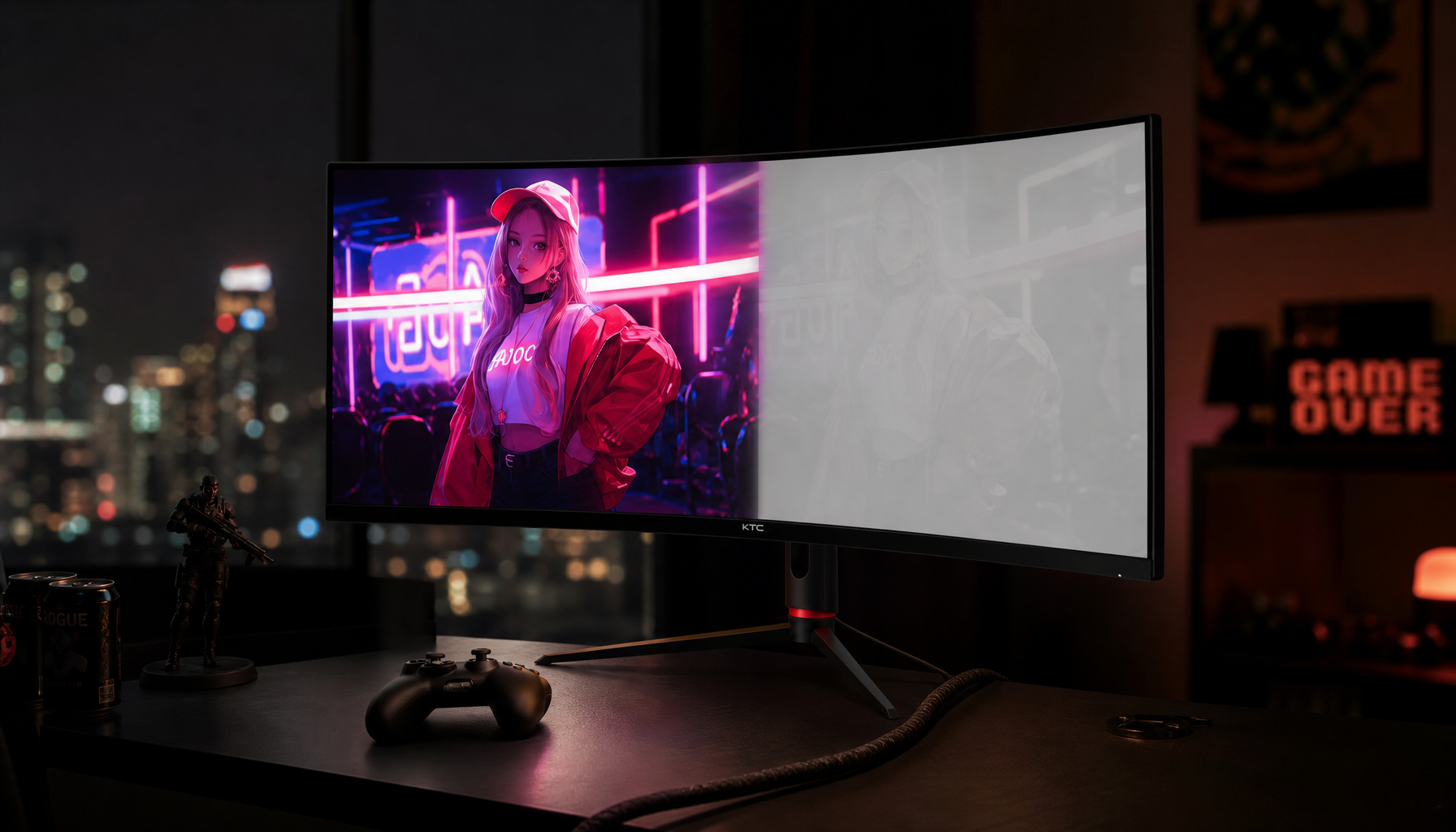
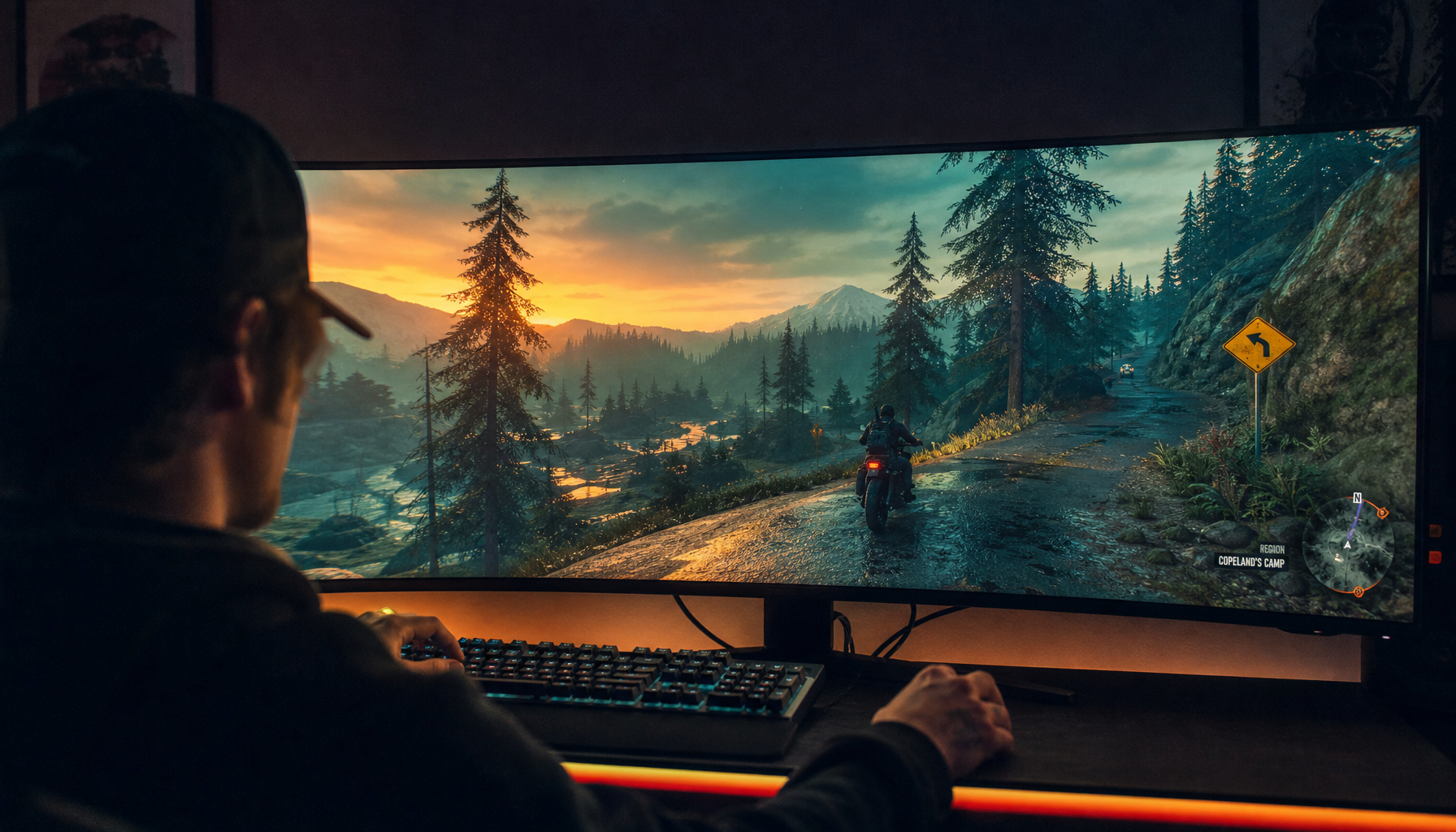
The most common real-world symptoms show up in skies, fog, smoke, shadows, sunsets, soft UI backgrounds, and heavily blurred game scenes. That is why banding often stands out more on gaming monitors and ultrawide monitors, where large areas of sky or dark ambient lighting fill more of your field of view.
In day-to-day troubleshooting, I treat banding differently when it appears only in one video versus when it shows up on the desktop, in games, and in test images. Reports from desktop, game, and image use suggest that if the problem is visible everywhere, the monitor path is the first place to investigate, not just one app.
Why Bit Depth Is Usually the First Suspect
6-bit, 8-bit, and dithering
The main technical cause is limited color depth. A true 6-bit panel has about 262,144 native colors, while a true 8-bit panel has about 16.7 million, so budget gaming monitors, laptop-class displays, and portable monitors have less room to render subtle steps cleanly if they rely on 6-bit+FRC instead of a true 8-bit panel.
The math explains why even decent 8-bit screens are not perfect. In a 1,920-pixel gradient example, 256 shades spread across the width average about 7.5 pixels per step, so the eye can still pick out bands in clean ramps, especially in dark tones or low-contrast fades.
A lot of displays hide this with dithering, which adds controlled noise or rapid shade switching to make transitions look smoother. That helps visually, but it does not create new native color precision, which is why many 6-bit laptop and portable panels can look acceptable in motion yet still show obvious steps in static gradients.
Panel or pipeline |
Native precision |
What gradients usually look like |
Best fit |
6-bit or 6-bit+FRC |
Lowest native shade count |
Most likely to show visible bands in dark ramps, skies, and flat UI backgrounds |
Budget displays and basic office use |
True 8-bit |
Good mainstream baseline |
Usually fine for everyday gaming and web video, but hard gradients can still show steps |
Most midrange gaming monitors |
Higher-bit-capable display path |
More tonal steps than 8-bit when supported end to end |
Better for HDR, subtle shadows, and smoother gradients |
Premium gaming, ultrawide, and creator-focused displays |
Why the Monitor Is Not the Only Culprit
GPU output, cable bandwidth, and color range
The display chain matters as much as the panel. In one real case, a 4K monitor running at 144 Hz was limited to YCbCr 4:2:2 with Limited range, while dropping to 60 Hz allowed RGB and 10-bit output, which reduced the issue. That is especially relevant for high-refresh-rate gaming monitors, where maximum refresh can force compromises in color format or output depth depending on the GPU, cable, and port.
 A Full versus Limited RGB mismatch can also make gradients look worse by compressing tonal transitions before they reach the panel. If your GPU is set to Limited but the monitor expects Full RGB, or the reverse, dark ramps and near-white ramps can show harsher stepping than they should.
Signal quality problems do not stop there. The banding test guidance also flags non-native scaling, weak panel processing, cable or bandwidth limits, and poor internal dithering as common contributors. In practice, that means a monitor that looks fine at 1440p over one connection type may behave differently over another connection type, or a portable monitor may look worse when driven through a lower-bandwidth adapter.
Why Good Monitors Still Show Banding Sometimes
Compression, re-renders, and source quality
A good panel cannot fully repair bad source material. Compression removes image information, and banding becomes more visible in dark, low-contrast gradients, especially after repeated export, upload, streaming, or in-game post-processing passes.
A strong production example comes from a color-grading workflow test: a high-quality video file looked clean on an 8-bit display before more editing, then showed visible sky banding after re-rendering, and the banding became worse again when encoded to a compressed delivery format. For monitor buyers, the takeaway is simple: if a streaming platform or a game engine sends a compromised gradient, even a high-end ultrawide will still reveal some of that damage.
That is why dithering or subtle noise is often used as a practical fix. It does not increase true precision, but it breaks up the edges between steps so the eye sees a smoother fade. In games, film grain and engine-side dithering can help; on the desktop, clean vector gradients and plain dark wallpapers often expose the problem much more clearly.
How to Test a Monitor Before You Buy or Return It
A practical gradient checklist
The most useful first step is a full-screen gradient test at the monitor’s native resolution. I start with neutral gray, then red, green, and blue ramps, because a bad monitor path often shows both uneven steps and color temperature drift in gradients that should stay consistent.
 A more thorough gradient test routine cycles through multiple patterns, directions, and colors so you can count visible bands instead of relying on a quick impression. Slight banding on an 8-bit screen is normal; severe, easy-to-count bands across many patterns point more strongly to a 6-bit+FRC panel, poor processing, or a bad signal setup.
Use a few real scenes after that. The common troubleshooting advice is to compare a synthetic test, a desktop background, a game sky, and a video scene with soft shadows. If all four show the same problem, check refresh rate, output bit depth, RGB range, and connection type before deciding the panel itself is defective.
What Specs Matter Most When Buying a Gaming, Ultrawide, or Portable Monitor
Buying priorities that actually reduce banding
The minimum sensible target for a monitor that will show lots of skies, HDR-like effects, or smooth UI gradients is a true 8-bit panel or better. A 6-bit+FRC display can be acceptable for casual use, but it is more likely to show visible banding on budget gaming monitors, entry-level ultrawides, and many portable or laptop-style panels.
A high-refresh setup can still bottleneck color if the monitor only supports better output formats at lower refresh rates. Before buying, verify what the display can do at your actual target mode, such as 1440p at 240 Hz or 4K at 144 Hz, not just the best-case spec printed on the box.
The last filter is real testing, not marketing language. A proper gradient check tells you more than a generic “HDR-ready” badge, and reports from notebook-style 6-bit panels are a reminder that thin, portable, and lower-cost displays often make bigger compromises in gradient quality than buyers expect.
FAQ
Q: Is color banding always a monitor defect?
A: No. Banding can come from the source file, video compression, game rendering, GPU output format, RGB range mismatch, cable bandwidth, or the monitor itself. If it appears only in one app or one video, the panel may be fine.
Q: Will a 10-bit-capable monitor eliminate banding completely?
A: No. A better panel and higher-bit pipeline reduce the problem, but they do not fix gradients that were already compressed, badly mastered, or rendered with limited precision upstream.
Q: Are gaming monitors more likely to show banding than office monitors?
A: Sometimes, yes, especially when a high-refresh mode forces a weaker signal format or when a budget gaming model uses a 6-bit+FRC panel. The gaming label alone does not guarantee smooth gradients.
Final Takeaway
If you see striped skies, shadow steps, or broken gray ramps, start with the display chain before blaming the panel. Check native resolution, refresh rate, output bit depth, RGB range, and connection type, then run a full-screen gradient test.
For buying, the safest path is straightforward: - Choose a true 8-bit panel or better if gradient quality matters. - Verify the monitor keeps RGB and strong color output at your actual target refresh rate. - Test with full-screen gradients during the return window. - Be more cautious with budget portable monitors and very cheap high-refresh models, where 6-bit+FRC compromises are more common. - Remember that some banding is in the content itself, so the goal is reduction, not perfection.