




Black level uniformity degrades when certain screen areas age, heat up, or display static content differently from the rest of the panel, causing local changes in backlight output, pixel response, or emissive material wear.
Do dark game scenes now show cloudy corners, faint taskbar shadows, or one patch that looks gray while the rest of the screen stays convincingly black? A simple gray-screen check, moving-video test, and brightness reset can quickly separate temporary retention from true panel aging. You’ll learn why specific zones drift over time, how each panel type fails, and what to do before a small uniformity issue becomes a permanent distraction.
What Black Level Uniformity Means
Black level uniformity describes how evenly a display renders dark tones across the full screen. On a strong monitor, a black or near-black scene should look consistent from center to edge, without glowing corners, muddy patches, bands, or faint outlines from old interface elements.
This matters more than spec sheets imply. In competitive games, uneven blacks can hide enemies in one corner while lifting shadows in another. In office work, a dim or stained zone can make dark themes, spreadsheets, and dashboards feel visually unstable. In creative workflows, uneven blacks compromise contrast judgment, especially when editing photos, grading video, or reviewing UI designs.
The tricky part is that not every black-level problem has the same cause. A brand-new IPS display may show mild corner glow from panel construction. A portable screen may reveal edge-lit brightness variation. An OLED may develop a faint static toolbar shape because the pixels in that region have aged differently. The symptom looks similar, but the fix and risk level are not.
Why Specific Zones Degrade Instead of the Whole Screen
Display zones degrade unevenly because screen content is rarely distributed evenly. A monitor used for productivity may show a desktop taskbar in the same lower strip for 10 hours a day. A game may keep a mini-map, ammo counter, or health bar fixed in one corner. A security dashboard or trading terminal may hold bright text, logos, and grid lines in the same regions for months.
Static content is one of the clearest drivers: monitor burn-in is permanent discoloration caused by uneven cumulative pixel use, while LCD image persistence is often temporary. That distinction is critical because a faint ghost shape on an IPS office monitor is often recoverable, while a persistent OLED mark usually means real luminance wear.
Heat adds a second layer. Zones near power electronics, thin chassis edges, poorly ventilated stands, or sun-exposed areas can age faster. Portable monitors are especially sensitive because slim housings give backlights and panel layers less room to dissipate heat. Uneven illumination in portable displays can come LED backlights aging, edge-lit construction, physical pressure, or damaged layers.
Brightness is the multiplier. Running a monitor at maximum brightness for long static work pushes backlights, liquid crystals, or OLED emitters harder. For an office display, dropping brightness from 100% to a more comfortable 70% can reduce visible glow and lower thermal stress. For an OLED used with static coding environments or dashboards, keeping SDR brightness conservative is even more important.
LCD, IPS, VA, Mini-LED, and OLED Age Differently

On LCD monitors, including IPS and VA, pixels do not create their own light. A backlight shines through liquid crystal layers, and those layers control how much light passes through. This makes LCDs more resistant to permanent burn-in than OLED, but not immune to black-level uniformity problems.
IPS displays are popular for color consistency and wide viewing angles, while VA panels typically offer stronger native contrast and deeper perceived blacks. In practical buying terms, IPS often suits office, design, and mixed-use setups, while VA can be attractive for darker games and movies. The tradeoff is that VA may show viewing-angle gamma shift, while IPS may show elevated black glow in dark rooms.
OLED is different because every pixel emits its own light. That is why OLED can deliver true black when pixels turn off, but it is also why repeated static zones age differently. A bright taskbar, scoreboard, or editing timeline can wear a specific pixel region faster than the rest of the panel. Tandem OLED tries to reduce that stress by stacking emissive layers, and recent desktop longevity testing reports that Tandem OLED can run at lower current density for the same brightness.

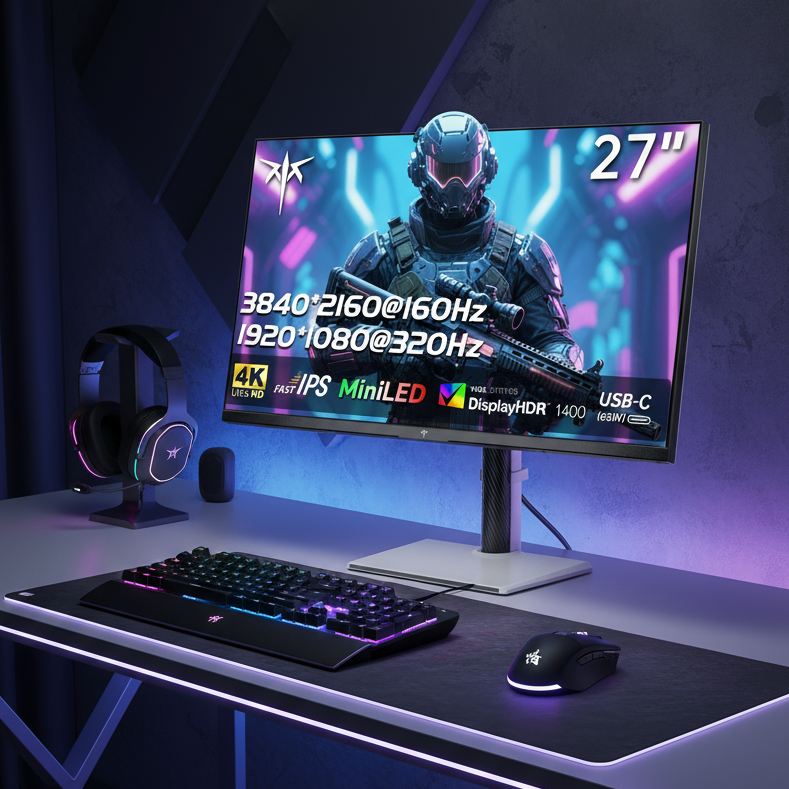
Mini-LED LCD displays reduce some black-level weaknesses by dimming backlight zones independently. Their downside is different: blooming or haloing can appear around bright objects on dark backgrounds, and uniformity depends heavily on zone count, dimming algorithm, panel quality, and calibration. For static-heavy productivity with minimal burn-in risk, Mini-LED can be the more reliable premium choice. For perfect black depth and cinematic gaming, OLED remains the immersion leader, provided the workload is varied.
Zone Degradation Triggers You Can Control
The most common preventable trigger is a fixed bright interface. A lower taskbar, static browser toolbar, news ticker, game HUD, or spreadsheet grid can imprint a workload pattern into one region. On LCDs, that may show as temporary charge-related persistence or local backlight fatigue. On OLED, it can become irreversible pixel wear.
Picture settings can make the problem look worse than it is. Vivid modes often push brightness, saturation, contrast, and sharpening beyond useful levels. For calibration, brightness controls adjust the backlight level, while black level and contrast determine whether shadow detail is lifted, crushed, or clipped. If one corner looks washed out, first switch to Standard, User, Custom, or sRGB mode, then set brightness for the room instead of chasing peak punch.
Physical conditions matter too. Pressure marks from a tight laptop bag, a bent portable monitor sleeve, or a monitor arm clamp stressing the chassis can create zones that look cloudy or dim. Heat above comfortable room conditions, direct sun, blocked vents, and unstable USB-C power can all accelerate uneven wear in portable screens.
Ambient light can also masquerade as bad panel uniformity. A glossy desk, white wall, side window, or overhead lamp can make one side of the display appear brighter. For color-critical work, a monitor hood can improve perceived uniformity by reducing screen glare, reflections, and viewing-condition changes before you blame the panel.
How to Diagnose the Problem Without Special Equipment
Start with a neutral test. Display a full-screen mid-gray image, then black, white, red, green, and blue. Look for fixed shapes, edge glow, vertical bands, dim corners, or outlines that resemble old UI elements. A gray screen is especially revealing because it exposes both image retention and uneven luminance without the distraction of content.
Then change the workload. Play full-screen moving video for 30 to 60 minutes or run a color-cycling screen wash. If the ghost shape fades, you are likely dealing with temporary image persistence. If it stays visible across colors, brightness levels, and after overnight rest, the risk shifts toward permanent burn-in, backlight aging, physical panel damage, or a manufacturing defect.
Compare symptoms with the panel type. On an IPS monitor, a faint taskbar after a long workday often points to temporary retention. On an OLED, the same taskbar outline deserves faster action. On a portable edge-lit LCD, dim corners or bright edge spots may indicate backlight layout, pressure, or LED aging rather than burn-in.
A simple real-world test is to photograph the same gray screen at normal exposure on day one, then repeat monthly under the same room lighting and brightness setting. You do not need lab gear to notice whether a lower-left HUD zone is becoming more visible over time.
Prevention: Performance-Safe Habits
The best prevention is workload variation without sacrificing your setup. Auto-hide the taskbar, rotate wallpapers, use screen sleep, and avoid leaving paused games, dashboards, or static windows unattended. For gaming monitors, enable dynamic HUD options when the game supports them. For office displays, move window layouts occasionally, especially on ultrawide screens where the same panels often stay in the same zones.
Brightness discipline is the highest-value setting change. In a dim room, a monitor running at 100% brightness is usually overdriven for comfort and longevity. A comfortable SDR level reduces eye strain, heat, and wear while preserving usable contrast. For HDR, enable it when gaming or watching true HDR content, but avoid leaving HDR desktop modes on for ordinary office work if they make the screen look washed out or overly bright.
Use built-in care features. Pixel shifting, logo dimming, panel refresh, compensation cycles, and auto-dimming are not magic repairs, but they spread or manage wear. OLED owners should let the monitor enter standby when requested so maintenance cycles can run. Fully unplugging the display every night may prevent some models from completing compensation routines.
For portable monitors, protect the panel mechanically. Store it flat in a hard sleeve, avoid pressure from keyboards or chargers, use stable USB-C power, and keep it away from hot cars or direct sunlight. Low-cost portable screens can be excellent value, but budget models often compromise brightness consistency, build rigidity, and long-term uniformity.
When to Repair, Replace, or Choose a Different Panel
If the artifact disappears after rest or varied content, keep the monitor and change the usage pattern. If the artifact remains visible after overnight rest, color cycling, and normal calibration resets, document it with photos and check warranty coverage.
For a used monitor, uniformity testing should happen immediately. A used 32-inch display can be a strong value, often costing far less than a new equivalent, but buyers should inspect solid-color screens, ports, stand condition, and return policy. A used 32 inch monitor should be tested for dead pixels, backlight bleed, and uniformity before the return window closes.
For static-heavy environments such as coding, finance dashboards, medical displays, POS systems, and office productivity, IPS or Mini-LED LCD remains the lower-risk choice. For cinematic gaming, dark-room immersion, and varied media, OLED gives the strongest black performance but demands better habits. For portable smart screens, prioritize build quality, stable power, firmware support, and moderate brightness over headline contrast claims.
FAQ
Is black level uniformity degradation the same as burn-in?
Not always. Burn-in is permanent uneven wear, usually tied to static content. Black level uniformity degradation can also come from backlight aging, pressure damage, heat, panel construction, poor settings, local dimming behavior, or temporary image retention.
Can calibration fix uneven blacks?
Calibration can improve shadow detail and reduce exaggerated contrast problems, but it cannot restore worn OLED pixels, repair damaged backlights, or remove physical panel defects. It is a tuning step, not a hardware cure.
Are OLED monitors unsafe for productivity?
No, but they are workload-sensitive. OLED is excellent for mixed gaming, media, and varied desktop use. If your screen shows static toolbars, spreadsheets, or dashboards all day, IPS or Mini-LED is more forgiving.
A display should make dark scenes feel intentional, not suspicious. Treat black uniformity as a long-term performance metric: test it early, control brightness, vary static zones, and match the panel technology to the work you actually do every day.


