Competitive games often restrict ultrawide displays to keep visibility, UI behavior, and ranked conditions consistent for every player.
You queue for a ranked match on a new ultrawide and expect a bigger, sharper battlefield, then the game adds black bars or locks you back to 16:9. That frustration makes sense: ultrawide can look fantastic in modern games, but it can also distort menus, shift sightlines, and complicate competitive balance. The key question is whether the restriction protects fair play or just reduces the value of expensive hardware.
What Ultrawide Actually Changes
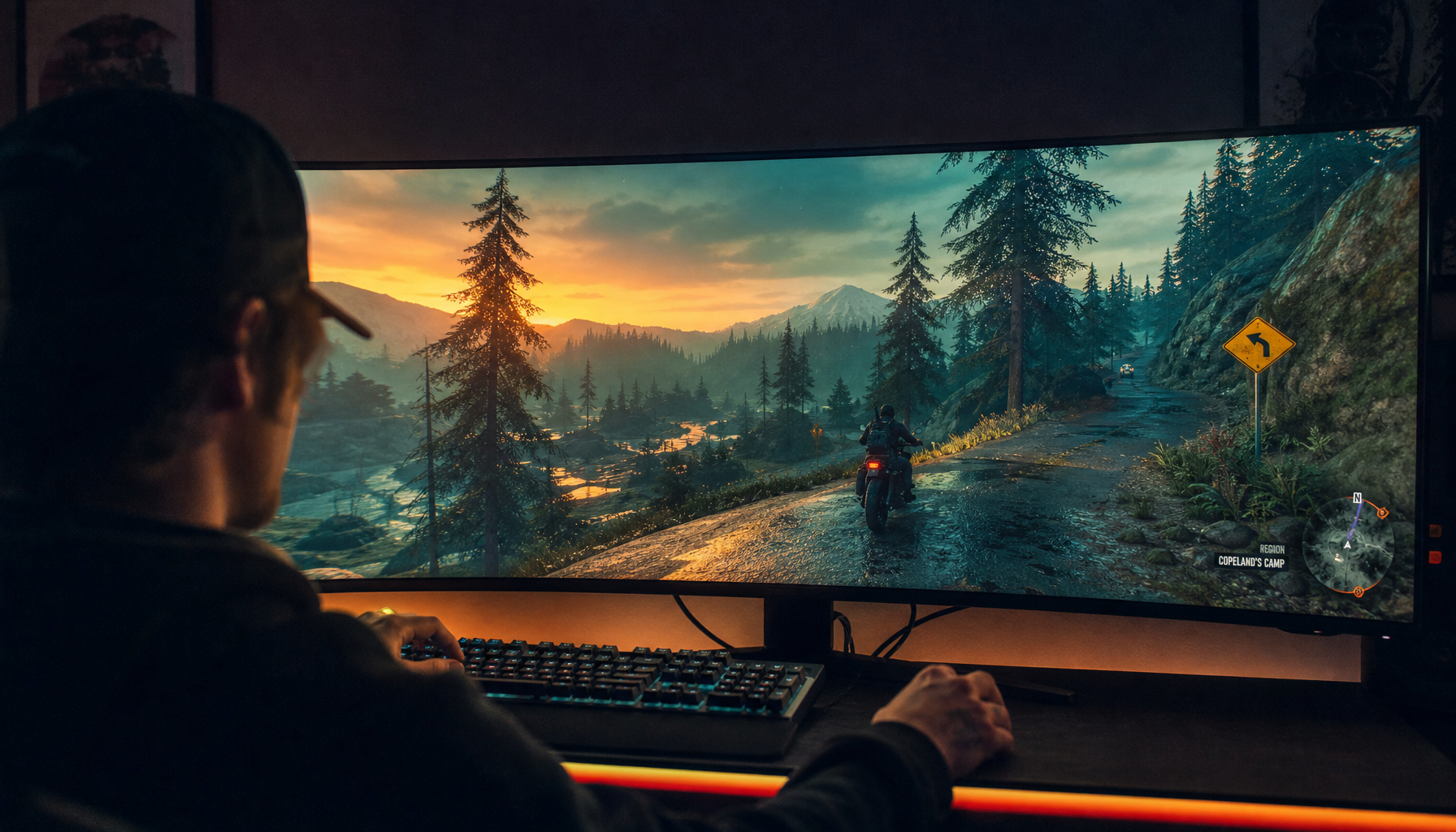
The core appeal of an ultrawide format is simple: it keeps roughly the same vertical viewing area as a standard monitor while expanding the image horizontally. In practical terms, that means a 21:9 panel can show more scenery at once than a 16:9 screen, and a 32:9 panel can push that effect even further.

That extra width feels powerful because more of the environment stays visible at the edges of the frame, which strengthens the sense of wide cinematic composition used for decades. On a desk, the result is easy to grasp: racing games feel broader, open-world games feel more enveloping, and multitasking gets easier because maps, chat windows, and side panels have more room.
The catch is that competitive games are not judged mainly by immersion. They are judged by whether every player gets a comparable view, similar information density, and reliable UI behavior under pressure.
Why Ranked Games Often Restrict It
Fairness Starts With Field of View
The first reason is competitive fairness. If one player can see more of a lane, doorway, or peripheral movement without rotating the camera as far, that can change reaction timing. Even when the difference sounds small on paper, it matters in shooters, MOBAs, hero games, and battle royales, where information often appears at the edges first.
Studios do not solve this the same way. Some games allow true horizontal expansion, some crop vertically, and some simply force 16:9. When developers worry that a wider screen may alter the competitive view, they often lock or patch around ultrawide behavior rather than let display format decide who sees what first.
That does not automatically mean ultrawide is cheating. It means the studio has decided that ranked integrity matters more than native support for every monitor shape.
HUDs, Menus, and Aim-Critical Elements Can Break
The second reason is less glamorous but just as real: interface reliability. Competitive games depend on clean reticles, stable minimaps, readable cooldowns, predictable hit markers, and menus that do not drift off-screen. Older or poorly maintained games can show stretched visuals, broken UI, and off-screen menus when pushed beyond the formats they were built for.

That matters more in ranked play than in casual play. If a lockpicking overlay, inventory page, or weapon view breaks in a single-player RPG, it is annoying. If a crosshair offset, scoreboard crop, or ability indicator fails in a competitive match, it becomes a gameplay problem. Developers sometimes restrict ultrawide simply because they cannot guarantee that every critical UI element will behave correctly across 21:9 and 32:9 at scale.
Esports Support Favors Standardization
The third reason is operational consistency. Tournament operators, anti-cheat teams, broadcast producers, QA teams, and support staff all work more efficiently when the game targets one standard competitive presentation. That usually means 16:9 because it remains the safest baseline for compatibility, spectator feeds, and testing.
This point is partly an inference from how competitive products are built, but it matches the broader pattern: ultrawide shines when immersion is the goal, while competitive environments prioritize control, repeatability, and fewer variables. If a developer has to choose between a dramatic format and a stable ruleset, ranked design usually favors the stable ruleset.
What a Ban Usually Looks Like
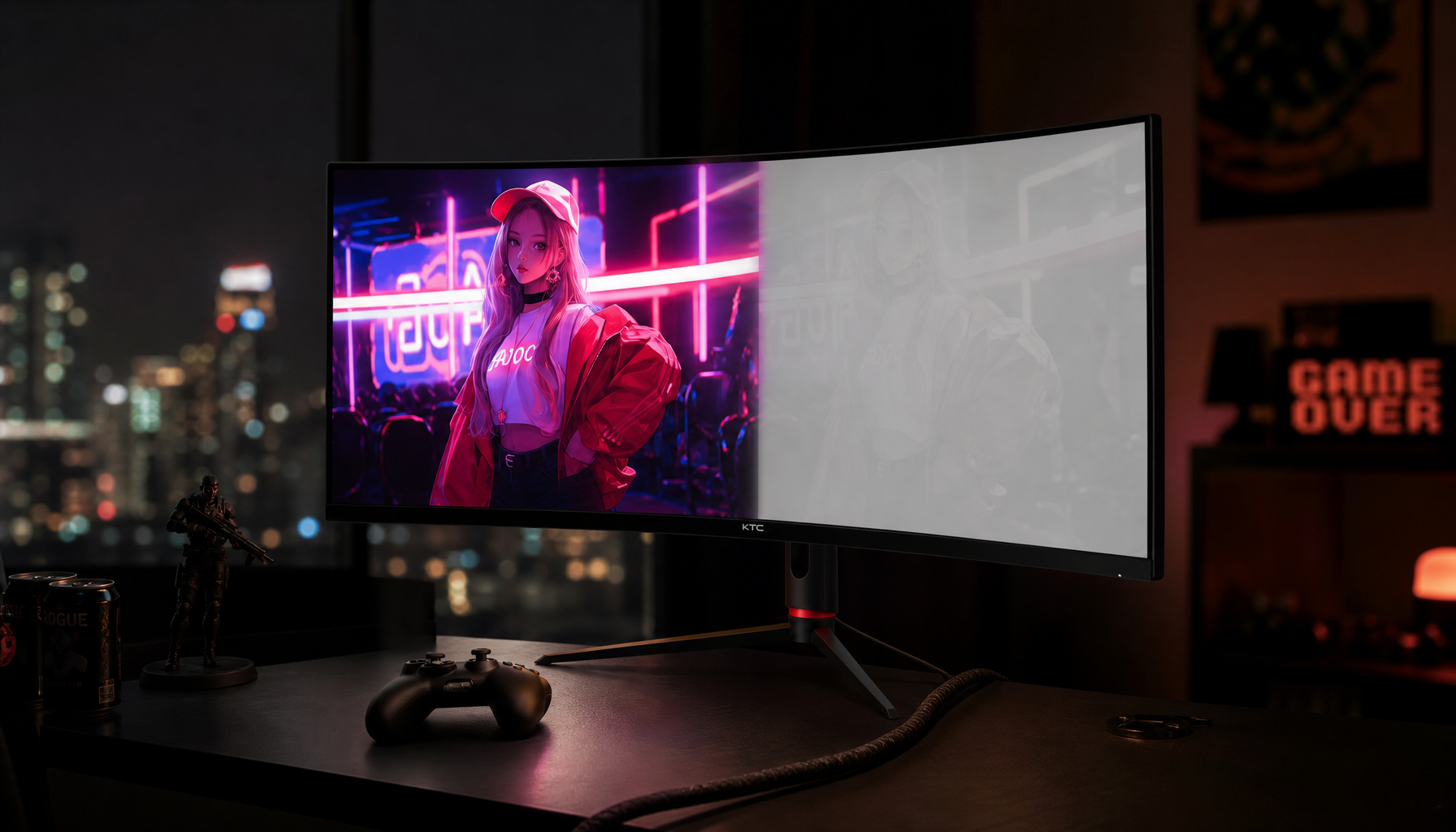
A ban does not always mean the game refuses to launch. More often, it means the game runs with black bars, forces a 16:9 render inside the wider panel, or narrows the effective field of view so the extra width does not become extra competitive information.

That is why two players can both own expensive monitors and still have very different experiences. One game may support 21:9 beautifully in casual modes, while another may accept the resolution but remove the advantage in ranked. A third may behave badly enough that community fixes are required, which is exactly the kind of maintenance burden developers try to avoid in competitive ecosystems.
When the Restriction Is Reasonable
A restriction is reasonable when the game’s sightlines, recoil control, peeking angles, or HUD placement would genuinely change with added horizontal view. It is also reasonable when the game has a long tail of legacy UI code and the studio cannot promise consistent results across every ultrawide setup.
It feels excessive when a game already handles ultrawide correctly in normal play, yet ranked mode still blocks it without a clear fairness rationale. In those cases, players are right to question whether the studio is solving a real balance issue or simply taking the cheapest support path. A justified restriction protects competition. A lazy restriction only reduces customer value.
The Real Pros and Cons for Buyers
The strongest case for ultrawide is still immersion, desktop space, and a more cinematic feel in modern titles. The weakest case is pure ranked optimization. If your week is mostly story games, sim racing, open-world exploration, and work on the same screen, ultrawide remains compelling. If your week is mostly scrims, ranked ladders, and esports titles, the safer performance-driven choice is often a fast 16:9 monitor with broad game support.

Ultrawide outcome |
Competitive impact |
|
Single-player and cinematic games |
Bigger sense of space and stronger immersion |
Usually positive |
More horizontal workspace on one panel |
Usually positive |
|
Older PC games |
Support can be inconsistent or broken |
Often negative |
May be limited, letterboxed, or normalized |
Often neutralized |
Practical Buying Advice Before You Upgrade
If competitive play is your priority, check whether your main games support ultrawide in ranked modes before you buy. Do not stop at whether the game launches at 3440 x 1440. What matters is whether it preserves correct HUD placement, field of view, and behavior in the mode you actually play.
If you split time between competitive and immersive gaming, think in percentages. A player who spends 80% of the week in tactical shooters will usually get more value from a high-refresh 16:9 display. A player who spends 80% of the week in RPGs, racing games, and general desktop work can justify ultrawide much more easily, even if one or two ranked titles add black bars.
If you already own an ultrawide, do not assume a restriction means the panel was a bad purchase. It may still be the better screen for everything outside ranked queues. The real mistake is buying for cinematic width when your daily use depends on competitive consistency.
Competitive games restrict ultrawide when screen shape starts affecting information, not just aesthetics. If your goal is maximum immersion, ultrawide is still one of the most satisfying upgrades you can make. If your goal is the cleanest path to ranked reliability, standardized 16:9 remains the safer choice.