


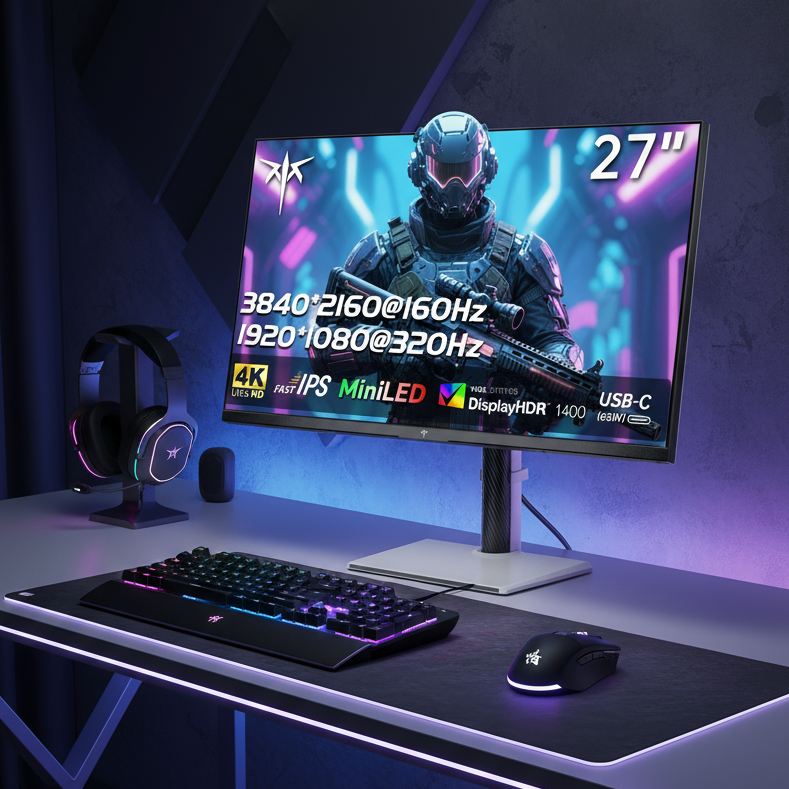
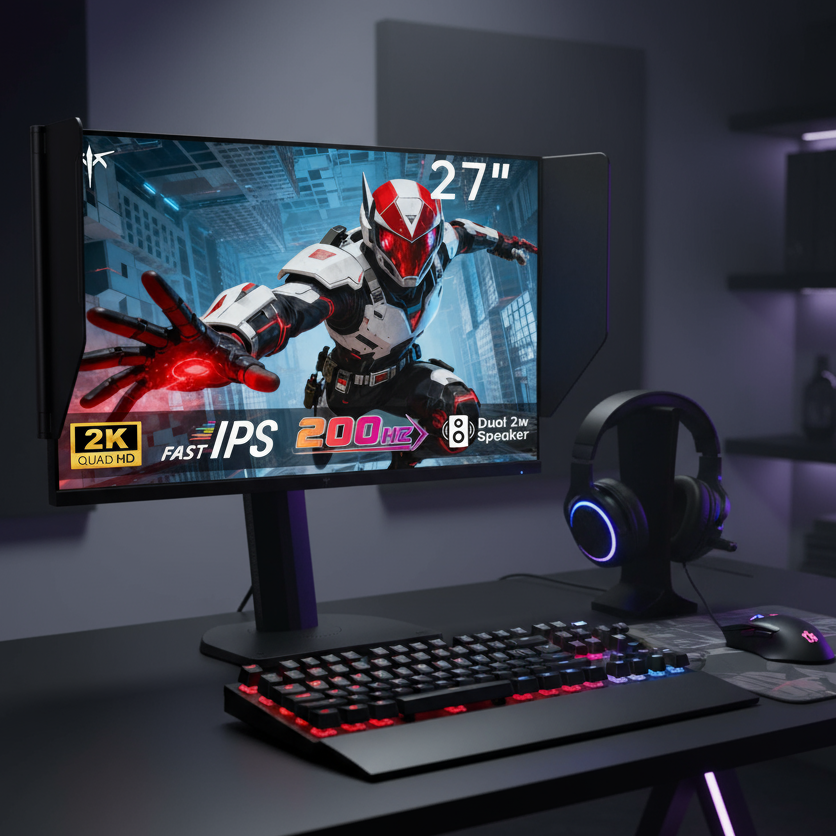
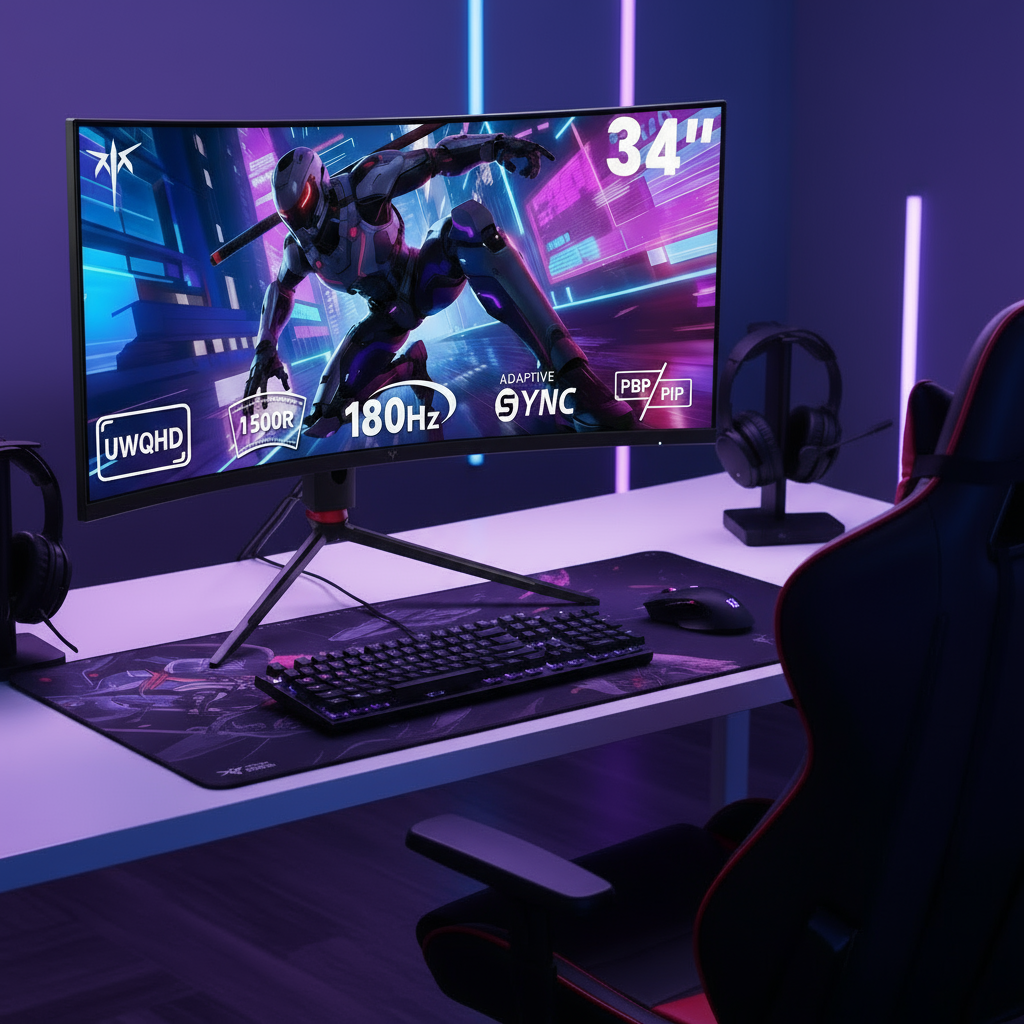


FPS mode usually raises near-black shadow tones so you can spot movement faster, but that same boost makes true black look gray on many gaming monitors.
Ever switch to FPS mode on a gaming monitor and watch a cave, hallway, or night map lose its deep black look? The same pattern has shown up on 1080p 144 Hz and 165 Hz displays from a brand, on a 32-inch 1440p gaming monitor from a brand in HDR, and across several VA models from multiple brands. You will see what the preset is changing, how to tell whether the cause is settings, panel limits, or HDR, and how to tune a high-refresh-rate display without washing out dark scenes.
What FPS Mode Is Trying to Do
Competitive visibility comes first
FPS-style presets brighten shadow detail on purpose, because competitive players care more about seeing movement in dark corners than preserving cinema-like black depth. On many gaming monitors, settings such as shadow boost, black boost, or similar controls selectively lift the darkest tones while keeping highlights closer to normal. That makes enemies easier to spot, but it also flattens the bottom end of the image where black should feel dense.

A shadow-boost control changes the gamma of dark shades while barely affecting white shades, which is why the picture can look oddly washed out instead of simply brighter. In one monitor-forum discussion, a setting of 20 was described as washing out dark scenes, while lower settings made blacks look darker but risked black crush. That is the core tradeoff of FPS mode on a gaming monitor: more visibility in shadows, less separation between true black and dark gray.
Games already fake darkness for readability
Night scenes are often made readable by faking darkness rather than making the whole image physically dark. Game artists and filmmakers use cooler tint, lower saturation, brighter practical lights, and stronger contrast so the scene still reads on a normal display. When your monitor applies an FPS preset on top of that, the image can become readable twice over, and the result is a night scene that feels gray instead of black.
Why Black Turns Into Gray
Brightness, contrast, and gamma all push the floor upward
Brightness that is too high, contrast that is too low, or poor calibration can make black look gray. On a fast gaming monitor, it is easy to overlook that problem because motion clarity and refresh rate still feel great even when the darkest tones are lifted. If the backlight is running too hard or the picture curve is too shallow, the screen never settles into a convincing black floor.
A practical baseline is 50% brightness and 50% contrast before making fine adjustments, with monitor gamma around 2.2 to 2.5 and GPU-level color overrides removed. That advice matters because many players try to fix a bad monitor preset with an in-game gamma slider, which often creates a second layer of compensation. The cleaner approach is to neutralize the display first, then tune the game.
The room matters more than people expect
Room lighting changes perceived black levels almost as much as the monitor OSD does. Reflections, a bright desk lamp, or a window in front of the panel can make even a decent VA gaming monitor look milky. If your display also offers Local Dimming, dynamic dimming, or dynamic backlight control, enabling it can deepen dark areas on supported hardware, although the quality depends heavily on how good the dimming implementation is.

Is It the Preset, the Panel, or HDR?
Preset problems often look like panel problems
Gray-looking blacks can show up across multiple VA monitors, which is a useful reminder that panel type alone does not diagnose the issue. In a June 7, 2022 report, a buyer who mostly played slower, dark games tried VA models from several brands and still saw a washed, gray image. The same user said a cinema-style picture mode on one VA model made the picture about 85% to 90% better, which strongly suggests the picture mode and tone mapping were a bigger factor than viewing angle or a one-off defect.
Technology still sets the ceiling
Panel technology still sets the ceiling for black performance: VA usually has higher native contrast than IPS, OLED can deliver true black by turning pixels off, and Mini-LED can improve dark-scene control with better dimming zones. That matters even more on larger 32-inch panels and ultrawide monitors, where dark areas fill more of your field of view. If you are trying to separate FPS-mode tuning from panel behavior, an OLED reference display such as an OLED 27” 2K 240Hz gaming monitor from a brand can be useful for comparison because true black should stay obviously black when the preset is not lifting near-black tones. If you play in a dim room and care about atmosphere, the panel’s native contrast still matters after settings are optimized.
HDR can make the problem worse when it is misconfigured
Misconfigured HDR can make the whole image look grayish with very low contrast, even when the desktop appears normal. In one game example, a 32-inch gaming monitor from a brand looked fine with HDR video on the desktop, but the game turned gray once HDR was enabled in the game menu. That is a practical reminder for display buying and setup: HDR on a gaming monitor is only as good as the monitor’s tone mapping, the operating system HDR state, the game’s HDR implementation, and the signal path between GPU and panel.
How to Tune a Gaming Monitor Without Ruining Contrast
Start with a neutral picture mode
Factory gaming presets often hurt visibility and black depth more than they help. Switch from FPS, RTS, or other aggressive presets to Standard, Custom, or the closest neutral mode first. Then confirm the monitor is running at its full refresh rate in the operating system, keep sharpness near default, and set overdrive to a moderate level such as Fast instead of the most extreme option.
Monitor-side changes should come before in-game gamma tweaks. A solid starting point is brightness around 50% to 60%, contrast around 80% to 90% if the display handles it cleanly, gamma near 2.2, and shadow-boost controls set to off or very low. Only after that should you touch the game’s gamma slider, using a familiar dark scene to make sure near-black detail is visible without turning the whole screen silver.

Setting or mode |
What it changes |
Best use case |
Common downside |
FPS mode |
Lifts dark tones and shadow detail |
Competitive shooters |
Blacks look gray |
Standard or Custom |
Preserves a more neutral tone curve |
General gaming and mixed use |
Dark corners may hide more detail |
High shadow boost |
Makes enemies easier to see in shadows |
Ranked or esports play |
Washed-out dark scenes |
Gamma around 2.2 |
Balances dark detail and contrast |
Most SDR gaming |
Too low looks flat; too high crushes detail |
Local dimming on |
Deepens dark zones on supported displays |
Mini-LED and some HDR monitors |
Can cause uneven transitions or blooming |
HDR on |
Expands dynamic range when implemented well |
Games with strong HDR support |
Can look flat if the HDR chain is wrong |
Check the signal path before blaming the panel
A washed-out image after switching connection type can point to signal handling rather than panel weakness. In one forum case, VGA looked choppy but colors seemed good, while HDMI made black areas look washed out even though the monitor’s own OSD still appeared fully black. If you see that kind of mismatch, verify the PC is sending the correct range, check HDR state, update monitor firmware if available, and test another cable or input before deciding the monitor cannot do deep blacks.
When a Different Monitor Is the Better Answer
Match the display to the kind of games you actually play
If your priority is competitive visibility, FPS mode can be useful even when it looks washed out. For esports titles, the ability to separate a player model from a dark hallway may matter more than cinematic black depth. In that context, a high-refresh-rate display with a carefully limited amount of shadow lift can be the right tool, even if it would look wrong for horror, stealth, or story-driven games.
Dark-room gaming favors higher contrast hardware
If your priority is dark-scene image quality, VA, Mini-LED, and especially OLED have a structural advantage. A fast IPS gaming monitor can still be excellent for motion clarity and color consistency, but it usually will not match the black depth of a good VA or OLED panel in a dim room. For buyers comparing gaming monitors, that is often the deciding split: competitive visibility versus dark-scene immersion.

Sometimes the ugly shadows are coming from the content
Not every ugly dark scene is the monitor’s fault. A user with two displays from a brand, one 1080p at 165 Hz and the other 1080p at 144 Hz, reported that dark parts of a video platform and other streamed video looked blotchy while brighter areas seemed normal. That is consistent with compression hitting shadow detail first, so if your games look acceptable but low-light streaming video falls apart, the source may be the weak point rather than the display.
Practical Next Steps
The fastest fix is usually to leave the FPS preset first, then rebuild the image from a neutral mode. If you still want extra visibility, add only enough shadow boost to reveal targets in the darkest corners. The goal is not maximum shadow lift; it is the smallest adjustment that solves a real gameplay problem.
Real user tuning examples suggest the sweet spot is moderate rather than extreme. In one forum thread, one player found that a shadow-boost setting of 15 with in-game gamma 1.6 helped separate enemies from shadows, while higher settings did not help and lower settings hid them. That is a good rule for monitor tuning in general: use the minimum effective change.
- Reset to Standard or Custom mode and confirm the monitor is running at its native refresh rate.
- Start near 50% to 60% brightness, moderate contrast, and gamma around 2.2.
- Turn shadow boost controls off, then raise them one step at a time only if needed.
- Test with one familiar dark game scene, not five different games at once.
- Check operating system HDR, GPU color settings, cable quality, and input range before blaming the panel.
- If deep blacks matter more than competitive shadow visibility, prioritize VA, Mini-LED, or OLED on your next monitor.
FAQ
Q: Should I use FPS mode for single-player games?
A: FPS mode is built around visibility in dark areas, so it is usually not the best choice for cinematic single-player games. Start with Standard or Custom, then add only a small amount of shadow lift if a specific scene is too dark.
Q: Why does HDR sometimes make my monitor look flatter instead of better?
A: HDR can look grayish and low-contrast when the HDR chain is mismatched. The monitor, operating system HDR setting, game HDR implementation, and GPU output all have to agree, and a failure in any one of those places can make dark scenes look worse instead of better.
Q: Is VA always better than IPS for dark scenes?
A: VA usually has higher native contrast than IPS, so it often looks better in dark rooms. But picture mode, gamma, HDR setup, and black-boost settings still matter, which is why some users still report gray-looking blacks even on VA gaming monitors.
References
- Making a night scene without being dark on the monitor - a developer forum
- Solutions to Fix Black-Look-Grey-on-LED-Screen Quickly
- Shadow-boost discussion - a monitor forum
- How to optimize the monitor and gamma settings - a game forum
- VA Monitor Question - a hardware forum
- Issue with HDR mode? - a game forum
- My Display has washed out blacks - a hardware forum
- Screen becomes super blotchy when looking at dark colors - a tech forum
- Optimize Display for Clarity


