


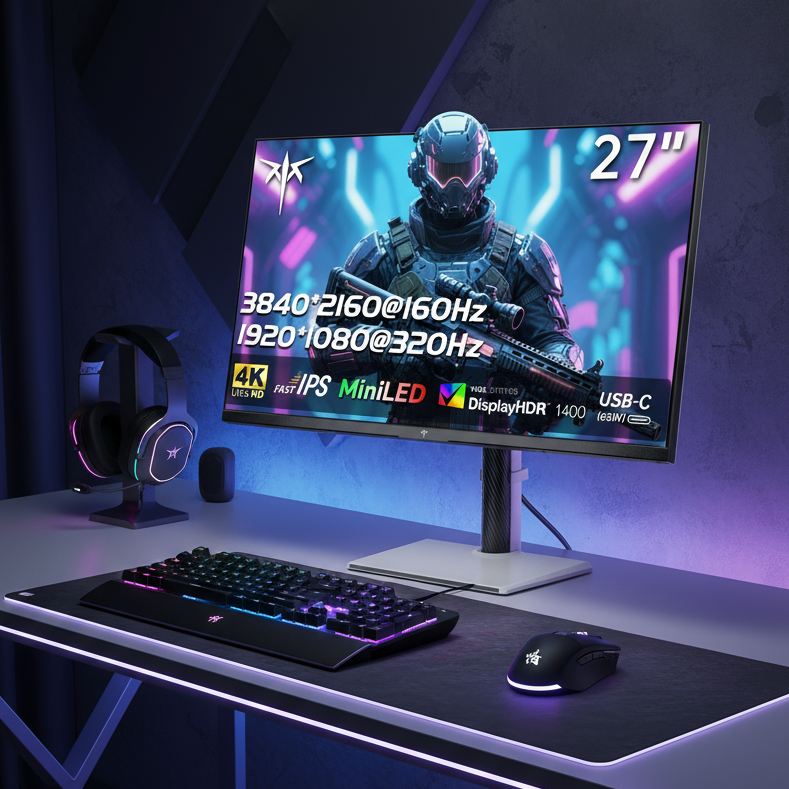


HDR usually turns off because the operating system, GPU driver, app, and monitor are renegotiating display mode, color depth, refresh rate, metadata, or power behavior. The fix is to isolate whether the trigger is the game’s display mode, system HDR state, cable bandwidth, monitor HDR processing, or laptop battery policy.
Does your monitor go black for a second, return in dull SDR, or lose its HDR badge the moment a game opens? A focused check of HDR status, game display mode, driver state, and monitor input settings can usually separate a real app limitation from a fixable signal-path problem in one session. This guide covers the practical causes, the tradeoffs, and a clean troubleshooting path that protects both gaming immersion and everyday desktop readability.
Why HDR Turns Off When an App Launches
HDR is not just a brightness switch. On a PC, HDR requires a working chain: the application must output HDR or cooperate with system HDR, the GPU must send the right signal, the cable must carry enough bandwidth, and the display must identify itself as HDR-capable. Platform HDR guidance notes that HDR must be enabled and configured correctly before HDR content can display well, with toggles available through Settings, a keyboard shortcut, and the game overlay HDR activation methods.
The automatic “disable” moment often happens when an application changes display mode. A game may switch from borderless windowed desktop composition to exclusive full screen, request a different refresh rate, change bit depth, or use its own HDR pipeline. If the monitor and GPU cannot maintain the requested combination, the system may fall back to SDR or briefly blank the screen while the signal handshakes again.

A simple example is a 4K high-refresh gaming monitor running over a marginal cable or adapter. The desktop may hold HDR at one refresh rate, but a game that launches at a higher refresh rate can push the connection into a bandwidth limit. For the best HDR image quality, use a direct display connection and avoid unnecessary adapters or converters when possible.
The Main Causes Behind Automatic HDR Dropouts
The Game Depends on System HDR Being On First
Some PC games expose HDR only when system HDR is already enabled. Others can toggle HDR internally. That difference explains why one title launches in HDR cleanly while another appears to turn HDR off or hides the HDR menu entirely.
For a reliable baseline, confirm HDR is enabled for the exact display you are using, not just for another monitor in a multi-display setup. Display setup guidance recommends right-clicking the desktop, opening Display Settings, and confirming that HDR gaming and app playback is enabled for the HDR-capable display.

The practical tradeoff is desktop quality. Leaving HDR on all day can make office apps, web pages, and SDR media look dim, gray, or oddly saturated. Monitor testing guidance recommends using HDR mainly for HDR games or video because SDR desktop content can look distorted when HDR stays on continuously.
The App Is Forcing a Different Display Mode
Games can change resolution, refresh rate, full-screen mode, color format, or output range at launch. That transition can make the screen flash black, lose HDR, or return with different brightness. This does not always mean the monitor is defective; it can be a mode negotiation issue between the operating system, GPU driver, and display.
The fastest test is to change the game from exclusive full screen to borderless windowed, then relaunch it. If HDR stays on in borderless mode but fails in exclusive full screen, the problem likely sits in the game’s display-mode handoff or metadata path. If HDR fails in both modes, the cause is more likely HDR configuration, the GPU driver, the cable, or the monitor.
Overlays can also matter. Capture tools, performance overlays, streaming hooks, and color-management utilities can alter the presentation path. If HDR disables only when an overlay is active, remove that variable before replacing hardware.
Cable, Port, or Adapter Bandwidth Is Not Holding the Signal
HDR increases signal demands because it often involves higher bit depth, wider color data, and metadata. A setup that works in SDR may fail when HDR is added, especially at 4K and high refresh rates. The symptom can look like a one-second black screen, intermittent flicker, or HDR quietly dropping back to SDR.
Community troubleshooting reports show how stubborn this can be. In one case, a user running a high-end GPU over a direct display cable reported that SDR worked normally, while HDR made the desktop cloudy, hard to read, and unstable. That kind of report does not prove a universal defect, but it does match a common diagnostic pattern: test another certified cable, another GPU output, another monitor input, and ideally the same monitor on another HDR source.
Adapters deserve special suspicion. USB-C docks, video converters, KVM switches, and older capture devices may pass an image while failing HDR metadata or full-bandwidth modes. For a performance display, the cleanest test is a direct cable from the GPU to the monitor.

The Monitor Accepts HDR but Cannot Display It Well
Some displays advertise HDR input support but lack the brightness, local dimming, contrast, or color depth needed for convincing HDR. When a game launches and HDR activates, the monitor may lock out normal picture controls, change tone mapping, reduce available color options, or make SDR-looking content appear worse.
HDR needs both the source and monitor to support HDR, and strong HDR performance depends on brightness, black levels, color gamut, and color volume rather than the label alone. A monitor that merely accepts HDR10 can still look worse than a well-tuned SDR mode.
That is why HDR dropout complaints sometimes overlap with washed-out HDR complaints. The app may not be disabling HDR at all; the monitor may be switching into an HDR processing mode that looks flatter on the desktop or in SDR menus. Comparing SDR white against HDR white with a known HDR reference app can help confirm whether the system is actually operating in HDR.
Power and Brightness Rules Are Intervening
Laptops and portable smart screens add another layer: battery policy. HDR playback can reduce battery life, so some manufacturers disable HDR when unplugged, with an option to prioritize image quality instead.
This matters for portable displays, USB-C monitors, and gaming laptops because the trigger can look app-specific. You launch a game, GPU load rises, power policy changes, brightness behavior shifts, and HDR disappears. Plug into AC power, set battery options to favor image quality, and retest before assuming the game is broken.

How to Diagnose the Trigger Without Guesswork
Start with display settings. Open Settings, go to System, then Display, select the correct monitor, and confirm HDR support and HDR status. If the display capability does not show HDR support, the system may not be reading the monitor correctly, which can point to a cable, adapter, firmware, EDID, or driver issue.
Next, use the HDR keyboard shortcut before and after launching the game. If the shortcut restores HDR instantly, the system is capable but the launch transition is knocking the display back to SDR. If the shortcut does nothing, the display mode requested by the app may not support HDR under the current connection.
Then lower one demanding variable at a time. Drop refresh rate from a high gaming setting to a more conservative one, keep native resolution, and relaunch. If HDR becomes stable, the previous mode likely exceeded what the cable, port, or monitor could sustain. If nothing changes, switch between borderless and exclusive full screen.
Finally, update deliberately. Install current GPU drivers, keep the operating system current, and check optional graphics updates for HDR compatibility. Firmware updates for monitors can help, but they should be treated as one part of the chain, not a guaranteed cure.
Pros and Cons of Leaving HDR On
Approach |
Best For |
Advantage |
Tradeoff |
HDR always on |
Frequent HDR gaming and video |
Fast launches and fewer missing HDR menus |
SDR desktop apps may look dull or inaccurate |
HDR only before HDR content |
Office work, browsing, mixed productivity |
Cleaner SDR readability and color consistency |
Requires toggling through Settings or a keyboard shortcut |
Per-game HDR when supported |
Games with reliable internal HDR |
Better control inside the title |
Some games still require system HDR first |
SDR only |
Weak HDR monitors or color-critical office work |
Stable brightness and predictable desktop color |
No HDR highlight detail or wide-range contrast |
For many office-productivity and gaming setups, the best daily workflow is SDR for normal desktop work and HDR only for HDR games or video. That gives you crisp text, stable white balance, and fewer surprises in email, spreadsheets, and browser windows, while still preserving the high-impact mode for supported content.
When It Is a Hardware Limitation, Not a Setting Mistake
If HDR consistently looks washed out, clips highlights, crushes shadows, or disables monitor controls, the display may be the limiting factor. KTC’s calibration discussion makes a useful point: HDR calibration failures often come from tone mapping, hardware limits, platform signal paths, or game-engine behavior, not simply from choosing the wrong slider value HDR calibration.
For a real-world buying lens, a productivity monitor with low peak brightness and no meaningful local dimming may accept HDR but deliver poor HDR. A gaming monitor with Mini LED local dimming or an OLED panel is more likely to show the point of HDR: bright highlights, controlled blacks, and richer color volume. Good HDR depends heavily on contrast, brightness, color gamut, and color volume, with OLED and Mini LED technologies offering stronger HDR behavior than many basic LCD monitors.
The value-oriented move is not always buying the most expensive screen. It is choosing a display whose HDR hardware matches your use case. A competitive esports player may prefer SDR consistency and ultra-high refresh. A cinematic RPG player, video editor, or portable-screen user benefits more from reliable HDR tone mapping, strong brightness, and predictable color controls.
Practical Fixes That Usually Work
Use a direct display connection from the GPU to the monitor, with no dock or adapter during testing. Enable HDR before launching games that require it, then use the HDR keyboard shortcut as your quick toggle when returning to desktop work. Set the game to borderless windowed if exclusive full screen causes HDR dropouts, or use exclusive full screen if the game’s HDR metadata behaves better there.
Update the GPU driver, confirm the operating system is current, and check monitor firmware only after the basic signal path is clean. Run the HDR Calibration app, but do not treat calibration as magic; a display with limited brightness, weak contrast, or poor HDR processing will still have limits. If you use a laptop or portable screen, test while plugged in and check whether battery settings are prioritizing battery life over HDR image quality.
The core discipline is to change one variable at a time. If HDR fails only at 4K high refresh, suspect bandwidth. If it fails only in one game, suspect that game’s HDR implementation or display mode. If it fails across every HDR app, suspect system HDR state, GPU driver, cable path, or the monitor’s HDR capability.
FAQ
Why does my screen go black briefly when HDR turns on?
A brief black screen usually means the system is renegotiating the video signal. Resolution, refresh rate, color format, bit depth, and HDR metadata can all change when a game launches.
Why does HDR look worse than SDR on my monitor?
HDR can look worse on displays with limited brightness, weak contrast, no local dimming, or poor tone mapping. In that case, SDR may be the more accurate and comfortable mode for everyday use.
Should I keep HDR on for office work?
Most users should keep SDR for office productivity and enable HDR only for HDR games or video. Text, web pages, spreadsheets, and design tools are usually easier to read and more predictable in SDR.
HDR auto-disable is rarely random. Treat it as a signal-chain negotiation problem, test the game mode and connection first, then judge whether your display’s HDR hardware is strong enough to deserve being left on. A great monitor should make HDR feel immersive, not fragile.


