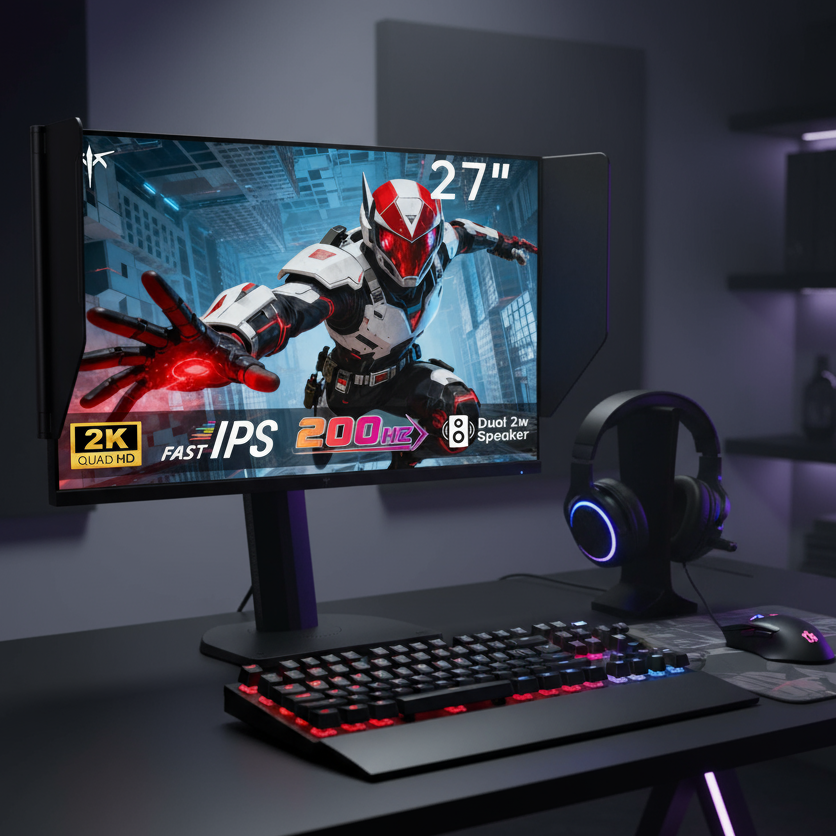
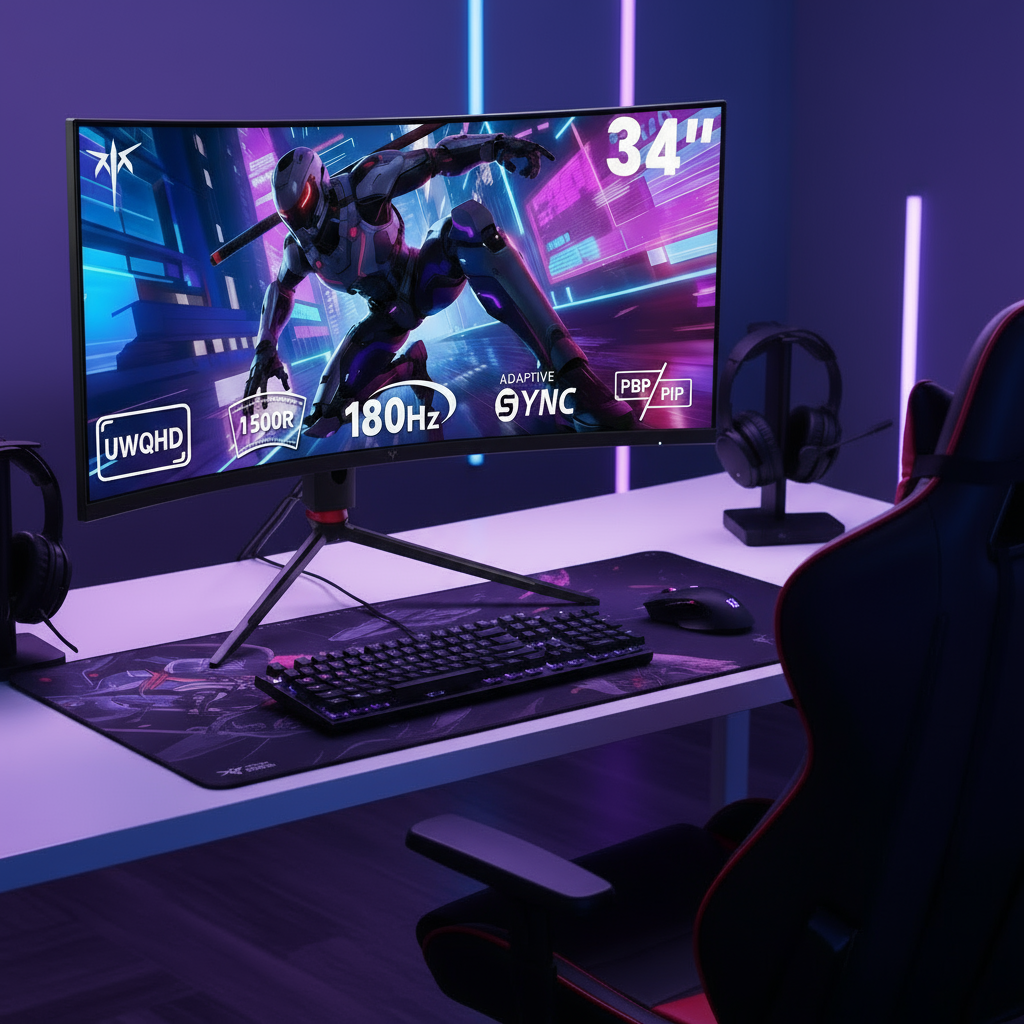




Choosing the right gaming monitor in 2026 means matching panel technology, refresh behavior, and connectivity to your actual room lighting, game mix, and daily screen time rather than chasing the highest headline numbers. The market now offers clear trade-offs between OLED contrast in controlled lighting and Mini-LED brightness for mixed-use spaces, so the best display for one player can be the wrong choice for another.

The 2026 Gaming Monitor Landscape: Navigating the Spec Convergence
Ultra-high refresh rates now combine with Mini-LED local dimming and OLED per-pixel lighting, creating more options but also more confusion for buyers who want performance without paying for unused features. Many shoppers still focus on marketing claims instead of the specs that directly affect motion clarity and HDR impact during real gameplay. A useful first step is to identify whether your sessions lean toward competitive FPS, story-driven titles, or mixed console and PC use before comparing specific models.
The HDR Revolution: Why Nits and Dimming Zones Matter
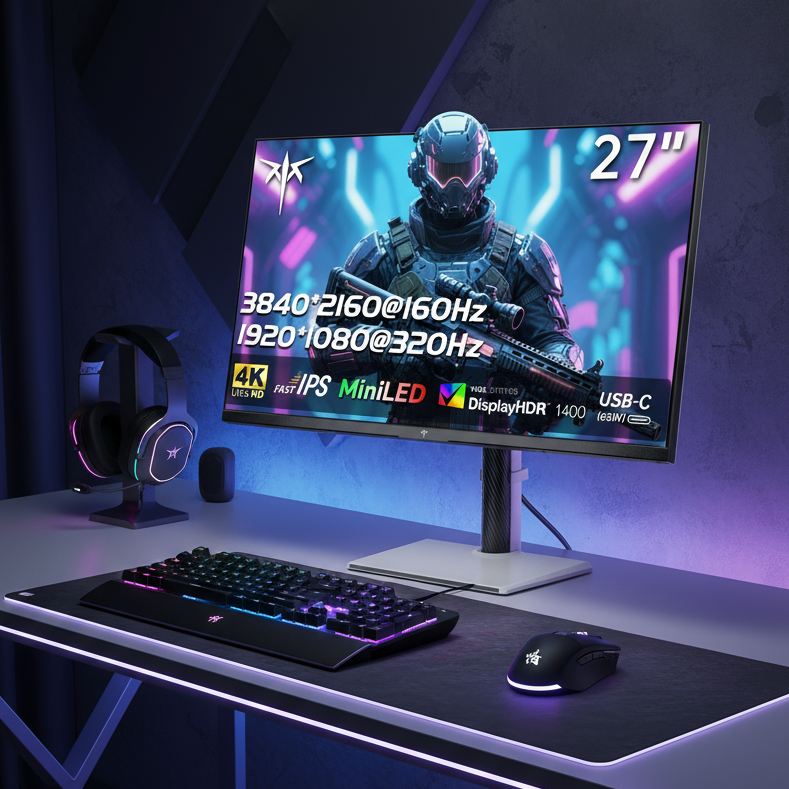
True HDR gaming requires both high peak brightness and controlled dimming zones to preserve detail in bright highlights without crushing shadows. VESA DisplayHDR 1400 sets the current premium tier by demanding 1400 nits peak luminance and significantly higher contrast than the HDR 1000 level, which typically requires advanced local dimming backlights. Mini-LED panels deliver sustained brightness that avoids the automatic brightness limiting common on OLED, making them better suited for rooms with ambient light. All-Mini-LED Monitors often list zone counts in the hundreds because each zone helps reduce blooming around bright objects on dark backgrounds.

OLED vs. Mini-LED: Choosing the Right Panel for Your Setup
The decision between OLED and Mini-LED usually comes down to room lighting and how much static content appears on screen each day. In darker environments OLED provides perfect black levels and near-instant response, while Mini-LED maintains higher sustained brightness and eliminates burn-in concerns for users who keep taskbars or desktop interfaces visible for long periods. Market pricing around the mid-hundreds often marks the point where buyers begin weighing OLED immersion against Mini-LED longevity, so checking your typical lighting conditions first helps avoid later regret. All-OLED Monitor options work well when the primary use is evening gaming in controlled light.
Beyond GtG: Understanding Motion Clarity and Response Times
Refresh rate alone does not guarantee smooth motion because pixel persistence and overshoot also affect perceived clarity. The VESA ClearMR standard measures the ratio of clear to blurry pixels during fast movement, providing a more practical indicator than traditional gray-to-gray response times. Dual-mode panels that toggle between 4K at moderate refresh and 1080p at higher speeds give hybrid users one display for both detailed console play and competitive PC sessions. A 240 Hz OLED can appear smoother than a higher-rate IPS panel in some titles because its near-zero persistence reduces motion blur without needing aggressive strobing. 240Hz-400Hz Monitors often target players who prioritize this clarity balance.
Connectivity Check: Is HDMI 2.1 Still Enough for 2026?
Future-proofing now centers on bandwidth and automated HDR handling rather than raw port count. HDMI 2.1a supports uncompressed 4K at 120 Hz and higher while adding Source-Based Tone Mapping that lets the source device optimize HDR tone curves automatically for both PS5 and PC. DisplayPort 2.1a extends similar capabilities for high-end GPUs that push beyond HDMI limits. Checking whether a monitor carries the full HDMI 2.1a feature set prevents manual calibration workarounds later when new consoles or graphics cards arrive.
Matching Your Monitor to Your Game Genre and Platform
Competitive FPS players benefit most from smaller, high-refresh panels that keep motion clear at the edges of vision, while AAA and RPG gamers gain more from larger 4K screens with strong HDR contrast. Simulator and ultrawide users typically prefer curved formats that increase field of view without head turning. Console gamers should verify 4K 120 Hz support plus VRR to reduce tearing on PS5 and Xbox Series X. Matching the display to the 90 percent use case rather than occasional edge scenarios produces higher long-term satisfaction.
The 'OEM Insurgent' Advantage: Why Factory-Direct Hardware Wins in 2026
Factory-direct brands that supply panels to larger manufacturers can deliver comparable or higher specifications at lower prices because they avoid traditional retail markups. Features such as full ergonomic stands, three-year warranties, and price-match policies add practical value when technology cycles move quickly. Models like the M27P6 combine 1152-zone Mini-LED backlighting with 4K 160 Hz performance inside a price range that previously required stepping up to premium brands.
The 2026 Gaming Monitor Decision Framework
A practical buying checklist starts with budget range, room lighting, daily duty cycle between work and play, motion clarity needs, and required connectivity. TÜV Rheinland Eye Comfort certification confirms low blue light and flicker-free operation that supports longer sessions without added eye strain. Buying for the dominant use pattern rather than rare peak scenarios keeps the purchase aligned with actual needs.
Panel Choice by Room and Usage
Compare OLED and Mini-LED strengths across common 2026 gaming setups to identify the better fit for your space and schedule.
Show comparison data
| Scenario | OLED Score | Mini-LED Score | Key Trade-off |
|---|---|---|---|
| Dark Room Gaming | 9 | 5 | Perfect blacks vs sustained brightness |
| Bright Room Gaming | 4 | 9 | ABL limits vs high peak nits |
| Mixed Work+Play | 6 | 8 | Burn-in risk vs no retention worry |
| Competitive FPS Focus | 8 | 6 | Instant response vs dual-mode flexibility |
Frequently Asked Questions
What Refresh Rate Should I Target for Competitive Play in 2026?
Players focused on fast-paced titles often see the largest gains moving from 144 Hz to 240 Hz or higher, provided the GPU can sustain matching frame rates. Beyond that point, motion clarity depends more on panel persistence and ClearMR rating than raw refresh number alone.
How Does OLED Burn-In Risk Affect Long-Term Monitor Use?
Burn-in remains a consideration for users who display static HUD elements or desktop interfaces for many hours daily. Mini-LED panels remove this concern entirely while still delivering strong contrast through local dimming, making them the lower-risk choice for mixed productivity and gaming schedules.
Is HDMI 2.1 Required for PS5 and Xbox Series X Gaming?
HDMI 2.1 enables full 4K 120 Hz with VRR and ALLM on current consoles. Monitors lacking these features can still connect but may require manual HDR adjustments or lower refresh rates for the smoothest experience.
What Is the Difference Between GtG and ClearMR Response Metrics?
Gray-to-gray measures the time for a pixel to change between two shades in ideal conditions. ClearMR evaluates how many pixels remain sharp versus blurry during actual fast motion, giving a more realistic view of motion clarity in games.
Should I Choose 4K or Stick with 1440p for Most Games?
4K delivers sharper detail and better console compatibility when paired with strong HDR, while 1440p allows higher refresh rates on mid-range GPUs. Dual-mode monitors that switch between both resolutions offer a practical middle path for players who want flexibility without multiple displays.